“Preach Christ… He is the whole gospel. His person, offices, and work must be our one great, all-comprehending theme.” —Charles Spurgeon
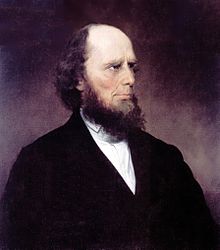
Pastor, these are incredible words spoken by the great Charles Finney nearly 140 years ago! I encourage you to take the time to hear these words with an open heart.
I believe it is a fact generally admitted that there is much less conscience manifested, by men and women, in nearly all the walks of life, than there was forty years ago. There is justly much complaint of this, and there seems to be but little prospect of reformation. The rings and frauds and villainies in high and low places, among all ranks of men, are most alarming, and one is almost compelled to ask: “Can nobody be safely trusted?” Now, what is the cause of this degeneracy? Doubtless there are many causes that contribute more or less directly to it; but I am persuaded that the fault is more in the ministry and public press than in any and all things else. It has been fashionable now for many years to ridicule and decry Puritanism. Ministers have ceased, in a great measure, to probe the consciences of men with the spiritual law of God. So far as my knowledge extends, there has been a great letting down and ignoring the searching claims of God’s law, as revealed in his Word. This law is the only standard of true morality. “By the law is the knowledge of sin.” The law is the quickener of the human conscience. Just in proportion as the spirituality of the law of God is kept out of view will there be manifest a decay of conscience. …The proper guardians of the public conscience have, I fear, very much neglected to expound and insist upon obedience to the moral law.
… The true Gospel is not preached where obedience to the moral law as the only rule of life is not insisted upon. Wherever there is a failure to do this in the instructions of any pulpit it will inevitably be seen that the hearers of such a mutilated Gospel will have very little conscience. …The universal literature of the present day shows conclusively that the moral sense of the people needs toning up, and some of our most fascinating preachers have become the favorites of infidels, skeptics of every grade, Universalists, and the most abandoned characters.
… My beloved brethren in the ministry, is there not a great want in the public inculcations of the pulpit upon this subject? We are set for the defense of the blessed Gospel and for the vindication of God’s holy law. I pray you let us probe the consciences of our hearers, let us thunder forth the law and Gospel of God until our voices reach the capital of this nation, through our representatives in Congress. It is now very common for the secular papers even to publish extracts of sermons. Let us give the reporters of the press such work to do as will make their ears and the ears of their readers tingle. Let our railroad rings, our stock gamblers, our officials of every grade hear from its pulpit, if they come within the sound, such wholesome Puritanical preaching as will arouse them to better thoughts and a better life. Away with this milk-and-water preaching of a love of Christ that has no holiness or moral discrimination in it. Away with preaching a love of God that is not angry with sinners every day. Away with preaching a Christ not crucified for sin.
… Brethren, our preaching will bear its legitimate fruits. If immorality prevails in the land, the fault is ours in a great degree. If there is a decay of conscience, the pulpit is responsible for it. If the public press lacks moral discrimination, the pulpit is responsible for it. If the church is degenerate and worldly, the pulpit is responsible for it. If the world loses its interest in religion, the pulpit is responsible for it. If satan rules in our halls of legislation, the pulpit is responsible for it. If our politics become so corrupt that the very foundations of our government are ready to fall away, the pulpit is responsible for it. Let us not ignore this fact, my dear brethren; but let us lay it to heart, and be thoroughly awake to our responsibility in respect to the morals of this nation. —Charles Finney (December 4, 1873)
Pastor, as you are putting the finishing touches on your message for Sunday, even as you are getting ready to begin the service, consider this counsel from Augustine of Hippo—
“He should be in no doubt that any ability he has and however much he has derives more from his devotion to prayer than his dedication to oratory; and so, by praying for himself and for those he is about to address, he must become a man of prayer before becoming a man of words. As the hour of his address approaches, before he opens his thrusting lips he should lift his thirsting soul to God so that he may utter what he has drunk in and pour out what has filled him.”
Pray for yourself—that you would be a living example of what you preach.
Pray for your vocabulary—that the Holy Spirit would direct your words.
Pray for your ego—that you would not be puffed up nor brought down by the people’s response.
Pray for your congregation—that they would receive and apply the Word of God.
Pray for your community—that they would desire the life of Christ that is evident in you and your congregation.
And on Monday morning perhaps you will pray this prayer of commitment from Augustine—
Breathe in me, O Holy Spirit, that my thoughts may all be holy.
Act in me, O Holy Spirit, that my work, too, may be holy.
Draw my heart, O Holy Spirit, that I love but what is holy.
Strengthen me, O Holy Spirit, to defend all that is holy.
Guard me, then, O Holy Spirit, that I always may be holy.
Amen.
I’m praying for you this weekend!
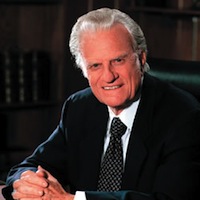
There are very few people who bring to mind such a picture of ministry success, passion for lost souls, and total integrity like Billy Graham.
So for my pastor friends, here are a few quotes from this renowned preacher about study habits, sermon preparation, and message delivery.
“The sword of the Spirit—the Bible—is the weapon God has provided for us to use in this battle between truth and deception. Make it a priority to wield that sword skillfully.”
“If I stick to the Bible and preach the principles and the teachings of the Bible, and quote the Bible, it has an impact of its own.”
“The fact that God is infinite makes the study of His Word a lifetime occupation.”
“A seminary professor I once knew told his students, ‘Never preach about hell without tears in your eyes.’”
“Our preaching emerges out of what we are.”
“Sometimes I’m asked to list the most important steps in preparing for an evangelistic mission, and my reply is always the same: prayer . . . prayer . . . prayer.”
“Preach with authority. The authority for us is the Word of God. Preach with simplicity . . . Preach with urgency . . . Heaven and Hell are at stake. Preach for a decision.”
“Proclaiming ‘the whole will of God’ should be the goal—and the joy— of every church and every preacher.”
“When we preach or teach the Scripture, we open the door for the Holy Spirit to do His work. God has not promised to bless oratory or clever preaching. He has promised to bless His Word.”
“It is vitally important for local church leaders to keep in touch with the spiritual state of their members, to discuss their level of biblical knowledge, and to teach them how to study God’s Word and pray.”
When Oswald Chambers taught at the Bible Training College in London, he frequently presented his lectures in a short, bullet-point format to give his students something to ponder.
Here are some of the “bullet points” he shared for sermon preparation:
“The greatest thing is not to hunt for texts, but to live in the big comprehensive truth of the Bible and the texts will hunt you.”
“To talk about ‘getting a message,’ is a mistake. It is preparation of myself that is required more than of my message.”
“To develop your expression in public you must do a vast amount of writing in private. Write out your problems before God. Go directly to Him about everything.”
“The work we do in preparation is meant to get our minds into such order that they are the service of God for His inspiration.”
“Conscious inspiration is mercifully rare or we would make inspiration our god.”
“Spiritual insight is in accordance with the development of heart-purity.”
“Spiritual sloth must be the greatest grief to the Holy Ghost.”
“In order to expound a passage, live in it well beforehand. Keep yourself full with reading. Reading gives you a vocabulary. Don’t read to remember; read to realize.”
“Get moved by your message, and it will move others in a corresponding way.”
I found these very thought-provoking. What did you learn?
Pastors, this is a timely word from Mark Batterson…
There is a world of difference between preaching a sermon and living a sermon. No amount of study can compensate for deficiencies in your life. You can “study it” but if you aren’t “living it” it’ll ring hollow. The opposite is true as well. Jesus’ teaching was authoritative because it was backed up by his life. You can’t back up your sermons with a seminary degree. You’ve got to back it up with your life. My advice? Don’t just get a sermon. Get a life. Then you’ll get a sermon!
Let me be blunt: if your life is boring your sermons will be too.
If you have no life outside of church—no hobbies, no friends, no interests, no goals—your illustrations will feel canned, your applications will feel theoretical instead of practical, and your sermons will be lifeless instead of life-giving.
The greatest sermons are not fashioned in the study. They are fleshed out in the laboratory of everyday life. Now, please don’t misinterpret what I’m saying. You need to study to show yourself approved and rightly divide the word. So keep studying! In fact, study more. But you can’t just study the word. You need to live it. The most powerful sermons are well-studied and well-lived.
At the end of the day, God won’t say, “Well studied, good and faithful servant.” He won’t say, “Well thought” or “Well said” either. There is only one commendation: “Well done.”
Now let’s be brutally honest: most Christians are educated way beyond the level of their obedience already! We don’t need to know more, we need to do more. That’s why I think sermons should focus on application more than interpretation. Theological doesn’t mean theoretical. In fact, as you get a life, your messages will be less theoretical and more experiential. You won’t just preach your sermons. You’ll incarnate them!
D.L. Moody’s book Secret Power is addressed to both individual Christians and church leaders (you can read my full book review by clicking here).
I posted some quotes for individual Christians to consider yesterday. Here are seven quotes especially for pastors and church leaders:
“The Gospel proclamation cannot be divorced from the Holy Spirit. Unless He attend the Word in power, vain will be the attempt in preaching it.”
“Skeptics and infidels may say they don’t believe in it. It is not our work to make them believe in it; that is the work of the Spirit. Our work is to give them the Word of God; not to preach our theories and our ideas about it, but just to deliver the message as God gives it to us.”
“It is not the hard work breaks down ministers, but it is the toil of working without power. …If you ministers have not the Spirit of God, you had better not preach, and your people had better stay at home. I think I speak not too strongly when I say that a church in the land without the Spirit of God is rather a curse than a blessing. If you have not the Spirit of God, Christian worker, remember that you stand in somebody else’s way; you are as a tree bearing no fruit standing where another fruitful tree might grow.”
“Man cannot preach effectively of himself. He must have the Spirit of God to give ability, and study God’s Word in order to testify according to the mind of the Spirit.”
“Thousands and thousands are sitting in darkness, knowing not of this great Light, but when we begin to preach Christ honestly, faithfully, sincerely and truthfully; holding Him up, not ourselves; exalting Christ and not our theories; presenting Christ and not our opinions; advocating Christ and not some false doctrine; then the Holy Ghost will come and bear witness. He will testify that what we say is true. When He comes He will confirm the Word with signs following.”
“I believe the reason why God makes use of so few in the Church, is because there is not in them the power that God can use. He is not going to use our ideas, but we must have the Word of God hid in our hearts, and then, the Holy Spirit inflaming us, we will have the testimony which will be rich, and sweet, and fresh, and the Lord’s Word will vindicate itself in blessed results. God wants to use us; God wants to make us channels of blessing; but we are in such a condition He does not use us. That is the trouble; there are so many men who have no testimony for the Lord; if they speak, they speak without saying anything, and if they pray, their prayer is powerless; they do not plead in prayer; their prayer is just a few set phrases that you have heard too often. Now what we want, is to be so full of the Word, that the Spirit coming upon us shall bring to mind—bring to our remembrance—the words of the Lord Jesus.”
“I have lived long enough to know that if I cannot have the power of the Spirit of God on me to help me to work for Him, I would rather die, than live just for the sake of living.”
D.L. Moody’s book Secret Power is addressed to both individual Christians and church leaders (you can read my full book review by clicking here).
Here are eight quotes for Christians to consider.
“Joy is love exulting; peace is love in repose; long suffering is love on trial; gentleness is love in society; goodness is love in action; faith is love on the battlefield; meekness is love at school; and temperance is love in training.”
“Before we pray that God would fill us, I believe we ought to pray Him to empty us.”
“The reason why the Church cannot overcome the enemy is, because she doesn’t know how to use the sword of the Spirit. People will get up and try to fight the devil with their experiences, but he doesn’t care for that, he will overcome them every time. People are trying to fight the devil with theories and pet ideas, but he will get the victory over them likewise. What we want is to draw the sword of the Spirit. It is that which cuts deeper than anything else. …The sword of the Spirit is the Word of God, and what we need specially is to be filled with the Spirit, so we shall know how to use the Word.”
“The fact is, we are leaky vessels, and we have to keep right under the fountain all the time to keep full of Christ, and so have a fresh supply.”
“The Holy Spirit tells a man of his faults in order to lead him to a better life. In John 16:8, we read: ‘He is to reprove the world of sin.’ Now, there are a class of people who don’t like this part of the Spirit’s work. Do you know why? Because He convicts them of sin; they don’t like that. What they want is some one to speak comforting words and make everything pleasant; keep everything all quiet; tell them there is peace when there is war; tell them it is light when it is dark, and tell them everything is growing better; that the world is getting on amazingly in goodness; that it is growing better all the time; that is the kind of preaching they seek for. …It is my work to preach and hold up the Cross and testify of Christ; but it is His work to convict men of sin and lead them to Christ.”
“I think there is no way so sure to win our families and our neighbors, and those about whom we are anxious, to Christ, than just to adorn the doctrine of Jesus Christ in our lives, and grow in all these graces. If we have peace and joy and love and gentleness and goodness and temperance; not only being temperate in what we drink, but in what we eat, and temperate in our language, guarded in our expressions; if we just live in our homes as the Lord would have us, an even Christian life day by day, we shall have a quiet and silent power proceeding from us, that will constrain them to believe on the Lord Jesus Christ. But an uneven life, hot today and cold tomorrow, will only repel. Many are watching God’s people.”
“Love will rebuke evil, but will not rejoice in it. Love will be impatient of sin, but patient with the sinner. To form the habit of finding fault constantly, is very damaging to spiritual life; it is about the lowest and meanest position that a man can take.”
“Oh, the privilege, the blessed privilege, to be used of God to win a soul to Christ, and to see a man or woman being led out of bondage by some act of ours toward them. To think that God should condescend to allow us to be co-workers with Him. It is the highest honor we can wear.”
(You may also be interested in quotes from this book that are especially for pastors and church leaders, which you can read by clicking here.)
Dwight L. Moody is my kind of pastor: he said exactly what was on his mind. He wasn’t worried about political correctness, or couching his words in comfortable words. He was a modern-day prophet of his day, clearly stating, “Thus says the Lord!” Thankfully for us in our day, D.L. Moody’s books sound just like his sermons. In Secret Power, Moody calls Christians and churches back to a fuller understanding of the role of the Holy Spirit in our lives.
Moody writes:
“How much we have dishonored Him [the Holy Spirit] in the past! How ignorant of His grace, and love and presence we have been? True, we have heard of Him and read of Him, but we have had little intelligent knowledge of His attributes, His offices and His relations to us. I fear He has not been to many professed Christians an actual existence, nor is He known to them as a personality of the Godhead.”
I am convinced that this is true. The Holy Spirit seems “spooky” or out-of-date or inapplicable in many churches. Moody explains this is the reason why our churches are not experiencing the same miracle-working power that was seen in the New Testament church.
As a result, individual Christians are lacking in power in their personal lives, too, because they are not being taught about the role of the Holy Spirit in their churches. As a result, Christians are not soul winners as were New Testament Christians.
A secondary title for this book is “The Secret Of Success In Christian Life And Work.” That success can be yours today if you will only allow God to operate in your life and church in all of His fullness.
If you are thirsty for this sort of fuller relationship with the Holy Spirit, I encourage you to read this book! You may also want to check out some quotes I shared from this book here and here.
John Chrysostom was a reluctant pastor. It took him a while to surrender to the call of God on his life to serve as a priest. But once he stepped into that role, his God-given talents were used mightily. He was such an incredible speaker that his sermons often moved his audience to tears or applause. Thus, he was given the nickname “Golden Mouth.”
Here are some great pastoral insights from Golden Mouth which are just as applicable today…
“Thus then must the Priest behave towards those in his charge, as a father would behave to his very young children; and as such are not disturbed either by their insults or their blows, or their lamentations, nor even if they laugh and rejoice with us, do we take much account of it; so should we neither be puffed up by the promises of these persons nor cast down at their censure, when it comes from them unseasonably.”
“Let, therefore, the man who undertakes the strain of teaching never give heed to the good opinion of the outside world, nor be dejected in soul on account of such persons; but laboring at his sermons so that he may please God, (For let this alone be his rule and determination, in discharging this best kind of workmanship, not acclamation, nor good opinions,) if, indeed, he be praised by men, let him not repudiate their applause, and when his hearers do not offer this, let him not seek it, let him not be grieved. For a sufficient consolation in his labors, and one greater than all, is when he is able to be conscious of arranging and ordering his teaching with a view to pleasing God.”
“For the soul of the Priest ought to be purer than the very sunbeams, in order that the Holy Spirit may not leave him desolate, in order that he may be able to say, ‘Now I live; and yet no longer I, but Christ liveth in me….’ For he has need of far greater purity than they; and whoever has need of greater purity, he too is subject to more pressing temptations than they, which are able to defile him, unless by using constant self-denial and much labor, he renders his soul inaccessible to them.”