Poetry Saturday—World Of Wonders

John BunyanO world of wonders (I can say no less),
That I should be preserved in that distress
That I have met with here! O blessed be
That hand that from it hath delivered me!
Dangers in darkness, devils, hell, and sin.
Did compass me, while I this vale was in;
Yea, snares, and pits, and traps, and nets did lie
My path about, that worthless, silly I
Might have been catched, entangled, and cast down:
But since I live, let JESUS wear the crown. —John Bunyan’s Christian in Pilgrim’s Progress, after he came through the Valley Of The Shadow Of Death


Poetry Saturday—Difficulty

John BunyanThe hill, though high, I covet to ascend;
The difficulty will not me offend;
For I perceive the way to life lies here:
Come, pluck up, heart, let’s neither faint nor fear.
Better, though difficult, the right way to go,
Than wrong, though easy, where the end is woe. —John Bunyan’s Christian in Pilgrim’s Progress, as he is climbing the Hill Difficulty


Poetry Saturday—Thus Far Did I Come

John BunyanThus far I did come laden with my sin;
Nor could aught ease the grief that I was in,
Till I came hither: what a place is this!
Must here be the beginning of my bliss?
Must here the burden fall from off my back?
Must here the strings that bound it to me crack?
Blessed Cross, blessed sepulcher! blessed rather be
The Man that there was put to shame for me! —John Bunyan’s Christian in Pilgrim’s Progress, after he lost his burden at Calvary


Great-heart & Christiana From “Pilgrim’s Progress”

Pilgrim's ProgressI love Pilgrim’s Progress! You can read my full book review by clicking here. I’m sharing some of my favorite passages from this classic.

This is part of a dialogue between Great-heart and Christiana—

Great-heart: “He [Christ] has more righteousness than you have need of, or than He needeth Himself.”

Christiana: “Pray make that appear.”

Great-heart: “With all my heart: but first I must premise, that He of whom we are now about to speak, is one that has not His fellow. He has two natures in one person, plain to be distinguished, impossible to be divided. Unto each of these natures a righteousness belongeth, and each righteousness is essential to that nature; so that one may as easily cause the nature to be extinct, as to separate its justice or righteousness from it. Of these righteousnesses therefore we are not made partakers, so as that they, or any of them, should be put upon us, that we might be made just, and live thereby. Besides these, there is a righteousness, which this person has, as these two natures are joined in one. And this is not the righteousness of the Godhead, as distinguished from the manhood; nor the righteousness of the manhood, as distinguished from the Godhead; but a righteousness which standeth in the union of both natures, and may properly be called the righteousness that is essential to His being prepared of God to the capacity of the mediatory office, which He was to be intrusted with. If He parts with His first righteousness, He parts with His Godhead; if He parts with His second righteousness, He parts with the purity of His manhood; if He parts with this third, He parts with that perfection which capacitates Him for the office of mediation. He has therefore another righteousness, which standeth in performance, or obedience to a revealed will; and that is it that He puts upon sinners, and that by which their sins are covered. Wherefore He saith, As by one man’s disobedience many were made sinners, so by the obedience of One shall many be made righteous.”

Christiana: “But are the other righteousnesses of no use to us?”

Great-heart: “Yes; for though they are essential to His natures and office, and so cannot be communicated unto another; yet it is by virtue of them that the righteousness that justifies is for that purpose efficacious. The righteousness of His Godhead gives virtue to His obedience; the righteousness of His manhood giveth capability to His obedience to justify; and the righteousness that standeth in the union of these two natures to His office, giveth authority to that righteousness to do the work for which it is ordained.

“So then here is a righteousness that Christ, as God, has no need of; for He is God without it. Here is a righteousness that Christ, as man, has no need of to make Him so; for He is perfect man without it. Again, here is a righteousness that Christ, as God-man, has no need of; for He is perfectly so without it. Here then is a righteousness that Christ, as God, as man, as God-man, has no need of with reference to Himself, and therefore He can spare it; a justifying righteousness, that He for Himself wanteth not, and therefore He giveth it away. Hence ’tis called the gift of righteousness. This righteousness, since Christ Jesus the Lord has made Himself under the law, must be given away; for the law doth not only bind him that is under it, to do justly, but to use charity. Wherefore he must, he ought by the law, if he hath two coats, to give one to him that has none. Now our Lord indeed hath two coats, one for Himself, and one to spare; wherefore He freely bestows one upon those that have none.”

Read a dialogue between Faithful, Christian, and Talkative by clicking here.

And a dialogue between Christian and Hopeful by clicking here.

Christian & Hopeful From “Pilgrim’s Progress”

Pilgrim's ProgressI love Pilgrim’s Progress! You can read my full book review by clicking here. I’m sharing some of my favorite passages from this classic.

This is part of a dialogue between Christian and Hopeful—

Christian: “Then I say, sometimes (as I think) they may; but they being naturally ignorant, understand not that such convictions tend to their good; and therefore they do desperately seek to stifle them, and presumptuously continue to flatter themselves in the way of their own hearts. … True or right fear is discovered by three things: (1) By its rise: it is caused by saving convictions for sin. (2) It driveth the soul to lay fast hold of Christ for salvation. (3) It begetteth and continueth in the soul a great reverence of God, His word, and ways; keeping it tender, and making it afraid to turn from them, to the right hand or to the left, to any thing that may dishonour God, break its peace, grieve the Spirit, or cause the enemy to speak reproachfully. … Now the ignorant know not that such convictions that tend to put them in fear, are for their good, and therefore they seek to stifle them.”

Hopeful: “How do they seek to stifle them?”

Christian: “(1) They think that those fears are wrought by the devil (though indeed they are wrought of God), and, thinking so, they resist them, as things that directly tend to their overthrow. (2) They also think that these fears tend to the spoiling of their faith; when, alas for them, poor men that they are, they have none at all! and therefore they harden their hearts against them. (3) They presume they ought not to fear, and therefore in despite of them, wax presumptuously confident. (4) They see that those fears tend to take away from them their pitiful old self-holiness, and therefore they resist them with all their might.”

Read a dialogue between Faithful, Christian, and Talkative by clicking here.

Pilgrim’s Progress (book review)

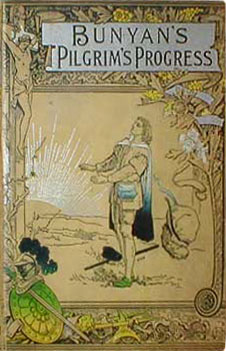
Pilgrim's ProgressIt’s been awhile since I have read Pilgrim’s Progress by John Bunyan, so I thought it was high time to re-read this amazing classic.

I was not disappointed!

In fact, I think I appreciated this time reading this amazing story more than any other time I’ve read it! The pilgrimages of Christian, Faithful, and Hopeful, and that of Christiana, Mercy and Great-heart are fantastic! Very few books have portrayed the journey of a Christian from salvation until arrival in Heaven with such accuracy and emotion.

Parents, your kids will love hearing you read this classic story to them. As your children get a little older, they can read Little Pilgrim’s Progress on their own. And then encourage them to read (and re-read) the original Pilgrim’s Progress throughout their lives. This book is a true blessing!

Grace Abounding To The Chief Of Sinners (book review)

One of my favorite books is Pilgrim’s Progress by John Bunyan. I just finished reading Bunyan’s autobiography called Grace Abounding To The Chief Of Sinners, so now I cannot wait to read Pilgrim’s Progress again!

John Bunyan’s autobiography is almost solely focused around how he became a Christian, and then how he defended himself against the Church of England after he became a follower of Jesus Christ.

At times Bunyan’s account of his struggle with his self-doubts about whether God would ever receive a sinner such as himself are absolutely heart-wrenching. He clung so desperately to the Scriptures that said God wanted to forgive him, and yet beat himself up with other Scriptures that talked about the vileness of sin. He felt that his sin had so wounded God, that he was unsure if he could ever be forgiven.

In a way, I found this quite refreshing. It reminded me of Dietrich Bonhoeffer’s warning against “cheap grace,” where far too many people trivialize the high price Christ paid on the Cross. But John Bunyan acutely felt his sin.

So once he finally received God’s forgiveness, he was a changed man who wanted to tell the world about his Savior. Unfortunately for the time in which he lived, his message of salvation wasn’t “sanctioned” by the Church of England, which landed him in jail for over a decade. The second-half of his autobiography is a play-by-play account of his interaction with the judges who tried and sentenced him. In this account, we read the words of a man who thoroughly knew Scripture, and knew how to use it!

It’s a fascinating biography, which I think any reader will enjoy.