Cardinal Virtues of Ladies & Gentlemen

George Washington Carver never married, and never had children of his own. But he saw himself as a father to all of his students at the Tuskegee Institute, and they viewed him the same way.

The graduating class of 1921 presented Dr. Carver with a beautiful fountain pen. He used that pen to write the following note to his children—

As your father, it is needless for me to keep saying, I hope, except for emphasis, that each one of my children will rise to the full height of your possibilities, which means the possession of these eight cardinal virtues which constitutes a lady or gentleman.

1st. Be clean both inside and outside.

2nd. Who neither looks up to the rich or down on the poor.

3rd. Who loses, if need be, without squealing.

4th. Who wins without bragging.

5th. Who is always considerate of women, children, and old people.

6th. Who is too brave to lie.

7th. Who is too generous to cheat.

8th. Who takes his share of the world and lets other people have theirs.

I think we would do very well if we, too, possessed these virtues, and taught them to our children.

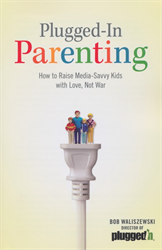
Plugged-In Parenting (book review)

Media saturates our lives. But it’s even more of a factor for the lives of our children. For years I’ve trusted the insights and movie/TV reviews from Focus On The Family’s Bob Waliszewski. Now in Plugged-In Parenting we get to go behind the reviews to learn the whys of the reviews.

In today’s world, we look at our presidents, our prime ministers, our princes and our potentates and we describe them as our leaders, but they’re not. They’re merely our rulers. The leaders are the people who change the minds and stimulate the imaginations of the public, whether children or adults. That means the movie makers, the people who make TV shows, the entertainment people in the business. —Douglas Gresham

Bob lays out some practical, biblically-sound principles that will help parents develop a framework for making sound decisions about media consumption. His approach is not a top-down, because-I-said-so approach, but one that involves even the kids in understanding why these decisions need to be made.

One of the more thought-provoking chapters is about developing a family constitution which gives the guidelines for what types of media are acceptable or unacceptable for your family.

I would recommend this book for every household who wants to ensure that only the highest quality media is being viewed in their homes. In addition, I appreciate the Plugged-In reviews both on their website and on the handy iPhone app.

I am a Tyndale book reviewer.

Secure Daughters, Confident Sons (book review)

Our society is bombarded by so many flat-out-wrong messages about boys and girls, and how to parent them. In Secure Daughters, Confident Sons, Glenn T. Stanton helps set the record straight.

Right out of the gate, Glenn makes an important statement about the need for a book such as this:

“If the rhetoric of political correctness keeps us from exploring the issue of gender differences, we lose something valuable to our humanity. Amazing scientific evidences of essential sex differences in the fields of anthropology, psychology, endocrinology, and neurology in the last few decades strongly disprove nearly all the thinking that drove the misunderstanding about gender in the first place. In fact, the more sophisticated this scientific research gets, the more it deepens our insight into the importance of male and female differences and how profoundly they exist within us.” (emphasis mine)

With a no-holds-barred approach, Glenn dismantles the politically-correct falsehoods like:

  • There are no real differences between boys and girls.
  • Kids can development just fine in a fatherless home.
  • Our children are just as healthy in a one-parent home as in a two-parent home.
  • Kids will be kids regardless of what their parents tell them.

The first few chapters alternate between information specifically for raising boys, and information specifically for raising girls. Then the later chapters zero in on the roles both Dads and Moms play in developing healthy, well-rounded, confident, secure children. Who (no surprise here) develop into healthy, well-rounded, confident, secure adults and future parents.

In one of the concluding chapters Glenn writes—

“Boys who grow up with warm and close connections with their fathers are more likely to develop a healthy masculine sense of self. …Boys who grow up with close, affectionate, and affirming relationships with their mothers have a better sensitivity to and understanding of women. …Girls who grow up close to affirming, warm, loving, and confident moms are more likely to be secure and healthy in their womanhood. Girls who grow up close to their fathers in loving and affirming relationships are more likely to be confident around boys and men as they grow.”

I cannot stress strongly enough how important it is for parents and soon-to-be parents to READ THIS BOOK! Raising children is an awesome responsibility, and we need all the help we can get!

I am a Multnomah book reviewer.

Help! I’m A Single Parent!

I believe God brings us to certain places and experiences in our lives to develop more of His nature in us. One of the aspects of God’s nature is His empathy. That word literally means to be in suffering with someone. Throughout all of history, God continually tells humanity, “I feel what you feel. When you suffer, I suffer too.” The Bible also tells us that Jesus experienced everything we will ever experience, and knows just how we feel.

So this week I’m experiencing what it’s like to be a single parent. Betsy is visiting her family in California, so I’m home with our kids. Granted this is not even close to what true single parents have to cope with. They do it for years, and I’m struggling with just a week. But my week-long experience is developing greater empathy in me.

I’ve got my usual slate of activity for this week, and then I come home to a crying child who is dealing with a rough relationship issue at school. And then I’m trading texts with a coach, trying to work out details for a practice schedule for another child. And then I’m juggling how to get my kids to three different activities, which all start at almost the same time. And then I’m trying to figure out the family meals, and squeezing in a trip to the grocery store. And then I’m having a discussion with my kids about a housekeeping issue. And then … and then … and then …

God’s design was for our kids to have two parents: a Mom and a Dad. When one parent is missing, I believe God gives extra grace to the remaining parent to operate in both roles. But that isn’t God’s ideal. Into this void, Christians are supposed to step in.

  • Support organizations that assist single parents.
  • Better yet: volunteer at one of these organization.
  • Invite a single-parent family over to dinner at your house.
  • Be a mentor.
  • If your kids are going somewhere a single parent’s kids are, offer to help carpool.
  • Guys, be a father-figure to fatherless kids.
  • Ladies, be a mother-figure to motherless kids.
  • Let a single parent drop off his/her kids at your house so that parent can have some alone time.
  • Take a single parent out for coffee and let them vent.
  • Provide a scholarship to a camp for single-parent kids.

The cliché said, “It takes a village to raise a child.” I think it’s even better this way: It takes a loving Church to raise a healthy, well-balance FAMILY.

It’s time for Christians to be that Church!

Generation iY (book review)

I’m going to make a statement about Dr. Tim Elmore’s book Generation iY that I rarely make: This book is a MUST READ for parents and anyone who works with youth!

Yes, a must read. The subtitle of this book is not over-dramatized, but really is an understated truth: Our last chance to save their future.

People who are parents now mostly fall into either the late Baby Boomer or Generation X classification. Our world is so different now than it was when we were kids. The growth in technology use (the “i-world” that Dr. Elmore illuminates so well) makes this generation unique. If we try to parent our kids or mentor Generation iYers using the same techniques parents have used in previous generations, we will lose this generation.

Tim Elmore knows this generation well. He outlines the paradoxes, the marks of (im)maturity, the reasons for their apparent lack of motivation, the incorrect parenting techniques, and the ineffective teaching methods that characterize Gen iY. But Dr. Elmore doesn’t stop at just pointing out all of these things; he gives clear-cut ways we can capture this generation before it’s too late. I wish this book had been available when I first became a parent of a Gen iYer!

If I haven’t made it clear enough already, let me state it again: Generation iY is a must read! The issues are too complex and the stakes are too high for us to miss our opportunity to save the future of this generation.

I am a Poet Gardener book reviewer.

Do You Speak “Teen-ese”?

I highly respect the work that Dr. Tim Elmore does with teenagers. Since I have two teenagers in my home, one of his latest blog posts about communicating with teens caught my attention. He asked 16- to 24-year-olds their preferred method of communication. Their response:

1. Text messaging

2. Internet (i.e. Facebook.com)

3. iPods and Podcasts

4. Instant messaging

5. Cell phone

6. DVD / CD

7. Books

8. Email

Email is last? Yep! Not only last, but described by one teen as the method for communicating with “old people.”

Ouch!

But as a parent, if I truly want to communicate with my teenagers, I have to learn to speak Teen-ese. It’s selfish of me to try to ask my teenager to communicate the way I’m most comfortable (that would be email, if you hadn’t guessed). If I’m going to get their attention, I need to speak the way they speak.

Paul wrote to the church in Corinth that he did the same thing. He said, “I try to find common ground with everyone.” Paul’s native language—his most comfortable language—would have been speaking to Jews in the synagogue about Christ fulfilling Old Testament law.

But he stretched himself. He learned to speak to non-Jews … to those who knew nothing about the Hebrew Old Testament … to those who worshipped idols … to those who were humanistic philosophers … to soldiers … to slaves … to government officials … to everyone.

Parents, don’t try to make your teenagers talk to you in your comfortable language.

Learn Teen-ese. Make it a goal to understand them, instead of trying to make them understand you. By this, you will show your love and earn their ear.

(Watch for a review on Dr. Elmore’s latest book—Generation iY—coming later this week.)

1-on-1 Time

I love my 1-on-1 time with my kids. It’s wonderful when we can spend time together as a family, but there is something special about the times I can zero-in on just one of my kids at a time.

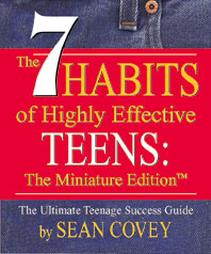
Harrison and I read Seven Habits Of Highly Effective Teens awhile ago, and now Samantha and I are working our way through it together. Brandon is just beginning to get into some serious reading, and right now we are discussing the situations in which Frank and Joe Hardy find themselves in The Hardy Boys series.

It doesn’t have to be over a book. Go for a walk … schedule a daddy-daughter date … play some basketball on the driveway … debrief the life lessons you just watched in a movie … play a video game.

Listen to this Dad and Mom: It doesn’t really matter what you’re doing together, as long as you are doing it together. Not what you want to do, but what they want to do. Get involved in their lives. The precious time you invest 1-on-1 with your kids will make all the difference in the world!

Setting A Good Example

Last week I told you about how proud (and humbled) I was by Brandon’s aware-winning essay. The story was covered in the Cedar Springs Post, and you can read it here.

Brandon is wearing a blue shirt, fifth in from the right (in front of his proud parents!).

Missing Ingredient

I’m getting ready for week two of our Overloaded series, so I’m really digging into a lot of articles and reports about relationships. I believe that the biggest victim in our overloaded lives is our relationships.

Why? Because for relationships to flourish, they need lots and lots of time. Relationship development cannot fit into a nice, neat timeframe. Relationships are fluid: sometimes they need more time and sometimes they need less time.

Dr. Tim Elmore has a great blog post called A Missing Ingredient As We Teach And Parent Our Kids. His thesis is that we have to teach our kids how to think for themselves. But to get to that place, we need to come alongside them to help learn to do this. He suggests —

  1. Process everything that happens. When you see a movie, hear a news report, or listen to a song, talk it over. Debrief its meaning, and the worldview of the people involved.
  2. Plan meaningful experiences together. Don’t simply go to ballgames (though I love ballgames) but feed the homeless in a soup kitchen or travel to another country and absorb it together.
  3. Ask lots of questions. When your child tells you what they did, enjoy the story, but eventually (without sounding like a professor) ask them their opinion about what happened.
  4. Share principles you’ve picked up in your past. At the right time, in those teachable moments, pass along a nugget, a quip or a little phrase you’ve used to keep you on track. You’ll be surprise how they remember it.

What do all of these have in common? They all require parents to have enough time in their schedule.

Can I make one suggestion on where to start? Dinner time.

  • Get your whole family around the dinner table as many times a week as possible.
  • Banish all technology during dinner (turn off the TV, leave the cell phones & iPods in the other room).
  • Ask open-ended questions like, “Tell me something good that happened today” or “What’s the most played song on your iPod? Why do you like it so much?”
  • Make sure that only one person at a time is talking. And then make sure you are really listening to what’s being said.

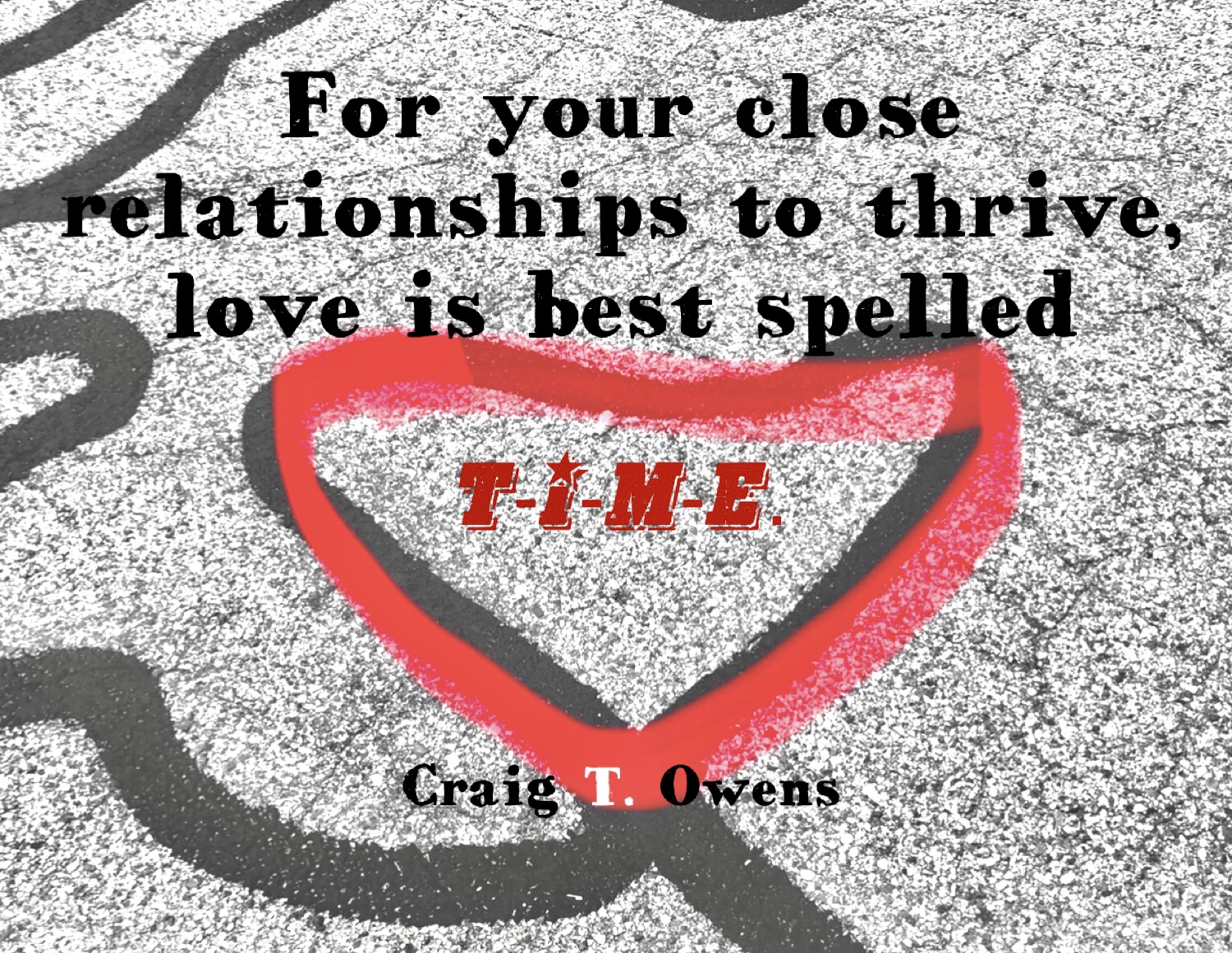
For your close relationships to thrive, love is best spelled T-I-M-E. Make sure you have plenty of it!

5 Love Languages, 7 Days, 1 Couple

Nothing in life stays the same. Nothing. Things are either getting better or deteriorating.

According to the law of entropy, a system will constantly move from order to disorder, unless sufficient energy is used to keep the system in order. More simply put: you and I can’t coast.

  • If you’re married, put energy into finding new ways to cherish your spouse.
  • If you’re a parent, put energy into better parenting skills.
  • If you’re a friend, put energy into deepening that friendship.
  • If you’re an employee, put energy into doing your job better.
  • If you’re a leader, put energy into leading better.

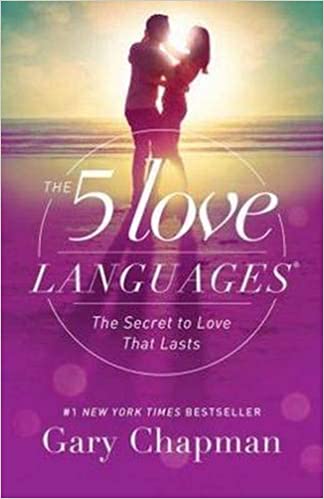
I love this article 5 Love Languages, 7 Days, 1 Couple in WebMD (you can read it here) about a couple skeptical of how Gary Chapman’s book on love languages could improve their marriage. But they decided to try it for one week. They put in the energy and got something better out. You can also read my thoughts about Dr. Chapman’s book by clicking here.

Are you willing to invest a week of energy into your marriage, family, job, or friendships? If you will keep applying energy, you will keep improving. And that’s a lot better than deteriorating!