

Links & Quotes

Don’t give in to F.E.A.R. When the devil’s lies make us afraid, remember that F.E.A.R. stands for false evidence appearing real. The Holy Spirit can help you find the true evidence in God’s Word that will confront and dismantle the false evidence. Check out this full message here. I have lots of new content every week, which you can check out on my YouTube channel.

“Meanwhile it is also necessary for the ruler [pastor] to keep wary watch, lest the lust of pleasing men assail him; lest, when he studiously penetrates the things that are within, and providently supplies the things that are without, he seek to be beloved of those that are under him more than truth…” (Gregory the Great). Check out how T.M. Moore unpacks this quote.

The Culture Translator” newsletter from Axis has this sobering reminder of the dangers of pornography. 

What it is: An eye-opening essay in The Free Press describes the impact of pornography on a teen’s developing brain.

What it tells us: The author of this piece, Isabel Hogben, is a homeschooled high schooler living in Redford City, California. In one of several devastating lines, Hogben details how she stumbled upon PornHub when she was only ten years old, even as her very present mother was “making sure I was eating nine differently colored fruits and vegetables on the daily.” Hogben goes on to explain that today’s pornography depicts a synthetically augmented and physically brutal type of sex that makes Playboy magazine look “like an American Girl Doll catalog.” She notes that teens who have never had a physical sexual encounter can’t know the difference between what fake sex and real sex is supposed to be like, skewing their expectations, and that her peers think selling nudes online is normal. As she examines the way porn causes scientifically-measurable changes in the brain, Hogden concludes that porn is not “content” as much as it is a dangerously addictive substance not unlike street drugs.

“Do nothing that you would not like God to see. Say nothing you would not like God to hear. Go no place where you would not like God to find you. Never spend your time in such a way that you would not like God to say, ‘What are you doing?’” —J.C. Ryle

“Learning to say no is not just about courage, but also learning how to prioritize your life and become more productive.” —John Maxwell
Be The Sermon

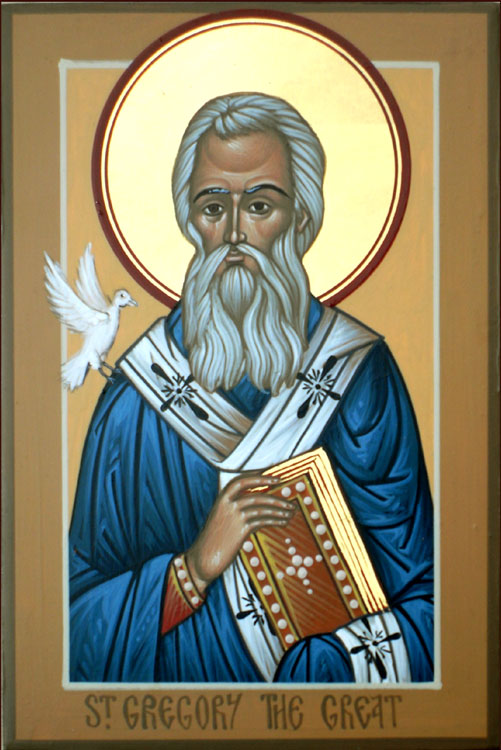
Gregory The GreatIt’s not enough to just preach a sermon, my pastor friend, we must be the sermon, too.

Heed these challenging words from Gregory The Great (ca. 540-604)—

“There are some who investigate spiritual precepts with cunning care, but what they penetrate with their understanding they trample on in their lives: all at once they teaching the things which not by practice but by study they have learnt; and what in words they preach by their manners they impugn. …

“The ruler should always be chief in action, that by his living he may point out the way to those that are put under him, and that the flock, which follows the voice and manners of the shepherd, may learn how to walk better through example than through words. For he who is required by the necessity of his position to speak the highest things is required by the same necessity to exhibit the highest things. …

Every preacher should give forth a sound more by his deeds than by his words, and rather by good living imprint footsteps for men to follow than by speaking show them the way to walk in.” 

Christian Disconnect

The Barna Group just released a study that looks at some of the disconnects between what Christians believe and how they live. You can read the full report by clicking here, but here are the main disconnects:

  • 81% of Christians say Jesus is important to them; but only 18% are committed to developing their relationship with Jesus.
  • 64% of Christians have confessed their sins to God; but only 12% realize how devastating their personal sin is.
  • Lots of Christians participate in “normal” religious activities every week; but “less than one out of ten have talked about their faith with a non-Christian, fasted for religious purposes, and had an extended time of spiritual reflection during the past week.”
  • Most Christians feel “comfortable” in their church; but their comfort level is only surface-deep, with no accountability nor confession.

As a pastor, I place the responsibility for these disconnects squarely on the pastors. On me.

Unless pastors are teaching this stuff—and living this stuff—the disconnects will always remain.

Gregory the Great (ca. 540-604) wrote, “There are some who investigate spiritual precepts with cunning care, but what they penetrate with understanding they trample on in their lives: all at once they are teaching the things which not by practice but by study they have learnt; and what in words they preach, by their manners they impugn. Whence it comes to pass that when the shepherd walks through steep places, the flock follows to the precipice.”

I’m challenged by this, and I’m going to spend some time in prayer this week regarding these disconnects. I want to take a good look at what I’m teaching and living, and allow the Holy Spirit to correct what needs to be corrected.