Listen to the podcast of this post by clicking on the player below, and you can also subscribe on Apple, Spotify, or Audible.
If leaders say or do the right thing in the wrong way, it really becomes the wrong thing. This is why leaders—especially those who have been sheep-bitten and want to bring corrections—need to take a pause.
In that short moment of reflection, the Holy Spirit can help pastoral leaders respond in a way that will bring restoration, not more pain and possibly division.
I talked about this idea from chapter 2 of my book When Sheep Bite on the Leading From Alignment podcast with John Opalewski and Jim Wiegand.
Listen to the podcast of this post by clicking on the player below, and you can also subscribe on Apple, Spotify, or Audible.
All leaders—but especially pastoral leaders—need to work on a better response when we are bitten by a sheep in our pasture. Our natural first response is usually not going to be very helpful for us or for the biting sheep.
When a painful attack suddenly confronts me, I go to the mirror. Instead of asking, “What’s wrong with them that they would bite me like this?” I go to prayer to ask, ‘“Did I do something that provoked this?’’ Sometimes I have literally gone into my bathroom, closed the door, and gotten nose-to-nose with myself to ask this question, and then listened for the Holy Spirit to speak to my heart.
My cousin Dick Brogden wrote, “Critics and skeptics are gifts to us, for in their aspersions they often bring to light a brokenness or a liability early on in its development in us. If we are secure enough to ferret out the truth through the condemnation of others, we remain healthy in the long term as our malady is exposed and dealt with before it becomes to serious.”
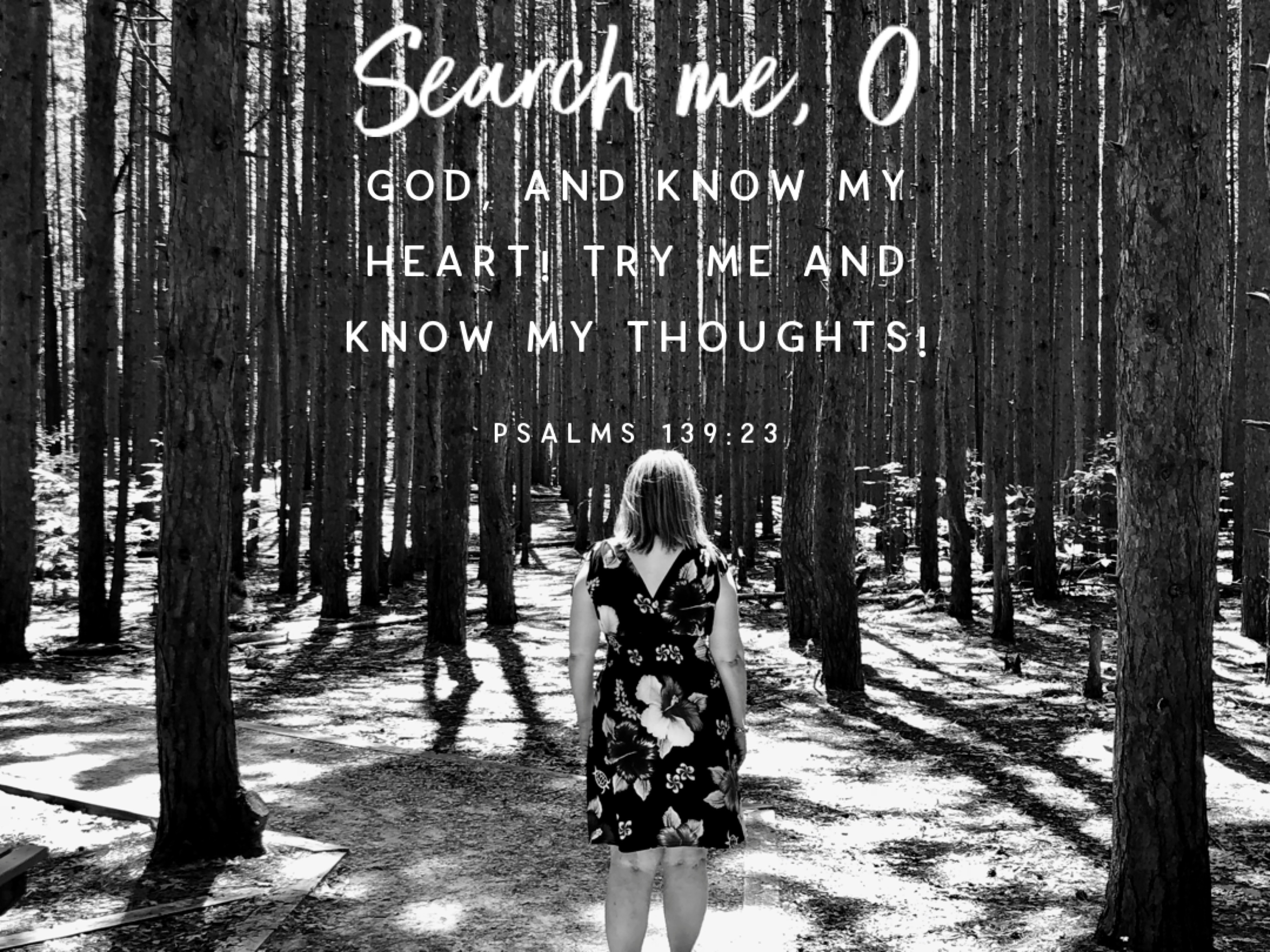
Remember that we are naturally self-protective, so this time of introspection will need to be supernaturally empowered by the Holy Spirit if we are going to see the true prompter of the attack. A prayer I have prayed more times than I can count is, “Search me thoroughly, O God, and know my heart! Try me and know my thoughts! And see if there is any wicked or hurtful way in me, and lead me in the way everlasting” (Psalm 139:23-24 AMPC).
Get a copy of my book here to help you heal from the painful sheep bites, and to learn how to respond better with each new biting experience.
This is a weekly series with things I’m reading and pondering from Charles Spurgeon. You can read the original seed thought here, or type “Thursdays With Spurgeon” in the search box to read more entries.
Listen to the podcast of this post by clicking on the player below, and you can also subscribe on Apple, Spotify, or Audible.
Holy Longings
My soul is consumed with longing for Your laws at all times. (Psalm 119:20)
One of the best tests of a man’s character will be found in his deepest and heartiest longings. You cannot always judge a man by what he is doing at any one time, he may be under constraints that compel him to act contrary to his true self, or he may be under an impulse from which he will soon be free. He may, for a while, back off from that which is evil, yet he may be radically bad. … A man’s longings are more inward and more nearer to his real self than his outward acts—they are more natural in that they are entirely free and beyond compulsion or restraint.
As a man longs in his heart, so is he. I mean not every idle wish, as I now speak, but strong desires of the heart. These are the true life of a man’s nature. You will know whether you yourself are evil by answering this question: To what have you the greatest desire? … So then, dear hearers, your heart longings may furnish you with helps for self-examination, and I beg you to apply them, as things of the heart touch the root of the matter.
From Holy Longings
Jesus was constantly taking us back to the examination of our heart. He knew that “out of the heart come evil thoughts—murder, adultery, sexual immorality, theft, false testimony, slander” (Matthew 15:19). He further demonstrated this when He made anger in the heart the same as murder, and lust in the heart the same as adultery (Matthew 5:21-30).
We can try to change our behaviors all day long, but if we don’t address the heart longings that are prompting those behaviors, we are fighting a losing battle.
Sigmund Freud called them “Freudian slips” when we said or did something that seemed out of character. I think we should call them eye-opening insights—we just had an opportunity to glimpse what heart longing is at the root of that inappropriate word or action. Thankfully, the same Holy Spirit that reveals these carnal longings to us will also lead us to repentance and a heart change that brings about God-honoring heart longings.
Don’t try to excuse or cover up what may have slipped out, but use that as a merciful warning of heart longings that need the sanctification of the Holy Spirit. We are all a work-in-progress, which is why I like to remember the word sanctification by saying it “saint-ification.” Let’s yield to the Holy Spirit to bring out greater saintliness by saint-ifying our heart longings.
Listen to the podcast of this post by clicking on the player below, and you can also subscribe on Apple or Spotify.
Jesus lived out the example of wholly healthy growth. The way Dr. Luke records it, the pinnacle of Christ’s health (and our health too) is seen in our relationships with other people.
Why is relational maturity at the peak of the pinnacle? How else could you know whether you truly have mental, physical, and spiritual health unless it’s put to the test? And the ultimate test is how we react when we’re caught off guard. Our so-called Freudian slips can reveal an area of immaturity. C.S. Lewis reminds us that the suddenness of the provocation that caused the slip didn’t create our immature response, but it actually revealed what is really inside our hearts. Surely our unplanned reactions are a better indicator of our spiritual maturity than our planned actions!
Jesus told us that our “slips” reveal what’s really inside (Matthew 15:19), but are these really unknown to us? If we’re really honest, how many times do we think unpleasant things without saying them or doing them? The Holy Spirit—the Spirit of Truth—knows so well what’s on the inside (Psalm 139:1-4).
When we experience one of these slip ups, the devil loves to pounce! Paul calls it “sin seizing an opportunity” (Romans 7:7-11). But even as sin pounces, Paul assures us, “Therefore there is no condemnation for those who are in Christ Jesus” (Romans 8:1).
What is the “therefore” there for? After the “therefore” the Holy Spirit as the Spirit of Adoption reminds us we are in Jesus and children of God, and the Holy Spirit as the Spirit of Intercession help us pray perfect, childlike prayers. So what comes before the “therefore” must be something that makes us feel unworthy, distant, and condemned.
Paul explains that “we died to sin” (Romans 6:2). That word “died” means to be separated from one thing which brings about the destruction of the other thing. When we are separated from God by our sin we are dead, when are separated from our sin by God we are alive. At that moment of salvation, we stand before Almighty God justified—just as if I’d never sinned. That is irrevocable: God will never go back on that, we will never slip away from His grace. But that moment of salvation also begins a lifelong process of sanctification—or as I like to say it saint-ification.
Remember that pyramid of growth Jesus demonstrated for us? Paul says, “I myself in my mind am a slave”(Romans 7:25). The mind is where the Spirit of Truth begins His maturing, saint-ifying process in us. As our minds are transformed, then our bodies and our mouths can live out a Christlike lifestyle (see Romans 12:1-2). It’s this mind and body transformation that matures our spiritual health, which is then revealed in our relationships with others.
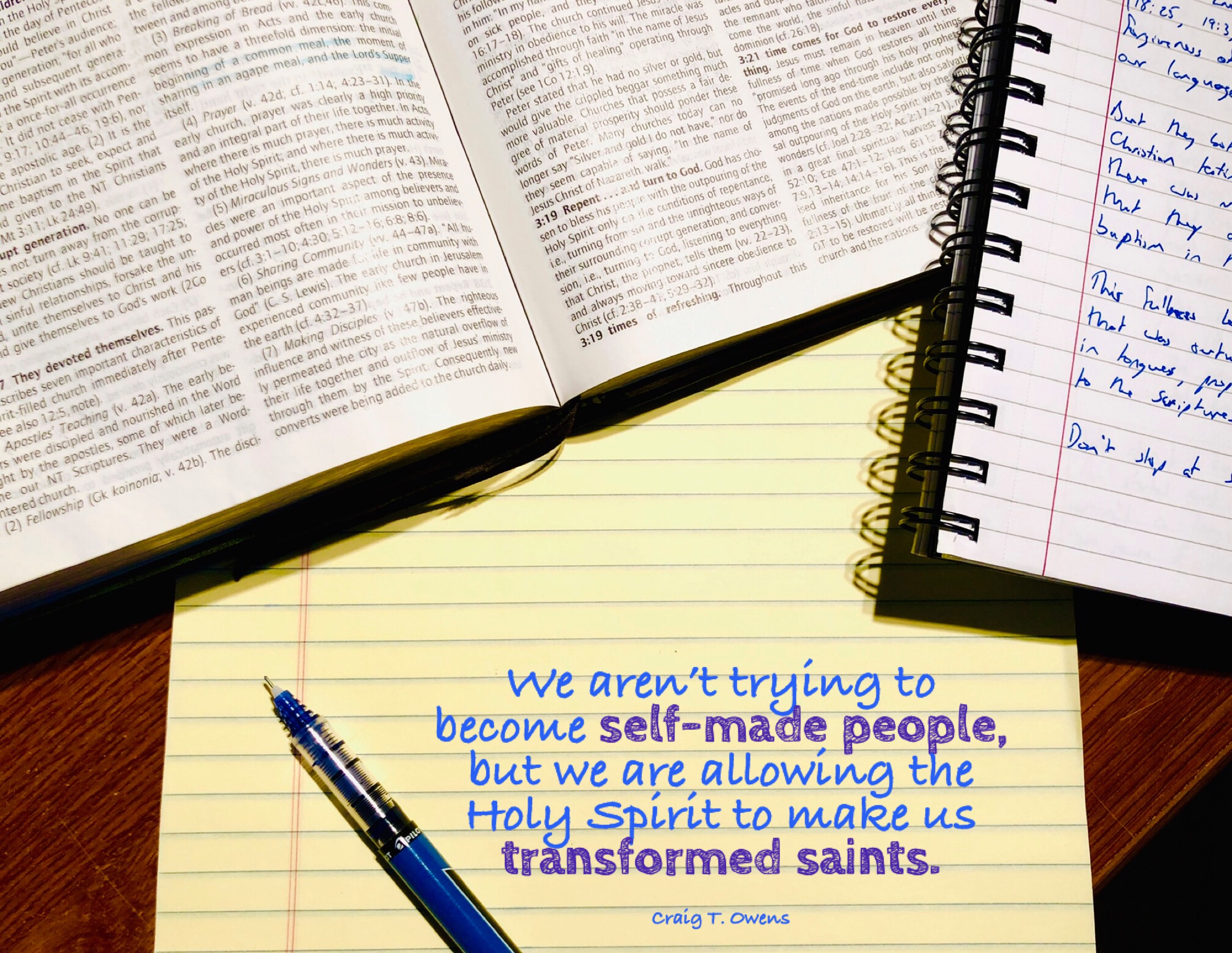
Notice that it is after we have been through this transformation of mind, body, and spirit that Paul tells us the standard for God-honoring living. This is where we see even our unplanned reactions becoming more and more Christ-like (Romans 12:9-21). We cannot live out this Romans 12 mandate solely on our own willpower. We aren’t trying to become self-made people, but instead, we are allowing the Holy Spirit to make us transformed saints. Transformed saints that are known by their unplanned Christlike reactions.
This is why I keep stressing for Christians to not stop at salvation, but to press on to be baptized in the Holy Spirit.








 Craig T. Owens