Listen to the podcast of this post by clicking on the player below, and you can also subscribe on Apple, Spotify, or Audible.
Back in 2014, I was reading through the history of the divided kingdoms of Judah and Israel. The historical accounts of these kingdoms in both the Books of Kings and Chronicles go back-and-forth from kings in the north to kings in the south. I was having trouble keeping them all straight, so I began designing a side-by-side chart to help me.
I had no idea that this chart would be viewed and downloaded by other Bible students literally thousands and thousands of times each year.
You can find all of the download information for this chart by clicking here.
Now [Uzziah] went out and fought against the Philistines, and broke down the wall of Gath, the wall of Jabneh, and the wall of Ashdod; and he built cities in the area of Ashdod and among the Philistines. God helped him against the Philistines.… Under their direction was an army of 307,500, who could wage war with great power, to help the king against the enemy. Moreover, Uzziah prepared for all the army shields, spears, helmets, body armor, bows, and slingstones. In Jerusalem he made machines of war invented by skillful workmen to be on the towers and the corners, for the purpose of shooting arrows and great stones. So his fame spread far, for he was marvelously helped until he was strong. But when he became strong, his heart was so proud that he acted corruptly, and he was untrue to the Lord his God, for he entered the temple of the Lord to burn incense on the altar of incense. (2 Chronicles 26:6-7, 13-16)
King Uzziah became intoxicated by his success, forgetting that God had made him successful. In his pride, he tried to elevate himself into a position that was not intended for him.
This sounds just like the actions of Lucifer, who was also corrupted by his pride and tried to make himself God.
Listen to the podcast of this post by clicking on the player below, and you can also subscribe on Apple, Spotify, or Audible.
Say the word “confrontation” and many people cringe. “I try to avoid confrontations with others,” people will quickly say.
The origin of the word comes from a derivative of the word for “forehead.” The original intent of confrontation was simply putting the facts in front of someone’s face so that they could acknowledge them.
The problem for most of us (myself included) is two-fold:
I don’t like to be confronted with things I may be doing incorrectly or incompletely.
I don’t like making others defensive when I confront them with the things they may be doing incorrectly or incompletely.
As a result, we usually don’t confront others and they usually don’t confront us. Sadly, this can keep us from maturing in areas where we may be able to soar if we could only make some minor changes.
Christians should be especially open to confrontation from a brother or sister. After all, Solomon told us, “Wounds from a friend can be trusted, but an enemy only multiplies kisses” (Proverbs 27:6). And Jesus warned us, “Woe to you when all men speak well of you, for so did their fathers to the false prophets” (Luke 6:26 NKJV).
The best confrontation is self-confrontation in the presence of the Holy Spirit. After we have submitted to that loving spotlight, then we can proceed with our loving confrontation with our brothers and sisters.
Remember this:
The goals of Christian confrontation are restoration and maturity.
We want to see wandering saints return to God’s path, and we want those saints who are immature to blossom into Christ-like maturity that brings glory to God.
I have prepared a flowchart that can help you with a biblical framework for the work of confrontation. Please work through this flowchart slowly and prayerfully. Don’t rush any step, but make sure you can answer an honest “yes” to each question. When you get to the last step, keep in mind these three Ms:
Maturity—self-confrontation and confrontation of others should always be moving us toward maturity.
Mutual accountability—agree to stay involved in this process, with each of you remaining accountable to each other.
Listen to the podcast of this post by clicking on the player below, and you can also subscribe on Apple, Spotify, or Audible.
CEO stands for “chief executive officer” and usually designates the person who is at the top of the organization’s flowchart. Those who occupy that office frequently exhibit a top-down mindset, where everyone below them is only in that position to serve the CEO.
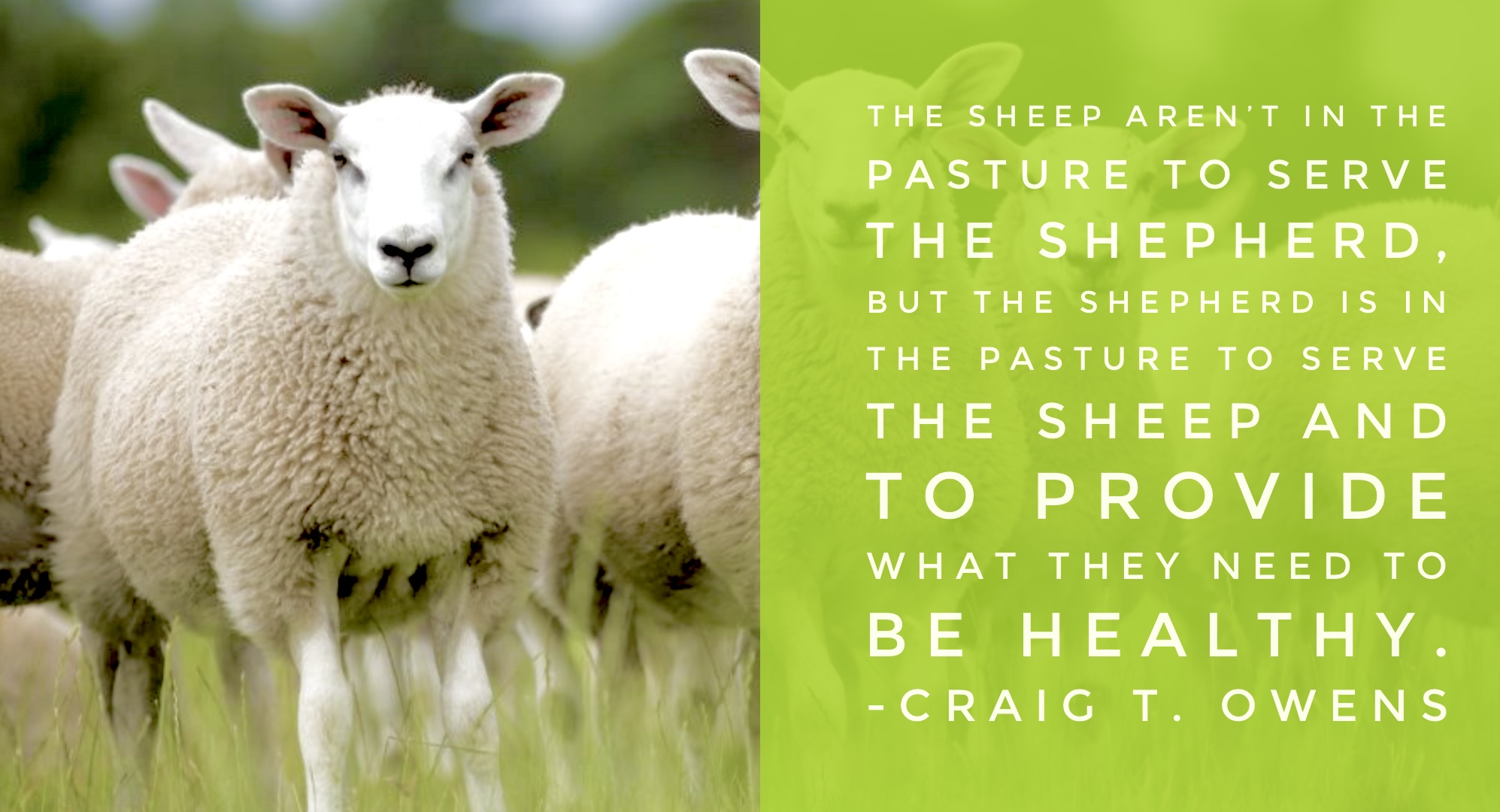
This may work well in the corporate world, but this is not at all the heart Jesus demonstrates toward us. Therefore, it shouldn’t be the mindset or practice of Christ’s under-shepherds—those whom He has called to pastor His sheep. The sheep aren’t in the pasture to serve the shepherd, but the shepherd is in the pasture to serve the sheep and to provide what they need to be healthy.
Check out this conversation I had when I joined a pastoral staff that is using my book Shepherd Leadership as a study guide.
Jesus was confident in who He was and what His Father’s plan was: “Jesus knew that the Father had given Him authority over everything and that He had come from God and would return to God” (John 13:3 NLT).
Yet Jesus also said, “For even the Son of Man came not to be served but to serve others and to give His life as a ransom for many” (Mark 10:45 NLT).
If you are a pastor, you have been charged with caring for the sheep under your care, and not the other way around—
Tend (nurture, guard, guide, and fold) the flock of God that is your responsibility, not by coercion or constraint, but willingly; not dishonorably motivated by the advantages and profits belonging to the office, but eagerly and cheerfully; not domineering—as arrogant, dictatorial, and overbearing persons—over those in your charge, but being examples (patterns and models of Christian living) to the flock (the congregation). (1 Peter 5:2-3 AMP)
Listen to the podcast of this post by clicking on the player below, and you can also subscribe on Apple, Spotify, or Audible.
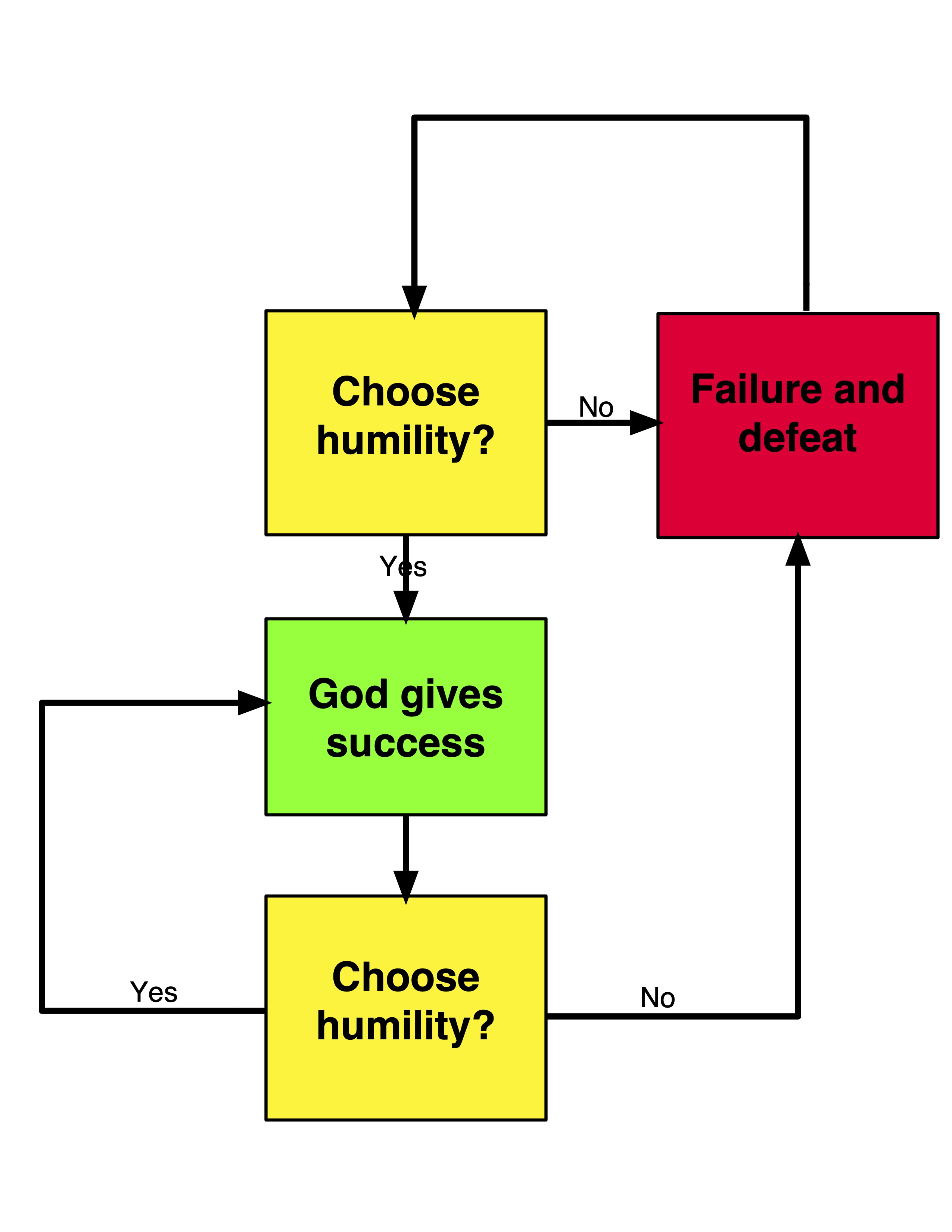
…As long as Uzziah sought the Lord, God gave him success. … But after Uzziah became powerful, his pride led to his downfall… (2 Chronicles 26:5, 16).
Success makes me more vulnerable to pride. Success can distract from the very One who gave me success. I am in danger of losing God’s blessings in the very moment I am enjoying God’s blessings.
Humility has to be an ongoing choice. That choice becomes harder as the successes become bigger or more frequent. But choosing pride in “my accomplishments” will undo all the previous successes.
The only way to keep these blessings is two words: IF ONLY. If only I will continue to remain humble before God and obedient to Him.
Uzziah, sadly, didn’t make that choice. His pride in God’s success led to his downfall.
His son Jotham learned this lesson. Jotham grew powerful because he walked steadfastly before the Lord his God (27:6).
I like the KJV of this verse that says, “Jotham grew powerful because he prepared his ways before the Lord his God.”
Jotham was keenly aware that everything he did was seen by God. He was determined that everything he did would be pleasing in God’s sight. The word “before” in verse 6 means “in front” of or even “before the face.” Jotham didn’t live as though he might face God at the end of his life, but as though he was facing God at every moment of his life.
Notice two phrases in this sentence—grew powerful and walked steadfastly. They are directly tied to each other: Jotham became powerful only because he was determined to live righteously and humbly in God’s sight. The more powerful he became, the more he increased his commitment to live humbly before God’s face.
He did what was right in the eyes of the Lord, just as his father Uzziah had done, BUTunlikehim he did not enter the temple of the Lord (v. 2).
Jotham humbly prepared his ways before the Lord, and when God made him powerful Jotham re-committed to stay humble. Great choice!
I’ll say it again: The only way to keep God’s blessings on my initial humble choice is to continue to choose humility at every moment of success.








 Craig T. Owens