I noticed the other day how Peter, Andrew, James, John, and Matthew responded when Jesus called them to follow Him. With all of these guys, Jesus simply said, “Follow Me.” Here’s how they responded:
At once
Immediately
Got up and followed
They were all busy with their own lives, working on their agendas for their day. But when they heard Jesus say, “Follow Me,” they got moving.
They didn’t delay.
Make other plans.
Ask someone to take over for them.
They simply got up, left what they were doing, and followed Jesus.
They didn’t explain to their family.
Check in with their friends.
Ask Jesus for clarification.
They just followed. At once. Immediately.
Do I follow Jesus like this?
Do I get moving at once when He calls me?
Do I start immediately when He directs me?
Do I follow without explanation when He prompts me?
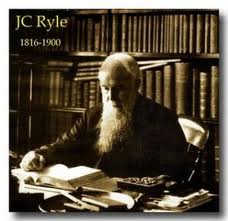
“Men and women who hear the Gospel regularly, I often fear much for you. I fear lest you become so familiar with the sounds of its doctrines, that you gradually become dead to its power. I fear lest your religion should sink down into a little vague talk about your own weakness and corruption, and a few sentimental expressions about Christ, while real practical fighting on Christ’s side is altogether neglected. Oh, beware of this state of mind! ‘Be doers of the Word, and not hearers only.’ No victory—no crown! Fight and overcome!”
If you would like to read more of Ryle’s quotes, check out this blog for a daily dose.
I know they’re out there, but I personally have never met someone who said, “I once followed God, but I have now decided to stop following Him. I’m doing my own thing now, and God has nothing to do with me.”
No, it’s usually a gradual drift away from God, not a deliberate decision. But the sad part of this is: most of these people still think they are following Him.
How does this happen? The prophet Zephaniah has an interesting take. He said that people drifted away because they did nothing. Check this out:
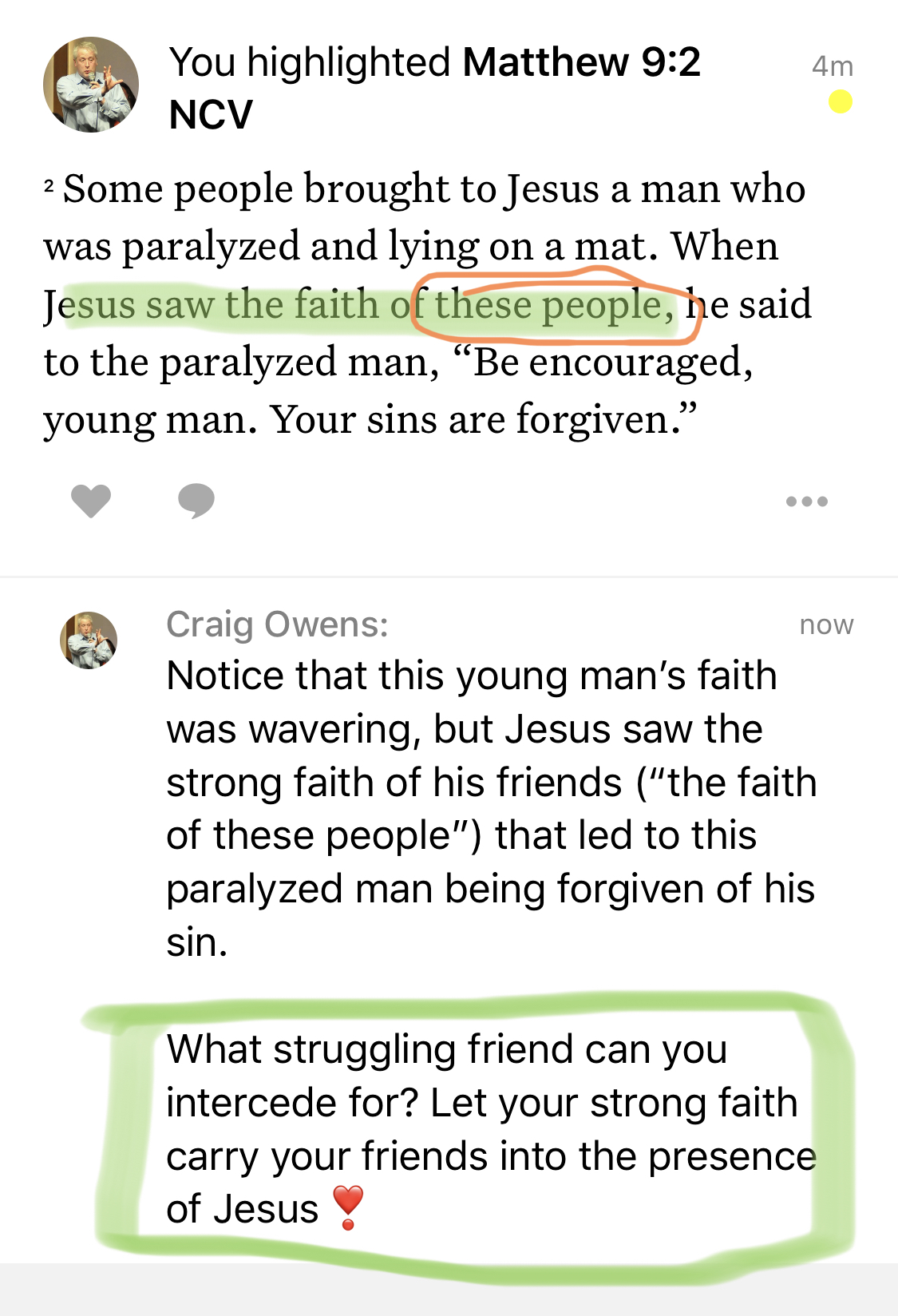
I love the story of the four friends who wanted to get their sick companion in to see Jesus. They had heard about Jesus healing others, and they believed that He would heal their friend too. But when they arrived at the house where Jesus was, they found it packed with people, and the doors and windows blocked by crowds who also wanted to see and hear Jesus. So these four friends made an appointment with one of Jesus’ disciples to come back at a more convenient time.
Ummm, not so much!
These guys were so convinced that Jesus could heal their friend, that they didn’t let crowds stop them. They climbed up on top of the house, ripped off some of the roof tiles, and lowered their friend down to Jesus. I love their inventive faith!
How many times do circumstances stop me?
there were too many people
or not enough people
they seemed busy
they seemed uninterested
it was raining
Oh, so many flimsy excuses that seem to derail my faith!
I love this thought from Charles Spurgeon:
“Faith is full of inventions. The world is constantly inventing; genius serves all the purposes of human desire: cannot faith invent too, and reach by some new means the outcasts who lie perishing around us?
“…Through door, through window, or through roof, let us, breaking through all impediments, labor to bring poor souls to Jesus. All means are good and decorous when faith and love are truly set on winning souls. If hunger for bread can break through stone walls, surely hunger for souls is not to be hindered in its efforts. O Lord, make us quick to suggest methods of reaching thy poor sin-sick ones, and bold to carry them out at all hazards.”
Do you wish the world were better?
Let me tell you what to do.
Set a watch upon your actions,
Keep them always straight and true.
Rid your mind of selfish motives,
Let your thoughts be clean and high.
You can make a little Eden
Of the sphere you occupy.
Do you wish the world were wiser?
Well, suppose you make a start,
By accumulating wisdom
In the scrapbook of your heart;
Do not waste one page on folly;
Live to learn, and learn to live
If you want to give men knowledge
You must get, ere you give.
Do you wish the world were happy?
Then remember day by day
Just to scatter seeds of kindness
As you pass along the way,
For the pleasures of the many
May be ofttimes traced to one,
As the hand that plants an acorn
Shelters armies from the sun.
The advertising slogan by Nike said, “Just do it.” I would modify this to say, “Just do it now.”
There is a power in now. So many times we have a God-idea, and then think/plan/pray ourselves out of acting on that idea. Don’t get me wrong, I think there is great value in planning and praying, but far too many ideas are left undone because they were over-thought and over-planned right out of existence.
When King Hezekiah came to the throne in Jerusalem, the country was a mess. The people were worshiping false gods and had completely abandoned the temple of God. The Bible says that Hezekiah went to work addressing the problem now:
In the first month of the first year of his reign, Hezekiah opened the doors of the temple of the Lord and repaired them.
After the temple had been restored to service, it didn’t matter that the “official” date for the Passover had come and gone. As soon as the temple was ready, Hezekiah said, “Let’s celebrate the Passover now.”
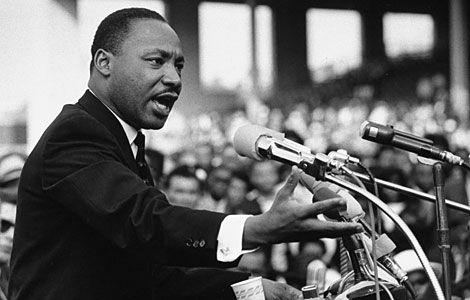
In honor of Martin Luther King Day, here’s what Dr. King had to say about the power and urgency of now:
We are now faced with the fact, my friends, that tomorrow is today. We are confronted with the fierce urgency of now. In this unfolding conundrum of life and history, there is such a thing as being too late. Procrastination is still the thief of time. Life often leaves us standing bare, naked, and dejected with a lost opportunity. The tide in the affairs of men does not remain at flood—it ebbs. We may cry out desperately for time to pause in her passage, but time is adamant to every plea and rushes on. Over the bleached bones and jumbled residues of numerous civilizations are written the pathetic words, “Too late.”
This is a weekly series with things I’m reading and pondering from Oswald Chambers. You can read the original seed thought here, or type “Thursdays With Oswald” in the search box to read more entries.
Integrated Life
God will never allow us to divide our lives into sacred and secular, into study and activity. We generally think of a student as one who shuts himself up and studies in a reflective way, but that is never revealed in God’s book. A Christian’s thinking ought to be done in activities, not in reflection, because we only come to right discernment in activities. Some incline to study naturally in the reflective sense, others incline more to steady active work; the Bible combines both in one life. We are apt to look on workers for God as a special class, but that is foreign to the New Testament. Our Lord was a carpenter; Paul was a weaver. If you try and live in compartments, God will tumble up the time.
From Approved Unto God
You and I don’t have sacred and secular lives. If you are a follower of God, your whole life is holy: it’s all set apart for God. Don’t slack off in areas that you think are secular; treat everything as holy.
Listen to the podcast of this post by clicking on the player below, and you can also subscribe on Apple, Spotify, or Audible.
I love this short story in Judges 13. There’s this woman, who for whatever reason, cannot have a baby. The Bible doesn’t say whether she had multiple miscarriages or just simply couldn’t get pregnant. Perhaps her husband’s body wasn’t “cooperating” in the process. In any case, this is a couple who desperately wants a child to carry on their family line, but they have been frustrated.
And then an amazing thing happens!
There must have been countless couples who were childless, but an angel from God shows up to this barren woman and says, “You are going to have a baby boy!” This thrilled (and probably somewhat dazed) mother-to-be runs to tell her husband Manoah what has just happened.
We know from the Book of Hebrews that the definition of faith is being sure of what we hope for and certain of what we do not see. But how do we express this faith? … this hope? … this certainty in unseen things?
It starts with our everyday vocabulary choices.
Look at Manoah’s vocabulary. When he hears this news from his wife, he doesn’t say, “Yeah, right!” Instead, he prays this incredible faith-filled prayer:
“O Lord, I beg You, let the man of God You sent to us come again to teach us how to bring up the boy who is to be born.”
Not: “I need more proof.” Or even: “A child.” But: “Theboy that is to be born.”
God answers this prayer and the angel appears again. Once again Manoah’s faith-filled vocabulary is on full display for us:
“When Your words are fulfilled, what is to be the rule for the boy’s life and work?”
Not: “If.” Or even: “I hope.” But: “When Your words are fulfilled.”
What a great example from Manoah!
Is there something for which you are waiting on God? Do you feel like He’s given you an assurance in your heart for this? Then change your vocabulary—let it be faith-filled vocabulary.
Change your Ifs to Whens to show that you are confident of what you hope for and certain of what you do not see.
I walked into a coffee shop for a meeting this morning and someone who had been in Biggby before me was wearing the same perfume that Betsy wears. It made me think of her throughout my meeting. Without even realizing it, some anonymous woman left something nice behind for me.
Here’s a thought…
…how about if we find a way to leave something nice behind everywhere we go?
A few thoughts on how we could do this:
Pick up a piece of trash blowing across the parking lot (even if it’s not your trash).
Wipe the water off the restroom counter (even if you didn’t splash it there).
Smile at the over-worked, under-paid server who is serving you (maybe even leave a larger tip).
Straighten up the magazines in the waiting room (even if you didn’t mess them up).
Put the toys back in the toy box (even if your kids didn’t play with them).
Restack the fallen cups (even if you didn’t knock them over).
Do something unexpected.
Leave everything a little better than you found it.
Q: What’s the difference between ignorance and apathy?
A: I don’t know and I don’t care.
Corny, I know, but it does make a point.
For followers of Jesus Christ, sometimes ignorance of a situation is acceptable, but apathy is never an option. In other words, you may not know what’s happening around you, but once you know, you’re on the hook. You cannot do nothing. Especially when people need help.
Nowhere in Scripture will you ever see something like this:
“If you feel like helping the poor, go for it. If you don’t feel like it, that’s okay.”
“It’s okay to look away from the hurting.”
“If you’re too busy to get involved, God will understand.”
“If it makes you uncomfortable to see that, just pretend you didn’t see it.”
Nope. I cannot do that and call myself a follower of Jesus.
Anyone, then, who knows the good he ought to do and doesn’t do it, sins. (James 4:17)
The consistently righteous man knows and cares for the rights of the poor…. (Proverbs 29:7 AMP)
The godly care about the rights of the poor; the wicked don’t care at all. (Proverbs 29:7 CEV)