Thursdays With Spurgeon—Jesus Gives His Bride Good Gifts

This is a weekly series with things I’m reading and pondering from Charles Spurgeon. You can read the original seed thought here, or type “Thursdays With Spurgeon” in the search box to read more entries.

Jesus Gives His Bride Good Gifts

     Our Lord Jesus Christ has nothing that He does not give to His church. He gave Himself for us and He continues, still, to give Himself to us. He receives the gifts, but He only acts as the conduit through which the grace of God flows to us. It pleased the Father that in Him should all fullness dwell, and of His fullness have we all received. …  

     These gifts, given in the form of men, are given for men [Ephesians 4:8-13]. Churches do not exist for preachers, but preachers for churches. … My brothers and sisters in the church, we who are your pastors are your servants for Christ’s sake. Our rule is not that of lordship, but of love. …  

     See how wonderful, then, was that ascension of our Lord in which He scattered down mercies so rich and appropriate among the sons of men! From His glorious elevation above all heavens He sends forth pastors, preachers, and evangelists, through whom the Holy Spirit works mightily in those who believe. By them He gathers the redeemed together and builds them up as a church to His glory!

From Our Lord’s Triumphant Ascension

Both the apostle Paul and King David from whom he quotes (see Psalm 68:18-19) see God’s victories as our victories. In the same letter to the church at Ephesus, Paul says that Jesus gave up everything for His Bride—the Church.

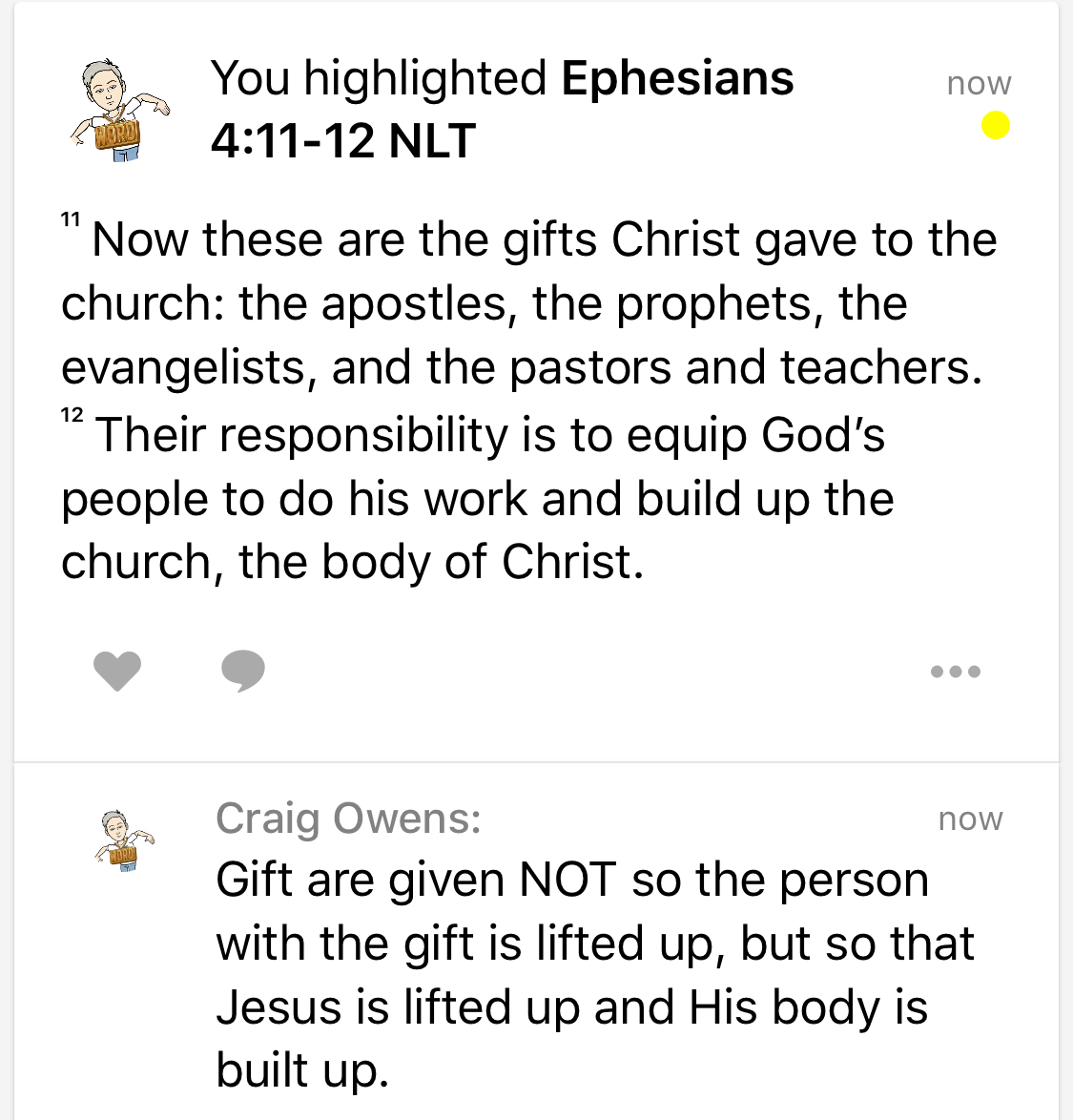
To bring His Bride into the fullness of her radiance, Jesus gave gifts to the Church in the form of people—apostles, pastors, evangelists, teachers, and servants that will help build up the Church and bring her into full maturity. 

Don’t ever downplay the important role that you, dear Christian, play in His Bride. YOU are a gift from Jesus and a gift to His Bride!
11 Quotes From “A Sketch Of The Life And Labors Of George Whitefield”

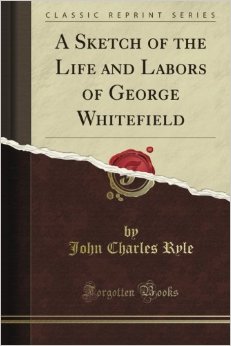
A Sketch of the Life and Labors of George WhitefieldYesterday I tweeted…

And that’s definitely true in the book J.C. Ryle wrote: A Sketch Of The Life And Labors Of George Whitefield. You can read my full book review by clicking here. Below are some of the quotes I highlighted in this interesting biography.

“Informing your opinion of the comparative merits of Christian men, never forget the old rule: ‘distinguish between times.’ Place yourself in each man’s position. Do not judge what was a right course of action in other times, by what seems a right course of action in your own.”

“In the thirty-four years of his ministry, it is reckoned that [Whitefield] preached publicly eighteen thousand times. … No preacher has ever retained his hold on his hearers so entirely as he did for thirty-four years.”

“He seemed to live for only two objects—the glory of God, and the salvation of immortal souls. He raised no party of followers who took his name. He established no system, like Wesley, of which his own writings should be cardinal elements. A frequent expression of his is most characteristic of the man: ‘Let the name of George Whitefield perish, so long as Christ only is exalted.’” 

“He was a man of extraordinary catholicity and liberality in his religion. He knew nothing of that narrow-minded policy which prompts a man to fancy that every thing must be barren outside his own camp, and that his party has got a monopoly of truth on heaven. He loved all who loved the Lord Jesus Christ in sincerity. He measured all by the measure which the angels of God use —‘Did they possess repentance towards God, faith towards the Lord Jesus Christ, holiness of conversation?’ If they did, they were as his brethren. His soul was with such men, by whatever name they were called.”

“Whitefield preached a singularly pure gospel. Few men ever gave their hearers so much wheat and so little chaff. … This, you may be sure, is the corner-stone of all preaching that God honors. It must be predominantly a manifestation of truth.”

“To make easy things seem hard is easy, but to make hard things easy is the office of a great preacher.” —Archbishop Usher

“He is the best orator who can turn men’s ears into eyes.” —Arabian Proverb

“It was no uncommon thing with him to weep profusely in the pulpit. Cornelius Winter goes so far as to say that he hardly ever knew him to get through a sermon without tears.”

“Once become satisfied that a man loves you, and you will listen gladly to anything he has got to say. And this was just one grand secret of Whitefield’s success.”

“He founded no denomination among whom his name was embalmed, and his every act recorded, as did John Wesley. He headed know mighty movement against a Church which openly professed false doctrines, as Luther did against Rome. He wrote no books which were to be the religious classics of the millions, like John Bunyan. He was a simple, guileless man, who lived for one thing only, and that was to preach Christ. If he succeeded in doing that effectually, he cared for nothing else. He did nothing to preserve the memory of his usefulness. He left his work with the Lord.”

“The truth, I believe, is, that the direct good Whitefield did to immortal souls was enormous. I will go farther. I believe it is incalculable.” 

A Brief Bio Of Smith Wigglesworth

WigglesworthTo say that Smith Wigglesworth was a unique minister of the Gospel is an understatement! I doubt that you can find anyone else in history quite like Wigglesworth, but what an amazing example he left for us of someone totally sold-out to God!

This video biography by Roberts Liardon is a fairly accurate picture of this great man’s life. You can also get to know Smith Wigglesworth by reading his sermons. I have posted several reviews of books which contain his sermons, as well as extensive quotes from his those sermons:

You may also be interested in checking out my family’s connection to this amazing evangelist.

Enjoy this video—

7 Quotes From “The Ministry Of God’s Word”

The Ministry Of God's WordThe Ministry Of God’s Word by Watchman Nee is a MUST READ for all pastors, preachers and evangelists. You can read my book review by clicking here. Over the next few Fridays, I’m going to share some powerful quotes from this book.

“In incarnation … the Word instead was dressed in Man; therefore it had human feeling, thought and opinion, though it remained God’s Word. … In this do we find a great principle of the Bible: that it is possible for the Word of God to be unimpaired by man’s feeling. The presence of human feeling does not necessarily ruin God’s Word; it does so only when such feeling is inadequate. Herein lies a tremendous problem. The great principle is that human elements must not be of such a nature as to hinder God’s Word.”

“God will work in man until his human elements do not damage God’s Word. … The Holy Spirit so operates in man, so controls and disciplines him, that the latter’s own elements can exist without impairing God’s Word; on the contrary, they fulfill it.”

“To be the one who delivers God’s Word we must be pruned and refined. God has to lay aside those whose human makeup contains many uncleannesses, fleshly things, and matters condemned by God. Others He has to bypass because they have never been broken before God, or their thoughts are not straightforward, or their lives are undisciplined, their necks stiff, their emotions untamed, or they have a controversy with God.”

“We need to be daily disciplined. Any defect in us will defile the Word and destroy its power. … The greatest difficulty we confront in preaching the Word is not whether the subject is proper or the phraseology correct, but whether the man is right.”

“God chooses men to be His ministers in order that His Word may carry a human flavor.” 

“The Bible is not a collection of devotional articles; it is men performing or living out the Word of God.”

“God puts His Word in us that we may meditate on it, feel after it, be afflicted by it, or rejoice in it, before the Word is released by us. … Thus the ministry of the Word is not the mere delivery of sermons we memorize. We must allow the Word to come to us, to drill and to grind us, until it flows out with—yes, our personal elements in it—and yet not spoiled or corrupted in the least. The Lord wishes to use us as a channel of living water.”