Thursdays With Oswald—A Friend Of God And Enemy Of The World

This is a weekly series with things I’m reading and pondering from Oswald Chambers. You can read the original seed thought here, or type “Thursdays With Oswald” in the search box to read more entries.

A Friend Of God & Enemy Of The World 

     The Bible says that “God so loved the world, that He gave His only begotten Son…,” and yet it says that if we are friends of the world we are enemies of God. “Know ye not that the friendship of the world is enmity with God?” (James 4:4). The difference is that God loves the world so much that He goes to all lengths to remove the wrong from it, and we must have the same kind of love. Any other kind of love for the world simply means we take it as it is and are perfectly delighted with it. … It is that sentiment which is the enemy of God. Do we love the world in this sense sufficiently to spend and be spent so that God can manifest His grace through us until the wrong and the evil are removed? 

From Biblical Psychology

  • Do I love the world the way God so loves the world?
  • Am I willing to let Him use me to change the world?
  • Am I willing to spend and be spent for God’s glory?

Jesus said, “You are salt and light.” But my salt does the world no good at all unless I allow the Holy Spirit to shake it out of me. And the light doesn’t benefit anyone if my apathy is not allowing the love of God to shine brightly through my life.

I must be a friend of God and an enemy of the evil in the world which keeps anyone from coming into a relationship with Him.

Taunting

Coaches and parents especially don’t encourage those under their care to taunt their opponents. But the Bible does!

Seriously!

As a part of our P119 Spiritual Workout series, we looked at the section called Waw yesterday—

May Your unfailing love come to me, O Lord, Your salvation according to Your promise; then I will answer the one who taunts me, for I trust in Your Word. (Psalm 119:41-42)

“I will answer the one who taunts me.” How exactly do you answer the taunter? The word for answer here in Hebrew comes from the idea of “singing tunefully.”

You know how it feels when you have that perfect zinger—that great one-liner as a comeback to someone who’s tweaked you?

And you know how you don’t just say that zinger, but you add a musical note to it as well, just to add a little emphasis?

Well, this is what Christians can do to the devil when he taunts them! The book of Revelation tells us that satan is the accuser (the taunter) of the Christians, and that we overcome him by the blood of Jesus and the word of our testimony. But the psalmist says it’s not just plain old words, but the lilting sing-song, tuneful reply to his taunt.

We reply to our enemy’s taunts with a Scriptural-based tweak of our own. We can remind him of our total forgiveness in Christ. We can tell him how God loves us, and sent His Son to die for our sins, and how the Holy Spirit has been given to us as a deposit guaranteeing that we are now in Christ. We can use the Bible to tunefully taunt the taunter with the truth of God’s Word.

Don’t just silently take it when the enemy accuses you. Don’t get mad. But shut him up by answering him with a song right from God’s Word!

If you have missed any of the messages in our P119 series, you can access them all by clicking here.

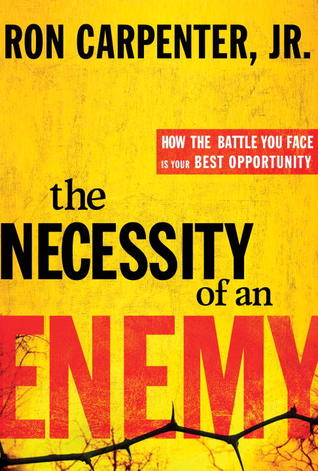
The Necessity Of An Enemy (book review)

Have you ever wished that all of your enemies were totally defeated? Have you ever prayed to ask God to defeat all of your enemies? I’ll be honest with you: I have. But according to Ron Carpenter, Jr. that may not be the best prayer for you. In fact, his book might say the exact opposite; it’s called The Necessity Of An Enemy.

Ron uses his personal story of being attacked and personally vilified to show us—as the subtitle states—how the battle you face is your best opportunity. Near the beginning of the book, Ron states:

“I have some important news for you: to fulfill your purpose and stay true to your calling, you’ll need to understand the reason for enemies. If you do that, then when they rise up against you, you will quickly recognize what’s happening.” 

Many of the enemies we face are to prepare us for the greater purpose for which God created us. We cannot simply run away from every battle or ask God to subdue every enemy we face, because those battles and enemies may be preparing us for something greater. Think about David: before he fought Goliath, he had to learn his stone-slinging skills by fighting off a lion and a bear. What if he had asked God to simply scare away the lion, or strike the bear dead? What would David had learned from that?

This book is divided into several sections, and each section has several very short chapters. This format, combined with the study guide at the back of the book, makes it ideal for applying the principles slowly in your life, or for having a great small group discussion with others.

God wants you to be victorious, but He doesn’t want you to take shortcuts to get there. He allows enemies to help build your spiritual skills, and The Necessity Of An Enemy can be a great part of your battle strategy as well.

I am a Waterbrook book reviewer.

When Friends Wound

Bill Hybels wrote in Axiom, “The nature of human beings is such that we tend not to drift into better behaviors. We usually have to be asked by someone to consider taking it up a level.” I have learned that this is true not only for behaviors but for crucial decisions too.

I’m in the process of contemplating some major decisions for my life. During this time I am grateful for friends that can give me their counsel and can share with me their wisdom.

I’m also grateful that they wound me.

Huh?

Yes, I am glad for friends who wound me!

The wise King Solomon wrote, “Wounds from a friend can be trusted, but an enemy multiplies kisses” (Proverbs 27:6). So true. Those who don’t care about you don’t ask the tough questions; those who care about you challenge your logic and your reasoning. Those who don’t care about you let the little things slide; those who care about you challenge you to not settle for the status quo.

The New Living Translation renders this verse, “Wounds from a sincere friend are better than many kisses from an enemy.I would much prefer to be wounded by a friend during the decision-making time, than to have lots of so-called love upfront, only to walk smack-dab into a huge problem later. Wouldn’t you? So when I have an important decision to make, I get around people who love me enough to wound me.

And not only for the big decisions, but I need sharp friends for the day-in-day-out things that will help me “take it up a level.” Solomon also said, “Become wise by walking with the wise; hang out with fools and watch your life fall to pieces” (Proverbs 13:20, The Message).

Many years ago a Romanian friend shared with me a proverb from his homeland: “Show me who your friends are and I will tell you who you are becoming.”

What does your choice in friends say about you? Do your friends love you enough to wound you? Do your friends help you take it to the next level?

Are You A Trustworthy “Enemy”?

Sticks and stones may break my bones but words will never hurt me, right? Wrong—words hurt!

At times you may think, “Well, I may have deserved that one.” Perhaps you did or said something inappropriate, and the other person responded out of their anger or frustration or embarrassment. But what about when you’ve done nothing wrong? Those sharp, wounding words seem to come out of the clear blue, from someone you never would have expected to be so hateful—angry, spiteful words deliberately hurled at you like stones.

David was forced to hide in Philistine territory to get away from Israelite King Saul. This was smart on David’s part because the Philistines had been ancient enemies of the Israelites, so Saul would never cross into Philistine territory to look for David. David asked King Achish for refuge in his territory, and Achish gave him the city of Ziklag in which to settle.

There’s a cliché that says, “The enemy of my enemy is my friend.” Achish was Saul’s enemy, so David could have assumed that Achish was his friend (the enemy of David’s enemy).

But here’s the important point—David didn’t consider Saul his enemy. Saul may have thought David was his enemy, but David didn’t reciprocate. David didn’t treat Saul as an enemy, but neither did David treat Achish as a friend.

Yet the Bible records an amazing statement: Achish trusted David (1 Samuel 27:12). Neither Saul nor Achish could ever claim that David slandered them, maligned their character, or did them any harm at all.

How could David do this? How could he keep from lashing out at the one who hurled insults at him (Saul) or the one who was his ancient foe (Achish)? David asked God to help him—

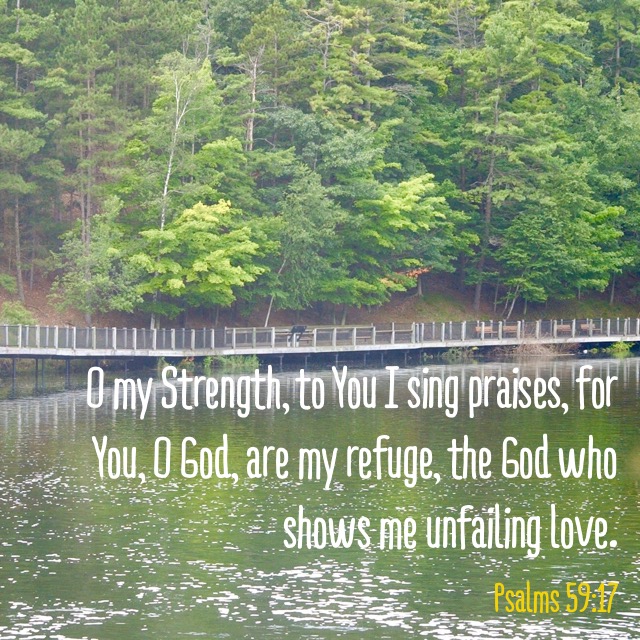
Fierce men conspire against me for no offence or sin of mine, O Lord.
I have done no wrong, yet they are ready to attack me.
Arise to help me; look on my plight!
(Psalm 59:3-4)

I see three great life applications when you are wrongly attacked or slandered:

  1. Don’t treat those who criticize and slander you as an enemy.
  2. Don’t find the enemy of your enemy and call him a friend.
  3. Do acknowledge your hurts and take them to God.

You don’t have to befriend your foes, but neither do you need to lash out at those who are falsely attacking you. Let God arise to help you, and may even your enemies find you trustworthy!