Distinguishing

DistinguishingA week ago I blogged about why some people avoid reading some of the Old Testament books because they seem tedious, or even out-of-date. But if you look at the Old Testament through the light of Jesus, you will find a rich beauty in its pages.

In Leviticus 11 God lists all kinds of food that is considered clean or unclean, and the proper ways to prepare and eat certain foods so as to not become unclean.

I believe one of the reasons God gave the commands for clean and unclean food was to cause His people to pause. Instead of just gobbling up what was in front of them, without any thought as to what it was, they would have to slow down to distinguish. God even said, “You must distinguish” (Leviticus 11:47).

Slowing down gives time for thankfulness too. How many times do I grab whatever is close by when I’m hungry? I shove anything in my mouth just to satisfy an immediate hunger, but there is no distinguishing, no thought, and no gratitude.

If I were to pause long enough to distinguish, how much healthier and grateful might I be?

Dinner That’s More Than Dinner

The apostles returned to Jesus from their ministry tour and told Him all they had done and taught. Then Jesus said, “Let’s go off by ourselves to a quiet place and rest awhile.” He said this because there were so many people coming and going that Jesus and His apostles didn’t even have time to eat. So they left by boat for a quiet place, where they could be alone. (Mark 6:30-32 NLT)

Sometimes dinner is more than dinner. It’s not just food for our physical bodies; it can be so much more.

The apostles returned from their first ministry assignment. They were so excited to come back and tell Jesus how incredible their time had been. They breathlessly rushed into the house where Jesus was waiting for them. “Master,” Peter started, “You should have seen how Andrew…” and he was cut short by a new visitor.

Next James tried, “Whoa, it was so cool when we…” and yet another distraction.

Time and time again their stories and questions and concerns were interrupted by the busyness of life and ministry. In fact, it got so chaotic that the disciples couldn’t even eat their food, except in quick gulps between visitors.

Finally, Jesus said, “Guys, let’s get out of here. I really want to hear about your ministry. I want to debrief a little with you. And, frankly, we’re all hungry and could use a quiet dinner. Let’s go someplace to hang out together.” Now that’s more than a dinner!

Check out the advantages of simply eating together:

  • Families who eat dinner together eat healthier.
  • Families who eat dinner together have higher communication skills.
  • Children in families who eat dinner together perform better academically.
  • Children in families who eat dinner together are less likely to try cigarettes, illegal drugs, or alcohol.

I love our family mealtimes—it is one of the best times to catch up on what’s happening with everyone. Last night we were joined at dinner by a young couple from our church. After dinner, the kids were off playing and Betsy and I could have a quiet conversation just with our friends. We talked about the newlyweds’ adjustment to marriage, what makes a good church, education, career, china patterns, and the way God speaks to us. We laughed and dreamed and talked about dreams. It was fantastic!

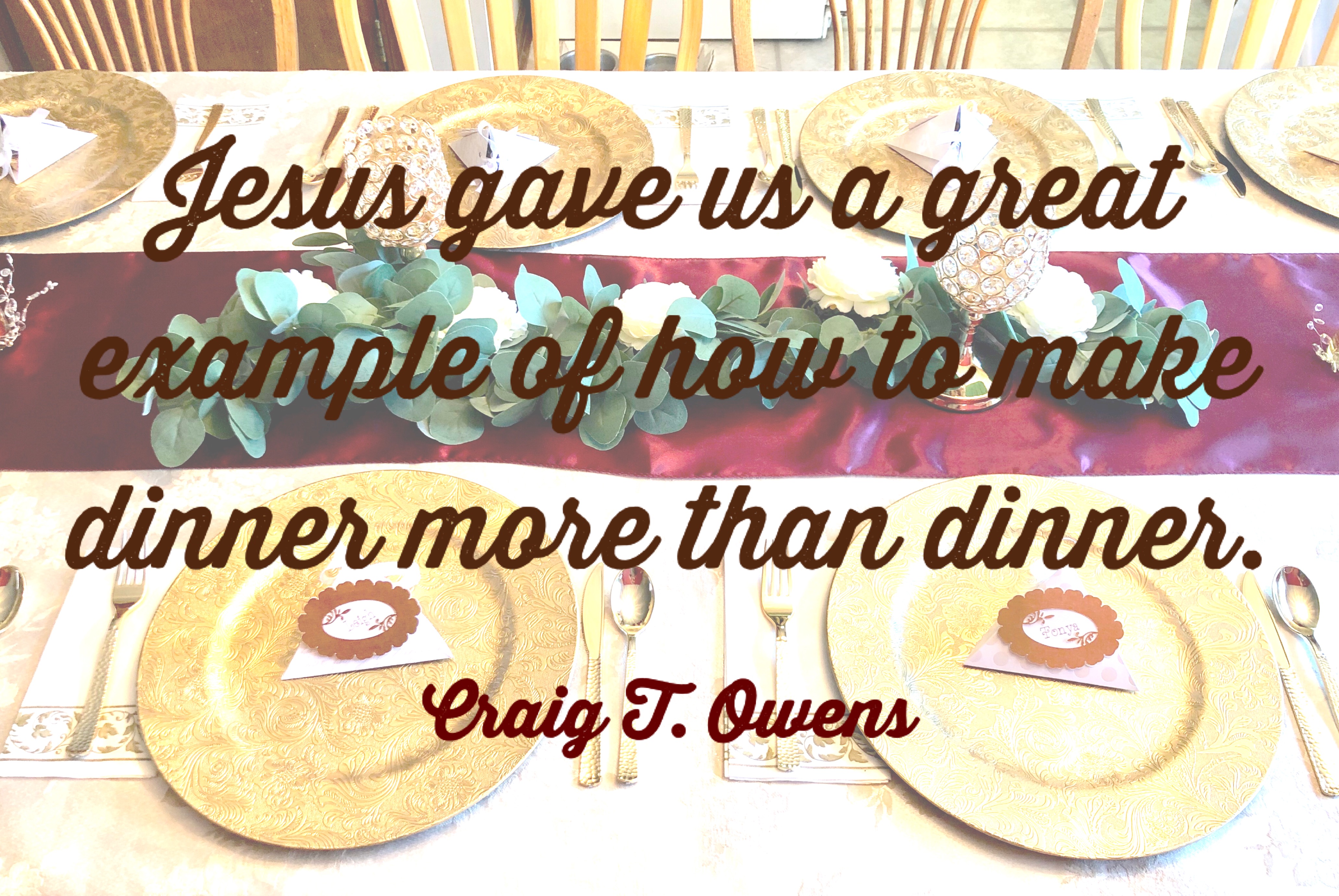
Turn off the TV. Make a healthy dinner. Set aside time to eat with family and friends. Jesus gave us a great example: “C’mon, friends, I really want to spend some quiet time with you.”

So here’s to dinners that are more than dinners.

Spiritual Cross-Training

Several years ago the term “cross-training” became more popular in physical fitness circles. The idea was that training or working out in a secondary sport better prepared the athlete for their primary sport. For example, a long-distance cyclist playing basketball would help develop some of the fast-twitch muscles needed for quick bursts on the bike. This was valuable insight and has helped many athletes excel.

It’s just as true spiritually.

The Apostle Paul encourages us to, “Carry each other’s burdens.” No small task in itself. In fact, that usually requires some very heavy lifting. But if I’m going to be prepared for the heavy lifting, I’ve got to put in some spiritual cross-training time.

It’s no secret that if I don’t eat right, my body doesn’t have the fuel to burn. If I don’t sleep enough hours, my body doesn’t have the stamina to function properly. If I’m not handling stress right, my mind and emotions will be clouded in their processing capabilities.

All of these areas are just as true spiritually. If I’m not getting the right spiritual food, rest, and peace, I’m going to break down. I won’t be any good to myself or others.

In the same burden-carrying / cross-training passage, Paul says, “Brothers, if someone is caught in a sin, you who are spiritual should restore him gently. But watch yourself, or you also may be tempted.”

Yesterday I did some cross-training. I was having lunch with a B.T.D.T. pastor friend (been there, done that). I was soaking up his counsel on vision-casting for my church, enjoying his encouragement for the road ahead of me, and just generally being filled up.

As our lunch was wrapping up, I received a call from another friend who needed help. This friend was in trouble and needed me to help shoulder a burden. I spent the next three hours doing some very heavy lifting.

Here’s the deal: if I hadn’t been doing some spiritual cross-training to prepare myself, I may not have been able to lift that burden. Or, worse yet, I may have been tempted to take shortcuts and fall into the same trap as my struggling friend.

It doesn’t always happen back-to-back like this. But I know the joy of being able to carry a heavy burden for a brother because I have done my cross-training time, and I (unfortunately) also know the heartache of not being a very effective lifter because I didn’t make the time for cross-training.

We never know when we’ll be called upon by a friend. So we need to stay in tip-top spiritual fitness all the time. Your spiritual cross-training regime should include time with God’s Word and time in prayer; reading good books; spending time with encouraging, uplifting people; plenty of rest, good food, and physical exercise; and an attentive ear to those in need.

Cross-train regularly so you can be a great burden-lifter when a friend-in-need calls on you.

A Healthy Breakfast

Listen to the podcast of this post by clicking on the player below, and you can also subscribe on AppleSpotify, or Audible.

Health experts say breakfast is the most important meal of the day. Your body has been without food (or fasting) during the hours you are asleep, so in the morning you are breaking your fast = break-fast.

Do you want to lose weight? Eat breakfast. Studies show that those who do best on their diets eat breakfast every morning.

Do you want to fire up your metabolism to burn more calories during the day? Eat breakfast. The way you stoke your body’s engine in the morning determines how it will run all day.

Do you want to maintain a stable blood sugar level so you don’t get sleepy mid-morning? Eat breakfast. A good breakfast regulates your insulin and blood sugar levels.

Do you want to learn more? Eat breakfast. Studies show those who eat breakfast regularly have longer attention spans and greater learning capacities.

What you put in your body in the morning determines the course of the rest of your day.

What you put in your mind in the morning determines the course of the rest of your day, too.

Even if you’re not a “morning person” your mind is highly receptive in the hours right after you wake up. So a healthy mental breakfast goes a long way toward how you will deal with the situations that face you throughout your day.

Just a few things to consider—

  • What’s on your wake-up playlist in the morning? Not-so-cheery headline news? Coarse radio hosts with crude humor? Music with lyrics that are not very uplifting? A harsh buzzer? Perhaps you could rethink your morning mental breakfast with something more positive and affirming.
  • How do you speak to yourself when you wake up? “Ugh, I just gotta get through today”? “I need a vacation”? “Grrr, I hate my job”? Try thinking instead of all of the blessings you have: a roof over your head, a bed of your own, clothes to wear, a family to love, and a family that loves you.
  • How do you speak to others when you wake up? “Leave me alone”? “<Grrrr!>”? Maybe you could serve others the good mental breakfast they need with some kind, encouraging words.
  • What fuel do you put in your mind? Talking heads on the morning TV shows? Your horoscope? Perhaps switching to something more substantial would help fuel your mind for the challenges you are going to face today.

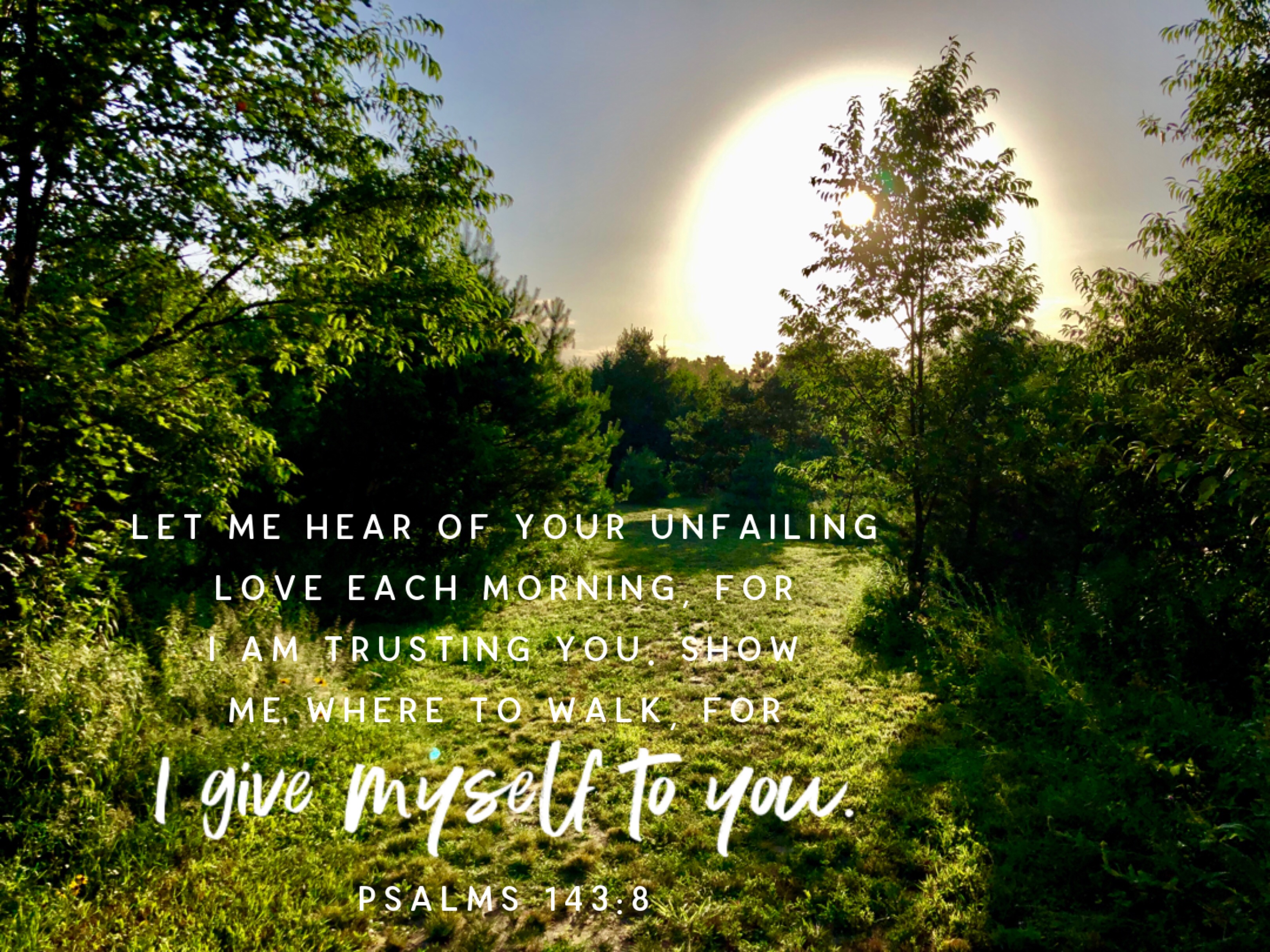
The psalmist David had a God-diet each morning, “Let me hear of Your unfailing love each morning, for I am trusting You. Show me where to walk, for I give myself to You” (Psalm 143:8, The Living Bible).

Jesus had a healthy mental breakfast, too: “Very early in the morning, while it was still dark, Jesus got up, left the house and went off to a solitary place, where He prayed” (Mark 1:35).

So let me ask you: What’s your morning mental breakfast like? do you need to make a diet change? I think a few tweaks and you will begin to see some remarkable changes for the better! Try it out and let me know.

►► Would you please prayerfully consider supporting this ministry? My Patreon supporters get behind-the-scenes access to exclusive materials. ◀︎◀︎

Heart Food

I was running from meeting to meeting, and when I got done I was hungry. So a quick stop into a gas station for a Diet Pepsi and… well, my first impulse was to grab candy or chips. It took no small amount of willpower to make myself grab a healthier alternative.

One of the top rules for healthy dieting: don’t let yourself get too hungry.

Seriously, I know it sounds backward but it works. If you eat three smaller meals with three healthy snacks in between meals you will lose weight. Why? Because keeping the good stuff in you makes the bad stuff less tempting. Try it and let me know how it works for you, but it’s been working well for me.

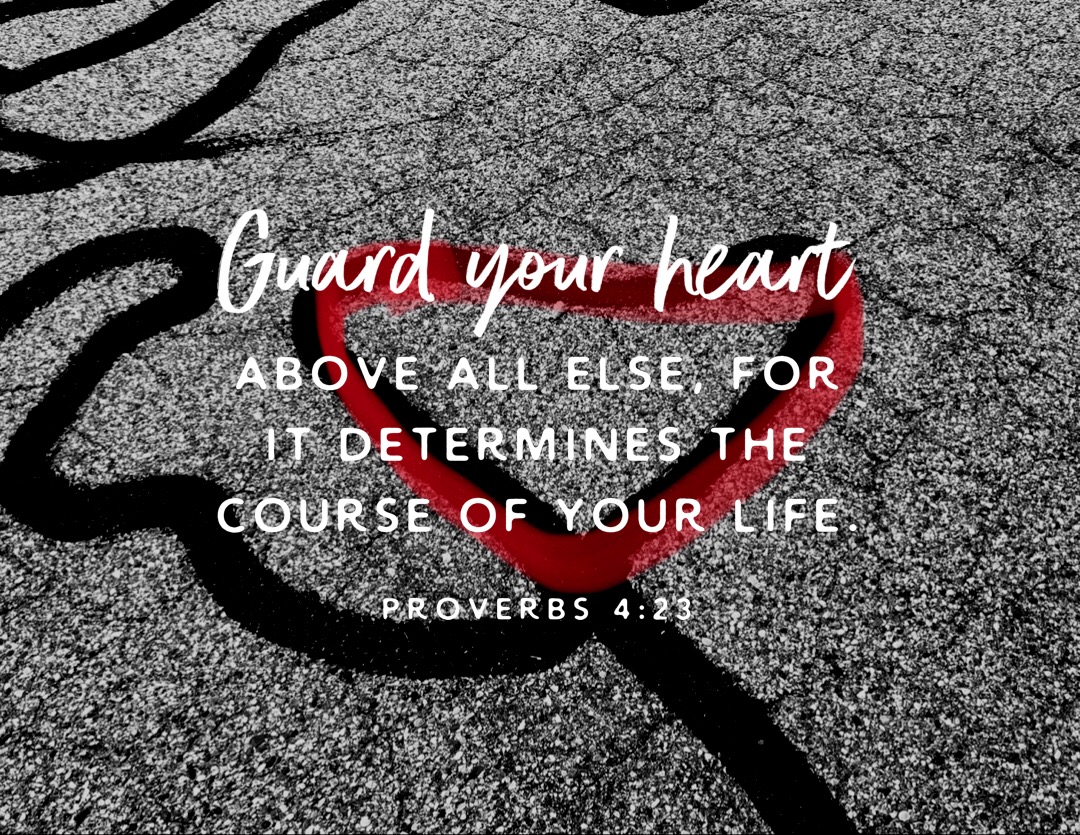
But what about “heart food” or “thought food”? The Bible says, “Guard your heart above all else, for it determines the course of your life” (Proverbs 4:23, New Living Translation).

If you don’t keep the good stuff in your heart and thoughts, the bad stuff becomes more tempting. And just like the junk food aisle in the convenience store is front-and-center, so are the “junk food headlines.” Swine flu … economic woes … earthquakes … war … these junk food headlines dominate and it’s so easy to snack on them unless you have some healthy stuff in your heart and thoughts.

Health experts say that breakfast is the most important meal of the day. What about some healthy heart/thought food each morning? How about some healthy conversation time with God: “In the morning, O LORD, You hear my voice; in the morning I lay my requests before You and wait in expectation” (Psalm 5:3).

Then you could make sure you have a healthy heart/thought diet throughout the day: “Whatever is true, whatever is noble, whatever is right, whatever is pure, whatever is lovely, whatever is admirable—if anything is excellent or praiseworthy—think about such things” (Philippians 4:8).

And then how about a healthy bedtime snack: “I set Your instructions to music and sing them as I walk this pilgrim way. I meditate on Your name all night, God, treasuring your revelation, O God” (Psalm 119:54-55, The Message).

How’s your heart/thought diet doing? Are there any changes you need to make? Best of all, how about sharing with us some heart/thought diet tips that have worked for you.