Thursdays With Oswald—No Substitution

This is a weekly series with things I’m reading and pondering from Oswald Chambers. You can read the original seed thought here, or type “Thursdays With Oswald” in the search box to read more entries.

No Substitution

     If in preaching the gospel you substitute your knowledge of the way of salvation for confidence in the power of the gospel, you hinder people from getting to reality. Take care to see while you proclaim your knowledge of the way of salvation, that you yourself are rooted and grounded by faith in God. Never rely on the clearness of your presentation, but as you give your explanation make sure that you are relying on the Holy Spirit. Rely on the certainty of God’s redemptive power, and He will create His own life in people.

From My Utmost For His Highest

The apostle Paul said,

When I came to you, brothers, I did not come with eloquence or superior wisdom as I proclaimed to you the testimony about God. …My message and my preaching were not with wise and persuasive words, but with a demonstration of the Spirit’s power, so that your faith might not rest on men’s wisdom, but on God’s power. (1 Corinthians 2:1, 4, 5)

As a pastor I have be so careful that I am steeped in the Word of God. It’s not my persuasive words that will win people to Christ, or draw them into a deeper relationship with God. My words will only be effective to the extent that they are God’s words. Yes, I still must study to be a workman who has no cause to be ashamed, correctly analyzing and accurately dividing [rightly handling and skillfully teaching] the Word of Truth (1 Timothy 2:15), but I must not allow my “knowledge” to ever be a substitute for the purity of the Word of God.
Has God Spoken? (book review)

The Bible has quite a bit to say about apologetics — defending what you believe. Paul tells Christians to study God’s Word so that we won’t be ashamed of it, and Peter tells Christians to always be prepared to answer anyone who questions our faith in Christ. But how do we know the Bible is true? Hank Hanegraaff’s latest book, Has God Spoken?, is an excellent resource to help you answer that question.

You may know Hank as host of the Bible Answer Man, and have come to appreciate his wit and wisdom. In Has God Spoken? you will be well-armed to answer any critics who claim that the Bible is not all that Christians claim it to be.

And I love the format that Hank uses to share all of his wisdom. Just like musicians learned their musical notes through such statements as, “Every Good Boy Deserves Fudge,” Hank uses a variety of acrostics to make his evidence so easy to recall. In addition, this book is fully documented, with nearly 100 pages of endnotes, so you can dig a little deeper into the evidence and proofs that he presents.

The puritan pastor Thomas Watson wrote, “The Bible is a rock of diamonds, a chain of pearls, the sword of the Spirit; a chain by which the Christian sails to eternity; the map by which he daily walks; the sundial by which he sets his life; the balance by which he weighs his actions.” But if someone ever doubts the accuracy, inspiration and inerrancy of the Bible, he will never know the treasures and life resources within its pages. That’s why this book is so valuable, and I highly recommend it to both Bible believers and Bible skeptics.

I am a Thomas Nelson book reviewer.

What Are These?

What happens when you read the Bible? Do you just read it, or do you ask questions of it? Some people seem hesitant to ask any questions, but the Bible itself is full of questions.

Zechariah was a prophet in the Old testament. If anyone would have been familiar with God’s Law, it would have been this guy. He grew up as a P.K. (priest’s kid), with several generations of religious leaders in his family tree. Yet as he was being shown the word of the Lord, he realizes how special it is, and wants to make sure he fully grasps it. So he fires away with the questions:

  • What are these?
  • What are these coming to do?
  • Where are you going? 
  • What is it? 
  • Where are they taking it?

The Word of God is living, active, and powerful. I should inquiry of it: what does this mean?

The same Holy Spirit that inspired the biblical writers is the same Holy Spirit Who will illuminate your mind to understand it.

All you have to do is ask!

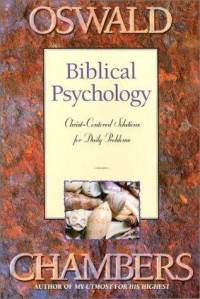
Biblical Psychology (book review)

I’m not one who’s into psycho-babble, but I do like trying to understand human nature a little better. A great book to help on this learning journey is Oswald Chambers’ Biblical Psychology.

As you might imagine, Chambers has a heavy emphasis on the biblical part. In fact, he makes the case that no one can really know themselves. But we can know God better, and He will reveal our real selves to us. Chambers delves into Scripture to teach how our body, soul, and spirit interact with each other, with outside influences, and with the Spirit of God.

It was an absolutely fascinating book to read. This is one of Oswald Chambers’ longest books, and also one of his most technical books. So be forewarned that you will have to really concentrate and apply yourself to grasp all he discusses, but if you persevere through it, you will be richly rewarded.

Thursdays With Oswald—Your Theology May Be Wrong

This is a weekly series with things I’m reading and pondering from Oswald Chambers. You can read the original seed thought here, or type “Thursdays With Oswald” in the search box to read more entries.

Your Theology May Be Wrong

     Never be afraid if your circumstances dispute what you have been taught about God; be willing to examine what you have been taught, and never take the conception of a theologian as infallible; it is simply an attempt to state things. … Theology is the science of religion, an intellectual attempt to systematize the consciousness of God.

From Baffled To Fight Better

Far too many times I catch myself believing something just because someone else told me that was the right way to do things. I’m sure my teachers and pastors were well intentioned, but that doesn’t make them infallible.

Only the Word of God is infallible.

When someone asks you, “Why do you do that?” or “Why do you believe that?” the unacceptable response is, “Someone told me this was the way.” Get into God’s Word and find out for yourself. A theologian may start you off on a path, but allow the Holy Spirit to illuminate God’s infallible truth to you personally.

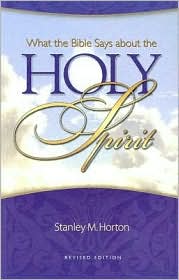
What The Bible Says About The Holy Spirit (book review)

I know a lot of people get uneasy when people starting talking about the Holy Spirit. But what about when the Bible talks about the Holy Spirit? In Dr. Stanley M. Horton’s book, What The Bible Says About The Holy Spirit, you won’t get opinion, just Scripture.

I’m a fourth generation Pentecostal, which means I’ve grown up in an environment where the discussions about the Holy Spirit were numerous and candid. As a result, I thought I knew quite a bit about Him, but it turns out I was so wrong! Dr. Horton is a brilliant scholar, and his knowledge of Scripture is wonderfully on display in this book.

Dr. Horton begins with the Pentateuch and progresses all the way through the Bible, showing exactly what the Bible says about the Holy Spirit. Other books I have read talk more about what the Holy Spirit does, but Dr. Horton pulls out the Scriptures to show Who the Holy Spirit is. And, believe me, there’s a huge difference! The first approach broadens your mind; the second approach deepens your relationship.

If you want to go deeper in your relationship with the Holy Spirit, or if you are simply interested in learning more about (as Francis Chan calls Him) the Forgotten God, then check out What The Bible Says About The Holy Spirit.

How To Read The Bible (book review)

People who call themselves Christians should know how to read the Bible, right? Maybe, but many times I think we assume far too much. Fortunately How To Read Your Bible by A.J. Conyers can help.

  • Some people avoid the Old Testament, saying, “It’s too confusing!”
  • Some people simply flip their Bibles open to any passage and simply start reading.
  • Some people only open their Bibles when they’re at church.

All of these methods may work, but they’re not the best way to learn what God has to say to us in His Word. A.J. Conyers explains to his readers the art of reading the Bible, as well as the practice of reading the Bible. He gives enough background information to get you started in the right direction, and he gives you ample resources to continue digging into God’s Word more.

As you might have noticed, I love to read. But hands-down-without-question my favorite book is the Bible. Every time I open it up, I find something new to apply to my life. If you’re having difficulty getting started on a Bible study, this book may be just the thing to help get things rolling.

(I’m also a big fan of YouVersion: the Bible app for your smart phone. You can download it for your iPhone or Droid by clicking here.)

Thursdays With Oswald—Revised Views Of God

This is a weekly series with things I’m reading and pondering from Oswald Chambers. You can read the original seed thought here, or type “Thursdays With Oswald” in the search box to read more entries.

Revised Views Of God

     The sign of dishonesty in a man’s creed is that he finds out defects in everyone save himself. … Trouble always arises when men will not revise their views of God. … It is a most painful thing for a man to find that his stated views of God are not adequate….

     The man who rests in a creed is apt to be a coward and refuse to come into a personal relationship with God. The whole point of vital Christianity is not the refusal to face things, but a matter of personal relationship.

From Baffled To Fight Better

Every time I read God’s Word I should be confronted with the reality that I don’t know it all. I don’t have it figured out. That’s because the Word is perfect, and I’m not. So the Holy Spirit uses the Word of God to point out flaws in my creeds and theology that need to change.

For the word of God is living and active. Sharper than any double-edged sword, it penetrates even to dividing soul and spirit, joints and marrow; it judges the thoughts and attitudes of the heart. (Hebrews 4:12)

I also need to remember that a creed is a cold, impersonal thing. But my relationship with Jesus Christ is vibrant and personal. Just as I continue to learn new things about my wife (even after 21 years of marriage), I continue to learn new things about my Savior (even after 40+ years of walking with Him).

Changing and revising my creeds is a sign of a mature, healthy relationship.

The Church In Exile (book review)

Although originally published 20 years ago, The Church In Exile by James W. Thompson is even more on-target today.

Taking its title from a phrase in the book of 1 Peter in the Bible (aliens and strangers in the world), Dr. Thompson makes the Apostle Peter’s counsel readily applicable for today. Christians don’t belong to this world, we are simply exiles living here temporarily until we reach our true home in heaven. Peter addresses how we as exiles are to conduct ourselves in foreign—often hostile—territory.

Dr. Thompson brings in just enough cultural background from the first century to set the stage, but then quickly shows the reader the parallels to the twenty-first century. He also uses just enough of his extensive knowledge Greek to pull out the deeper definition of words, but not so much as to make this a dry read. On the contrary, I was almost instantly hooked, and learned so much from every chapter.

I found this quote near the beginning of the book which set the stage for me:

“The changes that have taken place within the last generation will not make exiles of those whose Christian commitment demands little of them. Nor will it make exiles of churches that speak only to echo what others are already saying. Indeed, religion may remain popular in our culture as long as it exists only to bless the popular values. However, those who are willing to say that God has decisively revealed Himself only in Jesus Christ, and that our response to Him is a matter of ultimate importance, will be exiles in a culture that believes that all commitments are equally valid.”

The Church In Exile could easily be used as a personal Bible study tool, as a companion to reading through 1 Peter. However, the discussion questions at the end of each chapter would also make this book an excellent study guide for a small group Bible study.

I am an ACU Press book reviewer.

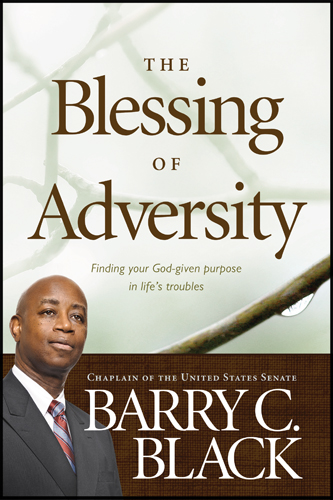
The Blessing Of Adversity (book review)

Barry C. Black has lived a full life, and that fullness has been poured into his timely book The Blessing Of Adversity: Finding your God-given purpose in life’s troubles.

A quick show of hands: how many of you have experienced trouble lately? How many of you are experiencing it right now? If you raised your hand in either category, this book could be quite helpful to you.

The Blessing Of Adversity is arranged into 23 chapters, but each chapter is broken down into several “mini chapters.” By that I mean that Chaplain Clark gives us several different ways of viewing the same topic of how to respond to adversity. He might tell you a personal story from his boyhood or his 23-year military career; or perhaps he’ll give you a modern-day example from his current ministry as chaplain to the U.S. Senate; or maybe a story from the pages of history; or a well-timed quote. Whatever his method, he always connects it with an encouraging word from the Bible to help the reader correctly process the times of adversity we all must pass through.

I found this book to be highly practical, and immediately applicable to my life. And for those of you who didn’t raise your hand earlier, there are a couple of chapters for you on how to prepare for the future adversity you are bound to face. This book would work very well as either an individual or small group Bible study.

I am a Tyndale book reviewer.