Yet

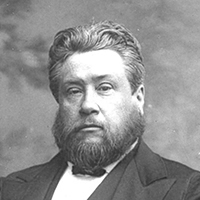
God’s mercy is AMAZING! Charles Spurgeon said:

“There is nothing little in God; His mercy is like Himself—it is infinite. You cannot measure it. His mercy is so great that it forgives great sins to great sinners, after great lengths of time, and then gives great favors and great privileges, and raises us up to great enjoyments in the great heaven of the great God.”

In the Bible, Daniel called on God’s mercy:

We do not make requests of You because we are righteous, but because of Your great mercy. O Lord, listen! O Lord, forgive! O Lord, hear and act! For Your sake, O my God, do not delay, because Your city and Your people bear Your Name. (Daniel 9:18, 19)

Mercy, simply put, is not getting the punishment we deserve. I am so grateful for God’s mercy which is new every morning. I need it.

But mercy is not something to be treated lightly. Mercy requires something of its recipient. In the verses preceding Daniel’s prayer, notice the use of the word YET:

  • All this disaster has come upon us, YET we have not sought the favor of the Lord our God by turning from our sins and giving attention to Your truth (v. 13).
  • The Lord our God is righteous in everything He does; YET we have not obeyed Him (v. 14).

If we receive God’s gift of mercy and YET do not change, we repudiate that mercy. In other words, it’s a slap in the face of God to not receive the penalty for our sins, and YET continue to live the same way.

My friend, if you have received God’s mercy gift turn from your old ways, give attention to His truth, and obey Him. This is the only way to show proper appreciation to our just God for His incredible mercy.
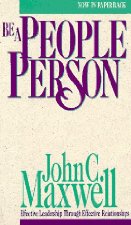
Be A People Person (book review)

John Maxwell’s insights into leading people perpetually astound me. He always finds such simple ways to explain what I know I should already be doing. In one of his earliest books, Be A People Person, I (re)discovered some more great people principles.

Be A People Person perfectly describes this book: It’s all about being a person who is trusted and accepted by other people. This, in turn, puts this people-person in a place to be an effective leader. So Dr. Maxwell talks about confidence, motivation, encouragement, empathy, trustworthiness, mentorship, and so many other people principles.

Because this was one of his earlier books, I see many of the seed thoughts that have become books in their own right later on. But that still didn’t take away from the refreshing insights that I uncovered.

Unless you are a solitary hermit, there is so much to discover in this book to help you grow stronger and more effective relationships with family members, coworkers, and friends.

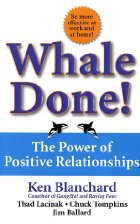
Whale Done (book review)

I love the business and intra-personal insights that Ken Blanchard shares in all of this books. In Whale Done, I learned from Sea World’s Shamu how I can inspire people to better performance.

Following the story of a frustrated business manager, husband, and father, Ken shows us how catching people doing something right is the key to turning around performance. And in the process, we also create more pleasant work and home environments. Ken’s premise is simple:

“The more attention you pay to a behavior, the more it will be repeated. …If you don’t want to encourage poor behavior, don’t spend a lot of time on it.”

Instead of focusing on what someone is doing wrong, we should be looking for opportunities to say to others, “Whale Done!” In other words, put the bulk of our energy into encouraging people to keep doing the right things, by redirecting our energy away from the mistakes.

It’s revolutionary, but it’s also very exciting. As soon as I finished reading Whale Done, I immediately handed it to my wife and said, “You’ve got to read this!” And I would say the same thing to all parents, pastors, teachers, and business leaders.

Servant

Someone said to me, “Great job!” and then not too much later I heard someone else say, “Umm, not so much!” What’s a guy to do?

Here’s what I refocus on: I’m living for the approval of only One.

The only comment that matters to me is God saying, “Well done, good and faithful servant.”

Well done = done with excellence.

Well done = finished well, not just well begun.

Good = pleasantly done.

Faithful = trustworthy, reliable.

Servant = not my will, but Yours be done.

And when it comes to praise and criticism from men, I like this:

“Every man needs a blind eye and a deaf ear, so when people applaud, you’ll only hear half of it, and when people salute, you’ll only see part of it. Believe only half the praise and half the criticism.” —C.H. Spurgeon

UPDATE: This idea of servant leadership is a key component of my book Shepherd Leadership: The Metrics That Really Matter.

The Seed (book review)

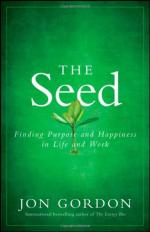
Until I won a copy of this book from Michael Hyatt’s blog, I had not heard of Jon Gordon. Now, having read The Seed, I am so disappointed that I didn’t find out about this author sooner!

The Seed is written as a fable, following the story of a young man named Josh, who has lost his passion for his work. Given a 2-week vacation by his boss to determine what happens next, Josh encounters a series of people who help him on his journey.

Josh is first given a seed by a kindly farmer, and told to plant the seed where it will grow best. Then learning from a crop-duster pilot, his parents, a favorite professor, a former employer, a traveling businessman, and even his dog Dharma, Josh learns about the seed that leads to a life full of passion and purpose.

This book was written to so compellingly that I had a hard time putting it down. Right from the opening pages I was drawn into Josh’s life. The lessons from this book are profound, insightful, and ones that all of us can apply.

Don’t miss out on The Seed!

Bonhoeffer (book review)

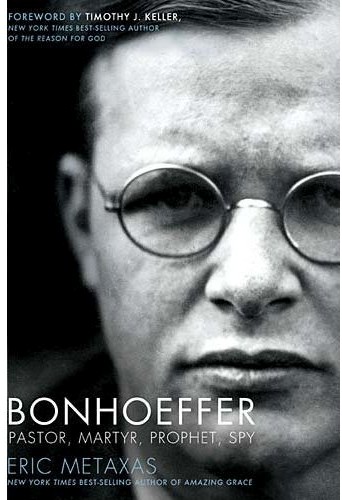
I’ve always been an admirer of Dietrich Bonhoeffer’s work, but Eric Metaxas’ sweeping biography has given me a whole new appreciation for this influential theologian.

Bonhoeffer: Pastor, Martyr, Prophet, Spy takes you behind the scenes that influenced this great man. You will see how his family helped encourage Dietrich to be such a deep thinker. Then you will read how Bonhoeffer’s thinking was sharpened as he challenged the Nazi’s co-opting of the church in Germany, leading him to call pastors back to a biblically-sound foundation.

By perhaps the most compelling storyline is how this pastor could join the band of German citizens who agreed that Adolph Hitler must be assassinated. Although to us now it may seem like an easy decision to make, to those who lived through the events leading up to Word War II, it was an excruciating decision. Eric Metaxas does a masterful job of taking us inside the thinking process that led Dietrich Bonhoeffer to his decision.

And through all of the turmoil swirling around him, Bonhoeffer found time to not only teach young pastors, but to leave behind some timeless teachings in his masterful books.

If you are already familiar with Bonhoeffer’s writings, this biography will give you a whole new appreciation into the man who crafted the books. If you aren’t yet familiar with Bonhoeffer’s books, Bonhoeffer will whet your appetite to know more. Don’t miss out on this one!

George Washington Carver (book review)

I love reading biographies about our most prominent historical figures. A man that looms large at a pivotal time in US history is George Washington Carver, who is wonderfully captured in this biography by John Perry.

This book is a part of a wonderful series from Thomas Nelson called “The Christian Encounters Series.” Carver was a man strong in his Christian faith, and yet he showed it in his gentle lifestyle. As an African American born in the Jim Crow South, Dr. Carver endured his share of discrimination. But he also benefited by his share of helpful folks — both black and white — who treated him with dignity and respect, and opened doors of opportunity for him. Yet whether treated well or treated poorly, he treated everyone the same gracious, gentlemanly way.

Dr. Carver also lived out his Christian faith in his strong work ethic. He was busy learning more about creation and the Creator, and finding ways to show God through his discoveries. Although at times he was offered extraordinarily high salaries to leave Tuskegee Institute, he stayed right where he believed God had placed him.

Dr. Carver never had children of his own, but saw himself has a father to all his students. And those students gladly received his fatherly love and counsel. His Sunday evening Bible studies (which weren’t mandatory) were the best-attended event of the week. Even after graduation, many students maintained a lifelong correspondence with Father Carver.

Dr. Carver was revered as a father, a scientist, and a teacher. His impact on the advancement of science, and his example of hearing God’s whisper in all of His creation, are immeasurable. Regardless of race or age or background, all of us owe a debt of gratitude to this giant of a gentleman scientist.

I am a Thomas Nelson book reviewer.

At The Beach…

…doing some more reading! I’m on vacation with my family this week.

For your enjoyment, I’ve posted some book reviews which will post every day this week. All of these books I highly recommend. Hope you enjoy them.

I’ll see you next week.

Cardinal Virtues of Ladies & Gentlemen

George Washington Carver never married, and never had children of his own. But he saw himself as a father to all of his students at the Tuskegee Institute, and they viewed him the same way.

The graduating class of 1921 presented Dr. Carver with a beautiful fountain pen. He used that pen to write the following note to his children—

As your father, it is needless for me to keep saying, I hope, except for emphasis, that each one of my children will rise to the full height of your possibilities, which means the possession of these eight cardinal virtues which constitutes a lady or gentleman.

1st. Be clean both inside and outside.

2nd. Who neither looks up to the rich or down on the poor.

3rd. Who loses, if need be, without squealing.

4th. Who wins without bragging.

5th. Who is always considerate of women, children, and old people.

6th. Who is too brave to lie.

7th. Who is too generous to cheat.

8th. Who takes his share of the world and lets other people have theirs.

I think we would do very well if we, too, possessed these virtues, and taught them to our children.

Biblical Psychology (book review)

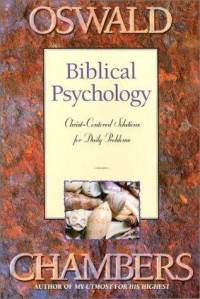
I’m not one who’s into psycho-babble, but I do like trying to understand human nature a little better. A great book to help on this learning journey is Oswald Chambers’ Biblical Psychology.

As you might imagine, Chambers has a heavy emphasis on the biblical part. In fact, he makes the case that no one can really know themselves. But we can know God better, and He will reveal our real selves to us. Chambers delves into Scripture to teach how our body, soul, and spirit interact with each other, with outside influences, and with the Spirit of God.

It was an absolutely fascinating book to read. This is one of Oswald Chambers’ longest books, and also one of his most technical books. So be forewarned that you will have to really concentrate and apply yourself to grasp all he discusses, but if you persevere through it, you will be richly rewarded.