Miracle Breaths

In the midst of his despair, Job uttered this amazing truth about God:

He performs wonders that cannot be fathomed, miracles that cannot be counted. When He passes me, I cannot see Him; when He goes by, I cannot perceive Him.

The wonders of God are all around me, His miracles occurring moment by moment; breath by breath.

Reflect for a moment on the miracle of your next breath…

  • Your brain coordinates nerves and muscles to aid in breathing in oxygen.
  • Both atriums and ventricles in your heart squeeze in perfect rhythm to circulate blood.
  • The valves between atriums and ventricles open and shut at the precise moment to allow blood to move forward, but not backward.
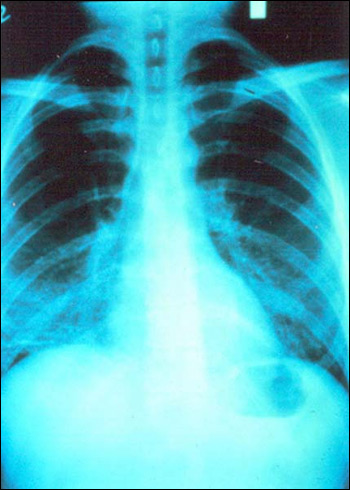
  • Red blood cells supercharged with hemoglobin bind to freshly inhaled oxygen molecules.
  • More red blood cells carrying carbon dioxide move toward the lungs, and release their passengers at the perfect time and place to be exhaled from your body.
  • Your brain coordinates nerves and muscles to aid in breathing out carbon dioxide.

If I’m exercising, this whole process accelerates. If I’m sleeping, this whole process slows.

This goes on breath by breath by breath throughout your entire life, all without your conscious effort.

It’s a wonder that cannot be fathomed, a miracle that cannot be counted!

This seemingly “little” miracle keeps me alive, yet when was the last time I stopped to praise God for it? I am a man of pitiful praise. I need to be more aware of God’s miracles and wonders around me. I need to become a man of perpetual praise.
Elevate

On Sunday we kicked off a new series A Season Of Thanks looking at this verse:

Since you have been raised to new life with Christ, set your sights on the realities of heaven, where Christ sits in the place of honor at God’s right hand. Think about the things of heaven, not the things of earth.

Here’s the deal: If you elevate your thinking to positive things, your life will be more positive. The best place to start is thank-fullness = being full of thanks. Make it a habit in your life to find more things for which you can give thanks.

I searched the Twitterverse for some thoughts about elevated thinking…

Feel free to add your own in the comments below. Oh yeah, and come join us next Sunday for A Season Of Thanks part 2.

Thanksgiving Challenge


Yesterday I began a two-part series at Calvary Assembly of God sandwiched around Thanksgiving Day. The series is simply called Thanks and is based on the premise that thankfulness is the soil for healthy growth.

Have you ever grown a garden? If you have, you know that even though you plant the best seeds in the best soil, if you simply leave it unattended, weeds will find their way into your well-manicured garden. If you leave your garden unattended for long enough, the weeds will eventually take over.

It’s just as true for our minds. We can cultivate the best soil in our minds and plant only the finest seeds. But if we do nothing more, the weeds will take over and eventually choke out anything good that was growing there.

A spirit of continual thankfulness will keep the soil free from the choking weeds. But pulling out weeds by our thankfulness must be a continual process. So I gave our church the 365/730/1095 challenge.

Start a thanksgiving journal. If you just write down one unique thing every day for which you are thankful, you will have recorded 365 things in a year. More challenging: write down two things every day, or even—are you brave enough to attempt this?—three things every day. If you find two things each day, you will have 730 weed busters by the end of the year, or three items will give you 1095 weed busters.

Are you ready for the challenge?

I’m going to attempt to find three unique things each day for the next year. I hope this is encouraging to you, and I hope you will accept the 365/730/1095 challenge too.

The Soil Of Thanks

This Sunday we kick off a two-part series around Thanksgiving. I know it’s a day we celebrate once per year, but thankfulness is also the soil that grows excellent things in our lives. Come and join us at 10:30 AM on November 22 and November 29. And in the meantime, start counting your blessings.

Thousands Of Haven’t Miles

I just spent two days away from home. After leaving at 6:00 in the morning and driving for 2+ hours, I sat through two days of intensive training. The following day I was anxious to get back to my family. My trip back home should have been a little over two hours, but I ran into several construction zones which made the trip so much longer. As I turned onto the homestretch I began to get more excited about finally being home.

And all of a sudden the expressway became a parking lot!

Just minutes before I turned onto that expressway, a serious accident took place just ahead of me. It then took me 30 minutes to travel the next mile, as all of the traffic was rerouted off the expressway and onto the side roads.

And then I began to rejoice. I have really been racking up the miles lately, so I began to rejoice that all of my miles have been incident-free miles.

I began to thank God for the accidents I HAVEN’T been in.

I gave praise for the times my car HASN’T broken down.

I rejoiced for all the flat tires I HAVEN’T had.

It’s natural to be thankful after a near-miss, but I want to do a better job of being thankful always—especially for the stuff that HASN’T happened.

What about you? What things HAVEN’T happened that you are thankful for?

Dirty Dishes

My folks came to our home for dinner after our Sunday church service. It’s always great to have them around.

Aside from the good fellowship and great food, I noticed something else: there were a lot of dishes to be cleaned. Not only was the dishwasher filled and run twice, but there were other dishes that had to be washed by hand. At first, I began to grumble about all of the extra work to do, but then I thought, “Dirty dishes are a good thing.”

Lots of dirty dishes means that lots of people graced our home.

Lots of dirty laundry means that my kids are running around and enjoying life.

Lots of trips to the grocery store means that friends and family are coming over to hang out with us.

Lots of studying means that I have lots of opportunities to invest in others.

There are so many things that I could choose to grumble about, but instead, I’m choosing to focus on the blessings. I’d much rather have dishes to clean, clothes to wash, errands to run, and hours to study than the alternative, wouldn’t you?

Look on the bright side this week: turn those grumbling opportunities into opportunities to give thanks.

Biodegradable Words

The day has been a good one so far: There’s been a lot of traffic through the store, all of the employees showed up for their shifts on time, and the manager is feeling great. Then because of one complaint from a finicky customer, the whole day seems to crumble.

The day has been a good one so far: You got up on time, found the right outfit to wear, got to school on time, smiled at your classmates, and got right down to business. Then a teacher points out a mistake you made yesterday, and your whole afternoon becomes gloomy.

Usually that’s all it takes. Just one complaint, one correction, one unkind word, one angry look, one unfriendly email. Just one, and it’s hard to remember any of the good stuff which happened earlier. Just one, and the rest of the day seems so hard to bear.

That’s because good words are biodegradable. Kind words break down faster than unkind words. Compliments are quickly erased by complaints.

“One of the commodities in life that most people can’t get enough of is compliments. The ego is never so intact that one can’t find a hole in which to plug a little praise. But, compliments by their very nature are highly biodegradable and tend to dissolve in hours or days after we receive them—which is why we can always use another.” —Phyllis Theroux

Here’s how you can help today. It might take a couple of extra minutes, but the results are so worth it! Give three compliments today.

  • Tell the barista at your coffee shop how much you appreciate her smile every morning.
  • Mention to the building custodian how nice he keeps the office looking.
  • Say “thanks” to the band for playing one of your favorite songs.
  • Compliment your kids for doing their homework without you having to ask them.
  • Thank your school teacher for her informative lesson.
  • Tell your supervisor you appreciate their extra effort.

It’s not hard to find something to compliment about anyone. Your compliment may be just the antidote they need to counteract a complaint that has gotten them down. And when you treat others this way, you can be sure that compliments will be coming your way too!

The Carbon Monoxide Of Anxiety

Carbon monoxide can poison our bodies and our emotions

Carbon monoxide can poison our bodies and our emotions

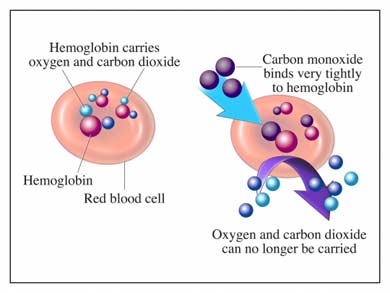
Our human red blood cells have a unique protein that carries life-promoting oxygen throughout our bodies. Hemoglobin binds to both oxygen (O2) and carbon dioxide (CO2) in a way that holds them “loosely” so that they can be released at just the right place and time in our bodies.

Carbon monoxide (CO) is the enemy of this respiration process. CO binds to hemoglobin 240 times more firmly than oxygen and CO2. With the CO so firmly attached to the hemoglobin, O2 and CO2 cannot be exchanged properly in our bodies. In other words, CO hijacks the respiration process. The sneaky thing is that CO is odorless, tasteless, and colorless, so it’s subtle poisoning. It simply brings about a lethargy that deepens into death.

As we move past Thanksgiving Day, I believe that a similar process can take place in our emotional lives. Thankfulness is the “oxygen” of our souls, and anxiety is the “carbon monoxide.”

In Philippians 4:6 Paul says, “Do not be anxious about anything,” where he is echoing the words of Jesus in Matthew 6:25: “Do not worry about your life.” Anxiety and worry can begin to dominate our emotional life: they bind so tightly that thankfulness and gratitude are forced out. This leads to emotional lethargy, and—if not corrected quickly—emotional deadness.

The cure for carbon monoxide poisoning is to twofold: (1) remove the victim from the toxic environment, and (2) give the victim pure oxygen to breathe. The same cure holds true for emotional CO poisoning—(1) Get out of that environment: “Do not be anxious about anything, but in everything, by prayer and petition, with thanksgiving, present your requests to God” (Philippians 4:6); and (2) get the pure emotional oxygen: Philippians 4:8 gives us the checklist for the pure oxygen of our emotional thought life: “Fix your thoughts on what is true, and honorable, and right, and pure, and lovely, and admirable. Think about things that are excellent and worthy of praise.“

If you find yourself sighing, or emotionally drained, or even depressed, it could be that the carbon monoxide poisoning of anxiety has snuck in. Get out of that toxic environment by praying and giving thanks to God, and then guard against future hijack attempts by breathing deeply on the things which are pure and lovely and excellent.