Don’t Try To Grow Your Ministry

Listen to the podcast of this post by clicking on the player below, and you can also subscribe on AppleSpotify, or Audible. 

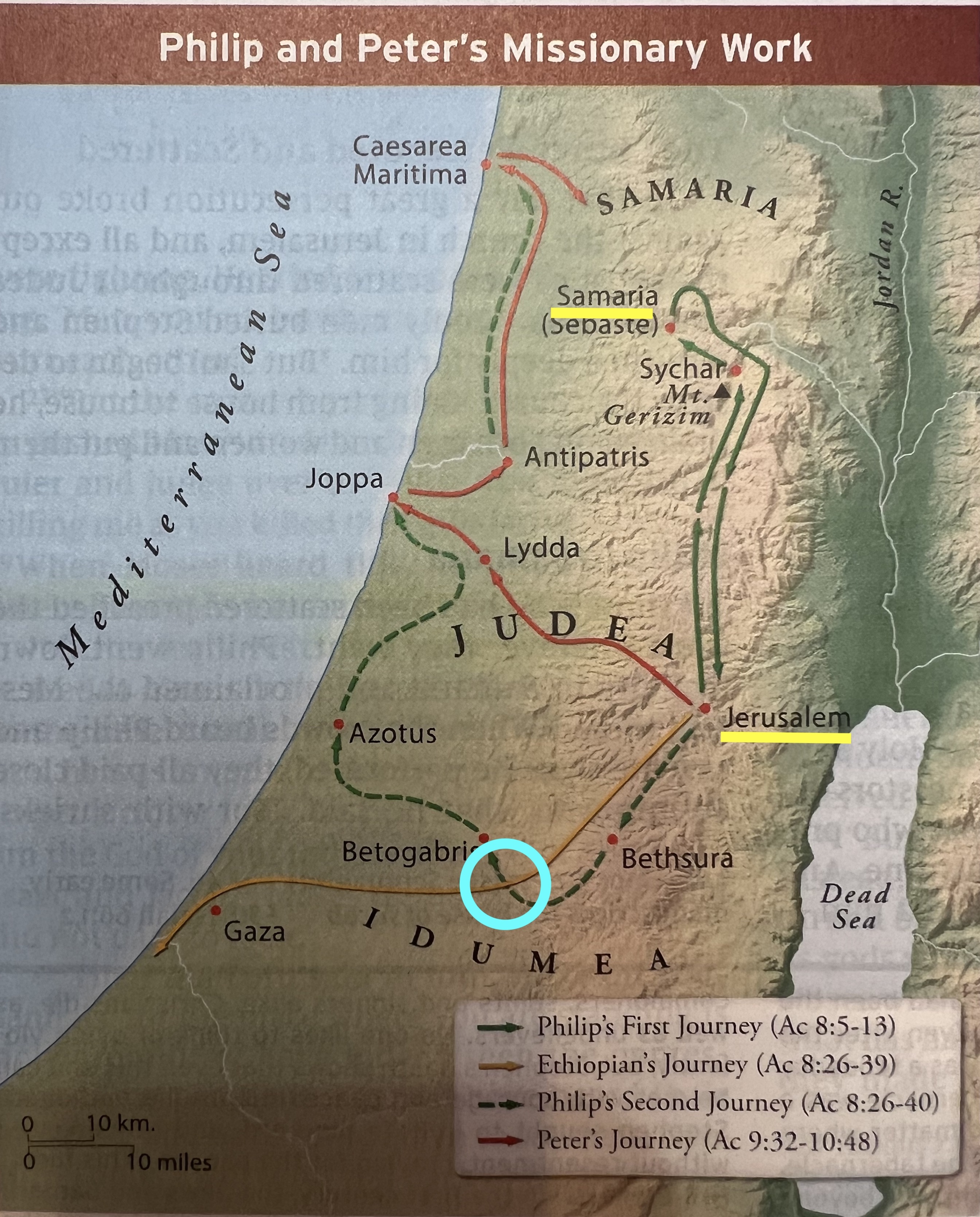
Ministry was booming in Samaria, and Philip was at the center of the activity. People were getting saved, healed, and set free from demonic possession. 

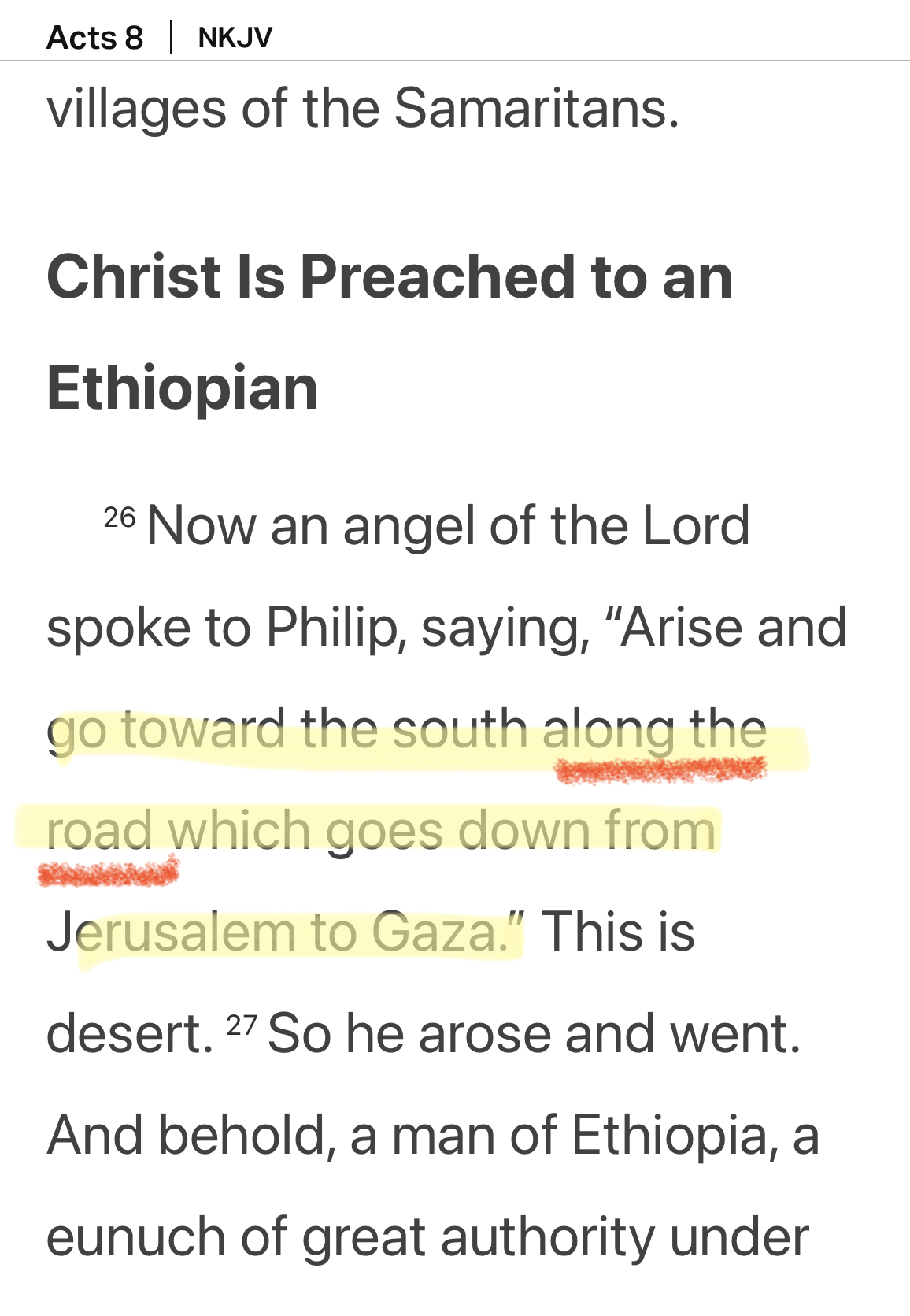
And then an angel tells Philip it is time to move on. We don’t see Philip debating or negotiating, but we just see his immediate obedience. As Philip is traveling the route the angel gave him, he sees a chariot approaching. The Holy Spirit then speaks to Philip and says, “Get close to that chariot and stay near it.” It was then that Philip hears the man in the chariot reading aloud from the Book of Isaiah, so he asks him if he understands what he is reading. This high-ranking official from Ethiopia then invites Philip into his chariot to explain the meaning to him. 

Philip had to leave Samaria in time to cross paths with the Ethiopian official who was heading home from Jerusalem—they met in the middle of a desert. An angel got Philip started. The Holy Spirit refined where Philip needed to be. And then Philip took it from there. 

If Philip had been trying to “grow” a successful ministry, he may have downplayed or even ignore the messages he received. But Philip wasn’t concerned about bigger numbers, just quicker obedience. 

Philip’s quick obedience placed him precisely where God needed him to be, precisely when he needed to be there! (See Acts 8:4-40.)

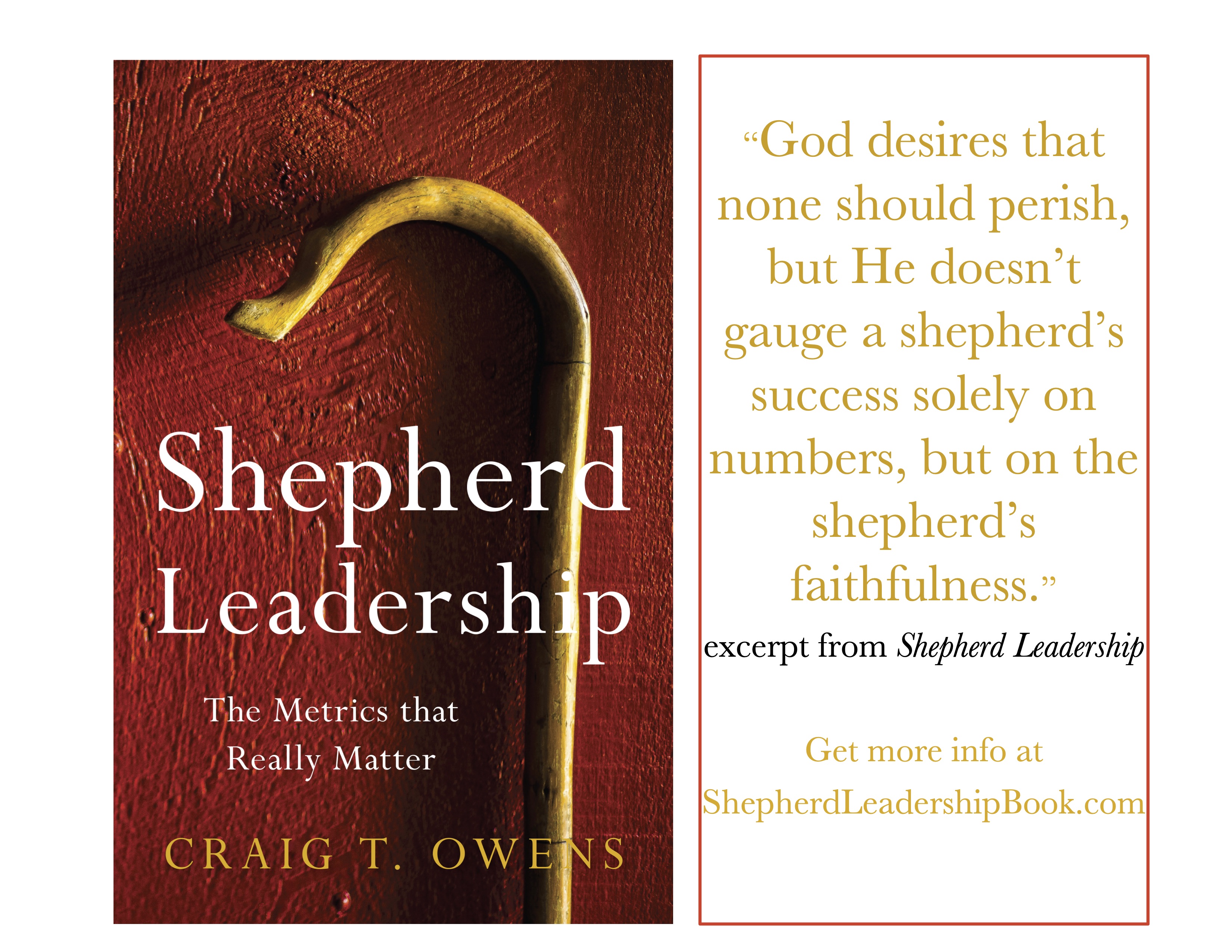
In my book Shepherd Leadership, I have a chapter entitled “Don’t Try to Grow Your Ministry.” A portion of what I wrote comes from Philip’s quick obedience—
     Don’t try to grow your ministry. First, because it’s not yours, it’s His; and second, because your measure of success is probably more slanted toward quantitative measurements than qualitative. Jesus wasn’t concerned about bigger numbers: “What do you think?” He asked, “If a man has a hundred sheep, and one of them goes astray, does he not leave the ninety-nine and go to the mountains to seek the one that is straying?” (Matthew 18:12). 

     Philip went to Samaria to tell people about Jesus. He didn’t go there because it fit his plan, but because Jesus said, “You will be My witnesses in Jerusalem, and in all Judea and Samaria, and to the ends of the earth” (Acts 1:8). Philip’s obedience brought God’s success: hundreds turned to Jesus as their Savior, demon-possessed people were delivered, the sick were healed, and the new Christians were baptized in the Holy Spirit. Yet God called Philip to leave these “ninety-nine” and go to the desert to cross paths with just one confused and wondering sheep (Acts 8). After that, Philip virtually disappears from Luke’s historical record. 

     What’s the value of one government official’s life? God says that his value is incalculable. Apparently, God knew that Philip was the perfect shepherd to lead this Ethiopian to the pasture where he would accept Jesus as his Savior. Philip was obedient, a sheep was saved, and God was pleased. But I wonder how many people today might think Philip’s ministry was unsuccessful because he left a bigger ministry in Samaria to go to a smaller ministry in the desert? Bishop William C. Abney said, “I’m still waiting for a leader to say, ‘God called me to a smaller ministry.’ We usually only say, ‘God called me’ when it’s something bigger. God’s math doesn’t work our way.” 

     The Chief Shepherd made this commitment to His sheep: “And I will give you shepherds according to My heart, who will feed you with knowledge and understanding” (Jeremiah 3:15). My prayer is that we would much rather feed a few sheep where God has directed us and given us His heart than for us to try to manufacture success that is measured by how many nickels and noses we can count. 

Philip demonstrates for us that it’s not about bigger numbers, it’s about obedience to God’s voice in the moment, and then hearing our Chief Shepherd’s voice at the end of our life saying, “Well done, good and faithful servant.” 

The subtitle of my book is “The metrics the really matter.” I invite you to pick up a copy today! 

►► Would you please prayerfully consider supporting this ministry? My Patreon supporters get behind-the-scenes access to exclusive materials. ◀︎◀︎
Intersecting Lives

Listen to the podcast of this post by clicking on the player below, and you can also subscribe on AppleSpotify, or Audible. 

I had a great time teaching some emerging ministry interns. I shared with them part of my autobiography. There was a time when I heard God’s voice as clearly as I had ever heard it telling me to pursue a career in the medical field. Before I completed that degree, I just as clearly heard God’s voice telling me that medicine wasn’t going to be the career for me.

For a number of years, I struggled with this because I thought I had missed God’s voice the first time. “Perhaps,” I thought to myself, “I didn’t hear God clearly.” 

But then the Holy Spirit opened my eyes to a story in the Book of Acts that I had completely missed before. The principles in this story helped me realize that God had put me on a particular path in order for my life to intersect with other people and places. 

Here’s how I explained my story and the principles I learned from the life of Philip:

My friend, your journey may be different from mine, but we still share something so vital in common: God is using everything in your life to accomplish His plan. As you follow Jesus, you will intersect with the lives of others, and your life is making a difference in them.

►► Would you please prayerfully consider supporting this ministry? My Patreon supporters get behind-the-scenes access to exclusive materials. ◀︎◀︎
A Step Backwards?

Listen to the podcast of this post by clicking on the player below, and you can also subscribe on AppleSpotify, or Audible. 

God needed to use Philip to steer a God-seeking government official to Jesus Christ. After this brief one-on-one encounter, God removed Philip from the scene and almost entirely from the pages of history.

Philip had just been leading a huge revival in Samaria, but he didn’t count success by the nickels-and-noses metrics of the world. He obeyed God even to the point of “taking a step backwards” in the world’s eyes, but in God’s eyes it was the most successful of moves.

In one of the chapter of Shepherd Leadership: The Metrics That Really Matter I wrote—

     Don’t try to grow your ministry. First, because it’s not yours, it’s His; and second, because your measure of success is probably more slanted toward quantitative measurements than qualitative. Jesus wasn’t concerned about bigger numbers: “What do you think?” He asked, “If a man has a hundred sheep, and one of them goes astray, does he not leave the ninety-nine and go to the mountains to seek the one that is straying?” (Matthew 18:12). … 

     What’s the value of one government official’s life? God says that his value is incalculable. Apparently, God knew that Philip was the perfect shepherd to lead this Ethiopian to the pasture where he would accept Jesus as his Savior. Philip was obedient, a sheep was saved, and God was pleased. … 

     The Chief Shepherd made this commitment to His sheep: “And I will give you shepherds according to My heart, who will feed you with knowledge and understanding” (Jeremiah 3:15). My prayer is that we would much rather feed a few sheep where God has directed us and given us His heart than for us to try to manufacture success that is measured by how many nickels and noses we can count. 

I’ll be sharing more clips from this book signing event soon, so please stay tuned. Shepherd Leadership: The Metrics That Really Matter is available in print or ebook, and in audiobook through either Audible or Apple.

►► Would you please prayerfully consider supporting this ministry? ◀︎◀︎

Whose Ladder?

Listen to the podcast of this post by clicking on the player below, and you can also subscribe on AppleSpotify, or Audible. 

I had a great time on the Ailbe Podcast with Rusty Rabon.

Rusty quotes a section from the chapter “The Wrong Ladder” in my book Shepherd Leadership: The Metrics That Really Matter: 

God frequently picks people we would consider the least qualified. He sometimes has one in an unglamorous position for years, and sometimes He catapults somebody immediately to the top. Sometimes God will keep His hand-selected individual in a prominent leadership position until death, and sometimes He will remove that person to a place of obscurity after only a short time. God’s ladder of success is nothing like ours! 

We discuss the American cultural ladder and how that may or may not square with what we read on the pages of the Bible. I use the example from the life of Philip to make my point that we would be wise to not try to set up our own ladder of success. 

 I’ll be sharing more clips from this interview soon, so please stay tuned. Shepherd Leadership: The Metrics That Really Matter is now available in print or ebook, and in audiobook through either Audible or Apple. 

►► Would you please prayerfully consider supporting this ministry? ◀︎◀︎

On The Record

Listen to the podcast of this post by clicking on the player below, and you can also subscribe on AppleSpotify, or Audible. 

When Jesus is getting ready to feed the multitude that had gathered to hear Him speak, Jesus asked Philip a question: “Where shall we buy bread for these people to eat?” (John 6:5). It seems like a fair question, but the next verse gives us insight into Christ’s motivation behind the question:

Jesus asked this only to test him, for He already had in mind what He was going to do.

Jesus had something in mind, but He wanted to know what Philip had in mind. If Jesus had not asked Philip to be on the record up front, Jesus could have multiplied the loaves and fish, and then Philip could have said, “I knew You could do it! I knew it all the time!”

But to test us, Jesus needs to get us on the record. The word test means to know the value of something; to know its strength; to know what it’s capable of.

My faith cannot be grown if it’s not tested. It cannot be accurately tested if I’m not on the record first. Jesus knows what He’s going to do: Glorify the Father. I can say that’s what I wanted all along after the miracle is done, but then my faith hasn’t grown one iota.

I can only see my faith grow when I am on the record (as Philip was) in saying, “How in the world could we get enough money to fix this problem?” Especially when Jesus isn’t even going to use money to fix that problem!

Here’s the principle:

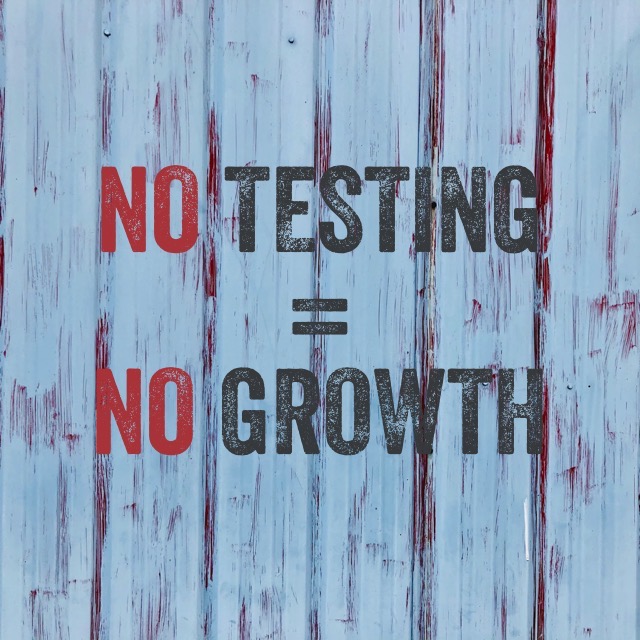
NO testing = NO growth

It’s only when I see that my faith is not as big as it should be that I can say, “Lord, I believe You, but help my unbelief.” He will bring me into a test so that I can grow, and the Father can be glorified. It’s scary being on the record, because only then can I see how much more growth I need!

►► Would you please prayerfully consider supporting this ministry? My Patreon supporters get behind-the-scenes access to exclusive materials. ◀︎◀︎

Every Sunday Is Easter

At most churches, Easter Sunday is the most well-attended service of the year. Perhaps this is appropriate, since the resurrection of Jesus is the cornerstone event of the Christian faith. Without Christ’s resurrection, what hope would we have?!

The first Christians were so convinced of the life-changing power of this singular event that they began to gather for worship on the first day of the week (Sunday), in honor of the resurrection. For them, every Sunday was resurrection Sunday.

What if we treated every Sunday like Easter?

Would we invite more people to church? I’m sure we would!

Of all the days of the week we could pick to gather together, why Sunday? Because Sunday reminds us of what happened 2000 years ago at a garden tomb in Jerusalem. Jesus arose from the dead!

When I look at the first followers of Jesus (see John 1:35-51), I see something amazingly simple in the lives of Andrew and Philip. It’s as simple as 1-2-3…

  1. They encountered Jesus.
  2. They immediately went to find a friend to tell them about this encounter.
  3. They invited their friend to “Come and see” Jesus for themselves.

Has Jesus changed your life? Then find a friend and say, “Come and see!” Don’t wait for Easter Sunday to invite someone to meet Jesus. Invite them to come this Sunday! (If you don’t have a church home, and you live in West Michigan, I invite you to come join me at Calvary Assembly of God.)