Overloaded?!?

I’m starting a new series this Sunday which I wish I didn’t have to start. But the reality is that far too many of us (and I do mean us because I’m including myself) have bought into the cultural idea that we need to add more and more and more to our lives.

As a result, our lives are overloaded. Physically, emotionally, financially, relationally … if life throws us just one curveball in any area, we’re toast!

And the biggest victim in our overloaded lives? Our relationships. It’s hard to have rich, meaningful, intimate, vibrant relationships when we’re so concerned about our own overloaded lives. It doesn’t have to be this way!

I hope you can join me at Calvary Assembly of God over the next four Sundays as we talk about the relief that God shows us in the Bible. There is relief from overload, and God wants us to find it.

Closed Door = Open Window

Yesterday God closed a pretty significant door in my life. It will mean some short-term changes, but I am confident that it also means some great long-term rewards! I’m not worried; just prayerful for the next steps I need to take.

Here’s where I base my confidence:

This didn’t take God by surprise: All the days ordained for me were written in Your book before one of them came to be.

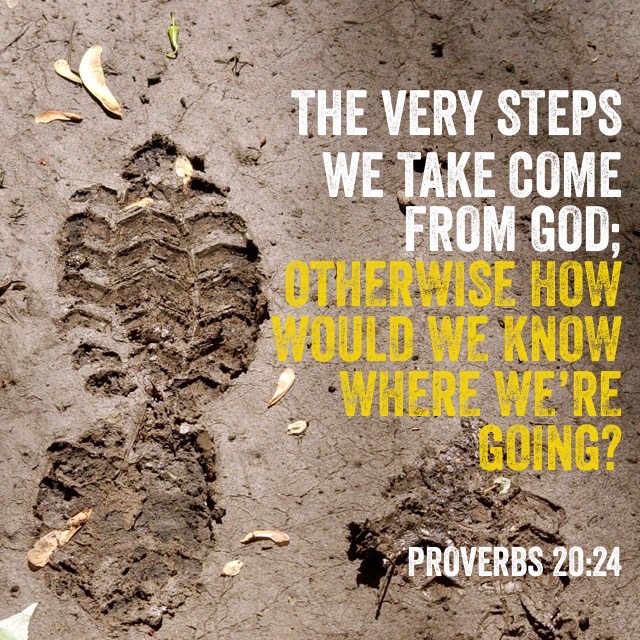
In fact, God was the One who closed this door: A man’s steps are directed by the Lord.

And now I’m just waiting: Behold, I am doing a new thing! Now it springs forth; do you not perceive and know it and will you not give heed to it? I will even make a way in the wilderness and rivers in the desert.

Or as Corrie ten Boom so beautifully said it:

“When God closes a door, He opens a window.”

Worry Unlearned

We started a new series yesterday called The Stranglehold Of Worry. The word worry originated with shepherds. When a wild dog or a wolf had killed a sheep by grabbing it by its throat and choking it to death, the shepherds said that sheep had been worried to death.

In modern times, researchers at Purdue University found that worrying can chop 16 years off of someone’s life. Not only does worry rob your life of years, but it can also rob your years of life.

What exactly is worry? Fear is our natural response to real threats, like a car heading toward you in your lane of traffic. Worry is our response to perceived threats (to unseen things), like the car that may head toward your kids’ car when they are driving.

Get this clear: worry is being fearful of the unseen.

Compare that to the Bible’s definition of faithNow faith is being sure of what we hope for and certain of what we do not see. Worry and faith both operate in the unseen dimension.

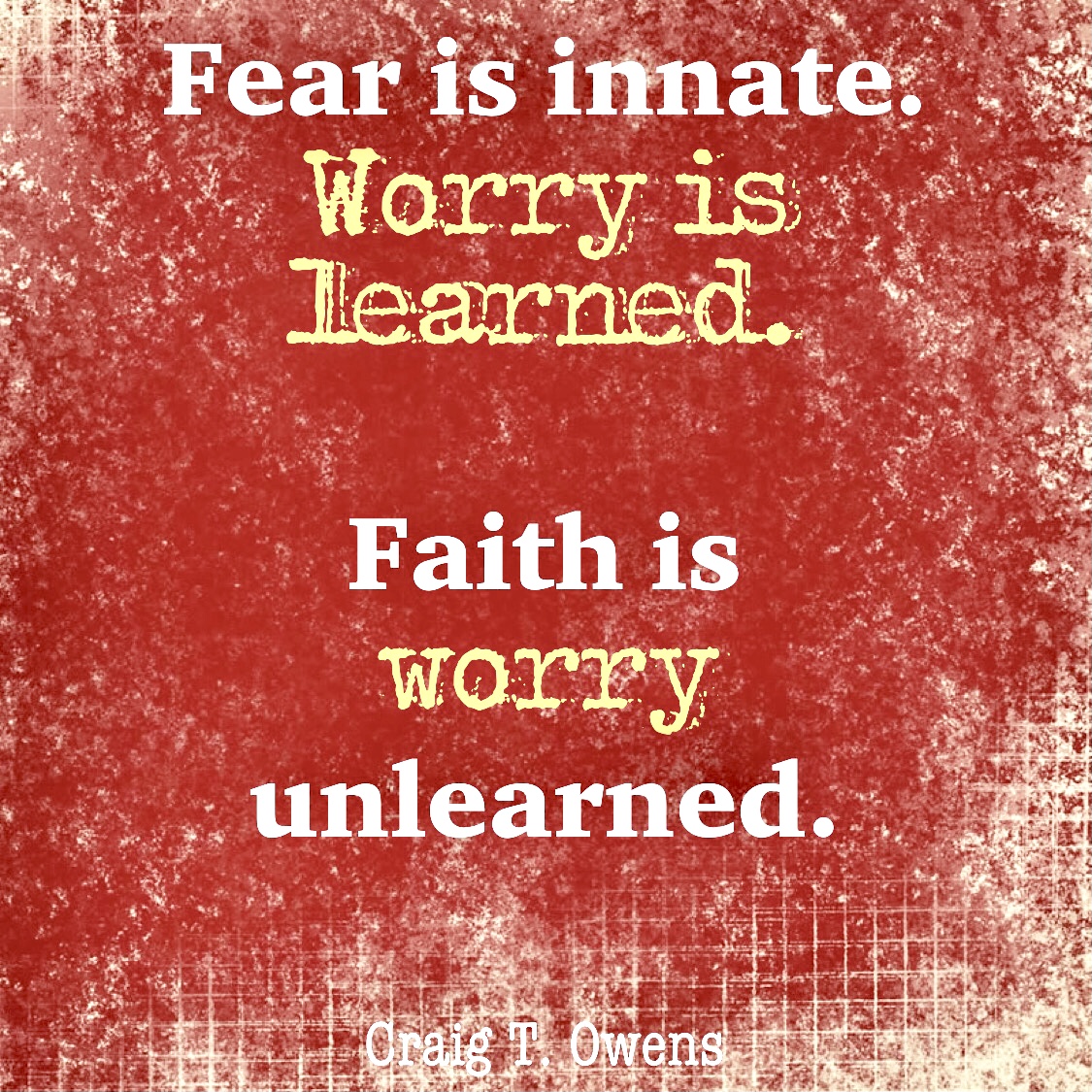
Fear is innate, but worry is learned.

Faith is worry unlearned.

Worry tells your brain a story about bad things that may happen.

Faith tells your brain a story about good things that should happen. Based on what you’ve already experienced of God’s power, what you’ve already seen in God’s provision, or what you already know of God’s promises, your faith in God can help you unlearn your worry.

The prophet Jeremiah tended to be a worrywart. Maybe that’s why he’s been called the “weeping prophet.” But in the middle of his worrying, he unlearns his worry by using his faith to tell a different story about God’s provision, power, and promises:

I well remember [the bad things], and my soul is downcast within me. Yet this I call to mind and therefore I have hope: Because of the LORD’s great love we are not consumed, for His compassions never fail. They are new every morning; great is Your faithfulness. I say to myself, “The LORD is my portion; therefore I will wait for Him.”

Did you notice that Jeremiah talked to himself? He wrote, “I say to myself.” If you have a tendency to worry, it’s time to start talking to yourself and telling yourself a different story. Instead of being fearful of the bad things you cannot see, why not be hopeful of the good things of God you can see?

Let your faith in God help you unlearn your worry. You can overcome worry and anxiety by telling yourself a new faith-filled, hope-oriented story. You can recall God’s faithfulness in the past, and apply it to your current circumstance.

What stories are you telling yourself today? Share with others how you overcame, or are in the process of overcoming worry now. Your faith story will help others overcome and unlearn their worry too.

Worrywart

“Worry indicates we’re not willing to let God handle certain things—at least not in His way, and certainly not in His time.” —Craig Groeschel, in The Christian Atheist

Worry is a control issue

…that is, I want to be in control.

Worry is a sovereignty issue

…that is, I think I know best how things should work out.

Worry is a trust issue

…that is, I trust God only when things are happening on my timeframe.

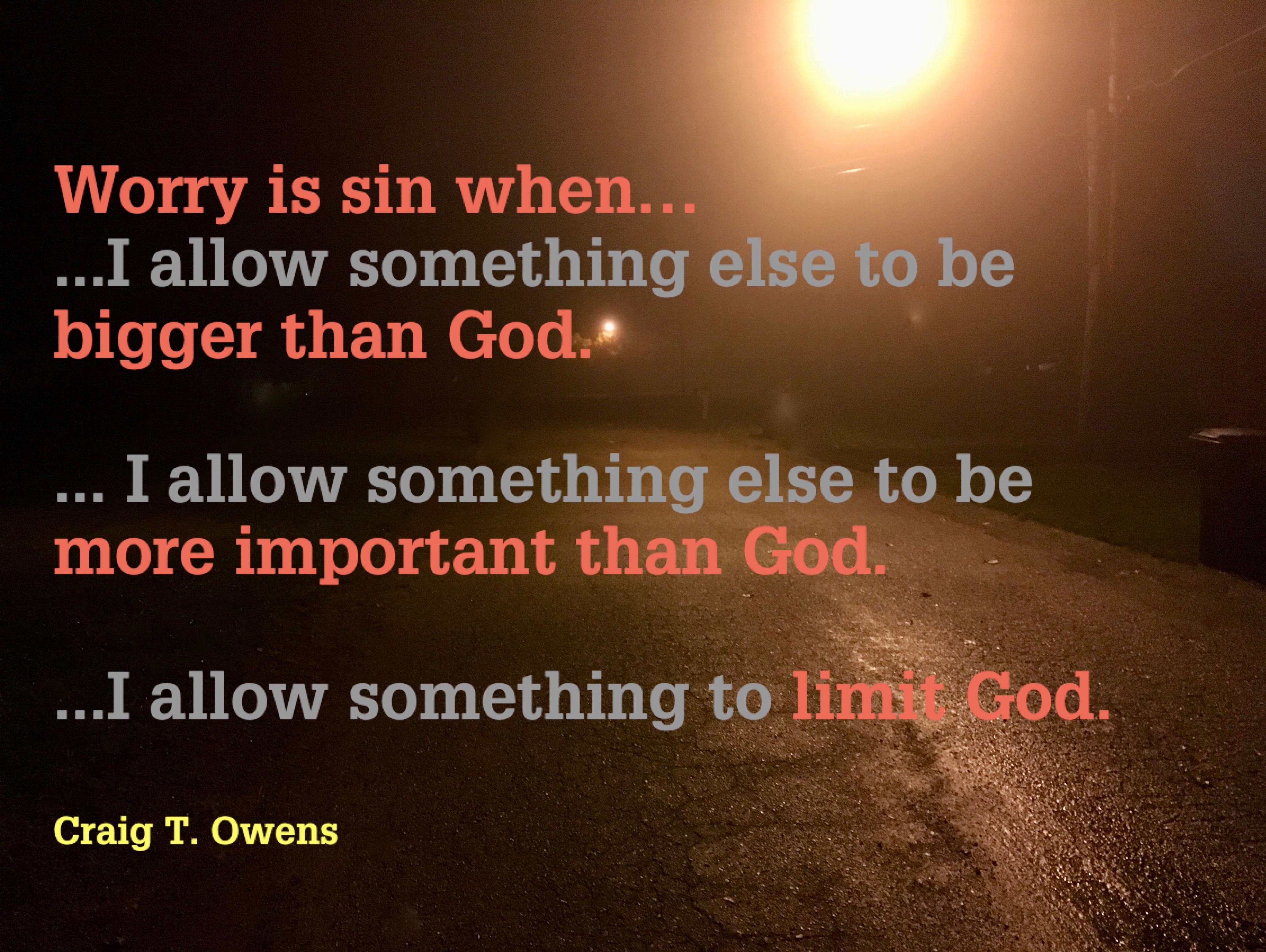
Bottom line: Worry is sin when

  • …I allow something else to be bigger than God.
  • …I allow something else to be more important than God.
  • …I allow something to limit God.
  • …I look more to myself for solutions than I look to God.

Any worry should be a call to prayer: Don’t worry about anything; instead, pray about everything. Tell God what you need, and thank Him for all He has done. Then you will experience God’s peace, which exceeds anything we can understand. His peace will guard your hearts and minds as you live in Christ Jesus. (Philippians 4:6-7)

Any extended worry should be a call to repentance: Jesus commands us four times, “Do not worry” (Matthew 6:25-34).

Worry can be disguised in a lot of different forms, but it’s still worry. And it’s still sin. I’m working on this.  

Grateful For My Powerlessness

This has been a very hard week!

I conducted a funeral service yesterday for a family whose baby died after only 18 days on earth. As a pastor, without a doubt the most physically-, emotionally-, spiritually-, and mentally-draining activity I do is a funeral. The Bible says that we grieve with those who grieve, and yet in the midst of that grieving, the family and loved ones are still turning to me to give them answers. Sometimes it seems there are more questions than answers. Between the grieving and the answer seeking, it’s very draining!

But God was gracious to me. He gave me a comforting word to share at the funeral, and at the conclusion eight people said that after their days on earth were done they wanted to have the assurance that they would be welcomed into God’s presence, just as baby Blake was. I had the privilege of praying with those folks as they invited Christ into their lives!

Probably the second-most draining thing I have to do as a pastor is deal with problems in the church. And, boy, did a big one crop up this week! It was supposed to culminate in a meeting this afternoon. So yesterday I was dealing with my two most draining issues at the same time! Today, this church problem wasn’t resolved, but God gave me such a peace about its outcome. I’m not sure what’s going to happen next, but what a peace flooded my heart to let me know that He is in control.

This morning I read this great quote from Oswald Chambers—

“It is a good thing to feel our own powerlessness in the face of destruction, it makes us know how much we depend upon God. … When a man gets to despair he knows that all his thinking will never get him out, he will only get out by the sheer creative effort of God, consequently he is in the right attitude to receive from God that which he cannot gain for himself.”

I am grateful today for my powerlessness. I am grateful that I feel so dependant on God. I am grateful for the sheer creative effort of God. And I am grateful for His peace.

I’m also grateful for the challenges. Why? Because without the challenges, I would not have felt such gratitude for my powerlessness, God’s provision, and God’s peace.