Poetry Saturday—If

Ella Wheeler Wilcox‘Twixt what thou art, and what thou wouldst be, let

No “If” arise on which to lay the blame.
Man makes a mountain of that puny word,
But, like a blade of grass before the scythe,
It falls and withers when a human will,
Stirred by creative force, sweeps toward its aim.

Thou wilt be what thou couldst be. Circumstance
Is but the toy of genius. When a soul
Burns with a god-like purpose to achieve,
All obstacles between it and its goal
Must vanish as the dew before the sun.

“If” is the motto of the dilettante
And idle dreamer; ‘tis the poor excuse
Of mediocrity. The truly great
Know not the word, or know it but to scorn,
Else had Joan of Arc a peasant died,
Uncrowned by glory and by men unsung. —Ella Wheeler Wilcox


Get Some Face Time

Listen to the podcast of this post by clicking on the player below, and you can also subscribe on AppleSpotify, or Audible. 

The apostle John closed his second and third letters very similarly—

I have much to write to you, but I do not want to use paper and ink. Instead I hope to visit you and talk with you face to face, so that our joy may be complete. (2 John 12; 3 John 13)

John didn’t use his advanced years, or the difficulty and expense of travel, or the busyness of his schedule, or even the inconvenience of trying to work something into someone else’s schedule as an excuse to stay home and fire off letters.

Certainly letters have their value, but they are a one-way talking TO people. Personal visits are face to face time. They are a two-way talking WITH people. And this, John says, leads to joy for both parties!

How many excuses could I use today?

  • My schedule is so busy
  • Technology is very convenient to use
  • I’m not sure if they have the time
  • I really don’t have that much to say

Can I paraphrase John’s desire in a modern setting?

I have much to say to you, but I do not want to use Facebook or Twitter or texting. Instead I hope to visit you and talk with you face to face, so that our joy may be complete.

Make some time for face time, and you’ll be increasing both your joy and the joy of your friend as you talk WITH each other.

You may also be interested in a related post called Our Growing Communication Problem.

►► Would you please prayerfully consider supporting this ministry? My Patreon supporters get behind-the-scenes access to exclusive materials. ◀︎◀︎

Watch Out For Pride

Listen to the podcast of this post by clicking on the player below, and you can also subscribe on AppleSpotify, or Audible.

This post is especially for my fellow pastors, but it would be thoughtful reading for anyone in a leadership position.

Let me state it simply: Pastor, you need to watch out for pride.

Listen to the words of A.W. Tozer—

“A clergyman is a man, and often he has a proud little kingdom of his own, a kingdom of position and often of pride and sometimes with power.”

Pride is so insidious that it can creep into the hearts of leaders at anytime.

  • When things are going well. We think to ourselves, “Look what I’ve done” or we even spiritualize it a bit to say, “Look what God’s done through me.”
  • When things are going poorly. Pride causes us to look out the window at others, instead of looking in the mirror at ourselves.
  • When we’ve successfully handled a situation. We think, “Wow, I’ve really got it!”
  • When we’ve dropped the ball and we make excuses instead of asking for forgiveness.
  • And on and on it goes….

One of the things that has helped me immensely is the thoughts Kenneth Blanchard and Phil Hodges shared in their book Lead Like Jesus. They point out that every leader has an ego. The issue is what kind of ego is it?

It can be negative: E.G.O. = Edging God Out 

It can be positive: E.G.O. = Exalting God Only

So what do we do to make sure we have the God-honoring E.G.O.?

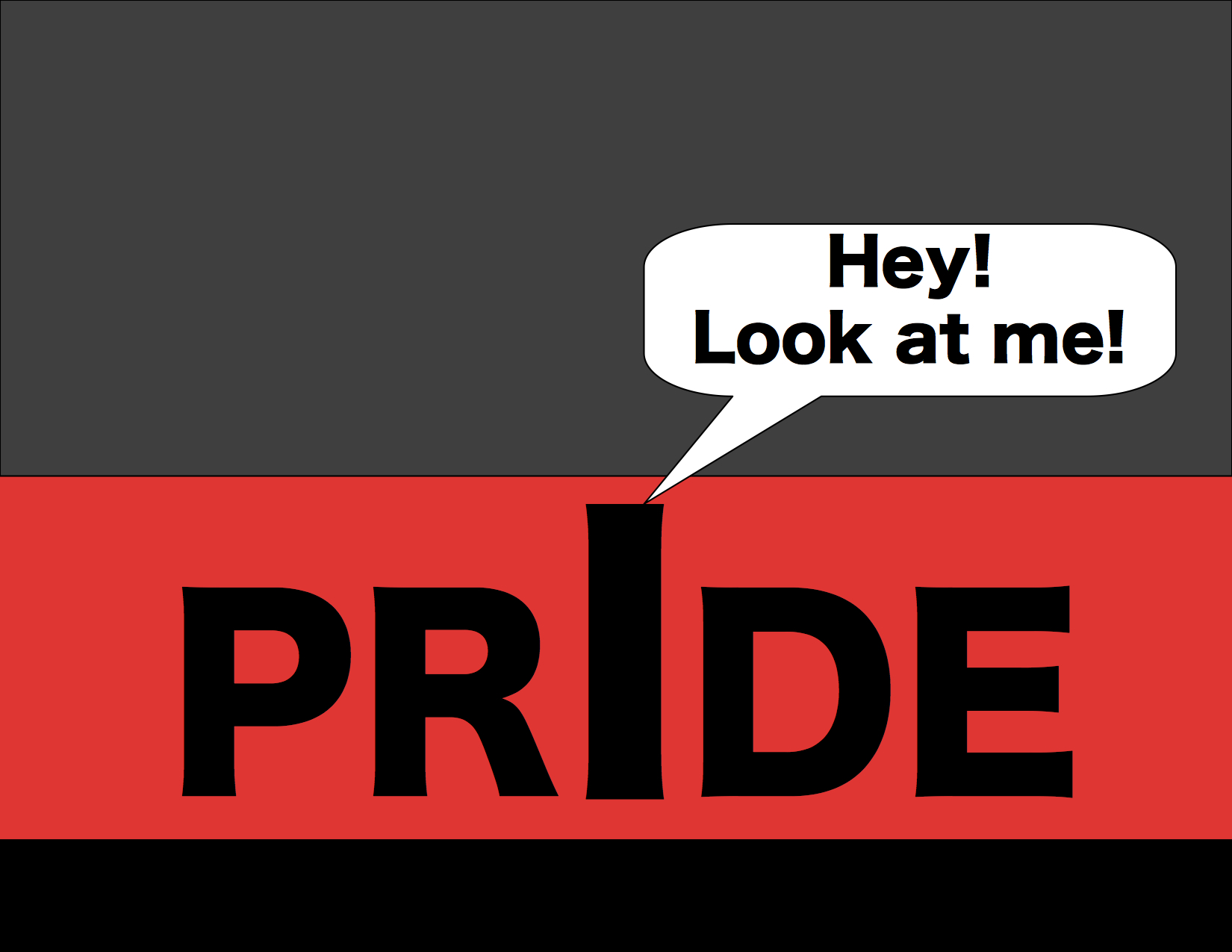
  • Look in the mirror. James says the Bible is the perfect mirror. So how does your life line up with the Scripture? Don’t sugarcoat it … Don’t make excuses … Say the words “Look at me” or “Wow, I’ve got it” out loud. Do you find those in God’s Word? If not, root it out!
  • Get some tough guys around you. You need some loving people around you that aren’t the ones writing your press releases. You need people around you that can boldly say, “Ahem! You appear to be getting off track.”
  • Monitor your gut-level responses. If you feel defensive, or if you feel the need to justify or make excuses, watch out because that’s pride’s signature.
  • Stay on your knees. Not only in prayer, but in service too. It’s awfully hard to get full of yourself when you’re washing feet, or scrubbing toilets. If you ever think any job is beneath you, watch out because you may have been infected by pride.

“Depth under depth of self-love and self-admiration. Pride! It was through Pride that the devil became the devil; it is the complete anti-God state of mind. Pride is essentially competitive in a way the other vices are not. Pride is a spiritual cancer. —C.S. Lewis

I have two companion chapters in my book Shepherd Leadership: The Metrics That Really Matter that dive deeper into this topic: “A confident leader’s attitude adjustment” and “A humble leader’s attitude adjustment.” I hope you will pick up a copy.

►► Would you please prayerfully consider supporting this ministry? My Patreon supporters get behind-the-scenes access to exclusive materials. ◀︎◀︎

Thursdays With Oswald—How To Think About Sin

This is a weekly series with things I’m reading and pondering from Oswald Chambers. You can read the original seed thought here, or type “Thursdays With Oswald” in the search box to read more entries.

How To Think About Sin

     We have to face the problem that our hearts may be right with God while our heads have a startling affinity with a great deal that is antagonistic to the Bible teaching. What we need, and what we get if we go on with God, is an intellectual re-birth as well as a heart re-birth.

     The trouble with the modern statements regarding sin is that they make sin far too slight. Sin according to the modern view simply means selfishness, and preachers and teachers are as dead against selfishness as the New Testament is. Immediately we come to the Bible we find that sin is much deeper than that. According to the Bible, sin in its final analysis is not a defect but a defiance, a defiance that means death to the life of God in us. …

     According to the Bible, sin is doing without God. Sin is not wrong doing, it is wrong being, deliberate and emphatic independence of God.

From Biblical Ethics

Sometimes I just have to read Oswald Chambers, let it soak in, read it again, and then sit back and exhale deeply. His profound insights into how a Christian should live always seem to hit me right between the eyes.

Here’s what I’m pondering: “The trouble with the modern statements regarding sin is that they make sin far too slight.” Do I make excuses for sin? Do I say, “It’s not that big of a deal”?

And this: “Sin is not wrong doing, it is wrong being, deliberate and emphatic independence of God.” Am I living each and every moment totally dependent on God? It’s when I think I can do it on my own that I am the most vulnerable to sinning.

What’s Your Excuse?

It’s so easy to make excuses, isn’t it?

  • I wasn’t feeling well
  • I don’t have enough training
  • The sun was in my eye
  • The other guy was supposed to….
  • I don’t have the right tools
  • If only….
  • I can’t because….

John Maxwell has started a new teaching series where he presents a one-minute lesson on one word every day. Today’s lesson was on excuses. Watch the clip here.

Here are some other quotes on excuses:

“Ninety-nine percent of failures come from people who have the habit of making excuses.” —George Washington Carver

“There’s a difference between interest and commitment. When you are interested in doing something, you do it only when it is convenient. When you are committed to something, you accept no excuses only results.” —Kenneth Blanchard

“Obstacles are not excuses for failure, they are opportunities for growth.” —Craig T. Owens

“People who are good at making excuses are seldom good at anything else.” —Benjamin Franklin

Let’s stop making excuses and start taking responsibility! 

Do It Quickly

Sometimes when you read about an incredible prophet like Elijah, don’t you think, “I wish God would use me like that?” I mean, why not? Was there something different about him? Even James said in the New Testament that Elijah was “just as human as we are.”

So why could use God use him so powerfully? Why not me?

I think the key is in how quickly Elijah responded when God spoke. Check this out:

Then the word of the Lord came to Elijah…. So he did what the Lord had told him.

Then the word of the Lord came to him: “Go at once to Zarephath….” So he went to Zarephath.

The word of the Lord came to Elijah: “Go present yourself to Ahab….” So Elijah went to present himself to Ahab.

See the pattern? God speaks, and in the very next verse, Elijah acts.

No delays.

No excuses.

No planning.

No extra prayer.

No companions.

Just obedience.

The next time you read your Bible and you hear the word of the Lord speak, act on it immediately.

The next time your pastor speaks the word of the Lord to you on Sunday, put it into action on Monday.

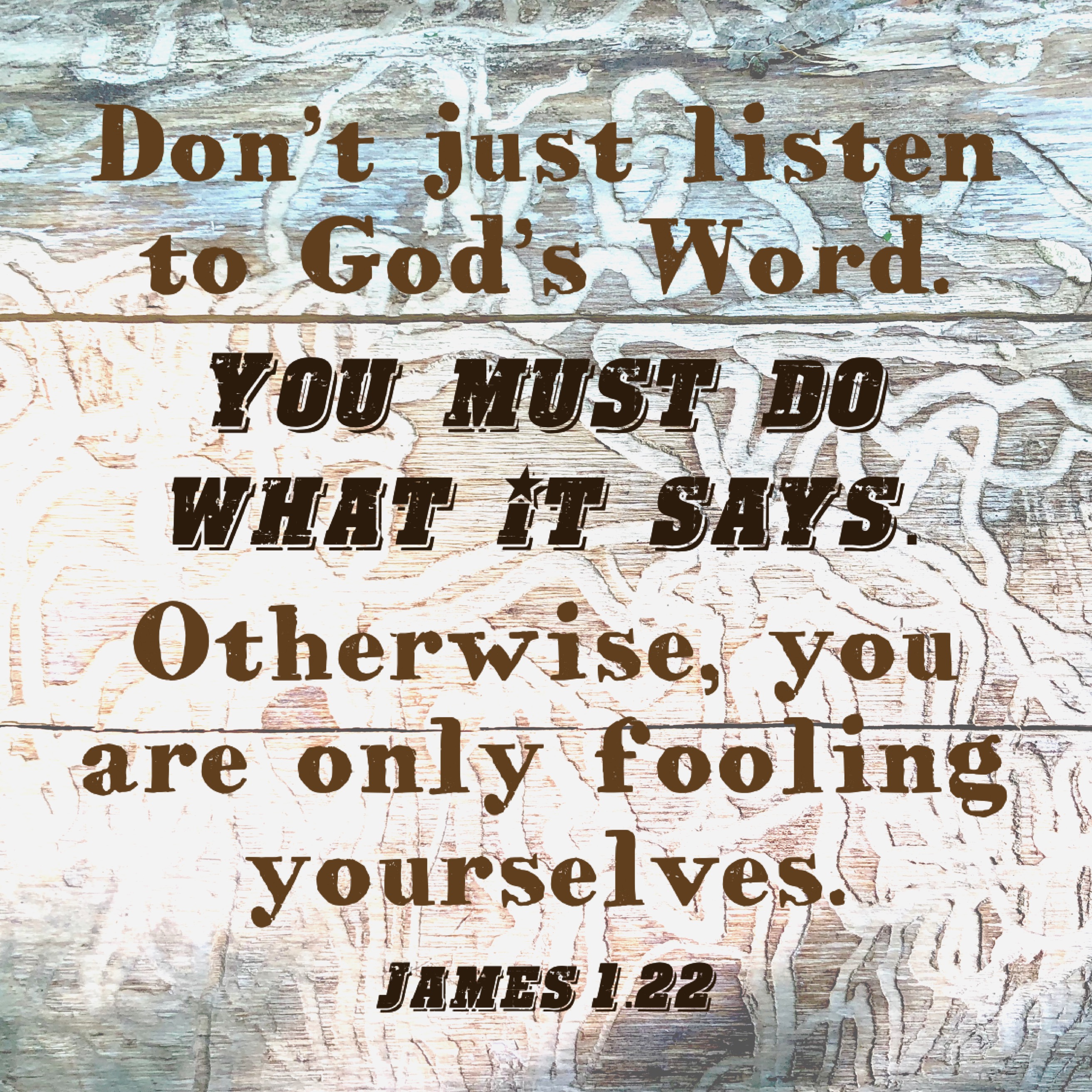
As James also said, let’s not just be hearers of the word of the Lord, let’s be immediate doers of the word.

Do it quickly and watch God begin to work through your life powerfully.

Yeah, But…

You know the story, or maybe you’ve even seen it portrayed on the big screen, where God appears to Moses in the burning bush. God handpicks Moses to lead His people to freedom. He assures Moses, “I AM the One who is sending you with My authority.” God shows Moses these miracles that He is going to do through him.

And how does Moses respond? “Yeah, but….” Sadly, this is how I usually respond too.

“Yeah, but who am I that You would handpick me?”

  • I don’t have the right credentials.
  • My family is dysfunctional.
  • I’m not comfortable with risk.
  • I’ve never done anything like this before.

“Yeah, but how do I really know this is You, God?”

  • I need a sign.
  • I’ve made mistakes before when I thought I was following You.
  • Have I mentioned I’ve never done anything like this before?

“Yeah, but what if this doesn’t work out?”

  • I need assurance.
  • I want to know where this is going to end up before I get started.
  • What happens next?

“Yeah, but how will I know what to say or do?”

  • I don’t want to look like a fool.
  • I don’t want to be embarrassed.
  • I want to be in control.

It’s interesting to see that God patiently answered all of Moses’ “Yeah, but” questions. It was only when Moses reached the conclusion “You’ve got the wrong guy” that God became angry.

Moses’ first response was his best response: Here I am.

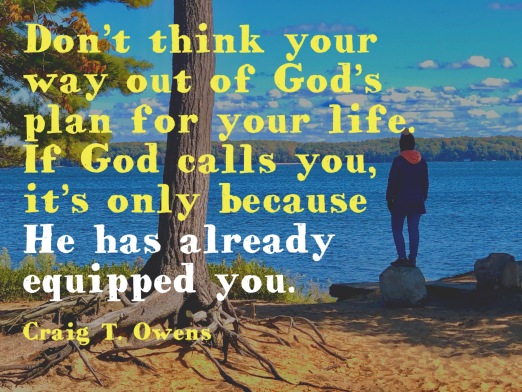
This is what usually happens to me. God calls me to do something or say something for Him, and I immediately say, “Here I am.” Then I begin to think about what I just committed to. It’s then that I come up with all my “Yeah, but” reasons why I can’t be the guy God thinks I am. In other words, I think my way out of God’s plan for me.

Here’s what I need to remember: If God calls me, it’s only because He has already equipped me.

For we are God’s workmanship, created in Christ Jesus to do good works, which God prepared in advance for us to do. (Ephesians 2:10)

No more “Yeah, but” second-guessing, I’m just sticking with “Here I am.”