William Carey’s Perseverance

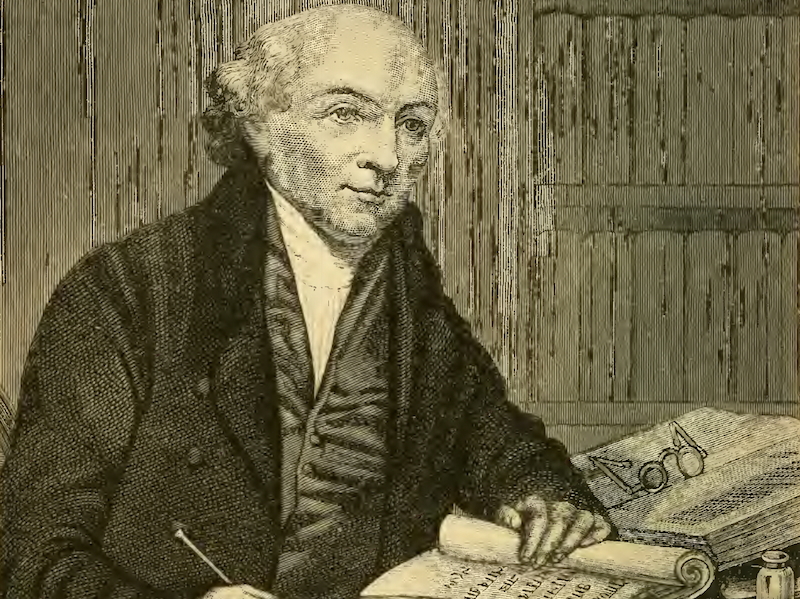
“William Carey, the ‘father of modern missions,’ wanted to translate the Bible into as many Indian languages as possible. He established a large printshop in Serampore where translation work was continually being done. Carey spent hours each day translating Scripture, while his insane wife ranted and raved.

“Carey was away from Serampore on March 11, 1832. His associate, William Ward, was working late. Suddenly Ward smelled smoke. He leaped up to discover clouds belching from the printing room. He screamed for help, and workers passed water from the nearby river until 2 a.m., but everything was destroyed.

“On March 12, 1812 missionary Joshua Marshman entered a Calcutta classroom where Carey was teaching. ‘I can think of no easy way to break the news,’ he said. ‘The printshop burned to the ground last night.’ Carey was stunned. Gone were his massive polyglot dictionary, two grammar books, and whole versions of the Bible. Gone were sets of type for 14 eastern languages, 1200 reams of paper, 55,000 printed sheets, and 30 pages of his Bengal dictionary. Gone was his complete library. ‘The work of years—gone in a moment,’ he whispered.

“He took little time to mourn. ‘The loss is heavy,’ he wrote, ‘but as traveling a road the second time is usually done with greater ease and certainty than the first time, so I trust the work will lose nothing of real value. We are not discouraged; indeed the work is already begun again in every language. We are cast down but not in despair.’

“When news of the fire reached England, it catapulted Carey to instant fame. Thousands of pounds were raised for the work, and volunteers offered to come help. The enterprise was rebuilt and enlarged. By 1832, complete Bibles, New Testaments, or separate books of Scripture had issued from the printing press in 44 languages and dialects. The secret of Carey’s success is found in his resiliency. ‘There are grave difficulties on every hand,’ he once wrote, ‘and more are looming ahead. Therefore we must go forward.’” —from On The Day

The Gift Of Fanny Crosby


Image processed by CodeCarvings Piczard ### FREE Community Edition ### on 2016-02-09 20:53:56Z | http://piczard.com | http://codecarvings.com“The hymns To God Be the Glory, Blessed Assurance, All the Way My Savior Leads Me, and He Hideth My Soul remind us that it’s never too late to begin serving Christ. Some people start as children, others as teens or young adults. But Moses was 80 when God commissioned him, and Paul was middle-aged. So was Fanny Crosby, author of the above hymns.

“Fanny was born in a cottage in South East, New York, in 1820. Six weeks later, she caught a cold in her eyes, and a visiting doctor prescribed mustard poultices, leaving her virtually blind for life. Growing into childhood, she determined to make the best of it, writing at age eight:

O what a happy soul I am!
Although I cannot see, 
I am resolved that in this world contented I will be.

“Fanny spent many years in New York’s Institution for the Blind, first as a student, then as a teacher and writer-in-residence. Her career flourished; her fame swelled. She recited her poems before Congress and became friends with the most powerful people in America, including presidents. But not until 1851 did Fanny meet her greatest friend, the Lord Jesus. While attending a revival meeting at John Street Methodist Church in New York, she later recalled, a prayer was offered, and ‘they began to sing the grand old consecration hymn, “Alas! And Did My Savior Bleed?” and when they reached the line, “Here, Lord, I give myself away,” my very soul was flooded with celestial light.’

“Fourteen years later she met the hymnist William Bradbury, who told her, ‘Fanny, I thank God we have met, for I think you can write hymns.’ Bradbury suggested an idea for a song he needed, and on February 5, 1864, Fanny Crosby, seizing his idea, wrote:

We are going, we are going
To a home beyond the skies
Where the fields are robed in beauty
And the sunlight never dies.

“It was her first hymn, and she was 44. But by the time she reached her ‘home beyond the skies’ 50 years later, she had written 8,000 more.” —From On This Day

The Unusual History Of The King James Bible

on-this-day“How odd that the most famous Bible in history should bear the name of a hard-drinking, foul-mouthed, ego-driven homosexual who rejected all demands for reform within the church.

“James VI of Scotland, son of imprisoned Mary, Queen of Scots, was raised in drafty Scottish castles by self-serving lords. He grew up religious and well-trained in theology. He went to church every day. But he was rude, rough, loud, conceited, and bisexually immoral. He was also shrewd.

“At age 37 he managed to succeed his cousin, Elizabeth I, as England’s monarch. As he traveled from Scotland to London, he met a group of Puritans bearing a ‘Millenary Petition’ signed by nearly 1,000 pastors. It demanded renewal within the church. The Puritans, stirred by the Geneva translation of the Bible and by Foxe’s popular Book of Martyrs, wanted to purify the church. The established clergy opposed Puritan demands, and the new king realized his kingdom was torn.

“He convened a conference for church leaders at his Hampton Court estate on January 12, 1604, and the Puritans vigorously presented their concerns. James rejected their requests, sometimes thundering against them, white with rage. At the conclusion of the conference he flung his arm toward the Puritans, shouting, ‘I shall make them conform or I will harry them out of this land, or do worse.’ Many of the dispirited Puritans, abandoning hope for the Anglican Church, began worshiping in small groups as they felt the Bible taught them. They were tagged Separatists, but from these persecuted cells came the Baptists in 1611, the Pilgrims who fled to America in 1620, and other dissenting groups.

“But on one issue at Hampton Court the king and Puritans had agreed. When Puritan John Rainolds requested a new translation of the Bible, James promptly approved it, saying, ‘I have never yet seen a Bible well-translated. But I think the Geneva is the worst.’ Seven years later the Authorized Version was unveiled, ironically making vice-prone King James one of the best-recognized names in English church history.” —Robert Morgan, On This Day

The Bad Habits Of Jesus (book review)

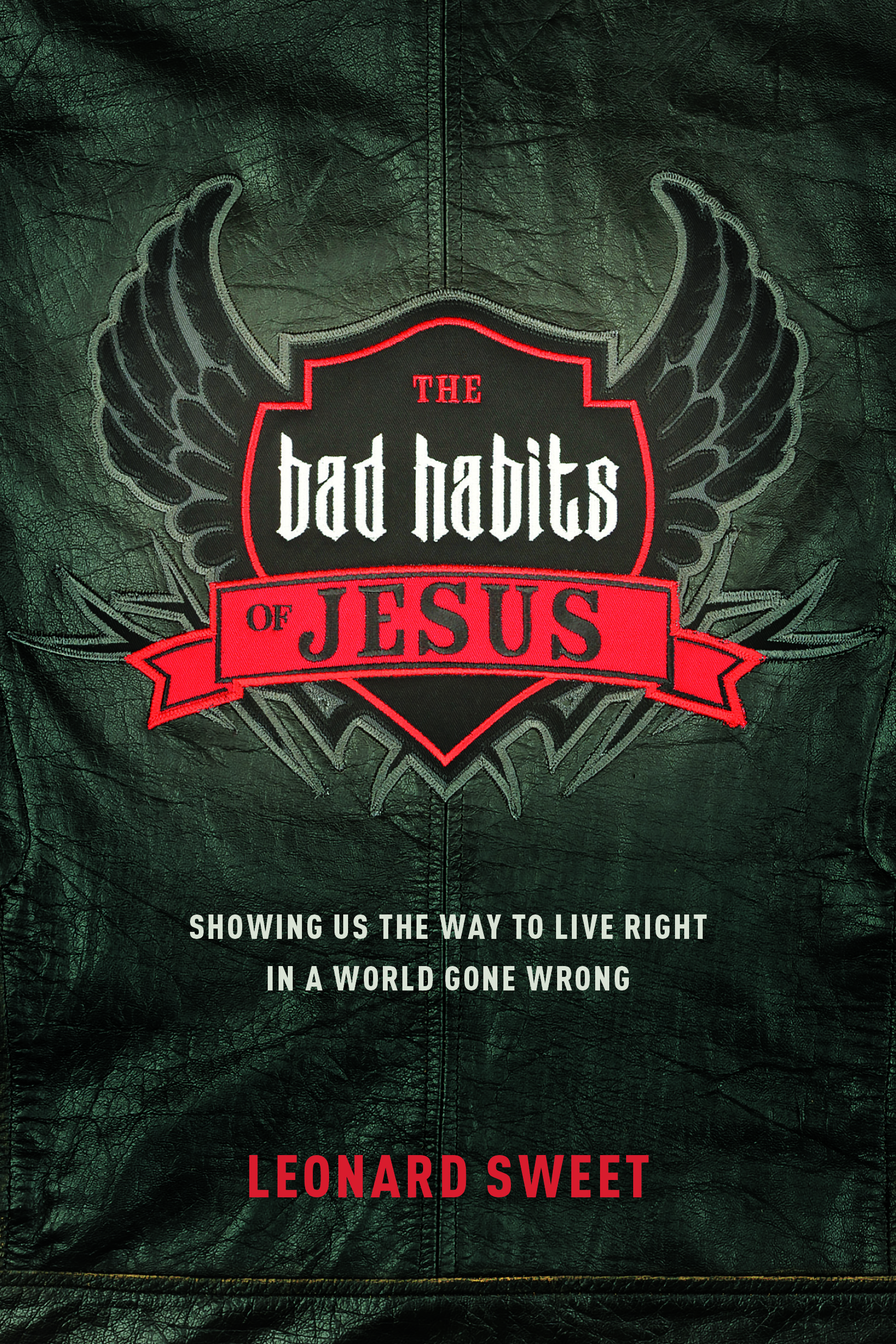
the-bad-habits-of-jesusMy wife asked me what book I was reading, and I told her, “The Bad Habits Of Jesus by Leonard Sweet.” Her quick reply was, “Oh, He didn’t have any!” Her gut reaction to this book’s title is probably the gut reaction of most Christians. But to think of Jesus that way is to completely misconstrue how much of a revolutionary Jesus was!

Sweet gives us 15 bad habits Jesus demonstrated while He lived and ministered in first-century Israel. They were “bad habits” because they went against the grain of all that polite, religious society had ingrained in the culture.

To give you an idea, let me list just one of Jesus Christ’s bad habits: He enjoyed the company of women. I know today many people would say, “Yeah, so what’s the big deal.”

The big deal is that women were called “misbegotten” by Aristotle. They were persona non grata if they weren’t in the company of their fathers or husbands. They could be mistreated or divorced solely because their husbands wanted to. And women could never—ever!—be a student of a rabbi.

And yet Jesus not only taught women, but He treated them with a dignity and respect that was unheard of in His culture. He allowed them to have key roles in supporting His ministry, and He elevated their value in society. Leonard Sweet points out, “Jesus is the first Person in recorded history, in fact, to critique the ‘male gaze,’ saying that ‘Anyone who looks at a woman lustfully has already committed adultery with her in his heart.’ Jesus took the proverb ‘As he thinks in his heart, so is he’ seriously but went beyond ‘Don’t do it’ to ‘Don’t even think about it!’” Jesus protected women like they had never been protected before.

This is truly an innovative, paradigm-busting, eye-opening book, and in the process, my understanding of what Jesus taught and demonstrated in the Gospels was expanded as well. The Bad Habits Of Jesus is written in such an engaging style that you will have a hard time putting it down.

I am a Tyndale book reviewer.

Encouragement For The Parent Of A Prodigal

There is perhaps nothing more heart-wrenching for a Christian parent than to see their son or daughter living a life differently than how they were raised.

One biblical promise these parents can claim in prayer is—Train up a child in the way he should go: and when he is old, he will not depart from it (Proverbs 22:6).

But perhaps an historical example might be helpful as well—

He was born in 354 in a North African town set among the woods near the Mediterranean. His father was a pagan, but his mother, Monica, was of devout Christian stock. 

Augustine was an undisciplined child, idle and truant despite frequent beatings. He loved sports and pranks and soon discovered a host of adolescent pleasures. … Augustine was also brilliant, and he soon moved to Carthage to further both his studies and his fun. Monica warned him against fornication, but ‘I ran headlong with blindness.’ 

At about 18 he found himself the father of a son. At the same time he joined a cult. Years passed, and Monica, praying ceaselessly, heard that Augustine was planning to leave Africa for Rome. She begged him not to go. When he refused, she determined to go with him. Using deception, he left her praying in a chapel and sailed without her; but she took a later boat and intercepted him. They traveled to Milan where she persuaded him to listen to the great Bishop Ambrose. The bishop’s razor-sharp sermons penetrated Augustine’s head, if not yet his heart. Monica continued praying, confiding her struggles to Ambrose. He told her not to worry: ‘It isn’t possible for the son of such prayers to be lost.’ 

One day as Augustine sat in a friend’s garden he heard a child singing, ‘Take up and read!’ He opened the Bible near him and read from Romans 13: ‘Don’t go to wild parties or get drunk or be vulgar or indecent.… Let the Lord Jesus Christ be as near to you as the clothes you wear.’ By the time he finished the sentence, he later said, he was converted. On the eve of Easter, April 24, 387, Augustine and his son Adeodatus were baptized by Ambrose as Monica watched. Her lifetime of prayer was answered, and a church father was born.

Years later as Augustine shared about his conversion in his book Confessions, he wrote out this prayer to God: “My mother, Your faithful servant, wept to You for me, shedding more tears for my spiritual death than others shed for the bodily death of a son. You heard her.

So, Christian Mom and Dad, don’t EVER stop praying for your wayward child! God hears those prayers, and is moving on behalf of your child.

The Tabernacle Of Israel (book review)

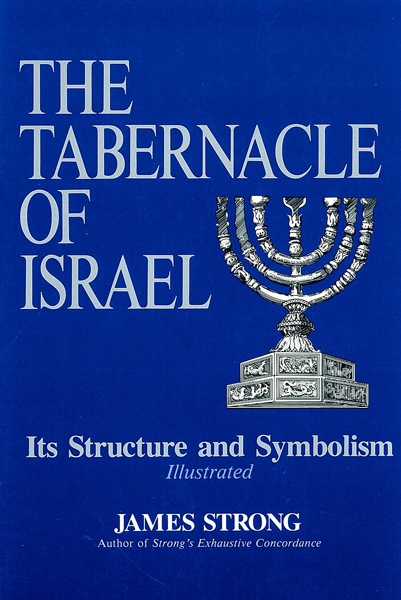
the-tabernacle-of-israelIf you have ever used the Strong’s Exhaustive Concordance Of The Bible, you are probably familiar with the work of Dr. James Strong. By the way, if you haven’t used this concordance, it is 1500+ pages listing every word in the Bible and their Hebrew or Greek word and definition. By contrast, Dr. Strong’s book on The Tabernacle Of Israel is only 170 pages, but it’s just as jam-packed with helpful information.

I was recently reading through the books of the Bible where God gives Moses highly specific instructions for the portable Tabernacle that is to be used for the Hebrews to conduct their worship services. This temporary Tabernacle not only served them while they sojourned in the wilderness for 40 years, but it became the pattern for the brick-and-mortar Temple that King Solomon built years later, and its pattern is referred to again in the New Testament book of Hebrews as being a pattern of the worship in heaven. Obviously this is a significant thing!

Dr. Strong uses his extraordinary skills to compile an easy-to-follow study of the design guidelines, building materials, and exact layout of this Tabernacle. He uses not only the biblical accounts, but also augments his work with extensive archeological discoveries.

Then to wrap up the book, Dr. Strong talks about the significance of the layout, colors, materials, and even mathematical significance of the Tabernacle’s design, showing how it still impacts the New Testament Christian to this day.

This is an academic book, but it is well worth your time if you would like to get a more in-depth knowledge of the Tabernacle which God commanded Moses to build.

10 Quotes From “On This Day”

on-this-dayI love studying church history! Robert Morgan has given us a delightful resource in his book On This Day, in which he shares snippets from history which are still impacting us today. Please check out my review of On This Day by clicking here. Then enjoy some quotes and tidbits from this amazing work.

“If we don’t know our own history, we will simply have to endure all the same mistakes, sacrifices, and absurdities all over again.” —Alexander Solzhenitsyn

“How shall we labor with any effect to build up the church, if we have no thorough knowledge of her history? History is, and must ever continue to be, next to God’s Word, the richest foundation of wisdom, and the surest guide to all successful practical activity.” —Philip Schaff

“Here am I, send me; send me to the ends of the earth; send me to the rough, the savage pagans of the wilderness; send me from all that is called comfort on earth; send me even to death itself, if it be but in Thy service and to promote Thy kingdom.” —David Brainerd

“During his lifetime Charles Spurgeon preached to approximately 10,000,000 people. … Today there is more material written by Spurgeon than by any other Christian author of any generation. The collection of his Sunday sermons stands as the largest set of books by a single author in the history of the church.” —Robert Morgan

“What more glorious and blessed lot can fall to man by the grace of God, than to confess God the Lord amidst tortures and in the face of death itself; to confess Christ the Son of God with lacerated body and with a spirit departing, yet free; and to become fellow-sufferers with Christ. Though we have not yet shed our blood, we are ready to do so.” —Christians in Rome wrote from prison to Bishop Cyprian of Carthage

“After the war William Sangster headed Britain’s Methodist home missions department until he was diagnosed with progressive muscular atrophy. For three years he slowly died, becoming progressively more paralyzed, finally able to move only two fingers. But his attitude didn’t falter, for when first learning of his illness, Sangster made four rules for himself. Many people have rules for living. Sangster composed four rules for dying: ‘I will never complain. I will keep the home bright. I will count my blessings. I will try to turn it to gain.’ He did all those things. And thus the work of God was displayed in his life, and God’s strength was made perfect in his weakness.” —Robert Morgan

“If the veil of the world’s machinery were lifted off, how much we could find is done in answer to the prayers of God’s children.” —Robert Murray McCheyne

“I went to Africa as prejudiced against religion as the worst infidel in London. But I saw this solitary old man there, and I asked myself, ‘What is it that inspires him?’ For months I found myself listening to him, wondering at the old man carrying out the words, ‘leave all and follow Me.’ Little by little, seeing his piety, gentleness, zeal, and how he went quietly about his business, I was converted by him.” —Henry Stanley writing about Dr. David Livingston

“I am greatly a debtor to God, Who has bestowed His grace so largely upon me, that multitudes were born again to God through me. The Irish, who had never had the knowledge of God and worshipped only idols and unclean things, have lately become the people of the Lord, and are called sons of God.” —St. Patrick, in his Confessions

“I cannot tell you what joy it gave me to bring the first soul to the Lord Jesus Christ. I have tasted almost all the pleasures this world can give. Those pleasures were as nothing compared to the joy that the saving of that one soul gave me.” —C.T. Studd

These quotes are just a few of the powerful stories throughout this book. Stay tuned for more!

On This Day (book review)

on-this-dayI truly believe George Santayana’s maxim about learning from history so that we don’t have to repeat its painful lessons. On This Day: 365 Amazing and Inspiring Stories about Saints, Martyrs and Heroes by Robert Morgan not only helped me learn history, but see that history through a biblical lens.

Each day of the year Robert Morgan will introduce you to someone who played a key part in church history. Some of the names will be well-known to you, and some of them will be brand new; some of the stories will make you smile, and some will break your heart. But all of the stories reinforced two major themes for me—(1) All of history is God’s story, and (2) God uses ordinary people to accomplish His extraordinary purpose.

Each day’s entry is short enough that you can easily add it to your daily schedule. If you are a teacher or a parent, these stories would be a great way to talk about current events in light of what God has already done in past history. Either by yourself or with others, you will gain a greater appreciation for God and the gifts He gives to men and women.

The Qur’an And The Bible

Answering JihadIn his outstanding book Answering Jihad, Nabeel Qureshi gives us an understanding of the beliefs which support the Islamic faith. One thing that is key for Muslims is their reliance on multiple sources for definitive answers to their faith. Nabeel explains it this way…

“The Qur’an that was the first Arabic book ever put into writing, and the Arabic script of the seventh century remained too deficient to capture the richness and complexities of its text. … Muslim biographers begin to write about Muhammad’s life around 770 A.D.” 

“By the middle of the ninth century, there were more than 500,000 traditions of Muhammad’s life in written and oral circulation, and Muslim scholars decided to undertake the effort of sifting through them and distilling the most authentic accounts.” 

“Since there are thousands of verses in the Qur’an and hundreds of thousands of hadith, it is expected that only trained Muslim jurists can engage in determining what sharia teachers. The jurist must give primacy to the Qur’an, then consider the actions (sunnah) and sayings (hadith) of Muhammad, followed by reviewing the consensus of Islamic scholars, or ijma, before using his own reasoning (qiyas). By following these four steps, a Muslim jurist can make a decision, or fatwa, about what sharia teaches on a given matter. The ultimate goal is to apply the teachings of sharia to Muslim life, and that is called fiqh.” 

“As is probably clear by now, at no point was the average Muslim expected to read the Qur’an to decide upon correct Islamic practices by himself or herself. Not only is Islam not a faith that upholds the sufficiency of scripture alone, the complexity of its foundations virtually necessitates a reliance on jurists and scholars for proper practice.” 

I prefer to pattern my life after the Bible, a book which I am free to read on my own. It’s authenticity has been well-established, and it doesn’t require me to find an “expert” in the texts and traditions to explain to me how to live my life.

I would highly recommend you read two books by Nabeel Qureshi: Seeking Allah, Finding Jesus and Answering Jihad. If you are curious about the claims of the Bible, you can check out God-Breathed and Questions Christians Hope No One Will Ask. And if you want to dig any deeper, search this website for the quotes I have posted from all four of these books.

Archeological Study Bible (book review—part 2)

Archeological Study BibleI wrote a review on the Archeological Study Bible when I was roughly halfway through the Bible, but as I have now finished, I thought another review was in order.

Zondervan did an amazing job on this project! I love reading the Bible, and I love studying history, and this study Bible helped me to do both of those things without getting lost on too many “rabbit trails.” Some study Bibles I have read require a lot of page flipping to follow a thought or do a little research. But the ABS kept the historical articles, maps, and graphics close at hand to the biblical text I was reading, so page flipping was kept to a minimum.

At over 2300 pages, there is so much history that came alive as I read through the Bible. I also read through the Bible in chronological order, so I really felt like the ABS was helping me move seamlessly along the timeline of history.

Purchasing this Bible gives you access to an online gallery of many of the photos and other study materials. I also purchased the Kindle version of this Bible, to make searching for content much easier.

If you are looking for a fresh way to study the history surrounding the Scripture, I highly recommend the Archeological Study Bible to you.