Links & Quotes

Ken Blanchard shared a blog post based on one of the chapters in his book Simple Truths Of Leadership (which I highly recommend to leaders!). He wrote, “When you catch yourself doing things right, everything in your life will improve—especially your relationships. Why? Because it’s fun to be around people who like themselves. After all, if you’re not your own best friend, who will be? And as my dad used to say, ‘If you don’t toot your own horn, others might use it as a spittoon!’”

For all Christians, but especially for those in leadership positions, Jon Bloom shares How to Watch for Wolves: Three Signs of False Teachers.

Fight The New Drug shares the research behind 15 Basic Facts About Human Sex Trafficking.

This is a great lesson from church history on the power of importunate prayer: The Hundred-Year Prayer Meeting.

Mary Slessor set a high bar for missionaries. John Stonestreet reminds us of this amazing woman.

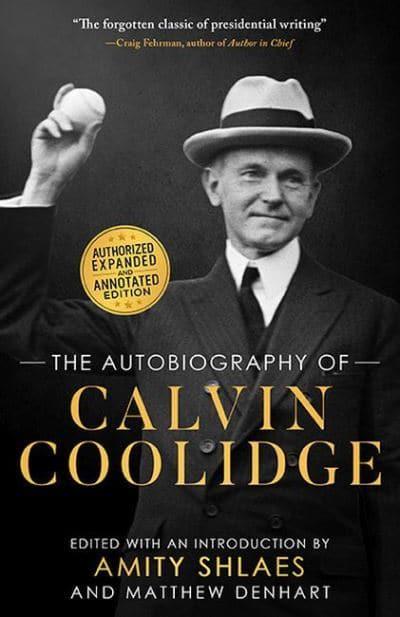
Autobiography Of Calvin Coolidge (book review) 

Listen to the podcast of this post by clicking on the player below, and you can also subscribe on AppleSpotify, or Audible. 

Calvin Coolidge is the only US president to have been born on July 4, which I think is very fitting for him, since his political philosophy found its firm foundation in our nation’s remarkable founding. In a very modest fashion, President Coolidge relates his amazing career in his autobiography. 

I’m not sure how the title “Silent Cal” ever stuck to this president. Throughout his legal and political career, his speeches—almost all of which he wrote himself—are some of the most thoughtful and enduring speeches in our nation’s history. His voice seemed to resonate across the political aisle too, because at each subsequent election, Coolidge would be elected by larger margins than before, with more Democrats crossing over to vote for him each time. 

Coolidge stood strong during a potentially disastrous Boston police strike while he was governor of Massachusetts, and he transitioned our government’s activities and expenditures from the wartime outlay of Word War I back into the peacetime activities after the war. He never wavered from his adherence to the principles in our founding documents, remaining a strong proponent of states’ rights and a smaller federal budget. 

He was quite progressive, utilizing the new media of radio to get his thoughts out to as many people as possible while championing topics like women’s suffrage, lower taxes, and a stronger working class. 

And then at the height of his political career, he chose not to run for reelection to the presidency, walking away from an almost guaranteed victory to a second term. 

Calvin Coolidge was a fascinating leader, one which both those in and out of politics should strive to emulate. As a student of leadership myself, I highly recommend this book to both American history buffs and those desiring to increase their leadership acumen. 

►► Would you please prayerfully consider supporting this ministry? My Patreon supporters get behind-the-scenes access to exclusive materials. ◀︎◀︎
Spurgeon And The Psalms (book review)

Listen to the podcast of this post by clicking on the player below, and you can also subscribe on AppleSpotify, or Audible. 

Spurgeon And The Psalms hits a sweet spot for me: Charles Spurgeon is one of my favorite preachers and the Psalms are my go-to resource when I need encouragement, perspective, or vocabulary for my heartfelt prayers. The combination of the Prince of Preachers and the Psalter grabbed my attention before I even opened the cover.

After I opened the cover, I was not disappointed. I love the format of each chapter. For each chapter your eyes go to Charles Spurgeon’s commentary first, and then you can read the chapter itself. The reason why I like this layout is because Spurgeon has a tendency to tell us not what the psalmist says, but what we should look for as we read that psalm. This remains true to what Spurgeon himself felt about biblical commentaries.

I always make my Bibles my own. By that I mean that I underline, highlight, circle, and write margin notes throughout my Bible. The wide margins in this book make it ideal to use as a prayer companion. I believe the Bible is not a Book to be read through, but a Book to be prayed through. Nowhere is that more true than in the Psalms, where such deep emotions are poured out in God’s presence, helping us give voice to our deepest prayers.

If you have never read anything from Charles Spurgeon, this is an excellent place to get started. After you have read his insights here, I’m confident that you will want to read more. Even if you are familiar with Spurgeon’s sermons and books, this book is going to be an excellent addition to your library.

I am a member of the Bible Gateway Blogger Grid and I reviewed this book at their invitation 

►► Would you please prayerfully consider supporting this ministry? My Patreon supporters get behind-the-scenes access to exclusive materials. ◀︎◀︎
Simple Truths Of Leadership (book review)

Listen to the podcast of this post by clicking on the player below, and you can also subscribe on AppleSpotify, or Audible. 

Kenneth Blanchard cranks out the leadership books! What I love about his writing style is how he makes his leadership principles so accessible in just a few words. Most of his books contain an overarching concept that’s easy to grasp and immediately applicable. But Simple Truths Of Leadership, which he co-wrote with Randy Conely, is a slight departure from this predictable style. 

Simple Truths—as its title implies—still presents easy-to-grasp principles, but this book has a different feel to it. I think the best way I can describe this book is as an index to Blanchard’s earlier leadership books. 

The overall emphasis of this book is servant leadership, with all of these simple truths being presented to us in 52 snippets. Each snippet gives the reader more than enough information to get to work, but then there is a reference given to a book previously written or co-written by Kenneth Blanchard to allow for a deeper study of that principle. This is why the overall feel of this book is as an index to the other books. 

Whether you’ve read Kenneth Blanchard’s leadership books before, or if this is your first time picking up something he’s written, Simple Truths is a great book to add to your leadership library. 

►► Would you please prayerfully consider supporting this ministry? My Patreon supporters get behind-the-scenes access to exclusive materials. ◀︎◀︎

The Holy War (book review)

Listen to the podcast of this post by clicking on the player below, and you can also subscribe on AppleSpotify, or Audible. 

Many of the principles taught in the Bible are conveyed to us through graphic stories. Think about some of the imagery the prophets of the Old Testament used or even the parables Jesus used in the New Testament. In fact, even the Hebrew language of the Old Testament and the Greek language of the New Testament are very picturesque languages. John Bunyan takes full advantage of this in his book The Holy War. 

If you have ever read a John Bunyan book or sermon, it is quite obvious that the Bible is his Source Book. In fact, Charles Spurgeon said of him, “Why, this man is a living Bible! Prick him anywhere—his blood is Bibline, the very essence of the Bible flows from him. He cannot speak without quoting a text, for his very soul is full of the Word of God.” Much like The Pilgrim’s Progress, The Holy War is steeped in biblical imagery that makes the story so engaging. 

The title and subtitle of the book alone tell you the essence of the story: The holy war made by Shaddai upon Diabolus for the regaining of the metropolis of the world, or the losing and taking again of the town of Mansoul. With the assault taking place on Ear-gate and Eye-gate of Mansoul by such combatants as Lord Incredulity or Mr. Forget-Good, and the servants of King Shaddai such as Captain Conviction, Mr. Justice, and Mr. True-Man drawing up battle lines against the town, you can quickly see how picturesque the language truly is. 

Much in the vein of C.S. Lewis’ The Screwtape Letters, Bunyan also lets us hear the correspondence and war counsels of Lucifer and his minions, as well as the conversation between King Shaddai and His Son Emmanuel. 

As with anything I’ve ever read from John Bunyan, The Holy War is entertaining and insightful. If you have read and enjoyed The Pilgrim’s Progress, I think you will thoroughly enjoy this book as well. 

►► Would you please prayerfully consider supporting this ministry? My Patreon supporters get behind-the-scenes access to exclusive materials. ◀︎◀︎

Who Says Elephants Can’t Dance? (book review)

Listen to the podcast of this post by clicking on the player below, and you can also subscribe on AppleSpotify, or Audible. 

Just as I was beginning my business career, Louis Gerstner was at the top of his career. Mr. Gerstner stepped in as the CEO of IBM when Big Blue was at a perilous time: This massive company was on the brink of either crumbling or soaring. Gerstner unpacks the impressive turnaround story in his book Who Says Elephants Can’t Dance? 

When I was in my teenage years, several family members were encouraging me to consider IBM for my career path. They explained that a job at IBM would become a lucrative, influential, and lifelong position. Indeed, since its founding in the early twentieth century, it had grown into a worldwide behemoth of technology. You could tell IBM employees by their distinct dress, confidence, and loyalty to Big Blue. 

But adhering to the rigid principles that both Thomas Watson Sr. and Thomas Watson Jr. had preached turned into inflexible practices that were losing the true soul of this once-great company. By the early 1990s, IBM was floundering, hemorrhaging cash, and about to experience one of the most epic collapses any organization had ever seen. 

Enter Louis Gerstner. He had developed a stellar reputation at American Express and RJR Nabisco, and was highly sought as the CEO of IBM. Except Mr. Gerstner initially didn’t want to take on this challenge. He knew how difficult it would be to lead change in an organization that was so entrenched in its nearly 100-year-old ways. 

Eventually, he did agree to step into this role, and over the next decade led one of the most comprehensive and impressive turnarounds in business history. IBM shook off stodgy practices while returning to its founding principles, refocused on customers’ needs, and as a result, regained its dominance in the technology field. 

Any organization—whether for-profit or non-profit—can get stuck in a rut. Its once-beneficial principles can morph into practices which are merely attempting to keep the machinery running, but are no longer meaningful for either team members or other stakeholders. 

Mr. Gerstner’s refocusing of the elephant-sized IBM will give any leader some invaluable insights into how to keep their organization from sliding into ineffectiveness and irrelevance. I would highly recommend this book to all leaders. 

►► Would you please prayerfully consider supporting this ministry? My Patreon supporters get behind-the-scenes access to exclusive materials. ◀︎◀︎

A Shepherd Leadership Update

Listen to the podcast of this post by clicking on the player below, and you can also subscribe on AppleSpotify, or Audible.

My friend Greg Heeres and I have been through so many things over the past 30 years. For the past couple of years, we have been presenting a leadership podcast called The Craig And Greg Show. Recently, Greg wanted to talk with me about the success of my book Shepherd Leadership: The Metrics That Really Matter, and to get an update on how the book has been received by others. 

I am so grateful that my book was listed on Amazon as a #1 new release. Shepherd Leadership: The Metrics That Really Matter is available in print or ebook, and in audiobook through either Audible or Apple.

The Roots Of Endurance (book review)

Listen to the podcast of this post by clicking on the player below, and you can also subscribe on AppleSpotify, or Audible. 

I always glean so many valuable lessons when I read the autobiographies or biographies of notable people of history. The Roots Of Endurance is the third installment in John Piper’s excellent series “The swans are not silent.” 

This book looks at the lives of John Newton, Charles Simeon, and William Wilberforce. Unlike the other books in this series, these men were all contemporaries and all of them had at least a passing relationship with each other. In fact, their lives and accomplishments were an encouragement to each other. 

Pastor John makes the case in this book that in order to endure through difficult times successfully, we must have a deep root into the joy of the Lord. This root nourishes our hearts to persevere successfully through long trials. These three men exhibit this endurance beautifully. John Newton had to endure his own struggles with his past, Charles Simeon contended with an obstinate congregation, and William Wilberforce battled pro-slavery forces in Parliament for years before the abolition of the slave trade was enacted.

All three of these men endured successfully because they trusted God so deeply. These roots of trust went deep and helped them to persevere for God’s glory.

As I have mentioned in my other book reviews from the series, anyone who enjoys biographies of godly leaders or the study of church history will thoroughly enjoy The Roots Of Endurance. 

If you would like to check out the other books in this series that I have previously reviewed, please click here, here, or here.

►► Would you please prayerfully consider supporting this ministry? My Patreon supporters get behind-the-scenes access to exclusive materials. ◀︎◀︎

Susanna Wesley (book review)

Listen to the podcast of this post by clicking on the player below, and you can also subscribe on AppleSpotify, or Audible. 

I think most people are familiar with the saying, “Behind every good man there is a good woman.” In the case of Samuel and Susanna Wesley almost the opposite is true: Susanna excelled as a godly mother despite the obstinacy and shortcomings of her husband Samuel. Arnold A. Dallimore delivers a fair overview of their lives in his biography of Susanna Wesley. 

Rev. Dallimore does an admirable job of telling Susanna’s story through the first person accounts of almost all of the Wesley family members. He has culled through the historical records, reading the letters of Samuel, Susanna, their children, and their relatives to give us a fairly unbiased look at this notable family. The subtitle of the book is, “The mother of John and Charles Wesley,” which is no small gift to the world! The preaching and song-writing ministries of these two brothers has had a huge impact on both the secular and church worlds, which is still being felt today. 

Samuel Wesley at times was distant from his family, to the extent of even abandoning them for a period of time, and was a very poor provider for his family. They were constantly in debt and struggling for the basic necessities. But despite these obstacles, Susanna created her own curriculum to instruct her children, and continued to correspond with them into their adulthood to give them her motherly wisdom. 

What a debt of gratitude we owe to this godly woman for not only persevering but thriving in the face of challenges that would have thwarted most people. And we also should be grateful to Arnold Dallimore for his well-researched biography of this amazing woman. 

(I previously reviewed Rev. Dallimore’s biography of George Whitefield.) 

►► Would you please prayerfully consider supporting this ministry? My Patreon supporters get behind-the-scenes access to exclusive materials. ◀︎◀︎

Out Of The Depths (book review)

Listen to the podcast of this post by clicking on the player below, and you can also subscribe on AppleSpotify, or Audible. 

I’ve heard it reported (and I quite believe it) that “Amazing Grace” is the best-known song in the world. This song of God’s unfathomable grace was written by a pastor who was once a slave trader. Out Of The Depths is the autobiography of slave-trader-turned-pastor John Newton. 

This story is told largely through the re-printing of letters that John Newton wrote to a friend over a lengthy correspondence. The original letters were not preserved, so as Mr. Newton wrote them again, he said that he added details that he hadn’t included in the first writing. Then the book closes with some remembrances of a dear friend, and a compilation of some short maxims that Pastor Newton used in his sermons and in conversations with friends. 

One of the real benefits of Newton writing these letters so long after the actual events is his ability to look back at the lessons he learned through his various trials. Granted, many of his trials were brought on by his own stubbornness, but still the beginning of the message of grace from his memorable hymn is heard in the recounting of these stories. 

Another key aspect of his story is his relationship with his wife. She and her family were much more committed Christians than Newton was at the time he began to show an interest in his bride-to-be, but neither she nor her family allowed the courtship to proceed until Newton had entirely surrendered his life to Jesus Christ. Their marriage was a source of great strength and encouragement to Pastor Newton. 

I highly recommend this book to those who enjoy learning about the key figures of church history. 

►► Would you please prayerfully consider supporting this ministry? ◀︎◀︎