The Point Of The Gospel

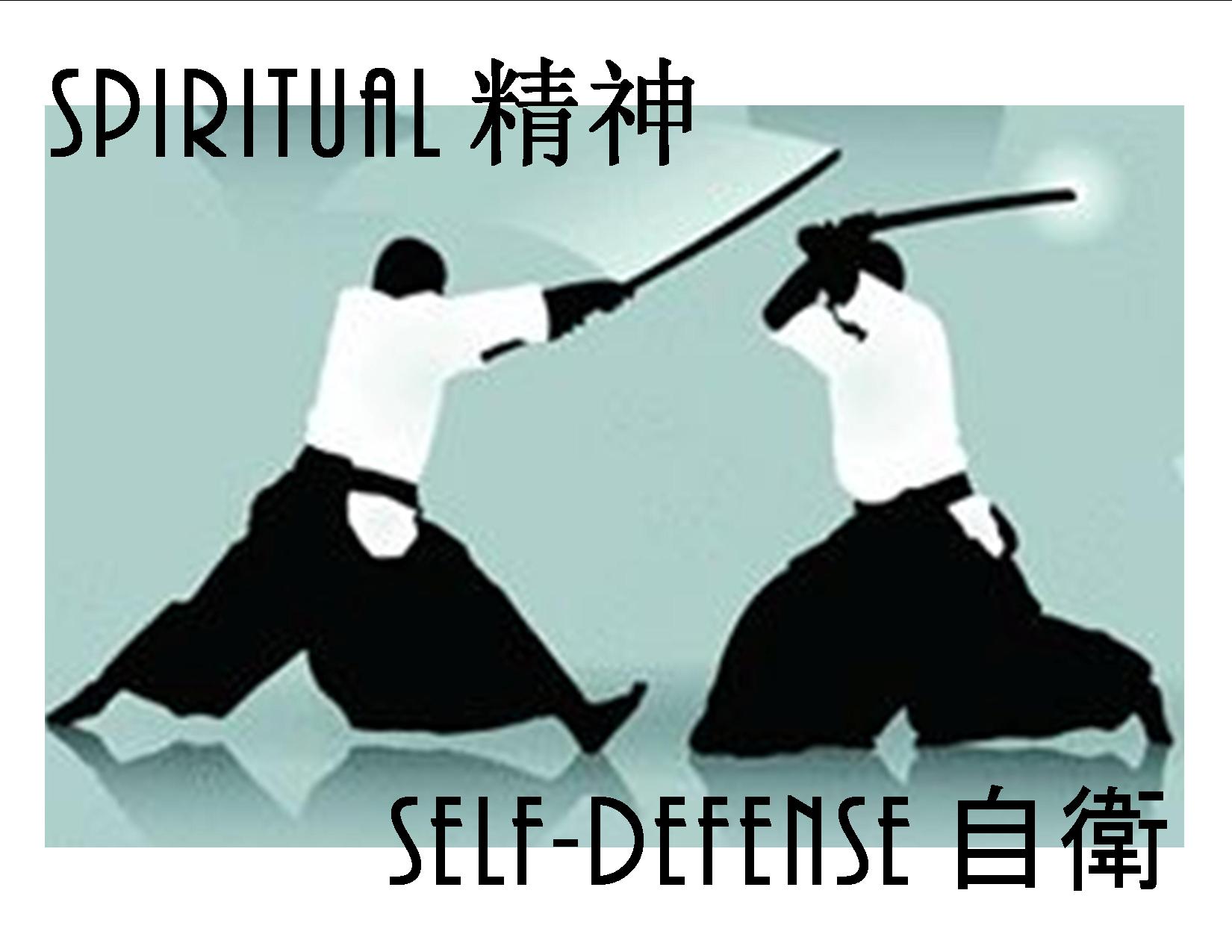
While I was preparing for our Spiritual Self-Defense class, Rick Warren tweeted this timely reminder: “If you spend more time defending the truth than actually sharing it, you will have missed the point of the Gospel.”

What is the point of the Gospel? Isn’t it simply that mankind is lost without God, and that only a relationship with Jesus can bring true life? If that’s the point, we can never argue someone into this divine relationship.

Here are some other thoughts I’m trying to keep in mind for this exciting class:

  • Jesus never shouted down those who disagreed with Him. Isaiah’s prophesy about Jesus said, “He will not shout or cry out, or raise His voice in the streets.” And that’s exactly how Jesus conducted Himself.
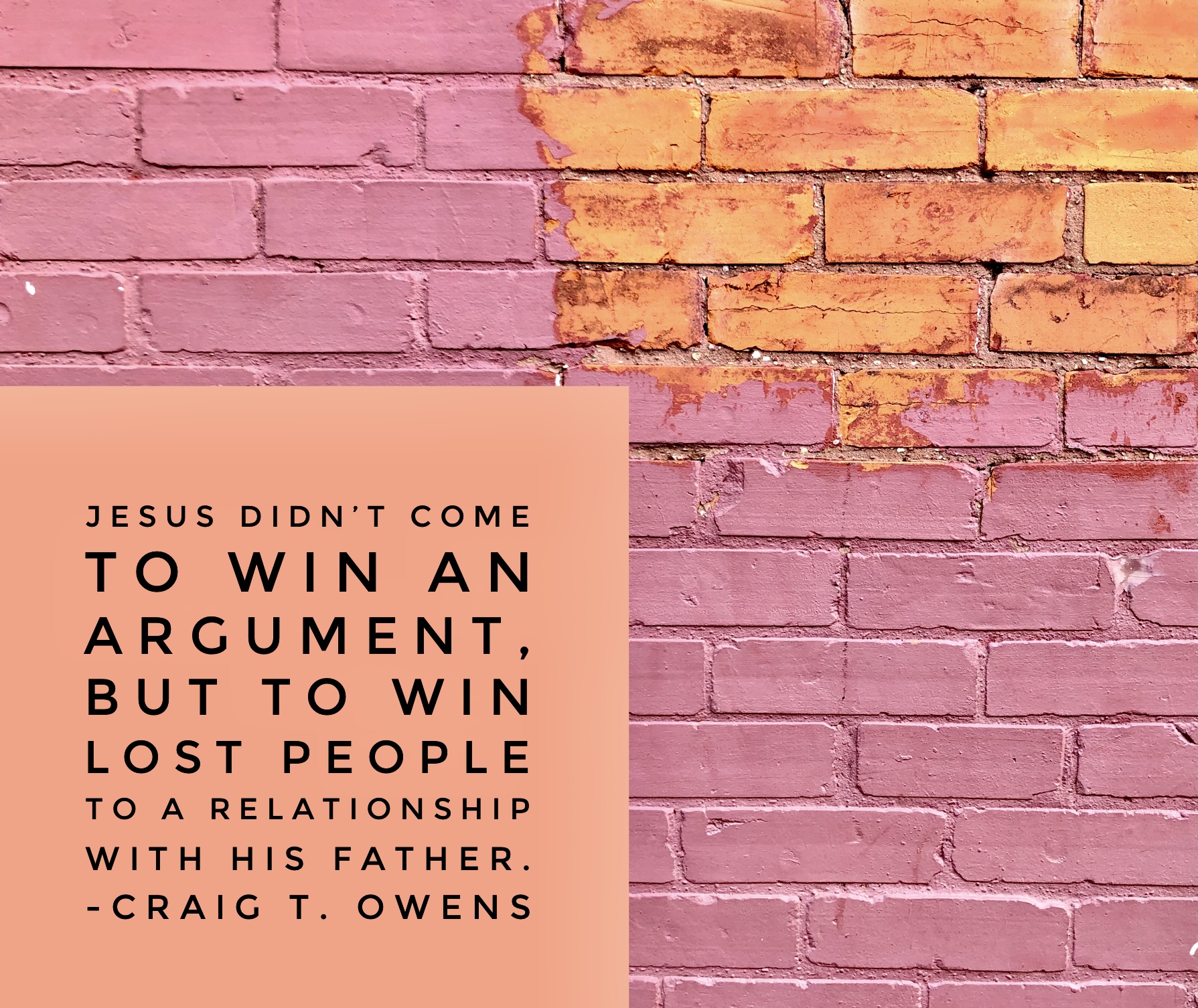
  • Jesus said, “God didn’t go to all the trouble of sending His Son merely to point an accusing finger, telling the world how bad it was. He came to help, to put the world right again.” Jesus didn’t come to win an argument, but to win lost people to a relationship with His Father.
  • There are very few exclamation points in Christ’s dialogue in the Gospels, but there are a lot of question marks. He was interested in engaging people in conversation.
  • G. K. Chesterton said, “The principle objection to a quarrel is that it interrupts an argument.” We need to discuss, not argue.

I’m really looking forward to leading this class, but I’m also excited about what I’m learning in the process.
“Amazing Grace…

…how sweet the sound, that saved a wretch like me. I once was lost but now I’m found; was blind but now I see.”

I’ve heard it reported that John Newton’s song may be the most well-known song in the world, and yet it seems we still live in a world so dominated by ungrace.

Another verse of this beloved song says, “Twas grace that taught my heart to fear, and grace my fears relieved.” How could grace bring both fear and relief? I think it is because grace is freely given. We don’t deserve grace, and yet Jesus paid a terrible price for us to recieve it.

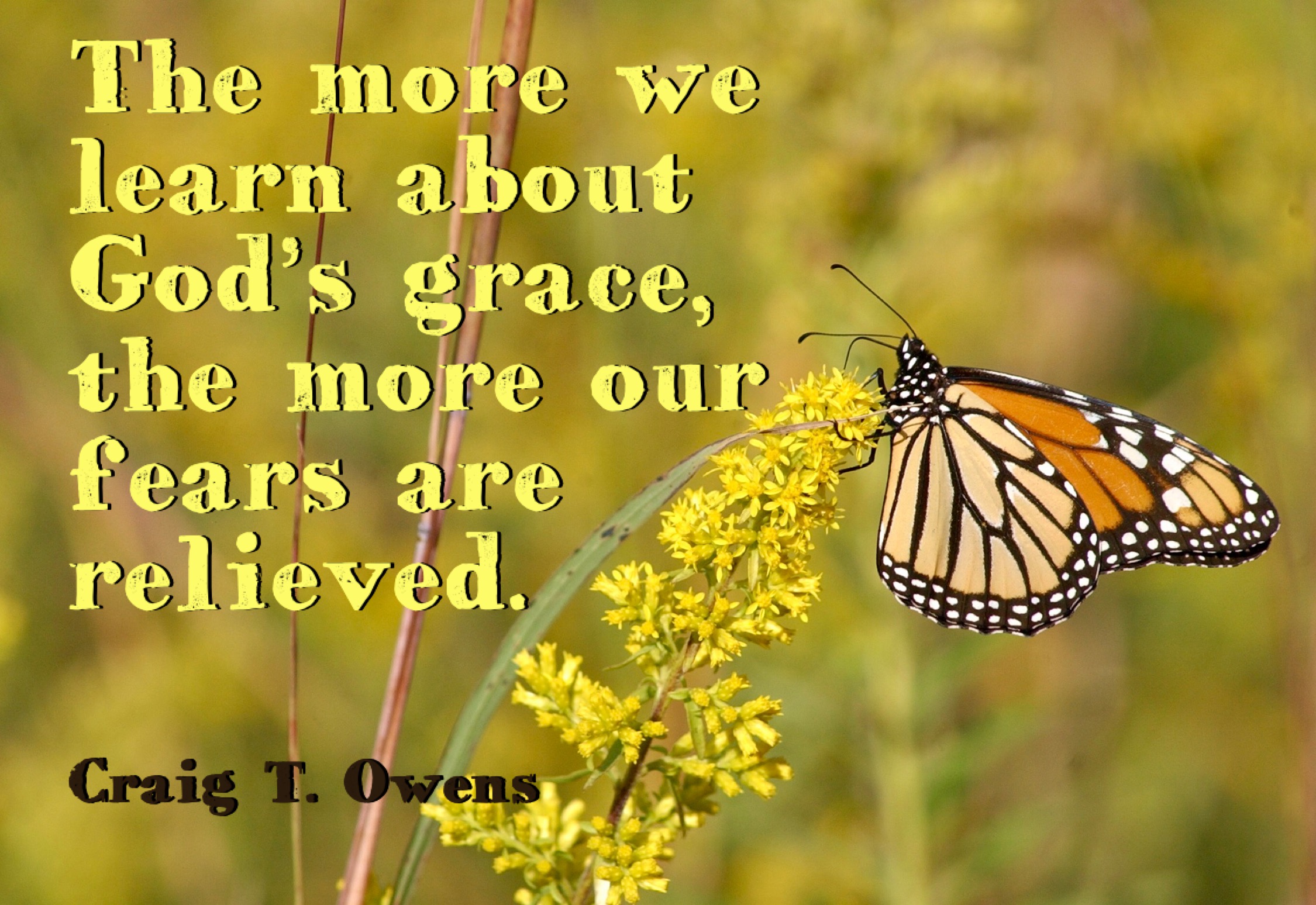
We’re more used to earning what we recieve. Sometimes looking at our own lives of ungrace we may feel like we’ve earned punishment, which is why the thought of grace brings fear. Yet the more we learn about God’s grace, the more those fears are relieved.

I need to learn more about grace. I want to soak in all that it means—the full impact—to be a recipient of God’s grace.

I love this definition of grace from Philip Yancey:
“There is nothing we can do to make God love us more.
There is nothing we can do to make God love us less.”

God’s grace truly is amazing!

Amazing Book!

I was reviewing some of my notes for our Spiritual Self-Defense class, and I’m always amazed at the unity and accuracy of the Bible. The Bible tells one unified story from beginning to end. For any other book, this is no big deal; in fact, we expect our books to tell the same story all the way through.

But what’s so mind-boggling for me is the fact that the Bible tells its unified story considering:

  • It was written by 45 different authors
  • Writing over a span of 1500 years
  • In three different languages
  • On three different continents

Not only does the Bible tell the same story, but it does so without error or contradiction! What an amazing book!

Contending For The Faith

This Wednesday we’re starting an important series in our Impact youth group called “Spiritual Self-Defense.” Training our students how to defend what they believe. Jude wrote that we need to learn how to earnestly contend for the faith.

I’m also mindful of Peter’s instruction: But in your hearts set Christ apart as holy [and acknowledge Him] as Lord. Always be ready to give a logical defense to anyone who asks you to account for the hope that is in you, but do it courteously and respectfully.

As I’m preparing for this, here are a few things I’m trying to keep in mind. Perhaps you will have some additional things to share with me:

  • Earnestly means wholeheartedly. So I want to convey passion for biblical truths.
  •  Faith means an added dimension beyond scientific proof. Not in place of science, but beyond it. Albert Einstein observed, “Science without religion is lame. Religion without science is blind.”
  • Focusing on the lordship of Christ is the primary focus of Christian apologetics.
  • I need to prepare to answer.
  • My answers need to be logical and well thought out.
  • My answers need to lead people to the hope that is only found in a personal relationship with Jesus.
  • My defense of biblical truths need to be courteous and respectful.

In addition to our training times on Wednesday, we’ll also offer “sparing lessons” in our weekly men’s and women’s Bible studies. If you’re interested to learn more, come and join us at 7PM over the next few Wednesdays.

BOGOF

Sometimes to get a point across, the only thing you can do is create a new word. Does anyone remember Rich Hall’s list of sniglets on Saturday Night Live? A list of 20 sniglets is here.

This morning we talked about the Parable of the Talents, where the servants were expected to do something with the talents God had given them. Then Jesus talks about the end of time judgment where we are divided into those who did something for God by addressing human needs, and those who ignored the human needs around them.

How do we remember this? How do we apply it to everyday life?

Then it hit me: we all eat; in fact, most of us eat every day. In order to eat, many of us go to the grocery store. And to help stretch the food budget, we often use coupons. When we get one of those buy-one-get-one-free coupons (a BOGOF), what do we do with the free one? Do we consume it ourselves, or could we give it away? Wouldn’t giving away the free one honor God by helping feed the hungry?

So we created a word—BOGOF—and turned it into a refrigerator magnet. We’re going to do our best to build into our daily lives the habit of loving others by addressing their practical needs.

Why don’t you try it yourself? Maybe you can create your own word too! If you do, please be sure to share it in the comments below.

Stepping Up To The Challenge

I shared with you earlier how my faith was challenged and stretched when my leadership team believed we could hit a much larger missions-giving goal than I had thought. (You can read about my little faith here.)

On Wednesday night we challenged our Impact students to believe God to do big things through them, and we asked them to make a faith promise. To say, “God, if You will help me give this amount to Speed The Light, I will do it.” Last night I was able to sit down with my leaders to tally up the cards that were turned in. Just in their faith promises alone our youth group has already committed one-third of our total goal!

I’m so proud of our students! I’ll keep you posted on how we’re doing. Please pray for us that we’ll be creative in finding new ways to raise money for missions, and that we’ll continue to have our faith stretched.

Rockin’ for Haiti

We are hosting another benefit show at Calvary Assembly of God. Our first show was a fundraiser for Latin America Child Care, and it was very well received.

This rock show is a fundraiser for Convoy of Hope. COH is a wonderful humanitarian organization that is bringing food, water purification systems, and other vital personnel and supplies into two areas that have been ravaged by earthquakes: Haiti and Chile.

It’s just a $2 cover charge to get in. Currently we have three local bands scheduled to perform. All our proceeds will go directly to COH.

Join us on Friday, March 19, doors open at 7 PM.

A Word That’s Hard To Say

Listen to the podcast of this post by clicking on the player below, and you can also subscribe on AppleSpotify, or Audible.

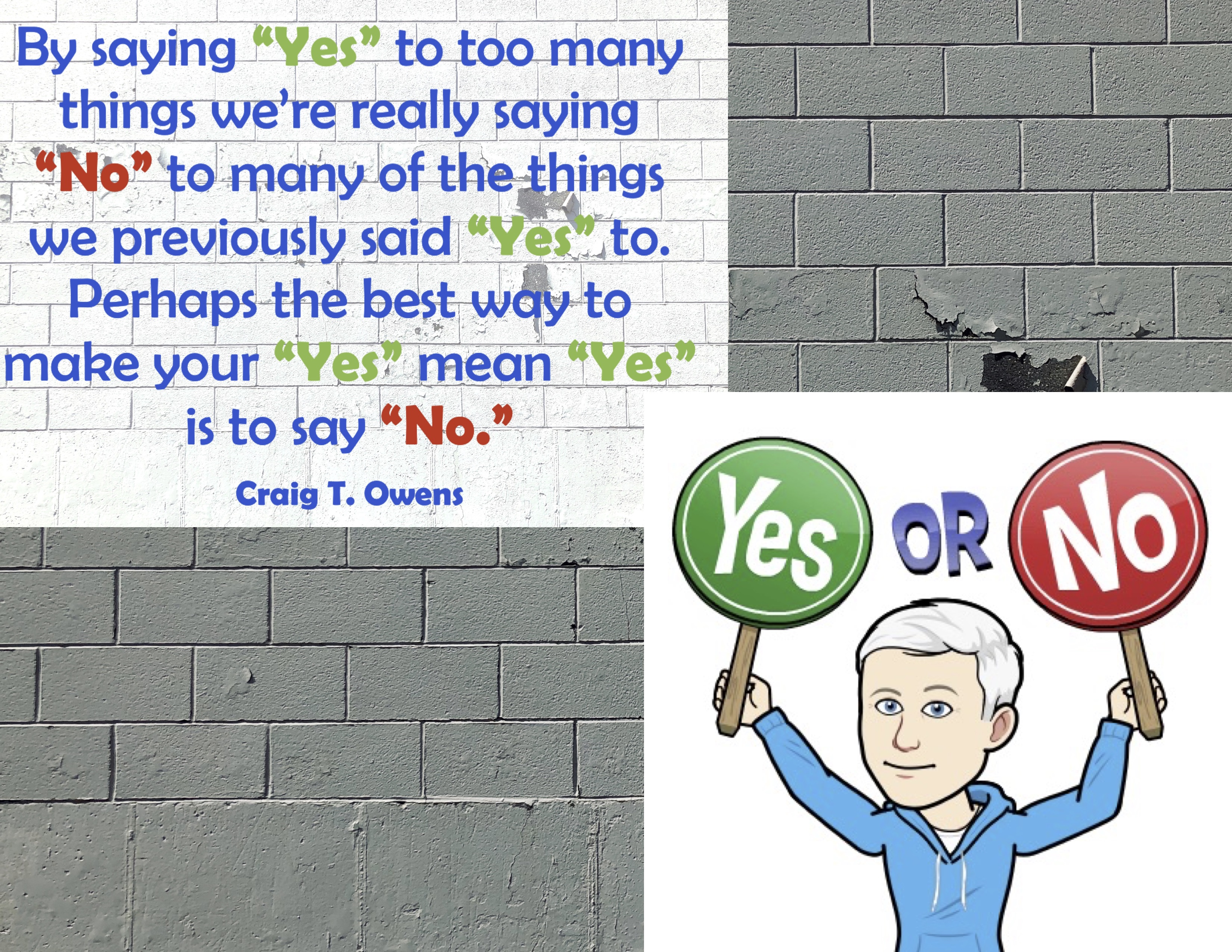
We all like “Yes.” That’s a nice word. But here’s the problem: By saying “Yes” to too many things we’re really saying “No” to many of the things we previously said “Yes” to.

Confused?

Let me try it this way. We all have only 24 hours in a day. No more; no less. We can all do a finite number of things during that 24-hour period. Some may be able to do slightly more, but even the most efficient people have a limit.

When we keep saying “Yes” over and over and over again, eventually our mouths are saying “Yes” but we cannot deliver. We’re out of time, out of resources, out of open places on our To Do list, out of patience, out of energy, out of money.

Perhaps the best way to make your “Yes” mean “Yes” is to say “No.” To truly evaluate what is important, how much time you have, or how much money you have. And then say “No” to the things that you cannot truly commit to.

It’s hard to say “No.” But saying “No” more often will make your “Yes” so much more doable. Otherwise, your verbal “Yes” becomes an “I’ll try,” which eventually is a “Not really,” which in reality is a “No” anyway. So just say “No” upfront.

     And don’t say anything you don’t mean. This counsel is embedded deep in our traditions. You only make things worse when you lay down a smoke screen of pious talk, saying, “I’ll pray for you,” and never doing it, or saying, “God be with you,” and not meaning it. You don’t make your words true by embellishing them with religious lace. In making your speech sound more religious, it becomes less true. Just say “yes” and “no.” When you manipulate words to get your own way, you go wrong. —Jesus (Matthew 5:33-37 in The Message paraphrase)

You can make your “Yes” so much more powerful by only saying “Yes” to those things that are truly important. That means you will need to get comfortable with saying a loving, but firm “No” more often than you probably have in the past.

How many different ways can you say it?

  • No
  • Nyet
  • Nein
  • Nee
  • Jo
  • He
  • Non
  • Δεν
  • לא
  • Nei
  • いいえ
  • Không
  • קיין

You may also want to check out a related post called Undecided Or Uncommitted?

►► Would you please prayerfully consider supporting this ministry? My Patreon supporters get behind-the-scenes access to exclusive materials. ◀︎◀︎

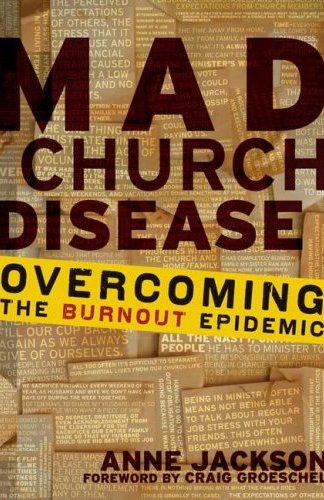
Mad Church Disease (book review)

Read this book and save your life.

Seriously.

I have seen far too many good people get burned-out in the most unlikely place. The one place where you would expect wholeness and vitality and safety and health: Church! In Mad Church Disease Anne Jackson draws the comparison to bovine spongiform encephalopathy (better known as mad cow disease) to confront mad church disease head-on.

Here’s the insidious thing about the way mad cow disease spreads: after infected cows die, they are ground up and fed to healthy cows. So unwittingly the disease is perpetuated because no one recognizes it’s there. Sadly that’s what happens far too often in the church. We have developed cultures that continue to burn-out people, and then we let those burned-out people feed (develop) new people

Anne shines the light of truth on this ugly disease. She confronts the symptoms head-on, and offers practical steps for helping people get healthy.

As someone who came very close to getting burned-out by mad church disease, I can attest how right-on-the-mark Anne’s book is. And to bolster her diagnosis, Anne interviews several leading pastors whose “second opinion” confirm the original diagnosis. I liked this observation from Bill Hybels:

“Especially as leaders in the church, we consistently need to be filled up and buoyed in our spirits because everybody takes their cue from the leader. If the leader is exhausted, then the people following that leader will feel exhausted. If the leader is wearing thin on hope, then people start losing hope too. If the leader gets pessimistic, everybody gets pessimistic.”

So who should read Mad Church Disease?

  • Pastors
  • Paid church staff
  • Volunteer church ministers
  • Counselors
  • Church board members

Whether you have been infected by mad church disease or not, you need to read this book. It will either be a source of healing for you, or an eye-opener to help protect yourself and others around you from this deadly disease.

The first step to eliminating mad church disease is recognizing its symptoms. Mad Church Disease does just that, and then goes further to talk about the steps for healing. Thanks, Anne, for a straightforward look at this serious disease.

Some Pain For Greater Gain

My US Marine Corps buddy always tells me to suck it up when I complain about something hurting. He says, “Pain is just weakness leaving your body.” Hoo-Rah!

Great.

But for the most part, I don’t like pain. What about you? Most of us non-Marine-types do our best to avoid pain. And if any pain does make it through, we can take care of that really fast with some Motrin or Tylenol, or Icy Hot or a massage session.

However, there are times that some pain is good for greater gain.

What about the temporary pain from an immunization injection? Short-term pain for the long-term gain of being free of disease.

What about a low-grade fever (below 101 degrees)? Taking Tylenol too soon can preempt the natural way your body is raising the heat to kill off an infection. The short-term pain of a fever for the long-term gain of dead germs.

What about the soreness from exercising? Again, the pain is short-term; the benefits of healthy exercise are long-term.

How about saying “no” to temptation? Shouldn’t you trade the short-term pain of temptation for the long-term gain of holiness?

Or God’s discipline? He sometimes puts us in positions that are painful because He is trying to bring the best out of us. Here my Marine buddy is correct: this pain is weakness leaving our (spiritual) body.

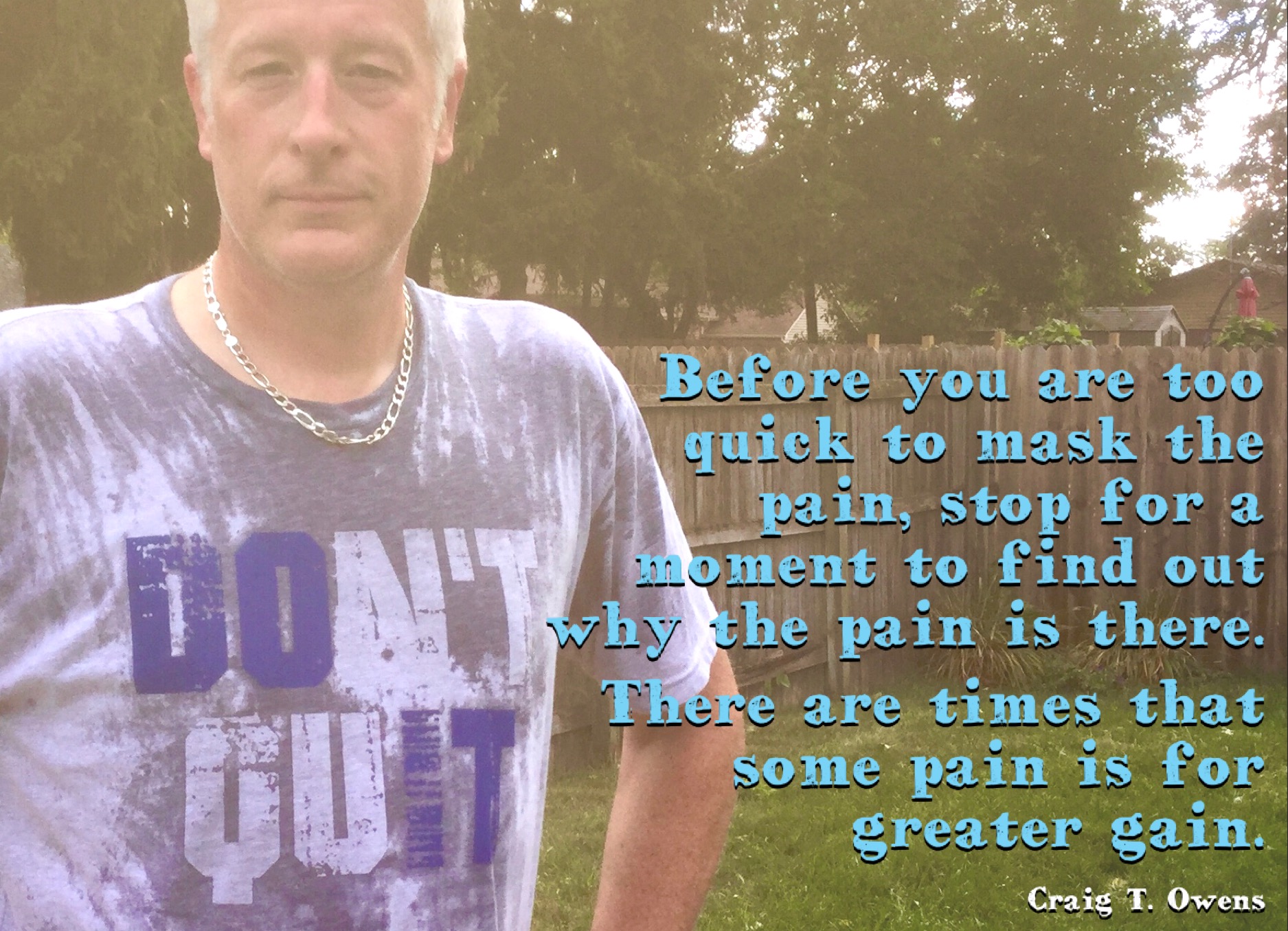
Before you are too quick to mask the pain, stop for a moment to find out why the pain is there. An immunization or low-grade fever or exercise or discipline may be just the short-term pain you need for far greater gain.