


Listen to the podcast of this post by clicking on the player below, and you can also subscribe on Apple, Spotify, or Audible.
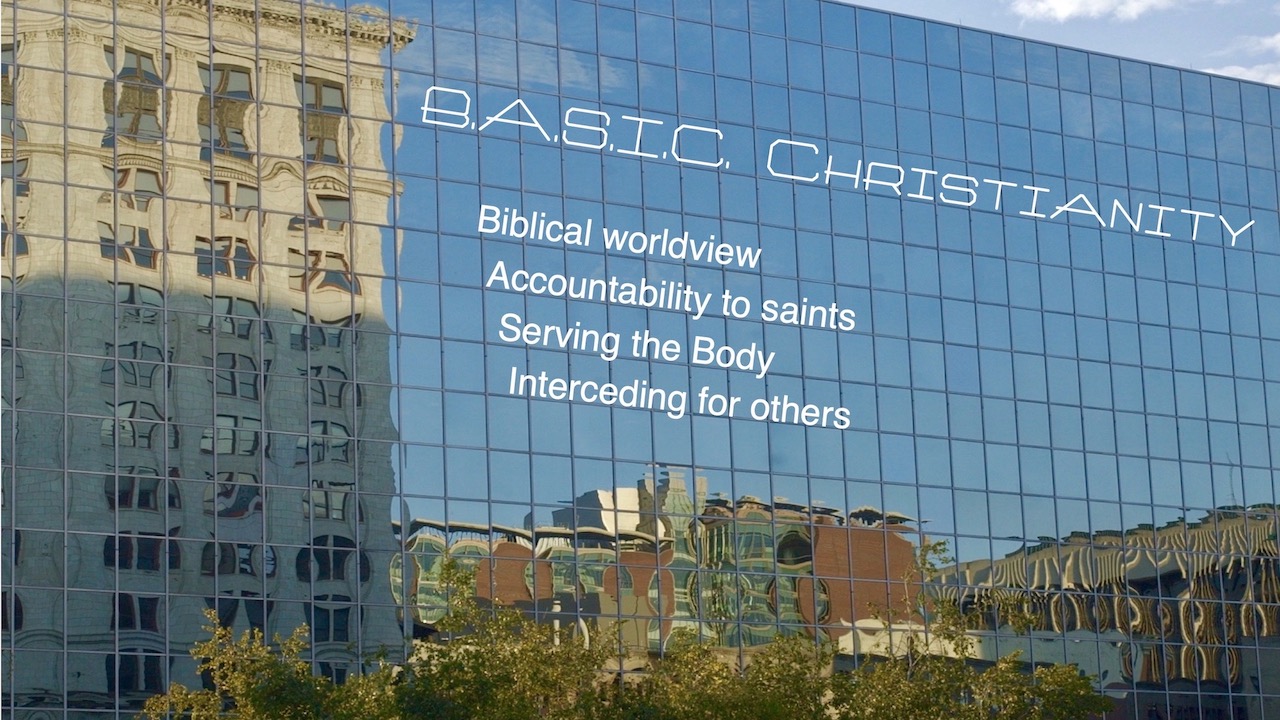 Sanctification (“saint-ification”) is an ongoing process that usually involves the help of other saints. We learn this by having a biblical worldview (that’s the “B”), being accountable with saints (“A”), and serving the Body of Christ (“S”). These are the things that bring out increased fruitfulness in our lives, make us more joy-full people, and enhance our testimony to others.
What a blessing it is to be involved in all of these saint-ification things alongside other brothers and sisters. Isn’t nice to know that you’re not all alone on your journey?
Two brothers walked up the hill to the park every afternoon to play baseball. One day a neighbor who lived near the bottom of the hill saw the younger brother pulling his older brother up the hill in a wagon. He observed this for a couple of days before he finally asked what was going on.
The younger brother said, “My big brother broke his leg so I pull him in the wagon so he can watch us play baseball and can be our coach.”
“He must be heavy,” the neighbor replied.
“He’s not heavy,” the little boy said, “he’s my brother!”
In the first brothers that the Bible shows us, we see the origin of the phrase “brother’s keeper.” Cain was jealous of the way God was blessing his younger brother, and so he murdered Able. God came to Cain and asked him, “Where is your brother Able?”
Cain responded with another question, “Am I my brother’s keeper?” (Genesis 4:9).
(Check out all of the Scriptures in this post by clicking here.)
The word brother is someone connected to me by blood or some other common bond. Cain used the same word for brother but then asked if He was supposed to be his brother’s keeper—his guard, helping to keep him in bounds, celebrating his victories.
The clear teaching of Scripture is that the answer to Cain’s question is an emphatic “Yes!”
That definition of brother’s keeper sounds a lot like the definition of an intercessor. In the Hebrew, that word mean to go to God on someone else’s behalf (Genesis 25:21; 2 Samuel 24:25). The Greek of the New Testament sounds more intense (hyperentygchano): to meet a person of the purpose of conversation in behalf of someone else.
Remember that the Hebrew word for brother was pretty narrow? The Christians in the New Testament took the word for relative-by-blood (adelphos) and made it a synonym for fellow saint, regardless of where they are from (Acts 9:17; 2 Corinthians 13:11).
John used Cain’s misunderstanding of brother’s keeper to show us the spiritual responsibility we have to our adelphos (1 John 3:12, 15-16).
When we intercede for our adelphos—our fellow saints—we are participating in the same work as both the Spirit and Jesus (Romans 8:26-27, 34; Hebrews 7:25; 1 John 5:16).
A couple of weeks ago we looked at Philemon’s service to the Body of Christ. Look at how Paul’s intercession may have released Philemon to do this (Philemon 7, 16, 20).
As Paul said to Philemon, I say to you—
 I appeal to you on the basis of love: Be your brother’s keeper!
Guard your adelphos, keep them in bounds, and celebrate both their righteousness and God’s blessing on their lives.
If you’ve missed any of the other messages in this series, you can find them all here.
►► Would you please prayerfully consider supporting this ministry? My Patreon supporters get behind-the-scenes access to exclusive materials. ◀︎◀︎


September 22, 2025 at 5:10 am
[…] I—Interceding for others […]
LikeLike
October 18, 2025 at 6:06 am
[…] saints have the joyful privilege of being able to step up for fellow saints. It’s hard work at times, but if we remember who those saints really are, it’s never heavy […]
LikeLike
January 13, 2026 at 5:06 am
[…] Interceding for others […]
LikeLike