As A Man Thinketh (book review)

“For as he thinketh in his heart, so is he,” said the wise King Solomon nearly 3000 years ago. James Allen picked up on this phrase and noticed how true it still was in his day, prompting him to pen some astute observations in his book As A Man Thinketh.

This is not an academic book, nor is it a self-help book. Mr. Allen states his rationale for writing on the opening pages: “This little volume (the result of meditation and experience) is not intended as an exhaustive treatise on the much-written-upon subject of the power of thought. It is suggestive rather than explanatory, its object being to stimulate men and women to the discovery and perception of the truth that—‘They themselves are makers of themselves.’” 

Just as the biblical book of Proverbs contains short observations that are intended to cause the reader to contemplate the outcome of particular life choices and thought patterns, Mr. Allen does the same thing for a contemporary audience. Although you could breeze through this short book quite quickly, I strongly urge you to take your time to ponder just how powerfully your patterns of thought contribute to your everyday actions. 

Metacognition is a psychological term meaning to think about what you think about. As A Man Thinketh will definitely stimulate some productive metacognition of your own. 
Forgetfulness Can Be Fatal

Have you ever noticed the up-and-down track record of the Israelites? We see them worshiping God, enjoying His abundance, with their enemies on the run in one chapter, only to see them worshiping idols, barely scraping by, with their enemies closing in on them.  

What led to the downturn from freedom and abundant blessing to slavery and scarcity? I think it’s summed up in two words: They forgot. 

Asaph captures this idea in the 78th Psalm. And if we’re honest with ourselves, Israel’s history is our history too. 

There is a peril in our forgetfulness!  

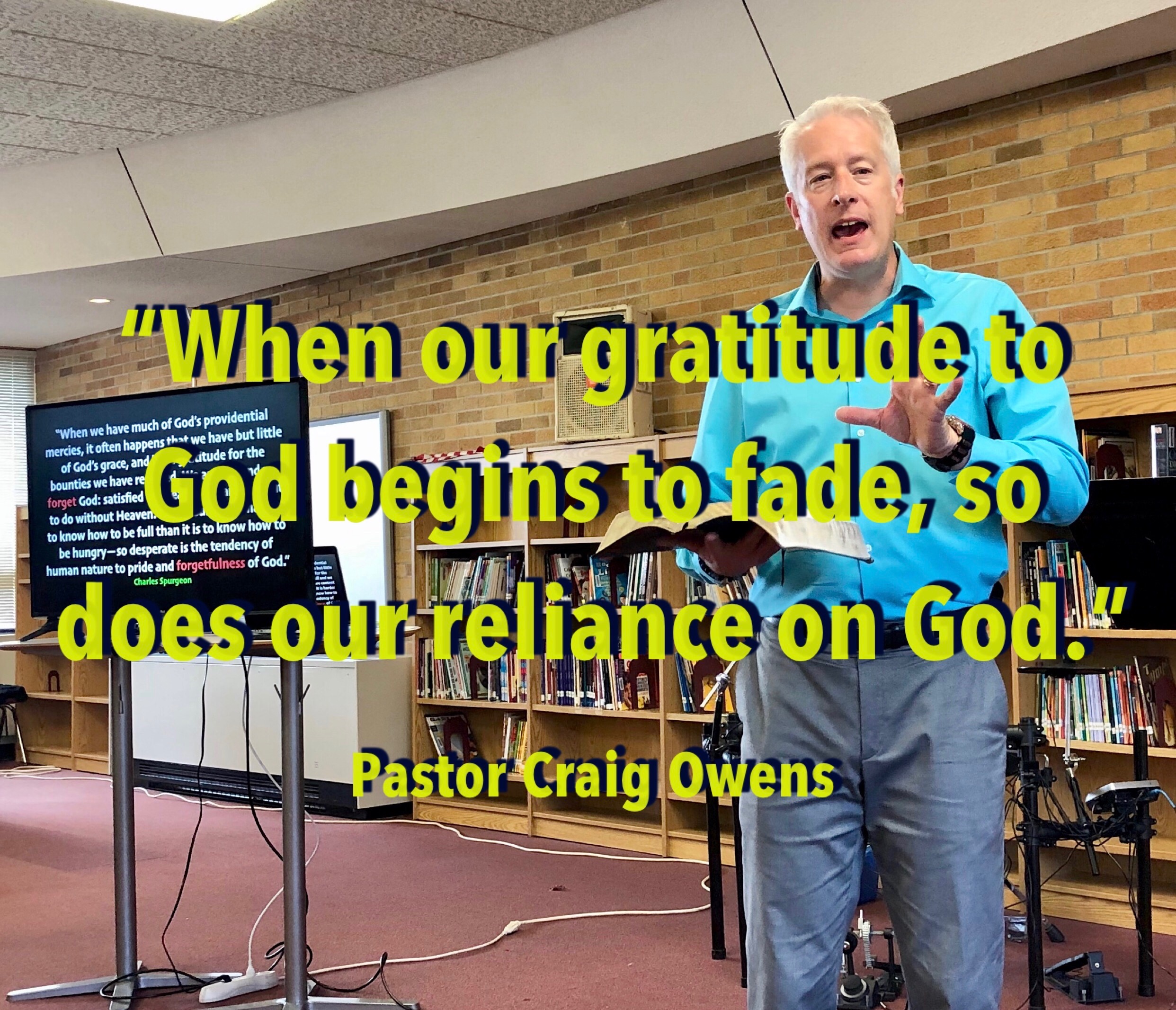
“When we have much of God’s providential mercies, it often happens that we have but little of God’s grace, and little gratitude for the bounties we have received. We are full and we forget God: satisfied with earth, we are content to do without Heaven. Rest assured it is harder to know how to be full than it is to know how to be hungry—so desperate is the tendency of human nature to pride and forgetfulness of God.” —Charles Spurgeon (emphasis added)

When our thoughts about God begin to fade, so does our gratitude to God. When our gratitude to God begins to fade, so does our reliance on Him. 

The dictionary defines some important terms:

  • Ungratefulness—not giving due return for benefits conferred
  • Unthankfulness—not repaying the blesser with thanks

I don’t think anyone consciously chooses to be ungrateful, but if we don’t choose to actively remember our blessings—and our Blesser—we will become ungrateful. So what if we began to think differently about the definition of gratitude? 

  • Forgetfulness—to cease to think of something
  • Gratitudeto continue to think of Someone (with that Someone being God!) 

When we are continually thankful—when we don’t let our gratitude fade—it keeps God’s blessings at the forefront of our minds. Gratitude—continuing to think of Someone—makes us completely God-reliant. 

Moses had a good idea to help us to continue to think of God’s blessings—

Impress them on your children. Talk about them when you sit at home and when you walk along the road, when you lie down and when you get up. Tie them as symbols on your hands and bind them on your foreheads. Write them on the doorframes of your houses and on your gates. (Deuteronomy 6:7-9) 

What if you posted reminders of God’s blessings all over the place? What if you made it almost impossible to forget God? What if you were constantly thinking of your blessings? 

Join us for our series called Fading Gratitude during the month of November.

Poetry Saturday—Come, Ye That Love The Lord

Come, ye that love the Lord,
  And let your joys be known;
Join in a song with sweet accord
  While we surround the throne.
The sorrow of the mind
  Be banish’d from the place; 
Religion never was design’d
  To make our pleasures less.
Let those refuse to sing
  Who never knew our God;
But servants of the heavenly King
  May speak their joys abroad.
The God that rules on high,
  That all the earth surveys,
That rides upon the stormy sky,
  And calms the roaring seas:
This awful God of ours,
  Our Father and our Love;
He will send down His heavenly powers
  To carry us above. 
There shall we see His face,
  And never, never sin;
There from the rivers of His grace
  Drink endless pleasures in.
Yes! and before we rise
  To that immortal state,
The thoughts of such amazing bliss
  Should constant joys create.
The men of grace have found
  Glory begun below;
Celestial fruits on earthly ground
  From faith and hope may grow.
The hill of Zion yields
  A thousand sacred sweets,
Before we reach the heavenly fields,
  Or walk the golden streets.
Then let our songs abound,
  And every tear be dry;
We’re marching through Immanuel’s ground
  To fairer worlds on high. —Isaac Watts