An Angel’s Story (book review)

an-angels-storyReader’s of my blog will know that I seldom read fiction books, but Max Lucado tricked me into reading this one! I read the introduction to An Angel’s Story and thought, “Wow, this is going to be an interesting take on the Christmas story,” and I began reading. But before I realized I was reading a fictional account, I was hooked and had to keep on reading.

I’m so glad I did! 

We often think of the night of Christ’s birth being—as the Christmas carols tell us—a silent night of wonder, a holy night of rejoicing, a festive night of an angel choir singing in the skies above Bethlehem. Indeed this is the picture we get in the Gospels of Matthew and Luke.

However, the book of Revelation tells a different story.

In Revelation, we see the lengths to which the devil and his hoard went to prevent the Advent of Jesus. And we also read about the angels who remain loyal to God battling against the dark forces in the heavens. Max Lucado imagines what this might of have looked like in the unseen spiritual world around Mary, Joseph, and Jesus.

If you’ve ever read anything from Max Lucado, you know that he is a first-class storyteller, and An Angel’s Story is no exception. Believe me: this book will grab your attention, keep you riveted until the very end, and give you a perspective of the night of Christ’s birth like you’ve probably never seen before. 

I highly recommend this book to you!

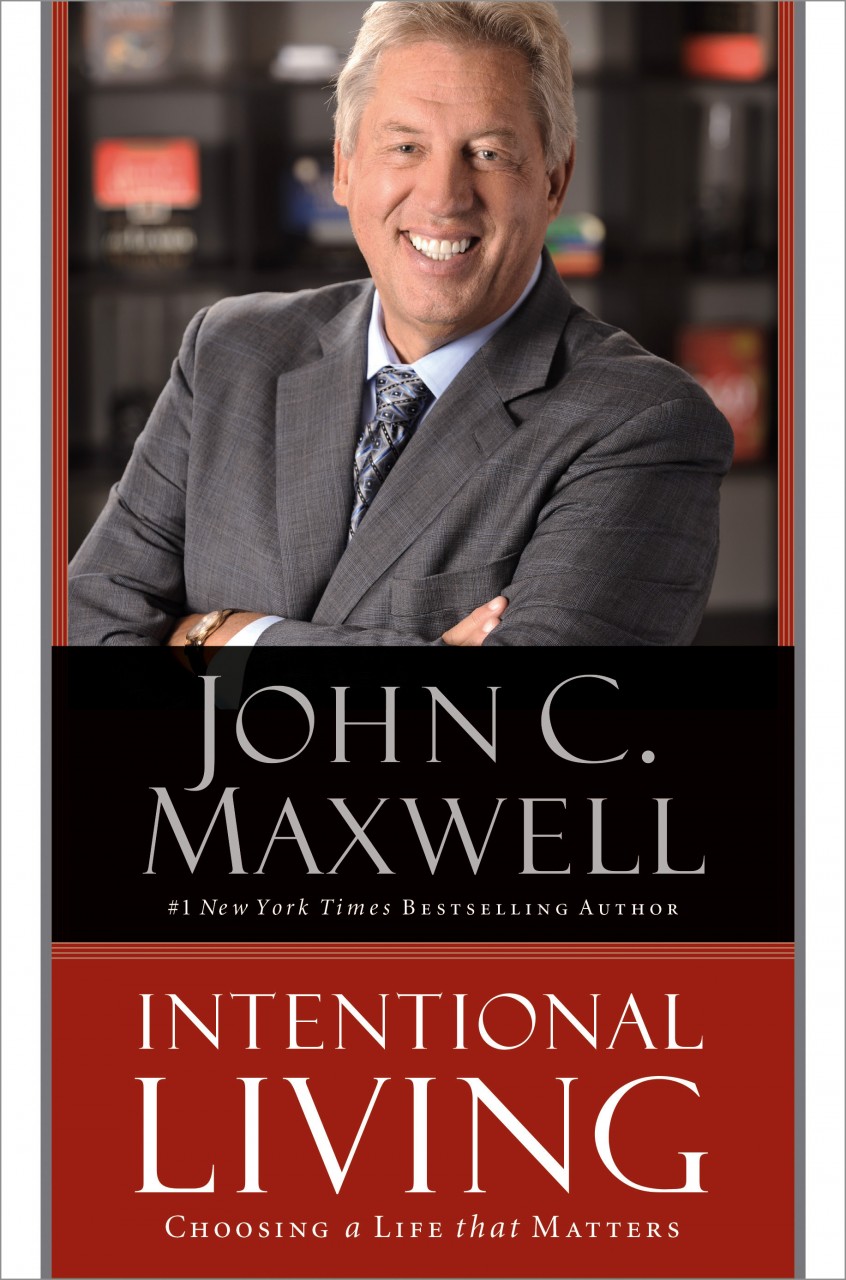
11 Quotes From “Intentional Living”

Intentional LivingIntentional Living by John Maxwell has a very different feel to it, compared to other Maxwell books, but I still liked it a lot! You can check out my book review by clicking here. One of the things vary familiar about this Maxwell book is the excellent content. Here is the first batch of quotes from Intentional Living.

“Most people want to hear or tell a good story. But they don’t realize that they can and should be the good story. That requires intentional living. It is the bridge that crosses the gap to a life that matters.”

“No one stumbles upon significance. We have to be intentional about making our lives matter. That calls for action—and not excuses. Most people don’t know this, but it’s easier to go from failure to success than from excuses to success.”

“If you want to live a life that matters, don’t start when you get good; start now so you become good.”

Trying alone does not communicate true commitment. It’s half-hearted. It is not a pledge to do what’s necessary to achieve a goal. It’s another way of saying, ‘I’ll make an effort.’ That’s not many steps away from, ‘I’ll go through the motions.’ Trying rarely achieves anything significant. If an attitude of trying is not enough, then what is? An attitude of doing!”

“Every time we choose action over ease we develop an increasing level of self-worth, self-respect, and self-confidence.”

“Intentional living always has an idea. Unintentional living always has an excuse. Intentional living fixes the situation. Unintentional living fixes the blame. Intentional living makes it happen. Unintentional living wonders what happened. Intentional living says, ‘Here’s something I can do.’ Unintentional living says, ‘Why doesn’t someone else to do something?’”

“If you want to make a difference and live a life that matters, you need to embrace some words and reject others. We all have a running dialogue in our heads. What we say to ourselves either encourages us or discourages us. The words we need to embrace our positive words, words such as we, can, will, and yes. What do we need to eliminate? Me, can’t, won’t, and no.” 

“Trying to make a huge change overnight often creates fear, uncertainty, and resistance, because the change appears unachievable. The idea of making small changes is less threatening and helps us overcome our hesitation and procrastination.”

“Do you believe in yourself? Your belief will drive your behavior. The thought I don’t think I can often arises out of I don’t think I am.”

“Purpose is the rudder on your boat. It gives you direction and keeps you going in the right direction when the wind is blowing and the waves are crashing against you. It provides calm and confidence in the midst of the storm.”

“Every person was created to do his or her part to better mankind. That includes you! 
Every person has talents that will help him or her better mankind. That includes you! 
Every person is given an opportunity to better mankind. That includes you! 
Every person has a purpose for which he or she was created. That includes you! 
Every person must look within to discover his or her purpose. That includes you!”


Links & Quotes

link quote

“The Son of God suffered (really suffered!) to deliver me from sinning. I cannot believe He suffered to make me miserable. Therefore, what He died to purchase must be more wonderful than the pleasures of sin.” —John Piper

“They who are Christ’s are kings. Take care that you wear your crown, by reigning over your lusts.” ―Charles Spurgeon

“Human beings are story-making engines, and when we’re confronted with randomness, we make up an egocentric version of what happened, and it involves us. So when things randomly go well, we give ourselves a pat on the back, a reminder of why we deserved it. And when they don’t, we seek out the ghost in whatever machine did us wrong and come up with a reason. … All the time we spend inventing reasons is probably better spent responding to what occurs.” —Seth Godin

Helpful medical health information: 9 Signs Of Improper Blood Circulation.

Here is another good reason to quit smoking.

[VIDEO] A heart-touching story of a family who adopted a beautiful girl names Sunflower―

Overcoming The Biggest Fears

Death is defeatedDid you know among Americans the fear of death is only #2 on the list? Yep, 68% of people list this as their top fear. What could be more fearful than death?! Believe it or not, the #1 fear—listed by 74% of people—is public speaking! (Followed in a distant third place by the fear of spiders by only 30% of people).

Why would people fear speaking more than death? Maybe because they don’t think they have anything to say.

But if you almost died, or had a near-death experience, or even temporarily crossed over to the other side, don’t you think you’d have a story to tell? And don’t you think lots of people would want to hear your story? And wouldn’t you want to tell it to as many people as you could?

In other words, if you could stare down death and come back from the brink, you would not only overcome your fear of death, but your fear of public speaking too!

In John 11 there is the story of a man who not only had a near-death experience, but he actually died. In fact, he was dead for over four days! Lazarus was a part of a family that loved Jesus, and the Bible says that Jesus loved them dearly too.

Prior to this account of Lazarus’ death, there is no mention in Scripture of him speaking at all. He was clearly one who suffered from the fear of public speaking, and quite possibly the fear of death too. But after Jesus raised him from the dead, the Bible says large crowds came to Lazarus’ hometown of Bethany to hear his amazing back-from-the-dead story. And not only that, they began to put their faith in Jesus because of his story! (see John 12:9-11).

We have a back-from-the-dead story to tell too. All of us have sinned against God (Romans 3:23), and because of that we are under a death sentence for our sins (Romans 6:23). But when we put our faith in what Jesus did on the Cross for us, and we ask God to forgive us of our sins, we have been brought back to life!

We have looked death square in the eyes and laughed!

Death is swallowed up in victory. O death, where is your victory? O death, where is your sting? (1 Corinthians 15:54-55)

Now our darkest valleys—even our valleys of death—have no fear for us. The Lord is our Shepherd … His goodness and mercy follow us all the days of our lives AND we shall dwell in the house of the Lord forever!

Not only should you not fear death, you shouldn’t fear public speaking. If you have been forgiven of your sins, you have a back-from-the-dead story to tell.

People need to hear your story! Why? Because they’re scared of death! So tell them about the love of a Savior that rescued you from death.

I invite you to join me next Sunday as we continue to celebrate Jesus Christ’s victory over death!

Creativity

Even being “Boring” can make the message memorable!

God is Creator, which means His creativity knows no limits. One of the ways I love seeing His creativity on display is in the ways His love story is communicated to humanity. The prophets used some highly creative and sometimes startling ways to get God’s message across. But I especially like how Jesus communicated the message of the Kingdom of God to His audience.

He used…

  • Seeds and sheep
  • Farmers and friends who needed a late-night snack
  • Lost coins and lost sons
  • Grapes and goats
  • Pearls and prodigals
  • Stuffy judges and smart bride’s maids
  • Bridegrooms and buildings
  • Banquets and bread
  • Servants and silver coins

He told people who had gotten locked into an inaccurate interpretation of Scripture, “You have heard it said…but I tell you” just to get their attention.

These simple, everyday, common items reminded people of the eternal message. The objects didn’t become the message, but just a way to remind and reinforce the biblical truth Jesus was sharing.

That’s why I use poker chips … Lego pieces … plastic eggs … bookmarkers … flip-flop key chains … aluminum tabs from pop cans … glow sticks … and even name tags to creatively tell the Creator’s love story in a memorable way.

How are you using God’s creativity to tell His story?

Ernie Harwell

Ernie Harwell taught me baseball. I would lay awake at night with my transistor radio under my pillow listening to the legendary voice of the Detroit Tigers. I didn’t know which player was on which team, but as I listened night after night, summer after summer, I learned everything I needed to know about baseball from Ernie Harwell.

Ernie Harwell taught me storytelling. He didn’t just broadcast a game, he painted a picture. His descriptive phrases told so much:

  • “He digs in at the plate waiting for this 3-2 pitch. Bent at the knees, his two-toned bat waving behind his right ear.”
  • “The lanky right-hander goes into the wind up and delivers.”
  • “There’s a fly ball to deep left field. It’s loooooong gone!”
  • The Tigers didn’t just turn a double-play, they “got two for the price of one.”
  • A batter didn’t just look at a called third strike, he was “called out for excessive window shopping” or “he stood there like the house by the side of the road and watched that one go by.”

Ernie Harwell taught me graciousness. After 30 years of serving as the Tiger’s play-by-play voice, he was unceremoniously fired in 1991. What did Mr. Harwell say? “The Tigers had plans that didn’t include me. I’ll always be grateful for the time I’ve been able to spend with such a fine organization.” And after the public outcry restored him to his broadcast booth position the following season, he never once gloated.

Ernie Harwell taught me how to finish well. He finished his career well. He died last night with his wife of 69 years sitting by his side. When he announced last year that he had inoperable cancer, he said he was ready for the next great adventure. He loved Jesus, but never flaunted his personal relationship with Christ. He simply lived it out every single day. I can’t imagine that anyone has an unkind thing to say about this great man.

The radio voice may be silenced, but his lessons will continue to live on in me.

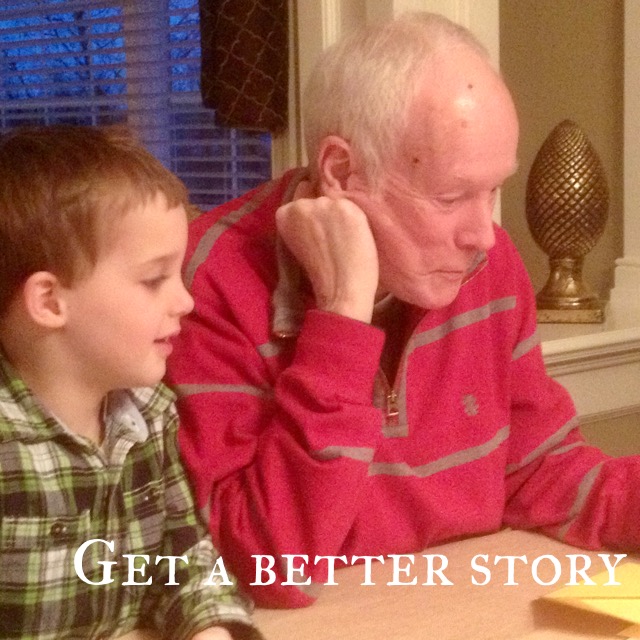
Get A Better Story

My friend Chuck and I run through a silly routine to make a point about the superficial conversations that many people have. It goes something like this—

Chuck: Hi! How are you?

Craig: I’m good. And you?

Chuck: Good. I’m good.

Craig: How’s work going?

Chuck: It’s good. How about for you?

Craig: Good.

Chuck: How’s your family?

Craig: They’re good. And yours?

Chuck: Good.

You get the idea. At the end of this conversation have I learned anything new about Chuck? Of course not. Has he learned anything new about me? Nope. Do you think either one of us is telling the truth? No, because we don’t want to really open up what’s going on inside us.

(In case you haven’t figured this out, this is just a silly thing Chuck and I do on purpose. After joking around, we do get down to the more “real life” conversation!) 

Last week I had several great sit-down meetings with some people that I already knew, but I wanted to get to know better.

In order to get to know them better, I have to get them to tell me a better story!

A better story about who they really are and what they’re really feeling.

This requires two things:

  1. I have to ask better questions. Not questions that can just be answered with a simple “good” or “fine” or “yes” or “no.”
  2. I have to be willing to tell the other person a real story about me, one that reveals who I really am and how I’m really feeling.

Sometimes asking these questions or telling these stories may seem awkward. But you have to pass through the awkward if you truly want to get to know someone better. Don’t just settle for “good,” but take a risk to go deeper.

Tell Your Story

People often ask me why I read so much, or even why I read the things I read. I like to read widely: classics to contemporary, history to biographies, and even a little poetry.

Tim Sanders wrote a book called Love Is The Killer App. In this wonderful book, he says that reading and studying should be motivated by love. We read and learn so that we can be informed enough to help others who are in need. Not reading just to read, but reading with a purpose. Reading to help tell someone a story. I haven’t found a book that does this better than the Bible.

The world’s greatest storyteller (ever!) was Jesus of Nazareth. Check this out:

With many stories like these, He presented His message to them, fitting the stories to their experience and maturity. He was never without a story when He spoke (Mark 4:33-34, The Message paraphrase).

Jesus could tell a story to anyone at any time. He learned, He studied, He observed, so He would always be ready. He frequently used whatever was at hand to tell His stories—a child, a farmer, fish, bread made with yeast, a coin, a bridal party—but He had to know something about each of those things in order for His stories to be effective for each person’s “experience and maturity.”

Once Jesus encountered a man so demonized that he spent his life naked and living in the graveyard (my friend Jim Wiegand calls him “the naked, cat-eating guy”!). Jesus set this man free from his demons. When this newly-freed man wanted to accompany Jesus, He told him, “Go home to your own people. Tell them your story” (Mark 5:19, The Message).

Tell them YOUR story.

The best story you can tell is your story.

It’s wonderful to read to be informed—I highly encourage this. I love to be able to say, “Benjamin Franklin said…” or “I love the Longfellow poem about…” or “Stephen Covey wrote that we should….” But it’s so much more effective to say, “Here’s what I have learned from my personal encounter with Jesus. Here’s MY story of what Jesus did for me!”

What about you? Do you have a story to tell? If you’re in a relationship with Jesus, you always have a story to tell. Keep walking with Jesus. Keep reading His love letter to you written on every page of the Bible. Then tell YOUR story—the best story of all!