The Hour That Matters Most (book review)

I’ve been a big fan of the relationship-strengthening books from Drs. Les & Leslie Parrott for quite awhile. In The Hour That Matters Most they combine together two of my favorite topics: family and food.

I have always appreciated family meal times. Especially as my kids have gotten older—and busier—the dinner hour seems to be the one oasis during the day when we can all reconnect. This is exactly the point that the Parrotts, and co-authors Stephanie Allen and Tina Kuna, are trying to make. And they do an excellent job making their point using statistics, research, tips, stories, and even recipe ideas.

First the statistics. Research has shown that families that eat together:

  • Get along with each other better.
  • Handle stress better.
  • Have lower rates of drug abuse, alcoholism, premarital sex, depression, eating disorders, and suicide.
  • Have students who perform better in school academically and socially.

Then there are the conversation-starters. The authors give ample suggestions of how to draw everyone into a conversation around the dinner table, to gain insight into what is happening in each family member’s day.

And finally, but certainly not insignificantly, there are the recipe. Some mmm, mmm good recipes! Sprinkled throughout the book—and in full color in the middle of the book—are some easy-to-make, hard-to-resist recipes. After all, it’s hard to have a family meal without the meal!

Whether you want to enhance your family dinner times, or you are ready to (re)establish a time for your family to connect over a meal, The Hour That Matters Most is an excellent read.

I am a Tyndale book reviewer.
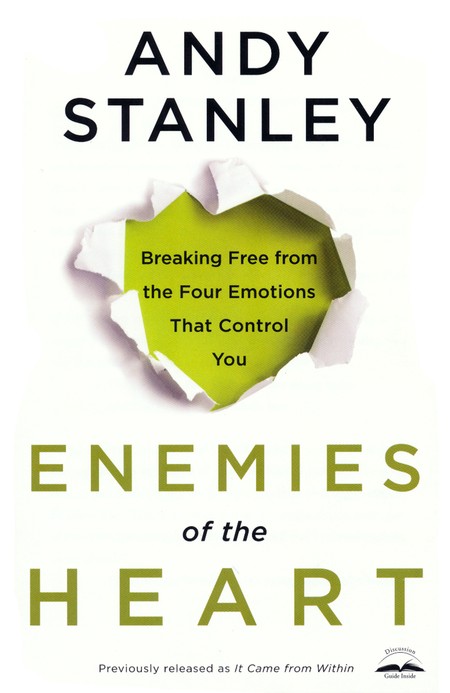
Enemies Of The Heart (book review)

Andy Stanley has a God-given talent to explain things in ways that not only help them “stick,” but in ways that are easily applicable too. In Enemies Of The Heart, Andy helps identify and confront four things that could derail anyone’s life.

Guilt, anger, greed, and jealousy are the four enemies Andy confronts. In a theme that runs throughout the book, Andy describes how each of these can be viewed as a debt-to-debtor relationship. This dynamic is a huge growth impediment to any relationship — whether with God or mankind.

Andy points out:

  • Guilt says, “I owe you.”
  • Anger says, “You owe me.”
  • Greed says, “I owe me.”
  • Jealousy says, “God owes me.”

In the first half of the book, Andy teaches the reader not only how to diagnose these heart problems, but also the danger in allowing these enemies to stay lodged in our hearts. In the second half of the book, Andy shares how to rid our hearts of these enemies, and how to improve the long-term health of our heart.

Since all four of these enemies are relationship killers, and tend to isolate us from other people, the study guide at the back of the book is especially helpful. Because this study guide is designed to be used in discussions with one or more people, there is an instant accountability process built in to rooting out these heart enemies.

Just as our physical heart health affects the rest of our lives, so too does our spiritual/emotional heart health. Don’t wait until it’s too late! This book can help you live a much, much healthier life.

I am a Multnomah book reviewer.

Leadership Is Dead (book review)

It’s not that we don’t need leaders anymore; actually, we need more leaders. But we also need the right kind of leaders. It is exactly those right kinds of leaders that Jeremie Kubicek calls upon in Leadership Is Dead: How Influence Is Reviving It.

Many leadership books tend to be very head-oriented. That is, most leadership books give you the how to’s. Jeremie takes a different approach. Instead of leading with the how to’s, he leads with the why. From the opening chapter Jeremie wants his readers to look deep inside to find out why they want to be a leader, or a better leader. Then once that is firmly in mind, he begins to dismantle all of the self-serving motivations, and replace them with the ultimate tool for effective leadership: influence.

In many ways this book is as much a people-skills book as it is a leadership book. But, after all, unless you are leading sheep, you need to know about interacting with people. Rest assured, Leadership Is Dead is not a touchy-feely book; it is an in-your-face confrontation about doing reviving true leadership.

The last chapter is called “Why You Probably Won’t Do This.” In this chapter, Jeremie says, “Most leaders never reach the levels of significant influence because their instincts for self-preservation are too strong.” And then he adds, “True influence comes when you change yourself to change the world.”

Do you want to make a lasting impact on your world? It starts when you can make the changes in yourself that will lead to greater levels of influence on those around you. Because in order to change your world, you’re going to need a lot of help from a lot of other people! This book can help.

(Special thanks to Michael Hyatt for selecting me as a winner on his blog, so that I could get a copy of this book. And thank you as well to Howard Books for making these books available to Michael Hyatt.)

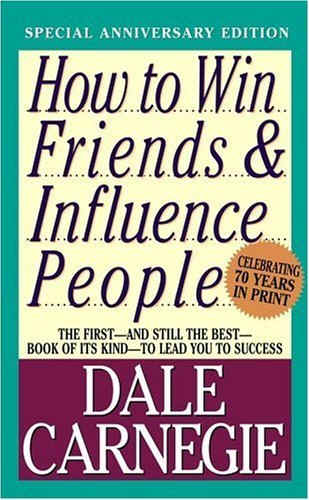
How To Win Friends And Influence People (book review)

Dale Carnegie wrote How To Win Friends And Influence People over 70 years ago. It’s stood the test of time and has—rightly so—earned the label “classic.”

Have you read it? I’ve certainly heard lots of people reference it, and I’ve seen other authors quote portions of this classic work. But honestly I hadn’t read it for myself. I had sort of assumed that I knew all that was in this book just because I had read so many snippets from others.

But I was wrong. Dead wrong. Now I’m almost kicking myself for having waited so long to read this. The principles in this classic about how to deal with people in the right ways would have saved me a lot of grief. Who knows, it may have even helped me to win more friends and perhaps even influence more people. But it’s never too late to start.

I love this Carnegie thought: “Do you know someone you would like to change and regulate and improve? Good! That is fine. I am all in favor of it. But why not begin on yourself? From a purely selfish standpoint, that is a lot more profitable than trying to improve others—yes, and a lot less dangerous. So I’m beginning on myself.

If you haven’t read this classic, get it, read it, and begin to improve your relationships.

Coasting

When I was in the 6th grade my school was at the end of a dead-end street, which was at the top of a not-too-steep hill. Coming home from school we would try to see how far we could coast on our bikes before we had to start pedaling. We’d pedal really hard across the parking lot, and then start coasting as we hit the top of the hill. I think my record was nearly four blocks!

Coasting is so much fun! It’s easy and exciting, and involves no work at all. Your legs are never tired at the end of a long coasting spree.

But you can only coast downhill. (Well, okay, I guess you might be able to coast for a short distance on level ground, but not nearly as far.)

Downhill might be fun on a bike, but it’s a lousy way to live. Solomon wrote:

The path of life leads upward for the wise to keep him from going down to the grave. (Proverbs 15:24)

Coasting is easy, but it’s taking you in the wrong direction.

Coasting doesn’t cause any muscle pain, but it doesn’t build any muscle strength either.

Coasting is fun for awhile, but the longer you coast, the harder the journey back.

Save coasting for your bike rides, but in your life be very cautious of coasting too long.

Instead…

  • Keep learning new things
  • Keep reading challenging things
  • Keep growing in new areas
  • Keep setting stretching goals
  • Keep forgiving
  • Keep strengthening relationships
  • Keep climbing higher and higher

It may be work to climb to the top, but the view is incredible!

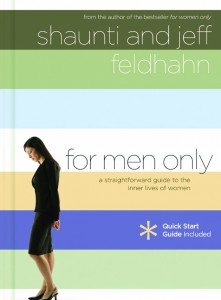
For Men Only (book review)

After nearly 21 years of marriage, I thought I had my wife pretty well figured out, but Shaunti & Jeff Feldhahn made me second-guess that belief in For Men Only.

This book is the compilation of surveys, focus group discussions, and lots of highly revealing emails and letters from women all over the country. Then Jeff & Shaunti dig through all of the data to help us guys figure out what’s really going on inside the hearts and minds of the special women in our lives.

Although there were a lot of statistics and bar charts throughout the book, For Men Only is not a dry academic book. On the contrary, the Feldhahns make these results so “livable” for all of us clueless men. The bottom line: when we guys try to understand and communication with the women in our lives the same way we understand and communicate with other guys, we’re setting ourselves up for a lot of frustration.

In the famous “love chapter” in the Bible (1 Corinthians 13), the Apostle Paul implies that love should always be maturing. And when the Apostle Peter says that men should live considerately with our wives, he is really saying that we should live with ever increasing knowledge of them. For Men Only is really helping me do this, and I believe it will help any other men who are serious about continuing to understand their wives better so they can love them more deeply.

A great read for every guy!

I am a Multnomah book reviewer.

Um, That’s A Bit Awkward

Somehow I don’t think this is the most effective way to start a conversation about your faith!

Here are four thoughts I have…

Don’t compartmentalize. In other words, don’t put on your “Christian hat” to talk about your relationship with Jesus. Just be Christ-like all the time. People are looking for something real, not someone who’s playing an act.

Develop relationships first. Don’t lead with a sermon; lead with a friendship. As the saying goes, “People don’t care how much (or Who) you know, until they know how much you care.” Be a genuine friend first.

Wait until they’re ready. Jesus told stories with a deeper meaning and asked a lot of questions of people before He spoke to them directly about the kingdom of God. Don’t force people into a conversation. Keep the door open, and let them step in when they are ready.

Don’t get discouraged. Just like there are some topics you’re not ready to discuss right now, others feel the same way. So just because they say “No thanks” today doesn’t mean nothing happened. The Bible says that we are the salt of the earth and the light of the world. Salt and light are always seasoning and illuminating everywhere they go. Your life is making a difference.

Disagreeing Agreeably

Listen to the podcast of this post by clicking on the player below, and you can also subscribe on Apple or Spotify.

Why do disagreements have to become so, well, disagreeable?

Is it possible to disagree agreeably?

It’s not easy, but I think it’s possible.

When I was younger I couldn’t stand the idea of “losing” an argument: I always had to be right. I think I’ve matured a bit (at least, I hope I have), and I no longer feel the same way. So here are a few lessons I’ve learned:

(1) Remember the person I’m disagreeing with is my brother or sister. God has created both of us, so that makes us siblings.

(2) Always go for win-win. Don’t look out only for your own interests, but take an interest in others, too (Philippians 2:4).

(3) Choose your battles wisely. You can’t make everything an issue worth dying over. Thomas Jefferson wisely said, “In matters of principle, stand like a rock; in matters of taste, swim with the current.”

(4) Redefine the “win.” What does it mean to win? Is it to put someone else in their place? That doesn’t seem very healthy. Perhaps a “win” is when values or principles are agreed to, although the way they are applied may be very different from person to person.

(5) Leave the baggage behind. Don’t bring previous hurts into a new situation. Don’t assume this new person will act like someone else from your past.

We’re all different people, so we’re going to have disagreements. The key: let’s find a way to disagree agreeably.

If you have other thoughts about how to disagree agreeably, I would love it if you would share them in the comments.

►► Would you please prayerfully consider supporting this ministry? ◀︎◀︎

1>2 & 2>1

Listen to the podcast of this post by clicking on the player below, and you can also subscribe on AppleSpotify, or Audible.

I know this sounds like confusing—maybe even illogical—math, and it probably sounds a bit like a contradiction, too. But hang with me.

Two verses from the sometimes-confusing book of Ecclesiastes say just this: 1 is greater than two, and two is greater than one.

Check them out for yourself:

1>2One handful of peaceful repose is better than two fistfuls of worried work.

2>1Two people are better off than one, for they can help each other succeed. If one person falls, the other can reach out and help. But someone who falls alone is in real trouble.

When it comes to working hard to get stuff: 1>2. It’s far better to have less and enjoy it more.

When it comes to meaningful relationships: 2>1. It’s far better to have the time to invest in more intimate relationships.

Never, ever, EVER let the pursuit of stuff get in the way of your important relationships.

To have more satisfying relationships, always keep this in mind: 1>2 [stuff] so that 2>1 [relationships].

►► Would you please prayerfully consider supporting this ministry? ◀︎◀︎

Overloaded Recap

We all have times that life feels overwhelming. Like there is too much to do, but not enough of us (or our time, or our money, or our willpower, or…) to accomplish what we need to. In a word: we are overloaded.

I just finished a 4-part series about God’s ways for finding relief for our overloaded lives, and I thought this quick recap might be helpful.

If you’re feeling OVERLOADED, remember…

Less Is More

When the “less” is stuff, the “more” is relationships.

Off Makes On Better

A day OFF (a Sabbath) helps you appreciate ON more.

Study To Be Quiet

Tune out all the noise so you can tune in to God’s voice.

Trust God First

Give God the first 10% of your income and enjoy His blessing.