Links & Quotes

God’s grace is so amazing. It keeps coming in like waves on a shore. God’s grace is unearned by our efforts, undeserved despite our sins, and unending for all of eternity! Check out this full message hereI have lots of new content every week, which you can check out on my YouTube channel.

“The humble servant of God is grateful for God’s past blessings, unashamed of his daily dependence on God, and confidant of God’s loving reply to every new request.” —Craig T. Owens

“There’s no shame in failing. The only shame is not giving things your best shot.” —Robin Williams

I’ve often said that praying, “God, here are my plans; please bless them” is an arrogant prayer. Instead, humility prays, “God, what would You have me do.” Proverbs 19:21 makes this point clearly. In his commentary on The Book of Proverbs, Dick Brogden noted on this verse, “God always gets His way over man’s ideas. In our hubris we think we know better than God, so we either make plans and then ask for His endorsement or we stand in judgment of what He is doing as if He should have asked us to endorse His plans. Folly judges only by results in Machiavellian crudity, but things going right doesn’t necessarily mean they were right, and things going wrong doesn’t necessarily mean we were wrong. Let us remember we are prophets, priests, and proclaimers, not pragmatists.”

“You don’t have to be a fantastic hero to do certain things—to compete. You can be just an ordinary chap, sufficiently motivated to reach challenging goals.” —Sir Edmund Hillary

Speaking of an exemplary work ethic, David Mathis writes, “However firsthand your experience as a soldier, athlete, or farmer, Scripture stands ready to fill in, supplement, recast, or override our personal experiences (or lack thereof) and teach us a Christian work ethic—for our own joy, the good of others, and the glory of Christ.” The biblical text Mathis uses to help us learn this Christian work ethic is 2 Timothy 2:1-7.

Marvin Olasky has a sobering and insightful post entitled “United States of Abortion.” He wrote, “For nearly four centuries, the frequency of abortion in America has depended on how citizens and residents answered five questions.” The five questions—and his five answers—are a mini history lesson on which all Christians should reflect.

Wave Nunnally has a fascinating look at the ritual purity that was required in order to enter various parts of the Temple in Jerusalem.

“If you are ever inclined to pray for a missionary, do it at once, wherever you are. Perhaps he may be in great peril at that moment.” —Amy Carmichael

From the vastly large solar system to the microscopic level, the beauty and genius of our Creator is seen. A new report published in the journal Nature delves into the complexity of our tiny cilia. Only an all-wise Creator could fashion something so precise!

If you are looking for an easily accessible online library (especially for researching older books), check out the Internet Archive.

Though a professing atheist, Richard Feynman poetically mused that “you might say the ‘hand of God’ wrote that number, and ‘we don’t know how He pushed His pencil.’” What number is that? Physicists call it alpha (α): “That number is 0.00729735256—approximately 1/137. This is the fine-structure constant. It appears everywhere in the equations of quantum physics.” Another remarkable signpost to a magnificent Creator!

8 Quotes From “Today’s Moment Of Truth”

Today's Moment Of TruthThere is so much excellent content to digest in each day’s reading from Today’s Moment Of Truth. Be sure to check out my book review by clicking here. Below are th first set of quotes I’m sharing from this book.

“For the scientist who has lived by his faith in the power of reason, the story ends like a bad dream. He has scaled the mountains of ignorance; he is about to conquer the highest peak; as he pulls himself over the final rock, he is greeted by a band of theologians who have been sitting there for centuries.” —Robert Jastsrow, founding director of NASA’s Goddard Institute For Space Studies

“As astronomers have discovered, our sun and moon are much more exceptional than once thought. Our sun is far from ordinary; it has exactly the right mass and composition and is the ideal distance from the earth to enable life on our planet. If it were much smaller, its luminosity wouldn’t allow the high-efficiency photosynthesis necessary in plants; if it were much closer, the water would boil away from the planet’s surface. Similarly, our moon is just far enough away and just the right size to stabilize the Earth’s tilt. Without the moon’s stabilizing presence, the Earth would experience wild temperature swings, with devastating consequences for life.” —Lee Strobel

“I think people who believe that life emerged naturalistically need to have a great deal more faith than people who reasonably infer that there’s an Intelligent Designer. —Walter Bradley, co-author of The Mystery Of Life’s Origin

“An honest man, armed with all the knowledge available to us now, could only state that in some sense, the origin of life appears at the moment to be almost a miracle, so many are the conditions which would have had to have been satisfied to get it going.” —Francis Crick, Nobel Prize winner

“It is my science that drove me to the conclusion that the world is much more complicated than can be explained by science. It was only through the supernatural that I can understand the mystery of existence.” —Allan Rex Sandage, cosmologist

“The beginning seems to present insuperable difficulties unless we agree to look on it as frankly supernatural.” —Sir Arthur Eddington

“Secular scientists often talk as though life came about through this formula: Matter + Energy + Time = Life. However, when scientists go into their labs and try to produce life, they add another ingredient—one they often don’t think about. The formula they really use is: Matter + Energy + Time + Ideas = Life. 

“In other words, they’re not just throwing all of the ingredients into a blender, switching it to the highest setting, and hoping life will pop out at the end. Rather, they’re applying the best of scientific knowledge to selecting the elements necessary for living matter as well as the conditions that will be conducive for life to flourish.

“Putting it another way, they’re trying to replicate what God did. And if they finally succeed, it’ll only serve to reinforce what the Bible says—that God created life.” —Dr. A.E. Wilder-Smith

“When this church service is over, I’m heading to the airport to fly back home. But it’s not enough for me to sit in the terminal and believe that airplanes fly. Just acknowledging the soundness of aviation science will never get me home. I have to go beyond mere belief that airplanes fly to a personal belief in the particular airplane that’s heading to my city—demonstrated by climbing on board. It’s that active trust that will ultimately get me where I want to go. Similarly, we all need to go beyond merely believing that Jesus is the Son of God who died on the Cross for our sins. We must take the next step and trust in Him personally, asking Him to forgive our sins and to lead our lives.” —Mark Mittelberg

If you would like to know when I post more quotes from Today’s Moment Of Truth, you may enter your email address in the form to the right, and you will be notified by email as soon as new content is available.

Also be sure to follow me on Twitter and Tumblr, where I will be sharing quotes from this book, along with lots of other material I’ve been studying.

The Experiment That Spooked Einstein

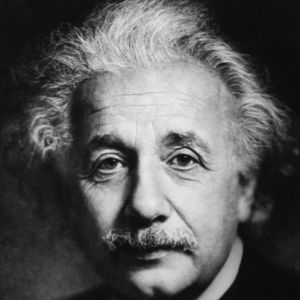
Albert EinsteinScience does not have all the answers (despite what many scientists want to tell us!). Here is a quantum physics mystery that has baffled the best and brightest minds. Even Albert Einstein called this “spooky actions at a distance.”

Watch this short video and see what you think…

https://youtu.be/DfPeprQ7oGc

A few other Einstein quotes come to mind:

“There are only two ways to live your life: one is as if everything is a miracle, the other is as though nothing is a miracle.”

“The important thing is not to stop questioning. Curiosity has its own reason for existing. One cannot help but be in awe when he contemplates the mysteries of eternity, of life, of the marvelous structure of reality. It is enough if one tries merely to comprehend a little of this mystery every day. Never lose a holy curiosity.”

“Even though the realms of religion and science in themselves are clearly marked off from each other, nevertheless there exist between the two strong reciprocal relationships and dependencies … The situation may be expressed by an image: science without religion is lame, religion without science is blind.”

“Every one who is seriously engaged in the pursuit of science becomes convinced the laws of nature manifest the existence of a spirit vastly superior to that of men, and one in the face of which we with our modest powers must feel humble.”

5 Quotes From Albert Einstein In “There Is A God”

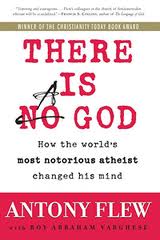
There Is A GodAs I said in my book review of Anthony Flew’s There Is A God, the real value of this book is in the arguments which contributed to Flew’s shift from atheism to theism. You can read my full book review by clicking here.

Frankly, it’s hard to share a lot of the quotes because the context of the full argument would be lacking, but I’ve begun sharing some of them over several posts. To continue, below are some quotes from Albert Einstein.

“I am not a positivist. Positivism states that what cannot be observed does not exist. This conception is scientifically indefensible, for it is impossible to make valid affirmations of what people ‘can’ or ‘cannot’ observe. One would have to say ‘only what we observe exists,’ which is obviously false.” —Albert Einstein

“The man of science is a poor philosopher.” —Albert Einstein

“I want to know how God created this world. … I want to know His thoughts, the rest are details.” —Albert Einstein

“I’m not an atheist, and I don’t think I can call myself a pantheist. We are in the position of a little child entering a huge library filled with books in many languages. The child knows someone must have written those books. It does not know how. It does not understand the languages in which they are written. The child dimly suspects a mysterious order in the arrangement of the books but doesn’t know what it is. That, it seems to me, is the attitude of even the most intelligent human being toward God. We see the universe marvelously arranged and obeying certain laws but only dimly understand these laws. Our limited minds grasp the mysterious force that moves the constellations.” —Albert Einstein

“Every one who is seriously engaged in the pursuit of science becomes convinced the laws of nature manifest the existence of a spirit vastly superior to that of men, and one in the face of which we with our modest powers must feel humble.” —Albert Einstein

More quotes are forthcoming. You can read some direct quotes from Anthony Flew by clicking here.

Christianity & Pantheism

C.S. Lewis at his deskI recently re-read C.S. Lewis′ book Miracles (you can read my full book review by clicking here). As you may have noticed, after reading and reviewing books on this blog, I also like to share some quotes that caught my attention. Doing this with Lewis is difficult because in order to get the context of a particular quote, I think I would have to cite almost a full page or more. So over the next few weeks, I plan to share some quotes from Miracles that require not as much context, or I will provide a bit of background to set the stage.

In this passage, Lewis refers to Flatlanders. This is a reference to a fascinating book called Flatland by Edwin Abbott, in which a 3-dimensional Sphere visits the 2-dimensional world called Flatland and speaks with Square. It was a favorite book of not only Lewis but Albert Einstein as well.

“The popular ‘religion’ excludes miracles because it excludes the ‘living God’ of Christianity and believes instead in a kind of God who obviously would not do miracles, or indeed anything else. … If ‘religion’ means simply what man says about God, and not what God does about man, then Pantheism almost is religion. … The old atomic theory is in physics what Pantheism is in religion—the normal, instinctive guess of the human mind, not utterly wrong, but needing correction. Christian theology and quantum physics are both, by comparison with the first guess, hard, complex, dry and repellent. … The Pantheist and Christian agree that we are all dependent on God and intimately related to Him. But the Christian defines this relation in terms of Maker and made, whereas the Pantheist (at least of the popular kind) says, we are ‘parts’ of Him, or are contained in Him. … Pantheist and Christian also agree that God is super-personal. The Christian means by this that God has a positive structure which we could never have guessed in advance, any more than a knowledge of squares would have enabled us to guess at a cube. He contains ‘persons’ (three of them) while remaining one God, as a cube contains six squares while remaining one solid body. We cannot comprehend such a structure any more than the Flatlanders could comprehend a cube. But we can at least comprehend our incomprehension, and see that if there is something beyond personality it ought to be incomprehensible in that sort of way. The Pantheist, on the other hand, though he may say super-personal really conceives God in terms of what is sub-personal—as though the Flatlanders thought a cube existed in fewer dimensions then a square.”

For other quotes from this book, see Miracles Or “Cheating”? and Miracle And Nature.