


Artificial Maturity is a must-read book by Dr. Tim Elmore for parents, pastors, youth pastors, teachers, coaches, and managers—anyone who works with youth.
Gentle Correction
June 29, 2012 — Craig T. Owens As a parent (and a pastor), delivering correction is one of my least favorite things to do. But it must be done.
The apostle Paul seemed to feel the same way. We get some insight into his heart in his letter to the Corinthians, where he reminds them of why he had to write such a stern letter of correction.
For I wrote to you out of great distress and anguish of heart and with many tears, not to grieve you but to let you know the depth of my love for you. (2 Corinthians 2:4)
The loving shepherd’s heart longs for the advancement, the betterment, of all the sheep under his care. He is hurt when his sheep are wounded. His approach to discipline is always gentle; not weak, but strength lovingly applied.
The loving shepherd looks at his own life first, before correcting the sheep, to address anything he may have done or failed to do which caused the sheep to stray.
The loving shepherd knows that discipline may be painful for a moment, but it is to bring greater life. Just as a parent will allow a child to suffer the momentary pain of an immunization injection, to spare that child the unbearable pain of a disease later on.
And the loving shepherd always approaches a time of correction with “confidence in all of you, that you would all share my joy” (v. 3). The shepherd doesn’t view them as “dumb sheep” that cannot improve; rather, he is confident and assured that they will receive loving correction and make the change that leads to joy for all.
UPDATE: If you want to dive deeper into the ideas of being a shepherd leader, please check out my book Shepherd Leadership: The Metrics That Really Matter.
Artificial Maturity—How To NOT Get A Job
June 28, 2012 — Craig T. OwensArtificial Maturity is a must-read book by Dr. Tim Elmore for parents, pastors, youth pastors, teachers, coaches, and managers—anyone who works with youth.
10 Quotes From “Artificial Maturity”
June 27, 2012 — Craig T. Owens The other day when I posted my review of Artificial Maturity by Dr. Tim Elmore, I said that for anyone working with children, tweens, teens, or young adults this book is a must-read. I don’t say that about very many books, but it is definitely true of this one (you can read my full review here).
Let me share with you ten of my favorite quotes from this book. Unless otherwise noted, all of the quotes are from Dr. Elmore…
“In short, the artificial maturity dilemma can be described this way: (1) Children are overexposed to information, far earlier than they’re ready. (2) Children are underexposed to real-life experiences far later than they’re ready.”
“Steps to take to build authentic maturity:
- Provide autonomy and responsibility simultaneously.
- Provide information and accountability simultaneously.
- Provide experiences to accompany their technology-savvy lifestyles.
- Provide community service opportunities to balance their self-service time.”
“For the most part, adults have failed to build true ‘life skills’ in kids. We haven’t helped them self-regulate and make decisions about concerns that matter. Students’ busy schedules often aren’t all that meaningful, and young people spiral downward into despair over relatively trivial issues. Their days are full of artificial activities with artificial consequences, resulting in artificial maturity. The stress is real, but it is often over things that don’t really matter, and it isn’t building mature people.”
“We must be parents, not pals. We must be coaches, not coddlers. And we must lead them, not just lecture them.”
“Analysts say there are increasing signs that a lack of independence fuels stress, anxiety, and depression among young people. …Kids’ early lives today are too full of information and structure, and too empty of innocence and the freedom to play and explore. But by adolescence, it’s almost the opposite. It’s as though they experience a flip-flop. Their lives are too full of freedom, and too empty of accountability.”
“This appears to be a paradoxical trend—[adolescents] expressing a decline in readiness to actually ‘be’ adults that is proportionate to their desire to leave home. …They want to be consumers but not necessarily contributors. …Our job is to prepare the child for the path, not the path for the child.”
“The fact is, kids—all kids—need adults to lead them well. In our mad obsession to remain cool and on the cutting edge of everything, adults have surrendered what may be their most important responsibility: to provide role models to the next generation. We might win at the game of being liked, but we lose at the game of leading well.”
“For our teens, we’ve defined nurturance largely in terms of the things we can do for them, the stuff we can buy them, and the experiences and opportunities we can provide. In reality, what most teens need is neither more stuff, nor more lessons, nor do most teens even need more tender, loving care or quality time. While young children need a great deal of parental nurturance in the form or direct assistance geared toward meeting their needs, adolescents need something different. Unlike children, teens’ bodies and brains most need us to nurture and develop capacities to function on their own in this world. This means expecting things of them, not just giving things to them.” —Drs. Joseph & Claudia Worrell
“Five parental decisions:
- Decide that you will build a bridge of relationship that can bear the weight of hard truth.
- Decide that it’s more important for you to have their respect than for them to like you.
- Decide that it’s more important for you to pass on essential values than to just have fun.
- Decide that it’s more important for them to be ready for the future than to be comfortable.
- Decide to pass on the principles (values) you wish you’d known earlier in life.”
“As adults, we have done a poor job in getting this generation of kids ready for life. If they flounder, it is because we’ve focused on preparing the path for the children instead of the children for the path. I believe in this next generation. These kids are great, and they’re capable of much more than we’ve expected. We have not led them well. We’ve allowed them to mature artificially by default. We’re protected them instead of preparing them for life as adults. It’s time we get them ready to lead the way into the future.”
Artificial Maturity (book review)
June 25, 2012 — Craig T. Owens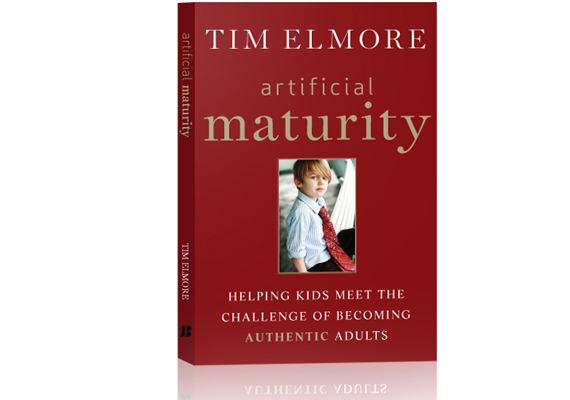 When I posted my review of Tim Elmore’s previous book Generation iY, I said that book earned a rare “must read” rating from me. Whether you read that book or not, Artificial Maturity has earned the coveted must-read rating again!
If Generation iY described who this current youth generation is, Artificial Maturity describes how to help these youth achieve genuine maturity. Here’s how Dr. Elmore sets the stage for this book from the very first page:
“…I believe in this generation like none before. I believe they have the potential to be the greatest generation—a population Warren Bennis calls the “Crucible Generation.” He and many others believe these young people may just be the ones who transform society globally and restore democracy and goodwill.
I believe this with one caveat. I predict all this is possible if we, the adults, will rethink the way we parent, lead, teach, coach, pastor, and manage them. It’s up to us what kinds of adults our kids will become. So far, many of them are a part of a leaderless generation. The adults have done more protecting than preparing. Some moms and dads want to be pals rather than parents. And many adults are just overwhelmed with the notion of leading kids today—and they surrender their role as leaders.”
So this is not a book that tells you how to change kids, but how we as adults must change.
With persuasive evidence, scientific studies, personal observations, and years of hands-on experience, Dr. Elmore so accurately details how we as parents have contributed to our kids becoming artificially mature. In other words, they know lots of things, but they don’t know how to effectively apply that knowledge to be productive at work, school, and in relationships.
I, too, share Dr. Elmore’s optimism about this generation. But if I want to see my kids—and other young people with whom I interact—excel and mature, I have to look at myself in the mirror. This generation can’t succeed if we continue to parent, and teach, and pastor, and manage as we have been doing.
I cannot urge pastors, youth pastors, parents, teachers, principals, coaches, and employers to read Artificial Maturity right away! This generation needs us to help them soar!
I am a Jossey-Bass book reviewer.
UPDATE: Read some of my favorite quotes from Artificial Maturity by clicking here.
Quotes From “From Santa To Sexting”
June 21, 2012 — Craig T. Owens If you are a parent of children middle school age or younger, or if you are a teacher or youth pastor that works with this age group, I cannot urge you strongly enough to read From Santa To Sexting (you can read my review here).
These are some quotes from this book that really got me thinking…
Sexual Activity & Sexual Roles
“What helps young adolescents accept a heterosexual sex role identity? Psychiatrist David P. Ausubel, the author of Theory And Problems of Adolescent Development, writes that accepting a heterosexual sex role is aided by the following: 1) witnessing a happy marriage between parents; 2) having positive experiences with the opposite sex; and 3) possessing a strong, positive identification with the parent of the same sex. …In addition, Ausubel believes that parents exert a strong influence on their adolescent’s adoption of a particular biological sex role. For example, if the parent of the opposite sex is negative about the sex role of his child, the child will find it difficult to identify with that role. Suppose a father, for example, put his wife down and is negative about women. Then his impressionable young daughter will find it hard to embrace her femininity and identify with her own sex. The converse is true for boys. According to Ausubel, the preadolescent, depending on the ‘psychological climate’ of his home, may adopt one of three attitudes toward gender: 1) acceptance, leading to heterosexuality; 2) rejection, leading to homosexuality or asexuality (the renunciation of all sexual expression); and 3) ambivalence, resulting in bisexuality, perversion, or sexual delinquency.”
“The evidence is that early sexual experience has consequences for both boys and girls. Joe McIlhaney, MD, an obstetrician and coauthor of the book Hooked: New Science on How Casual Sex is Affecting Our Children, told us that ‘sex is a primary stimulator and molder of the brain. When we have sex, the body secrets the hormone dopamine, and that makes us want to do it again and again. That’s one of the primary reasons to abstain from sex when you’re young, because it becomes addictive.’ He adds, ‘The body also secrets the hormone oxytocin, that some label the love hormone—a hormone that seems to contribute to a girl’s trusting a man she is intimate with and also bonding to him emotionally.’ Then comes the breakup. McIlhaney continues, ‘When young people break up, MRIs show that the pain center of the brain lights up. Emotional and physical pain are felt in the same brain center.’ McIlhaney believes that when kids have multiple breakups, they seem to contribute to their losing their ability to forge lasting connections or attachments with the opposite sex. In addition, they sometimes become depressed and some become suicidal.”
Empathy
“Sensing what others feel without their saying so captures the essence of empathy. Others rarely tell us in words what they feel; instead, they tell us in their tone of voice, facial expressions, or other nonverbal ways. The ability to sense these subtle communications builds on more basic competencies, particularly self-awareness and self-control. Without the ability to sense our own feelings—to keep them from swamping us—we would be hopelessly out of touch with the moods of others.” —Daniel Goleman
“Empathy has twin components—one in the affective or emotional area and the other in the cognitive. On other words, we feel the distress of others from birth, but as we grow and our brain develops, we begin to think about what they are feeling and can decide how to help the poor, the distressed, and the handicapped.”
“If you’re in a relationship, the relationship is a part of you, there’s no way around it. You get an empathetic child not by trying to teach the child and admonish the child to be empathetic; you get an empathetic child by being empathetic with the child. The child’s understanding of relationship can only be from the relationships he has experienced.” —Alan Sroufe
“If empathy is caught, not taught, then the effect of training students to be empathetic is only skin-deep. The training is focused on a cognitive-behavioral approach; it does not take into account the emotional aspect of empathy and the fact that empathy emerges from an intimate relationship or emotional bond.”
School
“Dr. Robert Balfanz, a research scientist at Johns Hopkins University who studies risk factors for dropping out of school, has found that future dropouts can be identified as early as sixth grade. …Dr. Balfanz’s study of fourteen thousand students in Philadelphia, Pennsylvania, found that sixth grader with just one of the following distress signals had ‘at least a three in four chance’ of dropping out when they reached high school. Here are the four areas he says parents and teachers should monitor:
- A final grade of F in mathematics;
- A final grade of F in English;
- Attendance below 80 percent for the year;
- A final ‘unsatisfactory’ behavior mark in at least one class.”
“Parents are the first and best anti-bullying program around.”
Video Games & Media
“Scientifically speaking, the notion that media violence harms kids is an open-and-shut case; research has found that violent video games increase levels of aggression hormones in teen players. While their onscreen personas kicked, punched, cut, and shot their way through enemies, testosterone and adrenaline levels rose significantly in the bodies of the players behind the controls…. The strength of the evidence linking media violence to youth aggression is stronger than the evidence linking lead poisoning with mental retardation and more definitive than the case linking secondhand smoke with cancer.” —Dr. David Walsh, Why Do They Act That Way?
Home Life
“We found that we could actually measure how parents were getting along in two ways. We could either ask them how happy they were—how much conflict they were having—or we could take a 24-hour urine sample from their kids and measure how many stress hormones, particularly adrenaline, were getting secreted in the children’s bodies. So if you’re fighting, your kids are secreting adrenaline. And if they’re secreting adrenaline because they’re stressed out, one of the things that happens to them is that the first and most sensitive system to reflect this stress is the attentional system—the kid’s ability to focus attention, the kid’s ability to shift attention when they want to, and the kid’s ability to sustain attention. And part of what we’re seeing in all of this diagnosis of hyperactivity is, in part, a reflection of increased family stress, increased stress between parents. So the attentional system is really a very sensitive indicator of whether kids are stressed out.” —Dr. John Gottman
“People who become Christians before their teen years are more likely than those who are converted when older to remain ‘absolutely committed’ to Christianity.” —Barna Group
“Revolutionary parenting, which is based on one’s faith in God, makes parenting a priority. Those who engage in revolutionary parenting define success as intentionally facilitating faith-based transformation in the lives of their children, rather than simply accepting the aging and survival of the child as a satisfactory result.” —George Barna
From Santa To Sexting (book review)
June 19, 2012 — Craig T. Owens Parenting is not for the faint of heart! If you’re a parent and you feel like you need some help in parenting your tween or teen, From Santa To Sexting by Brenda Hunter and Kristen Blair is a wonderful resource.
From Santa To Sexting makes ample use of comments and emails from other parents. As I read these comments, I found myself feeling like I wasn’t alone in my parenting work. Sometimes parents wonder if they are the only one dealing with a particular issue with their son or daughter, so these notes from other parents help us realize that we all face the same parenting challenges.
Beyond that encouragement, From Santa To Sexting presents some rock-solid research on the current state of the youth culture. These stats help parents see what items are “non-negotiable,” and what items are not ones to get worked up about.
This book is written for parents of middle schoolers, or for those about to enter middle school. Without the details becoming gruesome, topics are dealt with in a very matter-of-fact manner. Topics such as friends, internet/media usage, bullying, and family values. I came away with great assurance that although the battle is tough, it’s not only worth fighting, it’s one we can win!
The writer of Proverbs in the Bible said it well: Train a child in the way he should go, and when he is old he will not depart from it (Proverbs 22:6). This book is a great resource in helping parents “train” their children in healthy ways.
I am a Leafwood Publishers book reviewer.
Courageous Enough To Interfere
June 18, 2012 — Craig T. Owens King David was brilliant as a king, and a disaster as a father. One of the things that is very telling is what is not written when his kids mess up. The Bible tells us that David felt strong emotions, but he simply didn’t act on them. In fact, one of the most telling verses of inaction comes when his son Adonijah is trying to put himself on David’s throne—
His father had never interfered with him by asking, “Why do you behave as you do?” (1 Kings 1:6)
It takes courage to interfere with our kids when they are misbehaving.
So why don’t some dads interfere? I can think of a few reasons…
- They didn’t have a good relationship with their own father. In David’s case, his father Jesse didn’t think too highly of David. In fact, David was the overlooked, almost-forgotten son (1 Samuel 16:8-11).
- They’re too tired. David was so focused on building up Israel’s defenses, and defeating the bad guys, that he had nothing left emotionally and physically to interact with his kids. We need to make it our priority! John wrote: I have no greater joy than knowing my children all walk in the truth (3 John 4). Now that’s a great priority!
- Their past sins haunt them. David sinned against Bathsheba (like Amnon did against Tamar); David murdered Uriah (like Adonijah did Amnon). So perhaps he felt like he didn’t have the moral authority to interfere with his sons. But if you read some of the wise sayings in Proverbs 6:20-29 and 7:1-5, they sound like a man who has had experience. Let your hindsight (good or bad) be your kids’ foresight.
- They think it’s too late. It’s never too late! Never! Apparently, David learned this lesson in time and taught his son Solomon (read Proverbs 1:1 and 4:3-4). As long as there is breath in your lungs, you should be your kids’ dad!
Dads, will you be courageous enough to lovingly interfere with your kids if they are getting off track?
Will you be courageous enough to make some changes in your schedule so that you can invest the time and energy and creativity necessary to raise them up?
Will you be courageous enough to confess your past sins, and not let them hold you back from speaking into your kids’ lives?
Will you be courageous enough to start today?
Dad, you kids need you to be involved! Be courageous enough to step into their lives.
Nurturing The Leader Within Your Child (book review)
March 20, 2012 — Craig T. Owens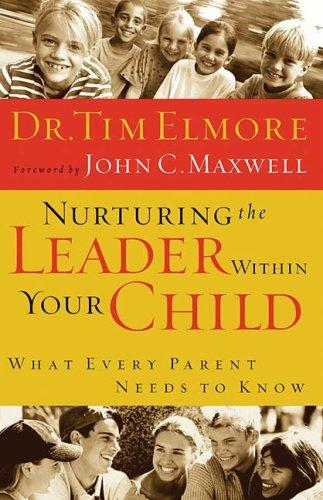 I make no attempt to hide my admiration for Dr. Tim Elmore. I read his blog throughout the week, I subscribe to his newsletter, and I find his books right on target. As a parent, I always want to raise my game, and Nurturing The Leader Within Your Child is the perfect resource for me.
Tim’s desire in this book is two-fold: (1) Help parents see the enormous potential in their children, and (2) Help parents see how crucial their role is in releasing that leadership potential. One of his premises is this:
“Children want parents who:
- communicate their interest in me;
- express appreciation for each member of our family;
- structure their lives to spend time together;
- welcome my friends into our home;
- answer my questions;
- are committed to each other;
- deal with crisis in a positive way;
- are honest;
- correct kids when needed, but not in front of friends;
- don’t argue in front of me;
- concentrate on strengths instead of weaknesses; and
- are consistent.”
The concepts Dr. Elmore presents are clear, concise, and simple to implement. But they are not microwaveable concepts; that is to say, you shouldn’t expect an overnight success story. But if you want to see your children discover and tap into the leadership potential resident inside them, you—Mom and Dad—will have to nurture it. If you are ready, this book can help!
Don’t Stop Now
February 14, 2012 — Craig T. Owens Today is Valentine’s Day—a day set aside for us to express our love to our sweethearts. Sadly, for many people, other than their birthday this may be the only day that someone is focused on them.
My encouragement to you is don’t stop today. Don’t let today be the only day those close to you see and hear and experience your love for them.
Don’t let your spouse wonder.
Don’t let your kids guess.
Don’t let your friends hope.
Don’t stop “studying” your loved ones. Learn what love language they speak, and then don’t stop speaking it. (If you haven’t read it already, I highly recommend Dr. Gary Chapman’s great book The Five Love Languages.)
Flowers, candy, cards, and romantic dinners today are a start. Don’t stop now. Keep it going all year long.
My most-viewed posts


 Craig T. Owens