Money And The Church

Unfortunately, far too many financial scandals have tainted the church, and therefore any pastor who mentions tithes or offerings or missions support is usually viewed skeptically.

So sad! Especially because it should NEVER be this way!

The Apostle Paul gives an excellent teaching on financial gifts for church ministry in 2 Corinthians 8-9. I love this example he gives about the Christians in the impoverished area of Macedonia—

Out of the most severe trial, their overflowing joy and their extreme poverty welled up in rich generosity. (2 Corinthians 8:3)

Severe trial … extreme poverty rich generosity…. Want to see this in a modern-day setting? Check out this video:

Wow!! If the homeless can give like that, why can’t we?

Here are some principles Paul lists about giving:

  • Give because God compels you, not because a man compels you (2 Corinthians 8:3-4)
  • Give yourself to God before you give your income (8:5)
  • Give excellently (8:7)
  • Give sincerely (8:8)
  • Give like Jesus gave (8:9)
  • Give what you say you’re going to give, and do it quickly (8:10-15)
  • Give where there is proper accountability and proven credibility (8:16-24)
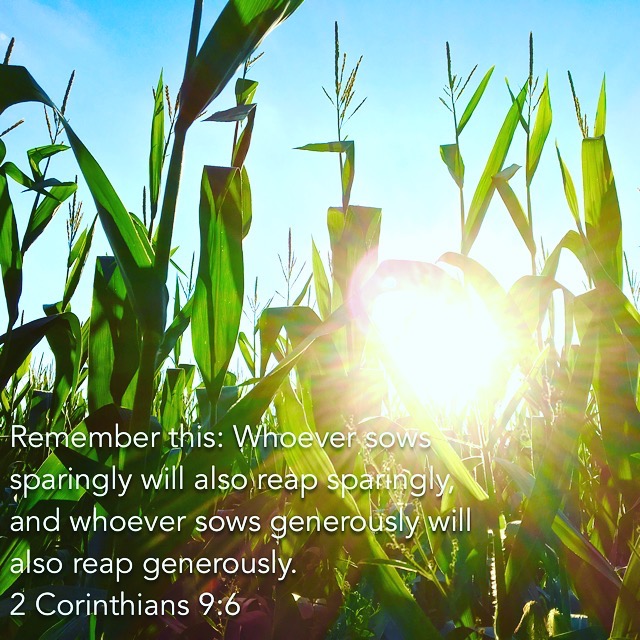
  • Give generously (9:1-6)
  • Give cheerfully (9:7)
  • Give where God is glorified (9:8-15)

Giving according to these principles removes the taint of anything shady, and puts the focus on God.

The Land Of Gospel Gall

Guest Blogger Dick Brogden

This Saturday Jenn and I took the boys to the dollar theatre to see the claymation film Pirates: Band of Misfits. A half-hour in I was in so much pain (could have been the British humor). I left the theatre and walked around the parking lot, vomiting a few times. I tried to tough it out but the pain got worse so I went back in and asked Jenn to take me to the hospital. Dignity seems to be an optional thing. I was writhing in the car and karate kicking the air until the medics could get some pain medicine into me. My gall bladder had declared war. I was admitted to the hospital, and Sunday morning the surgeons went in and Mr. Gall is gone.

Being wheeled on the stretcher to my room, exposed and vulnerable, I noticed my attendant was from the Middle East. His name was Mohammed and he is from Cairo. I told him I loved his country, loved Muslims, loved Jesus, and wanted him to go to Heaven. We had a nice little conversation about the Gospel and Jesus the only sin bearer. I dug him no well, I gave him no water, I taught him no English—he in fact was serving me kindly and gently, but I was able to tell him about Jesus. Who knows, maybe for the first time.

A YWAM friend of mine in Egypt some years ago, decided to take the Gospel literally by not taking anything. He made an exception for a toothbrush which he stuck in his pocket and then he began to walk through the desert, from village to village. Some villages were distant and he would stumble into them hot, thirsty, dirty, and fatigued. The Muslims would take him in, feed him, host him, give him a white robe, wash his clothes, and care for him. He had nothing to give them, nothing to offer back—except everything. He sat with them in their living rooms and shared with them the Gospel—what God has done in Christ.

I am not the gospel. You are not the gospel. The gospel is what God has done, is doing, and will do in Christ. We (in the West) increasingly believe in the Gospel plus. Embarrassed of the exclusive claims of Christ, some of our action (not all) is because we want to self-adorn the gospel. Truth is, God is true and the gospel stands whether or not I am false or laid out on a stretcher. The gall of the Gospel is that it is not about me, it’s not about what I do—the Gospel is all about what God has done in Christ.

Do not read this as a call to license, to falsehood, or to removal from the world. We attack evil wherever we find it, we minister in word, sign, and deed to body, soul, and spirit—but let’s remember that we and what we do is not the gospel. Let’s proclaim the good news about what God has done in Christ. Let’s do it from weakness—Gospel Gall—it really is not about us or what we can give. God gave His only Son. What can we possibly add to that?

Mammon

It’s a funny-sounding word, but it has deadly consequences!

Jesus said we cannot serve both God and mammon (Luke 16:13 KJV). That word mammon had no direct translation in the English language, so the translators of the King James Version of the Bible simply did a transliteration: they took the Greek word and carried the same word into English. The translators of the New International Version did something different with this word: they made it Money, with a capital M.

The idea behind this word is placing our trust or reliance in anything except God. For us, the means of our security and basic living needs seems to be money, so Money (with a capital M) seems like an appropriate way to translate mammon.

Jesus recommended giving an offering—above and beyond our tithe—as a way to defeat the Mammon Monster. Giving our tithe is simply obedience to God’s commands. But giving our offering shows our trust in God’s provision.

Giving an offering to God is counterintuitive.

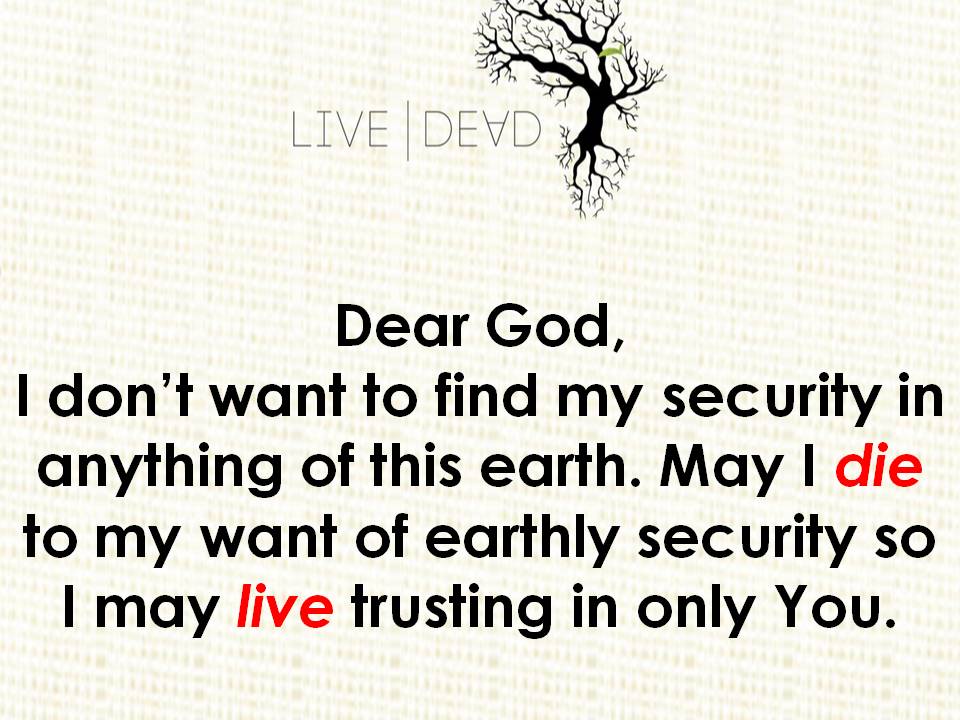
After all, less money is less than more money! If I receive money, I tend to hang on to it. I tell myself, “This might come in handy if the economy nosedives, or if something unexpected comes up.” When I start thinking this way, I start to make money Mammon, because I see money as my provider, instead of God.

What an appropriate way to wrap up our Live Dead series yesterday, as we made faith promises to God. We said, “God, I believe You will provide the amount of money I should give as an offering. And when You do provide, I promise to give it.” Placing my trust in God not only helps me to live dead to the pull of Mammon, but also Jesus promised—

Give, and it will be given to you. A good measure, pressed down, shaken together and running over, will be poured into your lap. For with the measure you use, it will be measured to you. (Luke 6:38)

I don’t give to get. I give because I trust God to provide.

P.S. By the way, all of the offerings that come in as a result of these faith promises will be going directly to missions. Calvary Assembly of God will not be keeping one cent of these faith promise offerings.

If you’ve missed any messages in our series called Live Dead, you can find them all by clicking here.

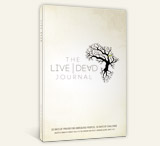
Live Dead (book review)

Live Dead is not for the faint of heart. Nor those who don’t want their regular routine disturbed. Nor those who like the status quo. Nor those who want life to be comfortable. But if your desire is to allow God to use you anyplace, anytime, anywhere, this just may be the resource you’ve been looking for.

Live Dead takes its name from the scriptural principles of considering everything in our lives dead so that we can live for Christ. This journal is compromised of 30 days of thought-provoking devotional material from those who are living dead. Namely: missionaries who are living in remote, unfriendly places, in order to take the Gospel of Jesus Christ to unreached and unengaged people groups.

Each day you will get a glimpse into their personal lives, the sacrifices they have made, and the joy they have discovered in living dead. And you will be confronted on how you too can follow them in living dead. Not everyone will hear God calling them to move to a foreign land to share the love of Jesus, but I believe everyone who takes this month-long journey will hear God calling them to live dead right where they are.

I did.

I’m glad I took the 30-day challenge, and I encourage you to do so as well. You can order live dead materials, including this journal, from their website. And if you live near Cedar Springs, MI, you can join me at Calvary Assembly of God as I teach a series based on this book during the month of February 2012.

Flexibility

I am working through a fascinating devotional book called Live Dead. It’s not just a book, but a challenge to live differently. I strongly encourage you to purchase this book, and then take the Live Dead challenge. With the permission of the book’s editor, I am reproducing Day 22’s challenge.

Flexibility: God’s Music, Written In Three Flats by Bob McCulley

Some of the most dangerous times in our life and ministry are when we lock our dreams and hopes in concrete, when we become so focused on what we are planning to do that we cannot see what God is trying to do. One day, while serving among the Maasai people of East Africa, I was running late for an appointment to meet with the village elders in a place called Mbirikani, which was about an hour away from our home. The purpose of the meeting was to appeal for a site where we could build a church in that village. My planned departure was delayed and my wife, Murriell, tried to soothe my anxiety with the words, “God has everything under control.”

I drove my four-by-four vehicle quickly up the road and was making good time until I got a flat tire, which I hurriedly changed. A few minutes later, I had a second flat and again made a tire change that would make a pit crew proud. Deep in the bush and well off the road, I had a third flat tire, and my third and final spare had to be removed from the luggage rack. In the process of getting it off the roof, it rolled away from me and down the hill into a large clump of thorn brush. By the time I retrieved it, my clothes were torn and my face and arms were bleeding from multiple scratches.

As I was preparing to mount the third spare tire, a Morani, a Maasai warrior, came walking out of the forest and greeted me. I did not wish to have a conversation because I was dirty from changing the flats and was now very late for what I thought was a critical appointment. His greeting was congenial and correct, while mine was harsh and abrupt. But I had good reason: I was late, dirty, bleeding, and angry. His next words stopped me. He knew my name. He had heard me preach a few weeks before, and that morning on awakening had decided to go to town to find me and to ask me to help him receive Christ. He had set off before sunrise to walk about 15 miles to town to find me and only halfway there, had found me on the roadside. I stopped changing the tire, cleaned my hands, and got my Bible out. Soon we were sitting under a thorn tree, reading and praying together as he became a newborn follower of Jesus.

When we were done, he thanked me and disappeared back into the forest, and I sat in wonder of the way God schedules our lives. By then I knew I had been right on time for the only appointment God had scheduled for me that day. I had no spare tires left, so I finished mounting the third spare and turned the truck around and headed home. Days later, I learned that the meeting had been postponed until the following day and our appeal had been granted. The community had given us 10 acres of ground on which to develop the ministry.

Our plans and dreams are often far removed from what God has in mind for us, and a lack of flexibility may cause us to miss Him and to be broken in the missing.

Live Dead Challenge—Look for a way you can be flexible today. Anticipate an interruption and welcome it as an opportunity, an event God has scheduled for you — even if it makes you late or it means that something you planned does not happen. In the days to come, look for ways you can be flexible. In service opportunities down the road, commit to flexing — dying to your plan and schedule that you might live to the surprises God injects in your daily life.

You can order the Live Dead book and other resources by clicking here.

And, for those of you who live in or near Cedar Springs, join us for a series of messages and a free copy of Live Dead in February.

The Land Of Tumors

My cousin Dick Brogden is one of my heroes. He has faithfully followed God to some of the toughest places on the planet to share the love of Jesus. He continues to grow in his relationship with Jesus Christ, and challenges me to grow as well.

Check out these challenging words an amazing prayer journal that Dick edited called Live Dead:

Greetings From The Land Of Tumors

Three weeks ago I started getting dizzy when I stood up. Over the next few days my vision began to blur and a headache set in behind my eyes that has not left. My eyes felt like they were being pushed out from the inside, and after 2 pm it was hard to keep them open. I went to the neo-omniscient internet and diagnosed myself with a brain tumor. Yesterday I went to the doctor. He ordered a CAT scan and the result was encouraging: There is nothing in my head. The doctor had some ridiculous advice for me like getting more sleep and working less.

Flying home to Chicago from Pennsylvania this week I asked myself what I would do if I did have a tumor. My thoughts initially turned to eating a dozen Twinkies, and coughing up the $500 it would cost to take my sons to a Chicago Bears game before settling on this:

If I had a tumor, I’d hammer in the morning.
I’d hammer in the evening, all over this town.
I’d hammer out gospel, I’d hammer out warning
I’d hammer out love and truth to brothers and sisters
—all over this land.

Now that I don’t have a tumor, I have decided to live like I do. This is after all what it means to Live Dead. Dying to what people think. Dying to what doesn’t matter. Living every moment to make Jesus famous, to make much of Him, to see God glorified. Let’s all live with imaginary tumors. Let’s live as if we are dying—which incidentally we are.

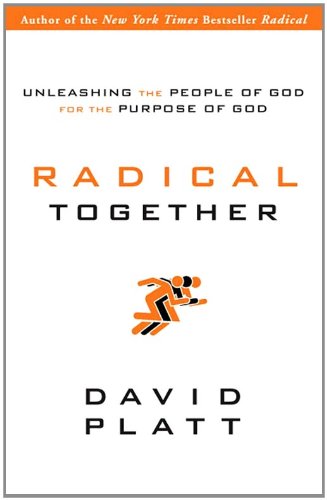
Radical Together (book review)

In Radical Together, David Platt follows up on his book Radical by focusing on how followers of Jesus need to rethink the purpose of the church.

Throughout the book, David continually challenges the age-old paradigms of “church,” and he calls on Christians to return to a more biblical approach to living out their faith. Some of my favorite wake-up calls come in these quotes:

“So we decided to stop planning, creating and managing outreach programs and to start unleashing people to maximize the ministry opportunities God had already planned and created for them.”

“Be careful not to let programs in the church keep you from engaging people in the world with the Gospel.”

“Discussions in the church more often revolve around what we want than what [God] wills. Almost unknowingly, the church becomes a means of self-entertainment and a monument to self-sufficiency.”

And he also addresses pastors specifically in the way they lead their churches. One quote from David really caused me to pause—

“The Bible is not in a church leader’s hands so he or she can give people answers to every question they have and guidance for every situation they face. Instead, the Bible is in a church leader’s hands to transform people into the image of Christ and to get people in touch with the Holy Spirit of God, who will not only give them counsel for every situation they face but will also walk with them through those situations. And when church leaders use God’s Word for this purpose, then church members develop a healthy dependence on God’s Spirit and a healthy admiration of God’s glory.”

Although Radical Together was really written as a sequel to Radical, I didn’t read the first book. With that being said, I didn’t feel like I was only getting part of the story, as Radical Together clearly stands alone.

If you are tired of same-old-same-old church, Radical Together just might be the wake-up call that you need.

I am a Multnomah book reviewer.

The Only Thing Missing

Last night we kicked off our week of pray by focusing our prayers on missionaries. We had a special missionary guest with us, and I was moved by his prayer. In essence, he prayed:

With all of the millions and millions of Christians in our churches, and with all of the millions and millions of dollars in resources we have, the only that is keeping us from reaching the 6900 unreached people groups is a “Yes.”

Wow!

I pray more people will say…

  • Yes, I will pray for missionaries.
  • Yes, I will give to missions.
  • Yes, I will go.

The only thing missing is a “Yes.” Can you be a part of that “Yes”?

Brave Enough

If God asks me to give $1, I can quickly and easily say, “Yes!”

If God asks me to give $10, I say, “Okay!”

If God asks me to give $100, I say, “Um, well, if You say so.”

If God asks me to give $1000, I say, “I need to pray about this ‘faith promise.’”

If God asks me to give $10,000, I say, “As soon as You bless me, I’ll be able to do this.”

This same principle holds true for anything else:

  • Used clothing? Sure. Brand new stuff? I’m not so sure.
  • Volunteer an hour? Okay! Make a commitment for an hour every week? Let me pray about it.
  • Pray for someone? No problem. Add them to my daily prayer list? Whoa!
  • Support missionaries? Yes! Become a missionary? Well….

It’s easy to obey when we think the stakes are low. But the more “zeroes” that get added to the amount, the higher the stakes seem. Am I brave enough to obey then?

This is what tripped up Saul, Israel’s first king. He was supposed to devote everything from the defeated Amalekites to God. “Devote” means a complete and irrevocable giving to God. When the stakes were low, he obeyed, but when he perceived the stakes being too high, he lost the courage to follow through:

Saul and his men spared Agag’s life and kept the best of the sheep and goats, the cattle, the fat calves, and the lambs—everything, in fact, that appealed to them. They destroyed only what was worthless or of poor quality. (1 Samuel 15:9 NLT)

He captured Agag, king of Amalek, alive. Everyone else was killed under the terms of the holy ban. Saul and the army made an exception for Agag, and for the choice sheep and cattle. They didn’t include them under the terms of the holy ban. But all the rest, which nobody wanted anyway, they destroyed as decreed by the holy ban. (1 Samuel 15:9, The Message)

Ironically, because Saul held on to what he thought was valuable, he lost something invaluable: a close relationship with God. His cowardice led to disobedience, and his disobedience led to his ultimate collapse.

I pray that I’m brave enough to obey just as quickly when the stakes are higher as I do when the stakes are lower.

What about you? Are you brave enough?

Stepping Up To The Challenge

I shared with you earlier how my faith was challenged and stretched when my leadership team believed we could hit a much larger missions-giving goal than I had thought. (You can read about my little faith here.)

On Wednesday night we challenged our Impact students to believe God to do big things through them, and we asked them to make a faith promise. To say, “God, if You will help me give this amount to Speed The Light, I will do it.” Last night I was able to sit down with my leaders to tally up the cards that were turned in. Just in their faith promises alone our youth group has already committed one-third of our total goal!

I’m so proud of our students! I’ll keep you posted on how we’re doing. Please pray for us that we’ll be creative in finding new ways to raise money for missions, and that we’ll continue to have our faith stretched.