Links & Quotes

link quote

Some interesting reading (and watching and listening) from the last couple of days.

Great D-Day history! You can listen to CBS Radio as they reported the D-Day invasion on June 6, 1944.

Watching porn not only decreases brain size, but it also weakens the watcher’s ability to make good long-term decisions.

Parents: kids can download apps to hide pictures and videos on their electronic devices. Check out the latest news from uknowkids.com.

The Congressional Budget Office now reports that ObamaCare costs are so outrageous that it is impossible for them to calculate the total economic impact.

“It is delightful to worship God, but it is also a humbling thing; and the man who has not been humbled in the presence of God will never be a worshiper of God at all. He may be a church member who keeps the rules and obeys the discipline, and who tithes and goes to conference, but he’ll never be a worshiper unless he is deeply humbled. … There’s an awesomeness about God which is missing in our day altogether; there’s little sense of admiring awe in the Church of Christ these days.” —A.W. Tozer

[VIDEO] Clay Christensen on the importance of religious freedom to democracy.

“The most paralyzing thing we can do for our relationship is to define our spouse by their past, rather than by who they are in the present.” Read more from this post Top 10 Relationship Killers.

Fasting is beneficial spiritually and physically: Fasting can regenerate immune system.

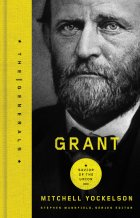
9 Quotes from “Grant: Savior Of The Union”

Grant: Savior Of The Union was a very eye-opening biography to read (you can read my full review by clicking here). Here are nine passages that especially caught my attention:

“This I don’t want you to read to others for I very much dislike speaking of myself.” —Grant, in a letter to his father about the accomplishments of his soldiers 

“The first day out the regiment made it five miles. However, the next morning at six o’clock when Grant resumed the March, his men were unprepared to move. He allowed them time to rise and eat breakfast this time, but the following morning when the men were again not ready to march, Grant left without them. It must have been a sight to see half-dressed soldiers running after their commander. The remainder of the trip to Quincy was conducted in relatively good order. Grant boasted to his father that ‘my men behaved admirably and the lesson has been a good one for them. They can now go into camp and after a day’s March and with as much promptness as veteran troops; they can strike their tents and be on the march with equal celerity.”  —Mitchell Yockelson

At one battle some officers advised retreat. Grant replied, “Retreat? No. I propose to attack at daylight and whip them.”

When some in Washington, D.C., wanted to replace Grant with someone more experienced, President Abraham Lincoln said, “I can’t spare this man; he fights.”

A friend observed that at a banquet where toasts and speeches were made to honor Grant, “his face never changed its unmoved expression. It never lit up with excitement. …His silence was a native endowment, nothing studied, nothing acquired. … His greatest enjoyment was manifestly with [his wife and children]. Their presence and happiness made his face beam as nothing else would.” 

When Grant was given the rank of Lt. General—a rank no one had held since George Washington—Grant’s acceptance speech was very gracious:

“I accept the commission with gratitude for the high honor conferred. With the aid of the noble armies that have fought on so many fields for our common country, it will be my earnest endeavor not to disappoint your expectations. I feel the full weight of the responsibilities now devolving on me and know that if they are net it will be due to those armies. And above all to the favor of that Providence which leads both Nations and men.”

After Robert E. Lee signed the surrender agreement for the armies of the South, word spread to the Union forces, and celebration erupted. “Grant ordered the cheering to stop. He did not want the Union army to gloat and in any way insult the defeated Confederates. ‘The war is over,’ Grant told a staff member. ‘The Rebels are our countrymen again.’”

“It will be a thousand years before Grant’s character is fully appreciated. Grant is the greatest soldier of our time if not all time… he fixes in his mind what is the true objective and abandons all minor ones. He dismisses all possibility of defeat. He believes in himself and in victory. If his plans go wrong he is never disconcerted but promptly devises a new one and is sure to win in the end. Grant more nearly impersonated the American character of 1861-65 than any other living man. Therefore he will stand as the typical hero of the great Civil War in America.” —William T. Sherman

“Of all the American generals of the nineteenth century, it seems to me that Ulysses S. Grant better understood the role of the military in democracy than any other.” —John S.D. Eisenhower, historian and son of Dwight D. Eisenhower

Fearless (book review)

I recently read Fearless by Eric Blehm, the story about Adam Brown, who was a SEAL Team 6 operator. It was an amazing story!

The publisher was concerned that since a Navy SEAL was on the front cover, perhaps some church folks (especially pastors) might pass by this book. But let me assure you, this is a completely Christ-centered, God-honoring story. Check out the video review I did for Waterbrook Multnomah —

I am a Multnomah book reviewer.

Act Of Valor (movie review)

I have always had great respect and appreciation for the soldiers, airmen, sailors and Marines that keep us safe. After seeing Act Of Valor, that level of appreciation has gone up significantly!

This is a realistic movie. It’s not a Hollywood-stylized action film. It portrays that way our teams operate in the field to keep our country and her citizens safe. And it shows the real men and women, and the real emotions they have to deal with as they do a very dangerous job.

This movie is rated R for very realistic combat scenes, and some language. But for your teenagers that think they know what “real combat” is because of the video games they play, take them to see this movie and use it as a discussion of what’s really real.

Go see this film. And then thank an active duty service personnel or a veteran for their incredibly selfless service to our country.

Sherman (book review)

I find biographies of leaders fascinating. And few Civil War leaders are a more fascinating study than William Tecumseh Sherman, as portrayed in Sherman: The Ruthless Victor by Agostino Von Hassell and Ed Breslin.

Sherman was a man driven by two forces which almost seem contradictory: (1) the desire to make a name for himself, without the help of other; and (2) the almost debilitating fear of trying to attempt anything that wasn’t guaranteed to be successful. Whereas the first might drive him to be something of an entrepreneur, the second would seem to keep him satisfied with the status quo. Ultimately the entrepreneurial force drove him forward.

In fact, it drove him forward so ruthlessly and mercilessly, that his name is still uttered as a curse word in the South, and one of the most fearsome military machines—the Sherman tank—was so aptly named after him.

As I read this biography, I couldn’t help feeling sorry for General Sherman. For a man who had been given so many advantages and opportunities, he seemed not only ungrateful for them, but almost contemptuous of them. In the end, the only thing that gave him satisfaction was totally annihilating everything in his path; including his marriage, his family, and his friends. Sad!

But Sherman is still an important read for any student of leadership. I can’t help but wondering how history might have been different if a mentor might have come alongside Sherman to help him use his God-given talents in a more judicious and beneficial way.

I am a Thomas Nelson book reviewer.

Home And Away (book review)

I just finished reading Home And Away, by David & Nancy French, and I have tears in my eyes. I readily admit that I’m a “patriotic crier” whenever the red, white and blue is involved, and this book hit me right in that patriotic soft spot.

A real quick summary of the book goes like this: David & Nancy French have an ideal life in America (family, home, career, etc.), but David feels compelled to serve his country in the armed forces in Iraq. So David enlists in the reserves and is stationed away in Iraq for a year, and Nancy tries to adjust to life home without her husband. The book alternates chapters, with both Nancy and David writing about the war from their perspective.

But what was invaluable to me was the insight into the emotional life of this couple. Both of them explain so clearly all of the feelings that are swirling around inside of them. You can feel the frustration as they try to explain their feelings to others, who don’t quite seem to get it. Even David has trouble grasping all that Nancy is experiencing, as Nancy tries to come to grips with what David is going through. In the end, I have a much greater appreciation for both our soldiers away in harm’s way, and their families who attempt to carry on at home without them.

If you want to know how to better support and pray for our armed forces and their families, I highly recommend Home And Away to you.

I am a Hachette Group book reviewer.

MacArthur (book review)

General Douglas MacArthur was popularly called “America’s General,” and Mitchell Yockelson’s biography—MacArthur: America’s General—does an admirable job in telling us how he earned this well-deserved moniker.

(As an aside: I have really enjoyed all of the books in the Thomas Nelson Generals series. You can read my reviews of George S. Patton here, and Robert E. Lee here.)

MacArthur’s influence is still being felt at West Point as we train our future military officers, and around the world, where General MacArthur had a prominent role in three wars. And, if his advice about Vietnam had been heeded, perhaps his influence would have extended through four wars.

How did he achieve such prominence? It’s the classic debate: are great leaders born or made? In Douglas MacArthur’s case the answer is a resounding “Yes!” Yes, he was born into a family with a strong military heritage. MacArthur certainly benefited from the influence of his grandfather (a judge), his father (a decorated, combat veteran and general), and his mother (who used her charm to sway many influential people). But these family members could only open doors; it was up to MacArthur to march through them.

And, yes, march through them he did! At every opportunity he pressed forward. Sometimes with unconventional tactics, sometimes in opposition to his leadership, and sometimes through sheer willpower. But the results speak for themselves: Without a General Douglas MacArthur to lead our troops in perilous times, the outcome in three wars could have been disastrously different.

The United States of America is viewed as the world’s superpower (and rightly so). It is very likely that without MacArthur’s influence we would not be the prominent power that we are now. We owe a huge debt of gratitude to God for blessing us with the MacArthur family.

A lively and informative read for military buffs and students of leadership. Highly recommended!

I am a Thomas Nelson book reviewer.

Never Surrender (book review)

In my estimation Gen. William “Jerry” Boykin is a true American hero, and Never Surrender is a great motto for us all to adopt.

Never Surrender is an autobiographical account of how General Boykin served our country in some of the deadliest and harshest places on the planet. But woven throughout his life story is this unmistakable message: Know what you believe in, and never surrender to the adversaries who try to get you to back down.

General Boykin has had such a movie-like military career: getting selected to be in the first Delta Force unit ever created, hunting down terrorists and drug lords, rescuing hostages, and even battling the bureaucrats in Washington, D.C., and the talking heads of the mainstream media. It’s sad to read that a patriot as committed to the protection of America and democracy-loving people around the world would come under such much fire from fellow Americans because he was so vocal about his faith in Christ. It’s almost appalling to realize that this patriot’s most vocal critics were right here in the USA!

Despite the smear campaigns and half-truths, despite the garbage the media spewed out about Gen. Boykin, he never backed down and he never surrendered. In the end, he was completely exonerated. Oh yeah, along the way, Gen. Boykin and his Delta Force operatives kept us a whole lot safer. And for that we’re all indebted to this proud soldier.

This book reads like a military novel—it’s a real page-turner! I highly recommend it.

I am a Faith Words book reviewer.

Lee: A Life Of Virtue (book review)

I’m thoroughly enjoying The Generals series from Thomas Nelson Publishers! The latest installment that kept me turning page after page is Lee: A Life Of Virtue by John Perry. (By the way, my review of the first book in this series is here.)

You probably think you know quite a bit about General Robert E. Lee, commander of the Confederate Army during the Civil War. After all, in our American History classes, we heard all about how Lee went to war to protect slavery, right? At least, that’s what I thought. But did you know that Lee signed the papers to free the slaves his family had inherited? And that Lee was working with other leaders to find the best way to free all of the slaves in the South?

This biography portrayed a side of Lee I had never heard before. John Perry does a remarkable job of showing us a man who quietly and resolutely relied on his faith in God for so many crucial decisions; a man who lovingly cared for his invalid mother; a man who continued to court his wife all throughout their marriage; a man who dearly loved his children; and a man who made his battlefield decisions based on what was best for his men.

The title is so apt: Lee was a man of virtue throughout his life. Always exercising self-control, always considerate of others, never cutting corners nor compromising.

If for no other reason, I recommend that you read Lee just to get a complete picture of a man who was so much more than an outstanding general; he was an outstanding man.

I am a Thomas Nelson book reviewer.

Patton: The Pursuit Of Destiny (book review)

Disclaimer: I am a huge admirer of General George Smith Patton, Jr. So it should come as no surprise that I thoroughly enjoyed Agostino Von Hassell and Ed Breslin’s biography Patton: The Pursuit Of Destiny.

It’s also no surprise that I relished reading about Patton’s military genius and his relentless preparation to be a man of destiny. What did surprise me was the candor with which the authors dealt with the shortcomings of Patton. For all of his military genius, there were areas of his life that always seemed to get the best of this general. On the battlefield, he had few equals, but away from the heat of battle, his insecurities could get the best of him. I appreciated how the authors showed Patton playing to his strengths while still struggling with his weaknesses. While many biographies show great men and women overcoming their struggles, Patton shows the general living with his struggles and still achieving greatness in spite of them.

I also learned more about Patton’s family lineage in this book that helped me understand what drove this military hero. I read about a man who was a voracious learner, highly competitive, and a man who set extraordinarily high standards for himself. His biggest weakness: he couldn’t abide those who didn’t share these same lofty goals for their own lives or profession.

If you enjoy military history, a study of a larger-than-life leadership persona, or a biography with an unflinching look at a great man’s angels and demons, you will enjoy reading Patton: The Pursuit Of Destiny.

I am a Thomas Nelson book reviewer.