From Azusa To Africa To The Nations (book review)

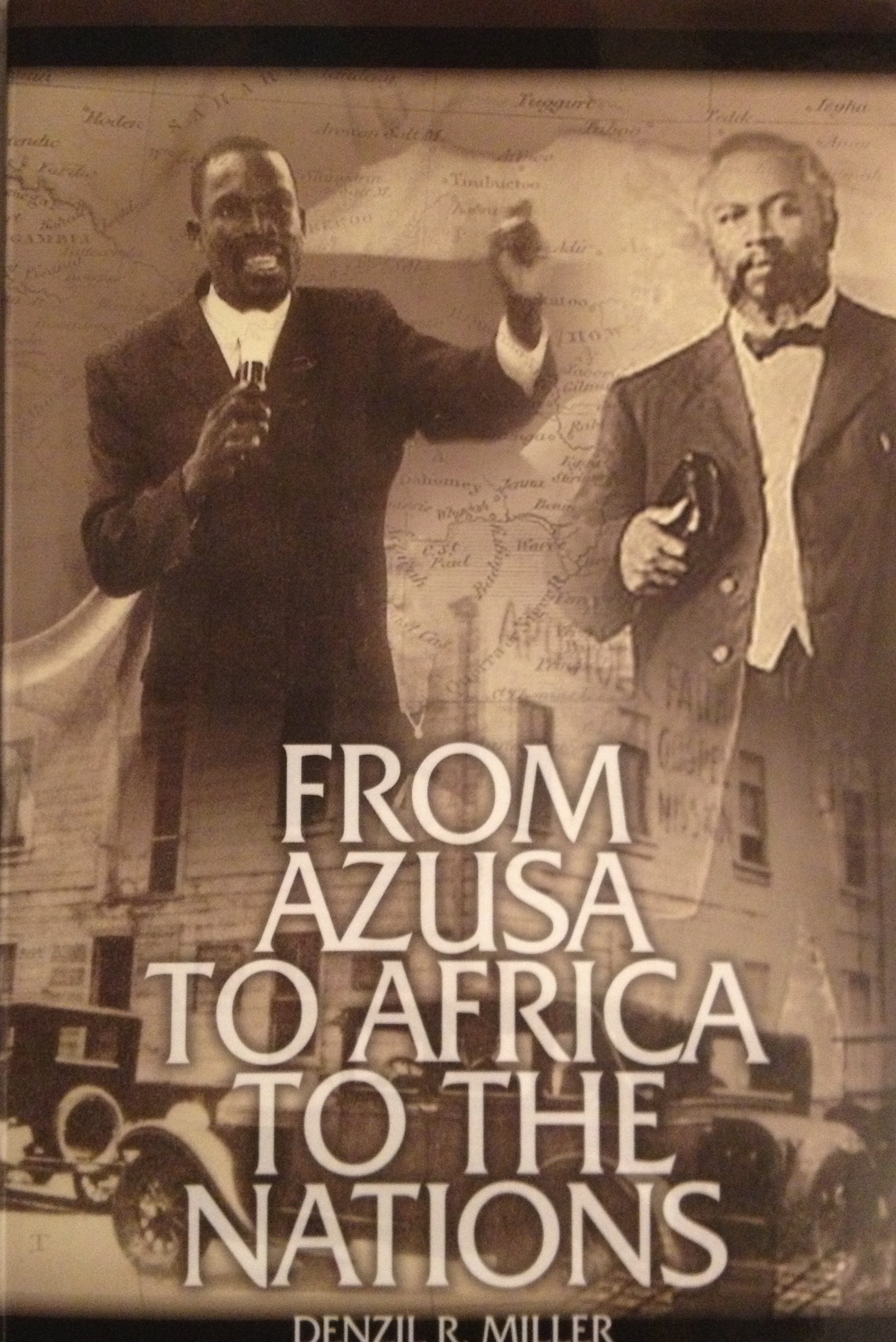
AzusaMost people are familiar with George Santayana’s powerful reminder: “Those who do not learn from history are doomed to repeat it.” This is why I love reading books of history. Denzil R. Miller has given us a powerful lesson of the history of the Pentecostal church in From Azusa To Africa To The Nations.

Denzil, a missionary in Africa, had a very specific motivation for writing this book: To remind African Christians how the full gospel message came to them, and how they should be responding to it. But I found that this book is a great reminder for all who call themselves Pentecostal.

From Azusa re-tells the story of the Pentecostal reawakening in the early days of the 1900s in a small church in Los Angeles pastored by William Seymour. From that small church, a worldwide revival to the fullness of the operation of the Holy Spirit began. It was a call to return to biblical roots; a call back to the message of Jesus, “You will receive power to be My witnesses after the Holy Spirit comes upon you” (Acts 1:8).

Denzil Miller aims to call the African churches back to their Pentecostal roots, but this is a call for all Pentecostals, regardless of the continent on which they live. This is a short, but powerful book, that I encourage you to check out.

The End?

Listen to the podcast of this post by clicking on the player below, and you can also subscribe on AppleSpotify, or Audible.

When Jesus was arrested, almost all of His disciples ran away. Peter, however, stayed somewhat close to Jesus, but not for the reason I originally thought.

Meanwhile, Peter followed Him at a distance and came to the high priest’s courtyard. He went in and sat with the guards and waited to see how it would all end. (Matthew 26:58 NLT)

Peter waited to see how it would all end.

Peter thought, “This is the end, roll the credits, turn out the lights, we can all go home now.”

When we think we can figure out how it will all end, our faith is too small. It’s not our story—it’s HIS story. And God’s story never ends for those who love Him. Their story is a perpetual, never-ending love story that gets better and better as eternity rolls on!!

Don’t put a period where God hasn’t put one. Don’t look for how it’s going to end. If you are a follower of God, you have His eternal life. That means the story never ends. It goes on and on and on and on….

Trust in the Lord always, for the Lord God is the eternal Rock. (Isaiah 26:4)

►► Would you please prayerfully consider supporting this ministry? My Patreon supporters get behind-the-scenes access to exclusive materials. Like this exceptional Bible study tool to help with Creation apologetics. ◀︎◀︎

Sola

On October 31, 1517, a sea change in world history was begun. On that day Martin Luther nailed his 95 theses to the door of a church, challenging the traditions of organized religion which he believed had strayed far from the instructions in the Bible.

The Reformation had been launched.

I truly believe that we all must be students of history, partly because all of his story is His Story. When we study history, we can see how God is working out His Story.

Second, we also need to know our history because as George Santayana rightly said, “Those who do not learn from history are doomed to repeat it.”

A third reason to (re)learn the thoughts brought out during the Reformation is for doctrinal strength. It’s important to know not only what why believe but why we believe it. And there are some valuable doctrinal truths in the history of the Reformation.

Finally, I believe an important part of learning is unlearning. Sometimes we accept something just because it’s been handed down to us. That is in large part what Luther and other reformers were challenging, and calling us to unlearn tradition and relearn what the Bible has to say.

So beginning this Sunday we will be walking through the five Sola doctrinal statements the reformers taught. I am really looking forward to relearning and unlearning, and just outright learning the biblical truths of the five solas.

I hope you can join me at Calvary Assembly of God.

Here are the topics we covered in this series:

9 Quotes from “Grant: Savior Of The Union”

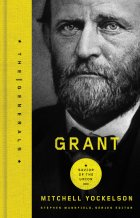
Grant: Savior Of The Union was a very eye-opening biography to read (you can read my full review by clicking here). Here are nine passages that especially caught my attention:

“This I don’t want you to read to others for I very much dislike speaking of myself.” —Grant, in a letter to his father about the accomplishments of his soldiers 

“The first day out the regiment made it five miles. However, the next morning at six o’clock when Grant resumed the March, his men were unprepared to move. He allowed them time to rise and eat breakfast this time, but the following morning when the men were again not ready to march, Grant left without them. It must have been a sight to see half-dressed soldiers running after their commander. The remainder of the trip to Quincy was conducted in relatively good order. Grant boasted to his father that ‘my men behaved admirably and the lesson has been a good one for them. They can now go into camp and after a day’s March and with as much promptness as veteran troops; they can strike their tents and be on the march with equal celerity.”  —Mitchell Yockelson

At one battle some officers advised retreat. Grant replied, “Retreat? No. I propose to attack at daylight and whip them.”

When some in Washington, D.C., wanted to replace Grant with someone more experienced, President Abraham Lincoln said, “I can’t spare this man; he fights.”

A friend observed that at a banquet where toasts and speeches were made to honor Grant, “his face never changed its unmoved expression. It never lit up with excitement. …His silence was a native endowment, nothing studied, nothing acquired. … His greatest enjoyment was manifestly with [his wife and children]. Their presence and happiness made his face beam as nothing else would.” 

When Grant was given the rank of Lt. General—a rank no one had held since George Washington—Grant’s acceptance speech was very gracious:

“I accept the commission with gratitude for the high honor conferred. With the aid of the noble armies that have fought on so many fields for our common country, it will be my earnest endeavor not to disappoint your expectations. I feel the full weight of the responsibilities now devolving on me and know that if they are net it will be due to those armies. And above all to the favor of that Providence which leads both Nations and men.”

After Robert E. Lee signed the surrender agreement for the armies of the South, word spread to the Union forces, and celebration erupted. “Grant ordered the cheering to stop. He did not want the Union army to gloat and in any way insult the defeated Confederates. ‘The war is over,’ Grant told a staff member. ‘The Rebels are our countrymen again.’”

“It will be a thousand years before Grant’s character is fully appreciated. Grant is the greatest soldier of our time if not all time… he fixes in his mind what is the true objective and abandons all minor ones. He dismisses all possibility of defeat. He believes in himself and in victory. If his plans go wrong he is never disconcerted but promptly devises a new one and is sure to win in the end. Grant more nearly impersonated the American character of 1861-65 than any other living man. Therefore he will stand as the typical hero of the great Civil War in America.” —William T. Sherman

“Of all the American generals of the nineteenth century, it seems to me that Ulysses S. Grant better understood the role of the military in democracy than any other.” —John S.D. Eisenhower, historian and son of Dwight D. Eisenhower

What Would Jesus Read? (book review)

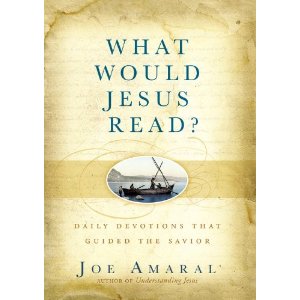
Many people are familiar with the phrase that goes with the acrostic WWJD: What Would Jesus Do. But I was very intrigued to see WWJR, which turns out to be an interesting book What Would Jesus Read? by Joe Amaral.

The premise behind the book is a historical setting. As the Jews were dispersed into captivity after Jerusalem fell, there was no longer a Temple to serve as the gathering place for religious worship, nor was there a central location for the storing and preservation of the scrolls which made up what we now refer to as the Old Testament of the Bible. The Jews themselves were now going to be the keepers of Scripture, and their homes would be the places of worship. So the Jewish rabbis divided up the biblical texts into daily reading portions, and distributed these among the scattering Jewish families. So each day of each week, a different portion of Scripture was read, and meditated on, and memorized so that it could be passed on to future generations.

So by following the reading plan in What Would Jesus Read you will be participating in a 2500-year-old tradition. It’s pretty cool to think of Bible reading that way!

Each day includes a portion of Old Testament scripture to read, and a brief devotional thought from Joe Amaral. It’s a great way to join your heart and thoughts to a tradition that started so long ago, and still continues today.

I am a FaithWords book reviewer.

Sherman (book review)

I find biographies of leaders fascinating. And few Civil War leaders are a more fascinating study than William Tecumseh Sherman, as portrayed in Sherman: The Ruthless Victor by Agostino Von Hassell and Ed Breslin.

Sherman was a man driven by two forces which almost seem contradictory: (1) the desire to make a name for himself, without the help of other; and (2) the almost debilitating fear of trying to attempt anything that wasn’t guaranteed to be successful. Whereas the first might drive him to be something of an entrepreneur, the second would seem to keep him satisfied with the status quo. Ultimately the entrepreneurial force drove him forward.

In fact, it drove him forward so ruthlessly and mercilessly, that his name is still uttered as a curse word in the South, and one of the most fearsome military machines—the Sherman tank—was so aptly named after him.

As I read this biography, I couldn’t help feeling sorry for General Sherman. For a man who had been given so many advantages and opportunities, he seemed not only ungrateful for them, but almost contemptuous of them. In the end, the only thing that gave him satisfaction was totally annihilating everything in his path; including his marriage, his family, and his friends. Sad!

But Sherman is still an important read for any student of leadership. I can’t help but wondering how history might have been different if a mentor might have come alongside Sherman to help him use his God-given talents in a more judicious and beneficial way.

I am a Thomas Nelson book reviewer.

Happy Thanksgiving From George Washington

“Whereas it is the duty of all Nations to acknowledge the providence of Almighty God, to obey His will, to be grateful for His benefits, and humbly to implore His protection and favor; and Whereas both Houses of Congress have, by their joint committee, requested me ‘to recommend to the people of the United States a DAY OF PUBLIC THANKSGIVING and PRAYER, to be observed by acknowledging with grateful hearts the many and signal favors of Almighty God, especially by affording them an opportunity peaceably to establish a form of government for their safety and happiness.’

“NOW THEREFORE, I do recommend and assign THURSDAY, the TWENTY-SIXTH DAY of NOVEMBER next, to be devoted by the people of these States to the service of that great and glorious Being who is the beneficent author of all the good that was, that is, or that will be; that we may then all unite in rendering unto Him our sincere and humble thanks for His kind care and protection of the people of this country previous to their becoming a nation; for the signal and manifold mercies and the favorable interpositions of His providence in the course and conclusion of the late war; for the great degree of tranquility, union, and plenty which we have since enjoyed; for the peaceable and rational manner in which we have been enable to establish Constitutions of government for our safety and happiness, and particularly the national one now lately instituted; for the civil and religious liberty with which we are blessed, and the means we have of acquiring and diffusing useful knowledge; and, in general, for all the great and various favors which He has been pleased to confer upon us.

“And also, that we may then unite in most humbly offering our prayers and supplications to the great Lord and Ruler of Nations and beseech Him to pardon our national and other transgressions; to enable us all, whether in public or private stations, to perform our several and relative duties properly and punctually; to render our National Government a blessing to all the people by constantly being a Government of wise, just, and constitutional laws, discreetly and faithfully executed and obeyed; to protect and guide all sovereigns and nations (especially such as have shown kindness unto us); and to bless them with good governments, peace, and concord; to promote the knowledge and practice of true religion and virtue, and the increase of science among them and us; and, generally to grant unto all mankind such a degree of temporal prosperity as he alone knows to be best.

“GIVEN under my hand, at the city of New York, the third day of October, in the year of our Lord, one thousand seven hundred and eighty-nine.”

(Un)Forgiveness

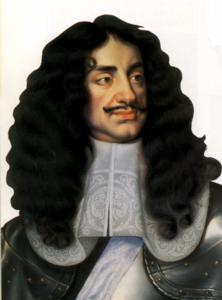
Charles II had a slight problem with unforgiveness

A couple of weeks ago I asked our church a simple question. So let me ask you the same thing: Anyone ever not been burned by someone, taken advantage of, or hurt by somebody else? Anyone? I didn’t think so. We’ve all been hurt, but the real issue is what we do with those hurts.

In January 1647, Oliver Cromwell captured King Charles I during the British Revolution. But a few months later, Charles escaped and managed to raise another army. In August 1648 Cromwell’s army defeated Charles’ army and once again Charles was taken prisoner. Cromwell had Charles tried for his crimes, and after the guilty verdict was issued, Charles I was executed. A total of 59 people signed his death warrant.

Eleven years later Cromwell’s son Richard had taken his place as Lord Protector of England, and there was great discontent with his leadership. As a result, the Loyalists were able to sweep Charles II into power. Charles II wanted the 59 death warrant signors put on trial, but 15 of them had already died. Charles II ordered their bodies exhumed, placed on trial, convicted, and then hung.

I’m no psychologist, but I think it’s safe to say that Charles II might have had a problem with unforgiveness!

It’s highly unlikely that you have dug up any dead bodies and put them on trial lately.

        Or maybe you have…

When someone has hurt us, we tend to keep the pain alive. Sometimes even after that person is long-gone from our life, we still exhume the corpse of their injury, put them on trial, convict them, and punish them all over again. But this process is actually punishing YOU. As long as you keep the hurt alive, you are trapped in the past.

The key to freedom is easy and yet hard: forgiveness.

Bonhoeffer (book review)

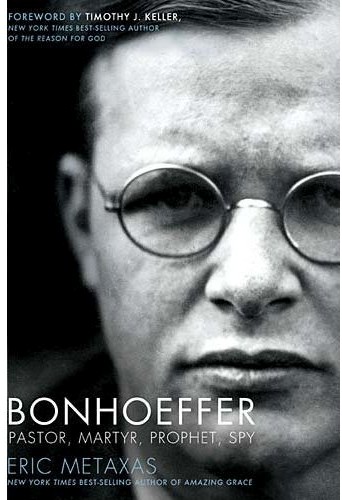
I’ve always been an admirer of Dietrich Bonhoeffer’s work, but Eric Metaxas’ sweeping biography has given me a whole new appreciation for this influential theologian.

Bonhoeffer: Pastor, Martyr, Prophet, Spy takes you behind the scenes that influenced this great man. You will see how his family helped encourage Dietrich to be such a deep thinker. Then you will read how Bonhoeffer’s thinking was sharpened as he challenged the Nazi’s co-opting of the church in Germany, leading him to call pastors back to a biblically-sound foundation.

By perhaps the most compelling storyline is how this pastor could join the band of German citizens who agreed that Adolph Hitler must be assassinated. Although to us now it may seem like an easy decision to make, to those who lived through the events leading up to Word War II, it was an excruciating decision. Eric Metaxas does a masterful job of taking us inside the thinking process that led Dietrich Bonhoeffer to his decision.

And through all of the turmoil swirling around him, Bonhoeffer found time to not only teach young pastors, but to leave behind some timeless teachings in his masterful books.

If you are already familiar with Bonhoeffer’s writings, this biography will give you a whole new appreciation into the man who crafted the books. If you aren’t yet familiar with Bonhoeffer’s books, Bonhoeffer will whet your appetite to know more. Don’t miss out on this one!

MacArthur (book review)

General Douglas MacArthur was popularly called “America’s General,” and Mitchell Yockelson’s biography—MacArthur: America’s General—does an admirable job in telling us how he earned this well-deserved moniker.

(As an aside: I have really enjoyed all of the books in the Thomas Nelson Generals series. You can read my reviews of George S. Patton here, and Robert E. Lee here.)

MacArthur’s influence is still being felt at West Point as we train our future military officers, and around the world, where General MacArthur had a prominent role in three wars. And, if his advice about Vietnam had been heeded, perhaps his influence would have extended through four wars.

How did he achieve such prominence? It’s the classic debate: are great leaders born or made? In Douglas MacArthur’s case the answer is a resounding “Yes!” Yes, he was born into a family with a strong military heritage. MacArthur certainly benefited from the influence of his grandfather (a judge), his father (a decorated, combat veteran and general), and his mother (who used her charm to sway many influential people). But these family members could only open doors; it was up to MacArthur to march through them.

And, yes, march through them he did! At every opportunity he pressed forward. Sometimes with unconventional tactics, sometimes in opposition to his leadership, and sometimes through sheer willpower. But the results speak for themselves: Without a General Douglas MacArthur to lead our troops in perilous times, the outcome in three wars could have been disastrously different.

The United States of America is viewed as the world’s superpower (and rightly so). It is very likely that without MacArthur’s influence we would not be the prominent power that we are now. We owe a huge debt of gratitude to God for blessing us with the MacArthur family.

A lively and informative read for military buffs and students of leadership. Highly recommended!

I am a Thomas Nelson book reviewer.