Brain-Savvy Leaders (book review)

Brain-Savvy LeadersThe human brain is an amazingly complex invention that only Someone like the Creator God could have designed! The brain plays a huge part in our day-to-day interactions with other people, so Charles Stone has given us a great resource in Brain-Savvy Leaders: The Science of Significant Ministry.

In the introduction, Charles explains the purpose of this book: “By intersecting biblical insights with insights about the brain, we can develop new learnings and language to help us become better leaders, like actually listening to a board member disagree with you rather than becoming defensive and cutting him or her off.”

Charles Stone brings a unique combination of mechanical engineering, pastoral studies, and his own family’s personal journey with a daughter going through multiple brain surgeries. This diverse background was very readable for me, as I believe it will be for anyone who believes that the Creator of the brain is the best One to describe its operational aspects.

Because we learn best using both our logical (left) brain and our creative (right) brain, Charles presents all of his concepts with logical words, descriptive pictures, and memorable acronyms for each of the main sections. Charles presents the technical information in a way that a non-medical layman can comprehend, and in a way that will be easy to apply in both your personal and corporate roles.

Although the book has “leaders” in its title, Brain-Savvy Leaders is a good read for anyone who would like to step up their interpersonal skills.

I am an Abingdon Press reviewer.
What God Is Building

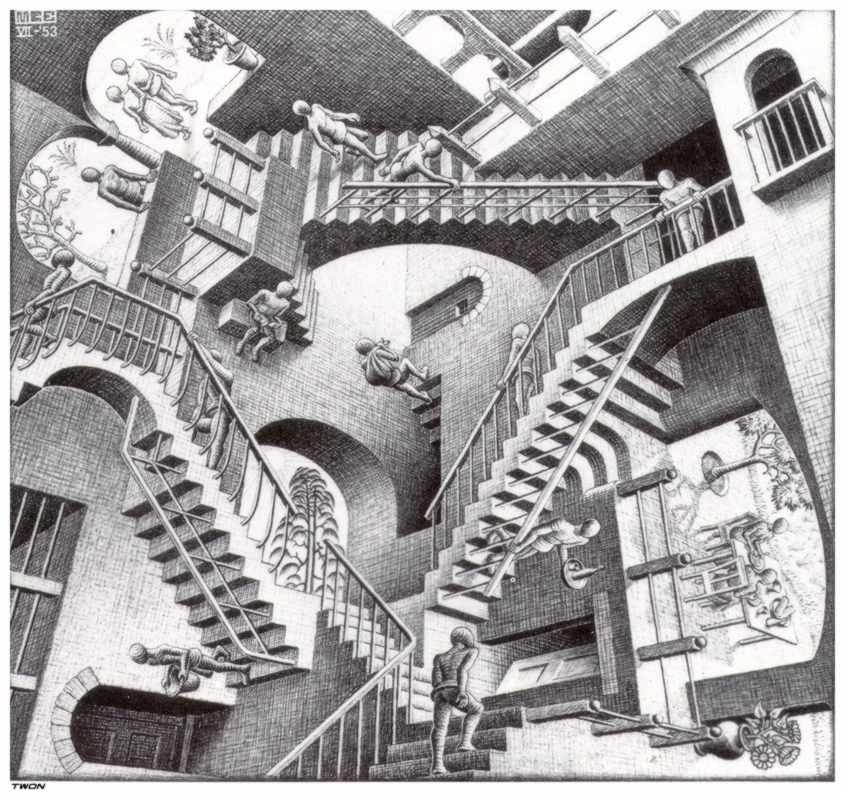
Relativity by M.C. EscherI love the drawings of M.C. Escher. But some of his sketches are clearly optical illusions we all know couldn’t work in the real world. We don’t have to be architects or engineers or builders to know that for a building to be functional it has to have (1) a solid foundation, (2) it must be built with quality materials, and (3) it must be constructed by someone who knows what he/she is doing.

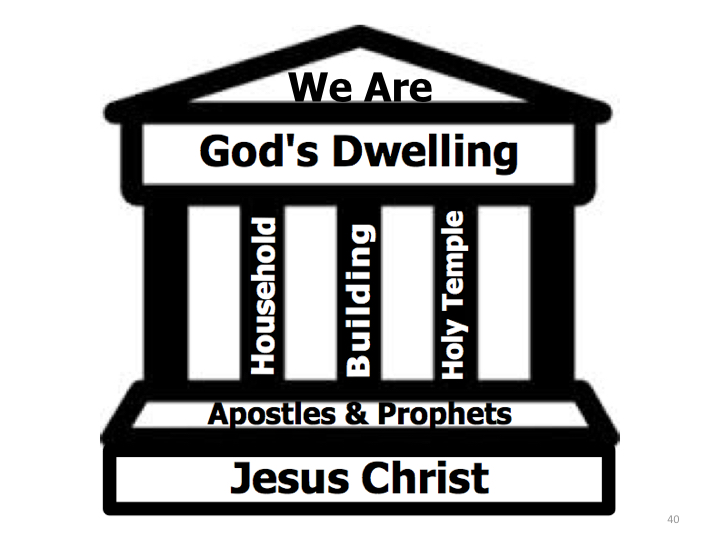
The Apostle Paul tells us that (1) Jesus Christ is the cornerstone of the sure foundation, (2) you and I—God’s saints—are the quality building materials that are being used, and (3) the Holy Spirit knows exactly what He is doing as He joins us together.

A cornerstone is the first stone set in the construction, the reference point for all other stone, which determines the position of the entire structure. Christ Jesus Himself is the cornerstone of His Church (Ephesians 2:20b). Orientated to that cornerstone we have the foundation of the apostles and prophets (2:20a).

This foundation is the Word of God (2 Peter 1:19-2:3 and 2 Timothy 3:14-4:5). We dare not try to replace, nullify, update, or change His Word. Not would this cause the foundation to crumble, but there are dire consequences for the one who tries to do so (Revelation 22:18-19).

Our foundationOn this foundation, God is constructing three things, each one growing in its level of intimacy with Him and with the surrounding saints:

  • God’s household (Ephesians 2:19)—this Greek word means a family home.
  • the whole building (Ephesians 2:21a)—this is a specific part of the family home used for prayer and fellowship.
  • a holy temple (Ephesians 2:21b)—this is the same word used for the Holy Place and Holy of Holies in the tabernacle.

God’s Presence dwells in us individually, but collectively we make a more powerful statement (1 Corinthians 3:16). There is a far greater testimony to the world when individuals willingly and actively allow themselves to be built together; when Christians give up their personal agendas to say, “I want to be a part of something bigger than me—I want to be a part of we.”

We must study God’s Word to make sure we are building on the same foundation. We must allow our lives to be quality building materials. We must allow the Holy Spirit to build us together through prayer and fellowship! This becomes the fulfillment of the prayer Jesus Himself prayed for us (John 17:20-23).

This was the last message (for this time) in our series on the Book of Ephesians. I hope to be able to continue this study next year.