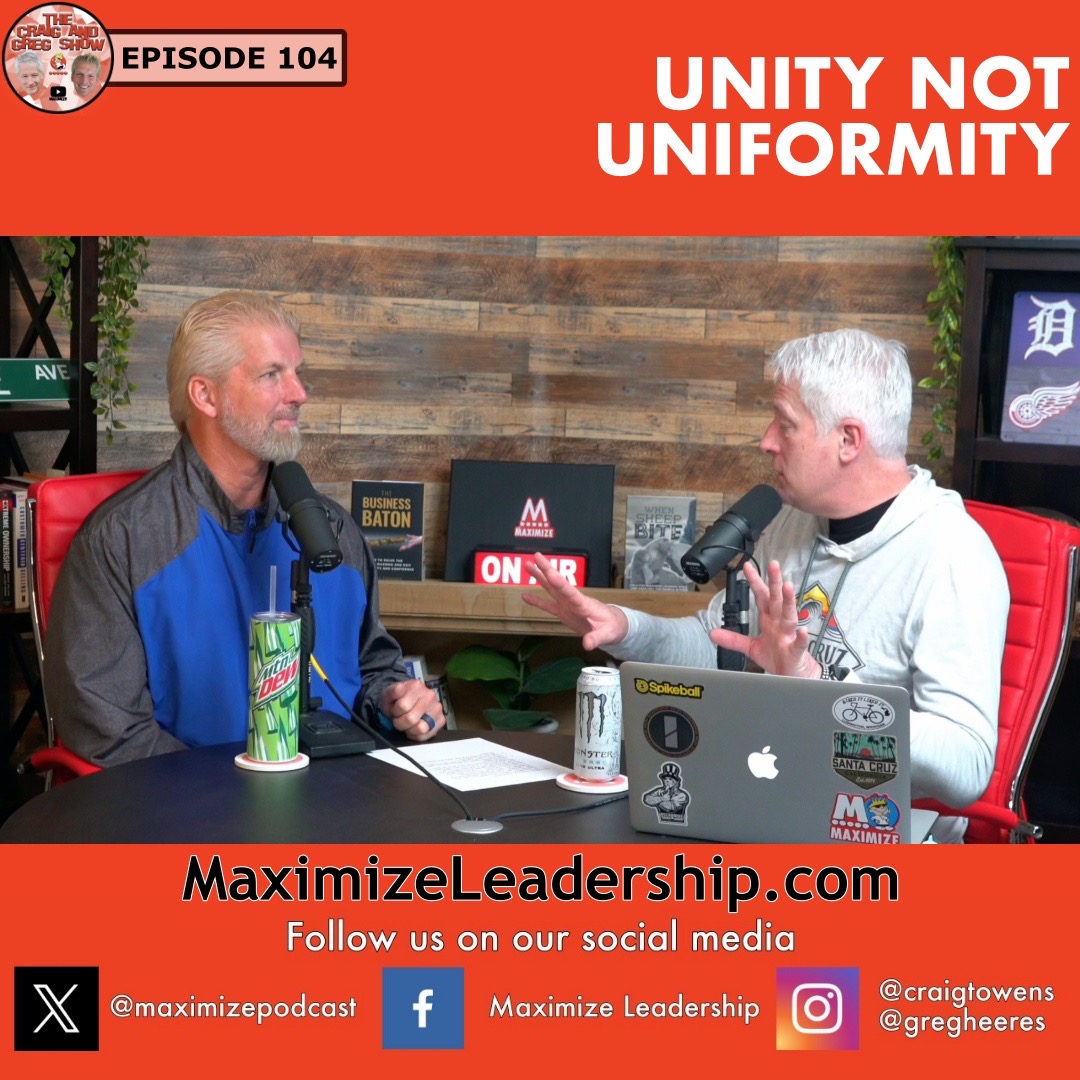
The Craig And Greg Show: Unity Not Conformity

Listen to the podcast of this post by clicking on the player below, and you can also subscribe on AppleSpotify, or Audible.

If you’re leading a team, then Greg and I feel pretty confident in assuming that you’ve got them all working, thinking, and behaving exactly like you work, think, and behave, right? Of course not! The differences in personality and thought within your team are what makes it special.

  • [0:18] Leaders like buy-in, but what about those teammates who say, “Hold on a second”?
  • [2:00] Unity doesn’t mean sameness.
  • [3:55] We all have different experiences and gifts so we all bring something different to the table.
  • [4:51] Unity doesn’t guarantee peacefulness in the process of getting to consensus.
  • [7:06] Leaders have to learn to accept the tension among teammates.
  • [9:47] Why do leaders avoid tension?
  • [13:16] I share a quote from Dick Brogden about the “no men” we need on our teams.
  • [14:54] Past success can make leaders deaf to the input from others.
  • [17:09] Greg wonders how to effectively play the devil’s advocate with our teams in order to get the best ideas on the table.
  • [19:03] My funny story about our producer Harrison.
  • [21:08] Greg changed the way he debriefed sales calls with his team, encouraging them to speak out.
  • [23:36] Greg uses an example of Joe Montana to show how leaders can bring confidence to their teams.
  • [25:30] Both opportunities and obstacles present a chance for us to teach our teammates.
  • [27:36] Greg and I want to help you help your team.

Check out this episode and subscribe on YouTube so you can watch all of the upcoming episodes. You can also listen to our podcast on Spotify and Apple.

Pay Attention To The Signals

Listen to the podcast of this post by clicking on the player below, and you can also subscribe on AppleSpotify, or Audible. 

Leaders need to pay very careful attention not to disregard the signals others are sending them.

Check out the full conversation Greg and I had about blind spots.

►► Would you please prayerfully consider supporting this ministry? My Patreon supporters get behind-the-scenes access to exclusive materials. ◀︎◀︎

A Leadership Measurement Trap

Listen to the podcast of this post by clicking on the player below, and you can also subscribe on AppleSpotify, or Audible. 

Leaders have to be very careful of the trap of measuring the growth of their teammates by the wrong metrics. The things that matter most are often the things that are the most difficult to measure, but leaders must find a way.

Check out the full conversation we had on this topic on this episode of The Craig and Greg Show. 

In my book Shepherd Leadership, I have a chapter entitled ‘Don’t Try to Grow Your Own Ministry.’ This book is mainly written for church and non-profit leaders, but there are helpful principles here for every kind of leader. Here’s an except from this chapter—

     Businesses think in terms of quantitative gains—things they can count—but churches and nonprofits should be thinking in terms of qualitative gains—a quality improvement that isn’t as easily counted. I think we all know this, and yet we still persist in wanting to define success in a church or a nonprofit by those quantitative standards such as attendance growth, donations, and the like. When we think qualitative over quantitative, suddenly what seemed “small” is so significant and so valuable that it cannot be calculated! … 

     Don’t try to grow your ministry. First, because it’s not yours, it’s [God’s]; and second, because your measure of success is probably more slanted toward quantitative measurements than qualitative. Jesus wasn’t concerned about bigger numbers: “What do you think?” He asked, “If a man has a hundred sheep, and one of them goes astray, does he not leave the ninety-nine and go to the mountains to seek the one that is straying?” (Matthew 18:12). 

     Philip went to Samaria to tell people about Jesus. He didn’t go there because it fit his plan, but because Jesus said, “You will be My witnesses in Jerusalem, and in all Judea and Samaria, and to the ends of the earth” (Acts 1:8). Philip’s obedience brought God’s success: hundreds turned to Jesus as their Savior, demon-possessed people were delivered, the sick were healed, and the new Christians were baptized in the Holy Spirit. Yet God called Philip to leave these “ninety-nine” and go to the desert to cross paths with just one confused and wondering sheep (Acts 8). After that, Philip virtually disappears from Luke’s historical record. 

     What’s the value of one government official’s life? God says that his value is incalculable. Apparently, God knew that Philip was the perfect shepherd to lead this Ethiopian to the pasture where he would accept Jesus as his Savior. Philip was obedient, a sheep was saved, and God was pleased. But I wonder how many people today might think Philip’s ministry was unsuccessful because he left a bigger ministry in Samaria to go to a smaller ministry in the desert? 

Leaders need to be very cautious about using the right metrics to measure the growth of their teammates and the success of their organization.

►► Would you please prayerfully consider supporting this ministry? My Patreon supporters get behind-the-scenes access to exclusive materials. ◀︎◀︎

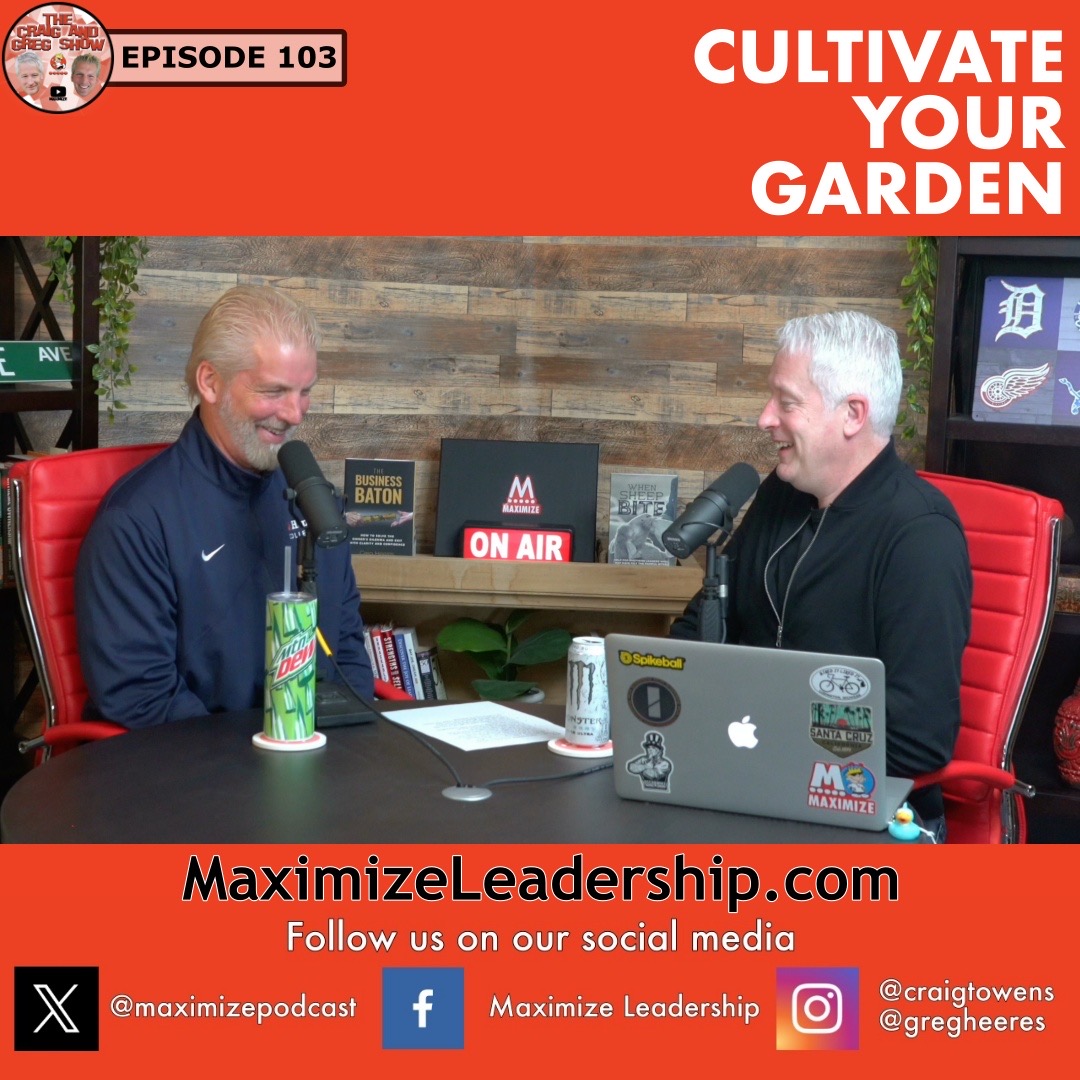
The Craig And Greg Show: Cultivate Your Garden

Listen to the podcast of this post by clicking on the player below, and you can also subscribe on AppleSpotify, or Audible.

Here in West Michigan, the city of Holland has a yearly festival that has just begun called Tulip Time where attendees will see millions of the most beautiful flowers growing everywhere. It is a stunning display, but perhaps even more impressive is the hard work and care that goes into the cultivation of these flowers. In today’s episode, Greg and I want to encourage you to bring the mindset of a gardener to your leadership. With hard work, patience, and just the right amount of careful pruning, your team will grow from small seeds in the ground to a dazzling beauty that rivals any horticultural display. 

  • [0:40] I’m not sure I’m qualified to talk about today’s topic… 
  • [1:32] A seed has almost everything it needs to grow, and so do our teammates.
  • [3:13] What do people need most from a gardener-leader?
  • [5:25] Leaders will need to exhibit confidence in a teammate’s competency.
  • [8:04] We need to be careful of not rushing the process.
  • [10:16] I share how the apostle Paul demonstrated belief in his people.
  • [12:04] How do we make sure our teammates know we have genuine belief in them?
  • [14:33] I reference a great passage from Greg’s forthcoming book about how leaders stand up for their team.
  • [19:13] A healthy habit for gardener-leaders.
  • [21:36] Gardening isn’t an assembly line—the growth plan for every person must be individualized.
  • [23:44] Greg shares an insightful quote about obstacles.
  • [25:11] Coaching can help you help your teammates grow.

Check out this episode and subscribe on YouTube so you can watch all of the upcoming episodes. You can also listen to our podcast on Spotify and Apple.
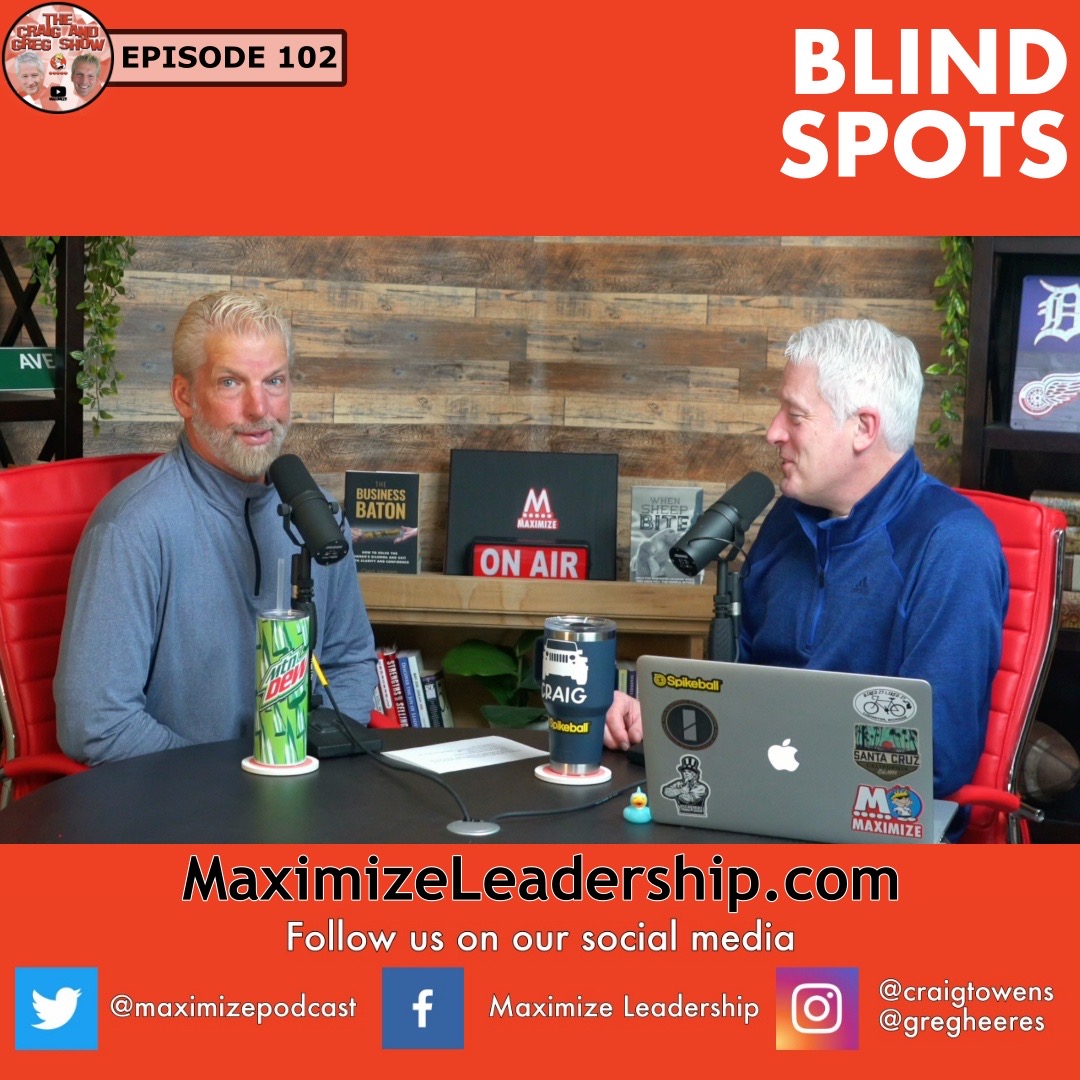
The Craig And Greg Show: Blind Spots

Listen to the podcast of this post by clicking on the player below, and you can also subscribe on AppleSpotify, or Audible.

In our last episode, Greg and I discussed how vital it is to focus on your own internal development. If you’ve been doing that, chances are you have identified a few blind spots in yourself. While it might feel more comfortable to simply hide these away and hope nobody notices, we would like to encourage you to be vulnerable: Drag your blind spots into the light, address them, and watch how your leadership improves as a result.

  • [1:30] Leaders have to get comfortable with being vulnerable if they are going to make any meaningful changes in their life.
  • [2:17] Blind spots have to be brought out into the light.
  • [5:44] Paying attention to the feedback from others requires us to slow down to process what we need to change.
  • [7:35] Leaders need to understand the speed of their team in the area of productivity.
  • [8:34] Greg shares a “blind spot” example from one of his kids.
  • [9:53] Why do leaders avoid their blind spots?
  • [11:45] Peripheral vision isn’t good just for athletes, but for leaders too.
  • [13:11] I share how asking good questions has helped my teammates with their blind spots.
  • [14:50] If leaders assume things about their teammates or work with their favorite teammates, they will never improve the morale of the team.
  • [18:17] Greg talks about the movie “Blindside” as a learning point about having the right people watching out for us.
  • [20:10] We need to be thinking about the kind of people we need around us.
  • [25:42] The one word most people are afraid to say.
  • [26:59] Sometimes a fresh set of eyes is necessary to see a blind spot. Maximize coaching would love to be a resource for you in this area.

Check out this episode and subscribe on YouTube so you can watch all of the upcoming episodes. You can also listen to our podcast on Spotify and Apple.
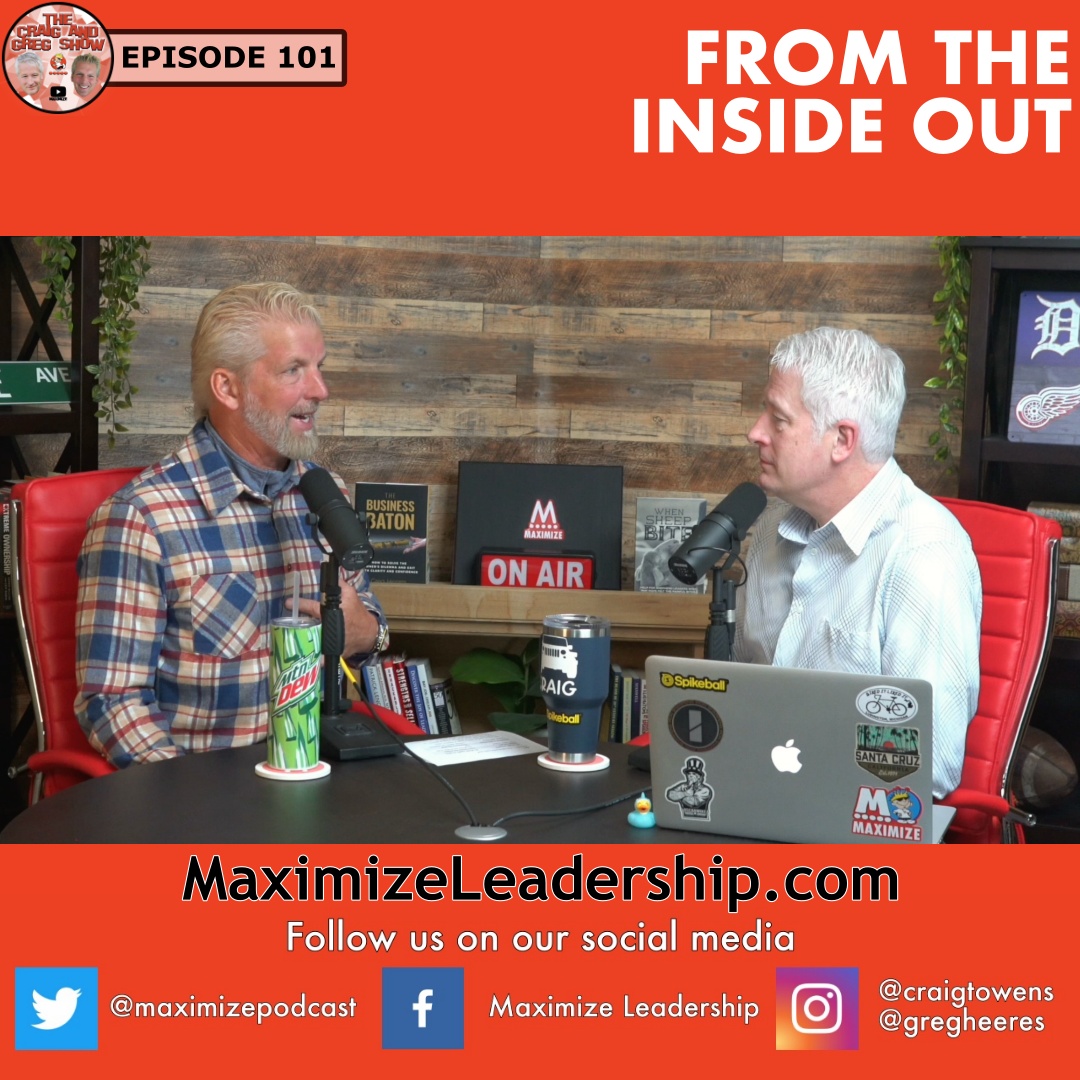
The Craig And Greg Show: From The Inside Out

Listen to the podcast of this post by clicking on the player below, and you can also subscribe on AppleSpotify, or Audible. 

Watermelon is a great summer treat. However, sometimes a nice green exterior can hide rotten fruit on the inside. When this happens we don’t say, “Well, at least the outside was nice,” but we throw the whole thing out! We can fall into a similar trap in our leadership, focusing on creating a great exterior while we let our vital interior development rot away. In this episode, Greg and I encourage you to focus first on your internal development, and through that your external image will improve as well.

  • [0:59] A lot of leaders are more interested in what’s on the outside than what’s on the inside.
  • [1:39] Why do leaders naturally gravitate to making the outside look better than the inside?
  • [4:10] Greg wonders if perhaps we enhance our exterior because we’re afraid to be vulnerable.
  • [5:25] If you have to tell people you’re a leader you’re probably not
  • [6:40] Greg and I discuss a list of things we usually recognize, alongside the things we should equally recognize
    • [6:48] 1. Talents and gifts alongside integrity and character.
    • [12:19] 2. Superb product alongside quality process.
    • [15:30] 3. Excellence performance alongside excellent discipline.
  • [19:35] If we ignore the inside stuff what’s the inevitable result?
  • [20:51] Greg likes to ask the question, “What’s new?” as a simple way to assess growth in others.
  • [21:50] I share a discovery from my Bible reading in Romans.
  • [23:03] Greg tells a cautionary tale about a former coworker who didn’t know how to engage in deeper conversation with his team.
  • [24:24] “The best mirror is in a good friend’s eye.” Greg and I would love to be this good friend for you. Reach out to us at here if you’re interested in personalized coaching.

Check out this episode and subscribe on YouTube so you can watch all of the upcoming episodes. You can also listen to our podcast on Spotify and Apple.

Links & Quotes

Every “miss” along the journey can be a stepping stone to future success. If you don’t win, at least learn. Check out the full conversation Greg and I had.

I have a lot of new video content on my YouTube channel every week. Please check it out and subscribe so you don’t miss anything.

“One cannot grow fine flowers in a thin soil.” —Virginia Woolf 

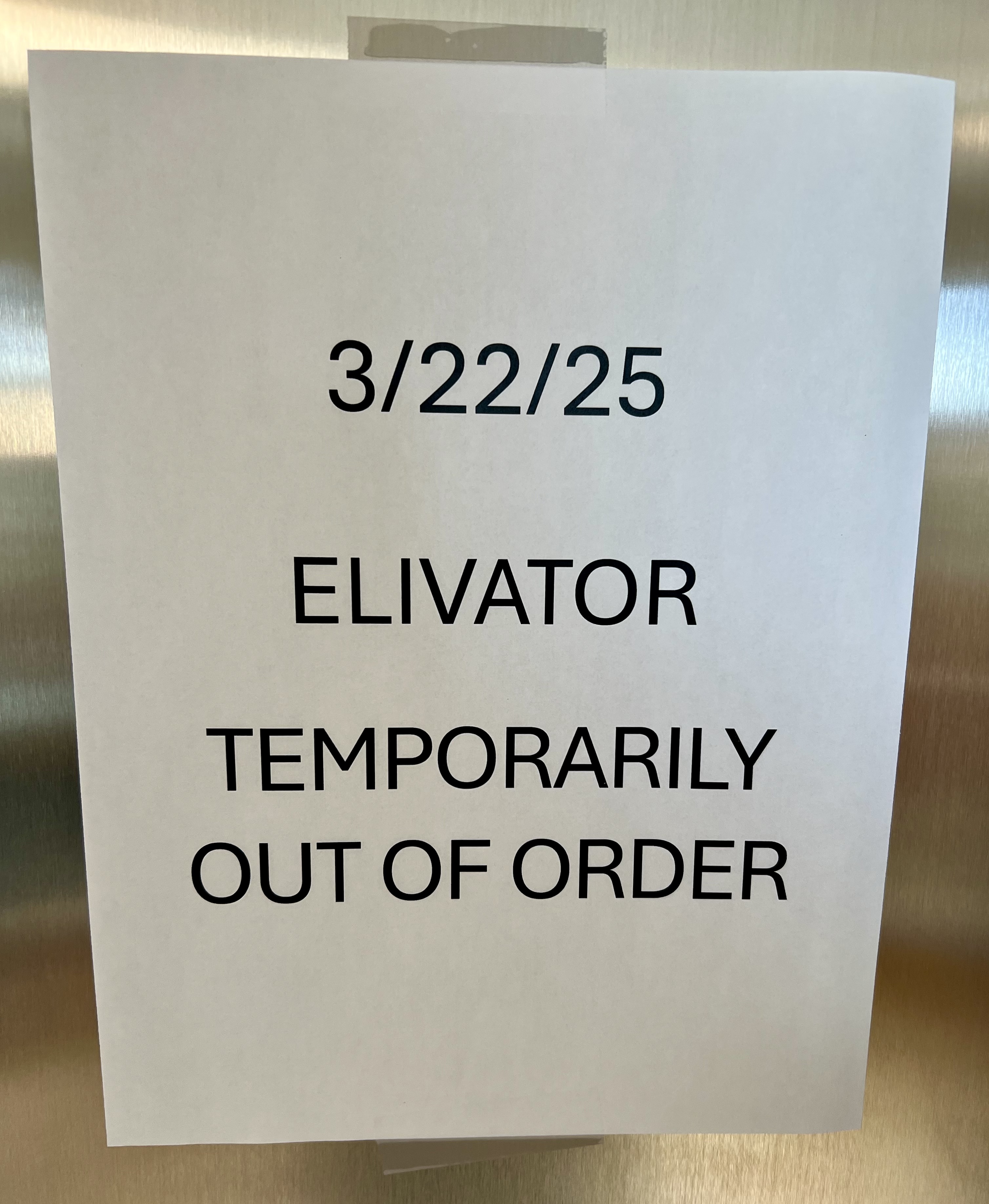
I love catching verbal flubs and mistyped signs. I recently saw this sign at my Dad’s apartment complex. And this list from a Ford Motor Company executive is hilarious!

“A leader must embody the strength that inspires others to follow. And yet, this strength must be tempered with humility, for Christ Himself came not as a warrior-king but as a servant-leader, washing the feet of His disciples.” —Lost Kings reading plan on YouVersion 

John Piper identifies the roots of false teaching in his Look at the Book teaching on 1 Timothy 6—

The Craig And Greg Show: The Struggle Is Real (But Necessary)

Listen to the podcast of this post by clicking on the player below, and you can also subscribe on AppleSpotify, or Audible.

Do you enjoy struggling? Odds are the answer to that is a resounding “No!” because struggling is difficult, uncomfortable, and frustrating. However, without struggle it is impossible for us to develop to our full potential in our personal and professional lives. In this episode Greg and I encourage you to embrace struggle, and allow your team to struggle as well so that you all can grow to your very best.

  • [0:20] The struggle is real, but leaders help people know that struggling ≠ failing.  
  • [2:07] Failure is not permanent, and leaders need to help people slow down to see this.
  • [3:38] Here’s how leaders can inspire their teammates to reframe failure.
  • [5:54] Greg shares some reflections from his sports background that can help us see our productive struggle in a positive light.
  • [6:40] I talk about using Six Sigma initiatives in one of my organizations to help them learn each time they missed a benchmark.
  • [8:25] The struggle is what helps us ultimately succeed.
  • [11:42] We rob others of the joy of a breakthrough if we don’t allow them to struggle.
  • [14:19] Leaders need to differentiate failures from mistakes.
  • [16:09] Greg pulls out a movie analogy for us.
  • [18:17] The struggle helps us enjoy the future wins.
  • [21:14] Two leadership lessons we need to keep in mind.
  • [25:26] Greg transformed a couple of organizations by asking people what they learned from mistakes.
  • [27:15] Leaders need to change their own mindset about failing before they can change the mindset of their team. If you need help with this, we would love to help coach you to that next level.

Check out this episode and subscribe on YouTube so you can watch all of the upcoming episodes. You can also listen to our podcast on Spotify and Apple.
Links & Quotes

Leaders would help their teams by (1) having shorter meetings, and (2) ensuring their language is clear and concise. Check out the full conversation about “Jargon” on this episode of the Craig and Greg Show. 

I have a lot of new video content on my YouTube channel every week. Please check it out and subscribe so you don’t miss anything.

In a fascinating article about the ways the planet Jupiter protects Earth, the conclusion is spot-on: “Jupiter is more than merely a beautiful planet in the tapestry of the night sky. Its massive size and powerful gravity make it a mighty guardian of Earth. From protecting us from dangerous space debris to helping maintain stable orbits, Jupiter’s influence is essential for life on our planet. Proof of our solar system’s complex design is everywhere around us. It’s easy to see that our world seems purposely made rather than just being a result of random chance causes. From the stars to the tiniest particles, everything in our universe is balanced and works together in a coordinated system. As science progresses and uncovers more about our solar system, scientists keep finding out how perfectly suited our solar system is for life.”

T.M. Moore encourages us to pray for the Church. “The Church is the in-time agency through which the Kingdom comes on earth as it is in heaven. The Kingdom is a spiritual realm; the Church is a physical entity. But is is also a spiritual one; thus it partakes of two worlds at once, and is able to channel the spiritual into the physical to make all things new. The Church is both the sign that the Kingdom has come and the outpost from which the Kingdom advances in the world. Our text is a watershed moment of Jesus’ earthly ministry, and it signals an important focus for every believer’s life and prayers.”

“Celebrate what you’ve accomplished, but raise the bar a little higher each time you succeed.” —Mia Hamm

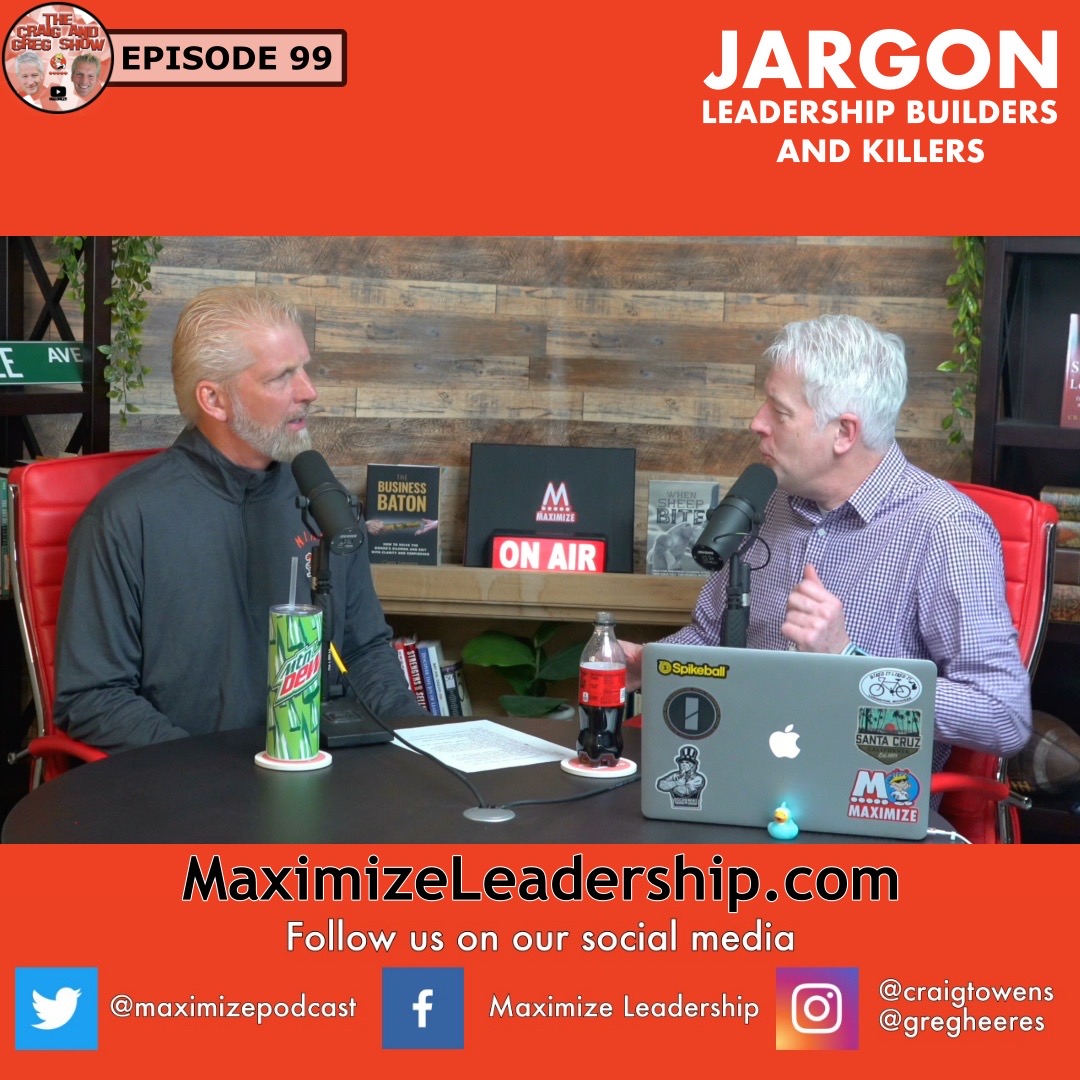
The Craig And Greg Show: Jargon

Listen to the podcast of this post by clicking on the player below, and you can also subscribe on AppleSpotify, or Audible.

If the expected target metrics of today’s program are met, we expect significant workflow performance advancements from team lead positioned individuals.

Does that seem a little complicated? Jargon in the workplace can very quickly cause significant problems, leading to confusion and disengagement in your team. The solution is simple—clear, concise communication. So let’s try this again without the jargon: Greg and I hope that this episode inspires you to remove the jargon from your communication, and as a result you will see your leadership influence grows.

  • [0:41] Today we are returning to Leadership Builders and Killers with a topic inspired by a series of videos I saw online about business jargon.
  • [3:21] Greg asks, “Why all the jargon?”
  • [5:34] Jargon can take away from what you want to communicate, and can cause others to disengage from the conversation.
  • [8:26] Jargon is antithetical to a commitment to clarity.
  • [9:33] I share a story of a conversation with students that highlights wisdom we can take into the workplace.
  • [12:06] One of the lowest form of communication is assumption.
  • [14:03] It’s important to circle back with people after a meeting to maker sure they understood.
  • [15:13] Jargon frequently shows up when there’s bad news to share, and when leaders are trying to cast vision.
  • [16:50] Sometimes we use jargon to hide.
  • [19:30] I share a story from the life of John Wesley about how he became a better communicator.
  • [21:14] It’s important to communicate with everyone on an even playing field, and not use jargon to avoid being pinned down.
  • [22:39] Using jargon can negatively impact your influence as a leader. Conversely, clear communication will lift your influence.
  • [24:58] Jargon can creep into your communication without you being aware of it. A coach from outside your industry can help you notice these blind spots.

Check out this episode and subscribe on YouTube so you can watch all of the upcoming episodes. You can also listen to our podcast on Spotify and Apple.