Thursdays With Oswald— Publicly Holy

This is a weekly series with things I’m reading and pondering from Oswald Chambers. You can read the original seed thought here, or type “Thursdays With Oswald” in the search box to read more entries.

Publicly Holy

     Try and develop a holy life in private, and you find it cannot be done. Individuals can only live the true life when they are dependent on one another. …

     In the early Middle Ages people had the idea that Christianity meant living a holy life apart from the world and its sociability, apart from its work and citizenship. That type of holiness is foreign to the New Testament; it cannot be reconciled with the records of the life of Jesus. The people of His day called Him “the Friend of publicans and sinners” because He spent so much time with them.

From Biblical Ethics

Jesus never told us to stay, but to go.

He didn’t tell us to separate, but to season and shine.

We cannot influence people from a distance. We must live and work and interact where they are.

Jesus taught us: “Let your light shine before men, that they may see your good deeds and praise your Father in heaven.” (Matthew 5:16)

Jesus prayed for us: “My prayer is not that You take them out of the world but that You protect them from the evil one. … As You sent Me into the world, I have sent them into the world. (John 17:15, 18)

I must be around people who need to see The Light.
The Next Christians (book review)

If you’re anything like me, you might feel that a lot of recently-released books and the current research results seem to paint a rather bleak picture of the church. Reading these works makes it sound like the church is in decline, it has lost its authority in the community, and people are finding Christianity less and less relevant in their lives. But Gabe Lyons has “the good news about the end of Christian America” in his book The Next Christians.

Where many Christians are either withdrawing from mainstream society, or are selling-out to it in an attempt to be accepted (Gabe calls these the Separatists or Culturals, respectively), Gabe happily points out that the next Christians coming to the forefront are Restorers. These Christians are not running away from culture, but are running to it in a way that makes the Gospel both relevant and appealing.

Gabe points out that the Restorers are defined by six descriptive phrases:

  • Provoked, not offended when they confront the unbiblical in culture
  • Creators, not critics of what mainstream culture is producing
  • Called, not just employed in “a job”
  • Grounded in Christian disciplines, not distracted by the tasks around them
  • Committed to their community, not isolating themselves from it
  • Countercultural, without attempting to become “relevant”

The Next Christians made me stand up and cheer, “Yes! This is how I want to live!” I could hardly put this book down. Now that I’ve finished reading it, I’ll be referring to these concepts again and again, both in my personal life, and in my calling as a pastor.

If you are ready to see Christians reassume their place in society like the Bible describes it, you will love reading The Next Christians.

I am a Doubleday book reviewer.

The Land Of Tumors

My cousin Dick Brogden is one of my heroes. He has faithfully followed God to some of the toughest places on the planet to share the love of Jesus. He continues to grow in his relationship with Jesus Christ, and challenges me to grow as well.

Check out these challenging words an amazing prayer journal that Dick edited called Live Dead:

Greetings From The Land Of Tumors

Three weeks ago I started getting dizzy when I stood up. Over the next few days my vision began to blur and a headache set in behind my eyes that has not left. My eyes felt like they were being pushed out from the inside, and after 2 pm it was hard to keep them open. I went to the neo-omniscient internet and diagnosed myself with a brain tumor. Yesterday I went to the doctor. He ordered a CAT scan and the result was encouraging: There is nothing in my head. The doctor had some ridiculous advice for me like getting more sleep and working less.

Flying home to Chicago from Pennsylvania this week I asked myself what I would do if I did have a tumor. My thoughts initially turned to eating a dozen Twinkies, and coughing up the $500 it would cost to take my sons to a Chicago Bears game before settling on this:

If I had a tumor, I’d hammer in the morning.
I’d hammer in the evening, all over this town.
I’d hammer out gospel, I’d hammer out warning
I’d hammer out love and truth to brothers and sisters
—all over this land.

Now that I don’t have a tumor, I have decided to live like I do. This is after all what it means to Live Dead. Dying to what people think. Dying to what doesn’t matter. Living every moment to make Jesus famous, to make much of Him, to see God glorified. Let’s all live with imaginary tumors. Let’s live as if we are dying—which incidentally we are.

Thursdays With Oswald—The Test

This is a weekly series with things I’m reading and pondering from Oswald Chambers. You can read the original seed thought here, or type “Thursdays With Oswald” in the search box to read more entries.

The Test

     The test of Christianity is that a man lives better than he preaches. …Christianity does not consist in telling the truth, or walking in a conscientious way, or adhering to principles; Christianity is something other than all that, it is adhering in absolute surrender to a Person, the Lord Jesus Christ.

From Baffled To Fight Better

I say, “I want my walk to match my talk.”

Jesus says, “I want your walk to exceed your talk.”

I say, “I’m not perfect, but I hope I’m good enough.”

Jesus says, “Be perfect, just as My Father in Heaven is perfect.”

I cannot do any of these things on my own. I can only do them by surrendering to my Lord.

Cedar Creek Cleanup

God told Adam and Eve that they needed to take care of the environment in which He placed them. And that directive is still in place for us today: We are to be caretakers of this amazing planet.

And as Christians, we should be excellent caretakers.

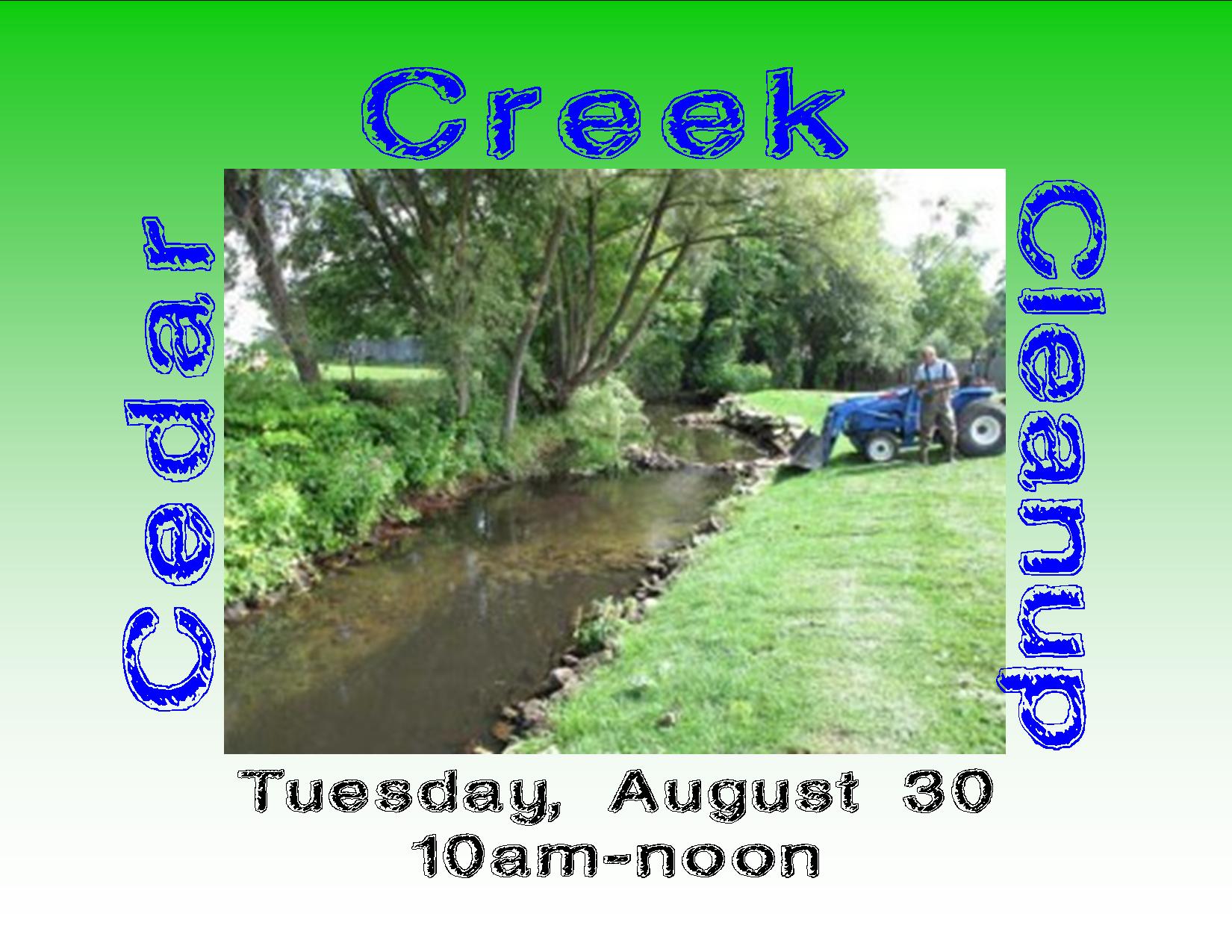
The City of Cedar Springs recently received a grant to help with some waterway cleanup. So I am very excited that a group from Calvary Assembly of God is going to be involved in the Cedar Creek Cleanup project on August 30.

This is another way for us to show our love for our community, and to live out our biblical values. I’m always so appreciative of the way this group wants to jump into any of these community projects. If I haven’t said it lately, let me repeat it loud and clear—

I My Church!

What’s Your Take On “Church”?

Here’s what I want to see…

From the book of Acts:

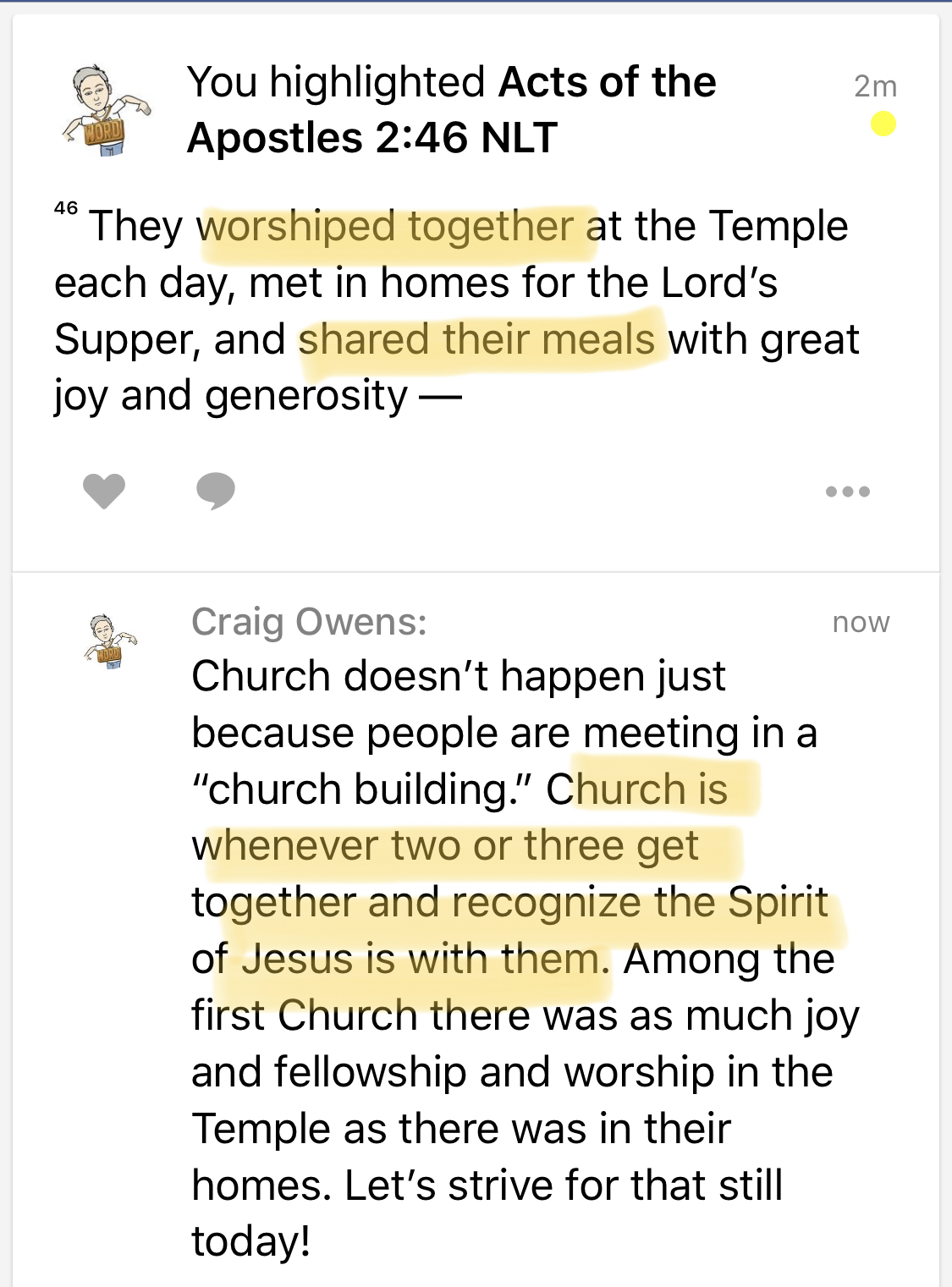
All the believers devoted themselves to the apostles’ teaching, and to fellowship, and to sharing in meals (including the Lord’s Supper), and to prayer. A deep sense of awe came over them all, and the apostles performed many miraculous signs and wonders. And all the believers met together in one place and shared everything they had. They sold their property and possessions and shared the money with those in need. They worshiped together at the Temple each day, met in homes for the Lord’s Supper, and shared their meals with great joy and generosity—all the while praising God and enjoying the goodwill of all the people. And each day the Lord added to their fellowship those who were being saved. (Acts 2:42-47, New Living Translation)

Here’s how N.T. Wright puts it:

“The life of believers, individually and collectively, is intended to incarnate the biblical reality of human dignity. The church is called to be an alternative society, living in contrasting style in the midst of the world. Its members are, in God’s design, not self-promoting, as the world is; they are not competitive, as the world is; they do not advance at the expense of others, as the world does; they do not take advantage of the weakness of others, as the world does. They love one another and do good to and for one another. Failing that, there is no compelling reason for the world to pay attention. Which is to say that the only means by which Christians can commend a truly godly vision of human rights is to incarnate them in their individual and collective lives, to announce God’s actions and intentions that constitute the Gospel, and to act justly in the name of God.”

And Rubel Shelly’s take:

“It is a mistake of monumental proportions to think that the priestly ministry of the church is a Sunday-focused event. It is the whole life of the whole church that is our living-body sacrifice to the Lord. Sunday praise is to be joined with Tuesday work and Thursday golf, Wednesday family life and Saturday yard work. Everything in the life of a Christian is to be seamless in terms of its appropriateness for displaying the excellence of God’s heart and character.”

What’s your take?

I Knew Jesus Before He Was A Christian (book review)

You know the cliché: “Never judge a book by its cover.” But with Rubel Shelly’s book, it’s really hard not to give in to this! The complete title is I Knew Jesus Before He Was A Christian… And I Liked Him Better Then. Provocative, huh?

His idea is that the Jesus that is presented in the Bible—which is also the Jesus that is presented to someone who doesn’t have a personal relationship with Him—is different from the Jesus people see in the organized church and in professing Christians. The Jesus in the Bible (or before someone becomes a Christian) is seen in freedom and abundant life. But the Jesus in the church (or after someone becomes a Christian) is a rule-keeping killjoy.

Honestly, I expected this book to be a church-bashing book. I excepted Rubel Shelly to come out blasting away on the rephrase I-love-Jesus-but-I-can’t-stand-His-followers! So I was more than pleasantly surprised right from the first chapter—appropriately titled “Pro-Jesus and Pro-Church”—that this book was not taking that track. Instead, Shelly makes the distinction between “institutionalized religiosity” and a vibrant personalized relationship between God and mankind. Then out of the overflow of this personalized relationship with God, a Christian’s outward lifestyle toward others should be notably more Christ-like.

This book is not targeted at any one segment. There are parts that every pastor would do well to heed. Then there are other parts that anyone who calls themselves Christian should read. And there are even parts that those not involved in a church or a relationship with Christ should take note of.

If, by the title, you were expecting to see the church get beat up, you will be sadly disappointed. However, if you feel like the Church has no room for improvement, you will not only be disappointed, but probably a bit angered too! On the other hand, those who love Christ and love His Bride (the Church), and want to see the Church operating more as she should, you will find much to process in this book.

I am an ACU Press book reviewer.

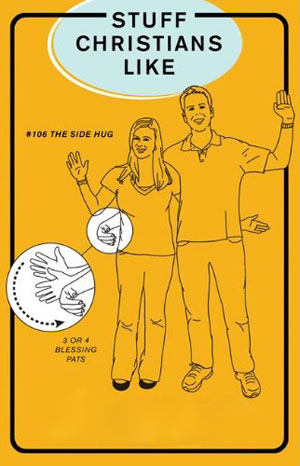
Stuff Christians Like (book review)

As a fourth-generation Pentecostal, I’ve grown up in the church. I readily recognize that Christians (like any other group) develop their own vocabulary and set of “acceptable” behaviors. But can you spot them? Jon Acuff has spotted them, and puts them on display in Stuff Christians Like.

This book is funny! I know some people think every discussion about anything related to the Bible and church needs to be stone-faced serious. I don’t happen to be one of those people. I see some great comedy in Scripture, and I have certainly seen even more in the church.

Jon writes—as any comedian does—in exaggerated terms. This is what makes his topics so enjoyable to read. He comes close to being irreverent, but never quite crosses the line. But in the process, Jon helps us to see what we often miss, but what those who don’t regularly attend church see so clearly.

If you’re easily offended, or don’t think Christians should laugh at themselves, stay away from this book. But if you enjoy lighthearted comedy with an underlying purpose, you will enjoy Stuff Christians Like.

The Church In Exile (book review)

Although originally published 20 years ago, The Church In Exile by James W. Thompson is even more on-target today.

Taking its title from a phrase in the book of 1 Peter in the Bible (aliens and strangers in the world), Dr. Thompson makes the Apostle Peter’s counsel readily applicable for today. Christians don’t belong to this world, we are simply exiles living here temporarily until we reach our true home in heaven. Peter addresses how we as exiles are to conduct ourselves in foreign—often hostile—territory.

Dr. Thompson brings in just enough cultural background from the first century to set the stage, but then quickly shows the reader the parallels to the twenty-first century. He also uses just enough of his extensive knowledge Greek to pull out the deeper definition of words, but not so much as to make this a dry read. On the contrary, I was almost instantly hooked, and learned so much from every chapter.

I found this quote near the beginning of the book which set the stage for me:

“The changes that have taken place within the last generation will not make exiles of those whose Christian commitment demands little of them. Nor will it make exiles of churches that speak only to echo what others are already saying. Indeed, religion may remain popular in our culture as long as it exists only to bless the popular values. However, those who are willing to say that God has decisively revealed Himself only in Jesus Christ, and that our response to Him is a matter of ultimate importance, will be exiles in a culture that believes that all commitments are equally valid.”

The Church In Exile could easily be used as a personal Bible study tool, as a companion to reading through 1 Peter. However, the discussion questions at the end of each chapter would also make this book an excellent study guide for a small group Bible study.

I am an ACU Press book reviewer.

Untamed (book review)

A friend introduced me to the writings of Alan Hirsch, and I’m so glad he did! Co-written with his wife Debra, Untamed resonated with me on so many levels.

Untamed is about discipleship the way it should be; not the way those in Christendom have made it. It’s about viewing our lives as an integrated whole; not the part-Christian, part-other roles in which we tend to operate. It’s about seeing the Church operate as a living, breathing, loving organism; not as an only-meets-once-a-week organization.

There were parts of this book that made me say, “Yes! That’s what I want to be a part of.” There were other parts that made me pause and say, “Hmmm, I never thought of it like that before.” And there were still other parts (honestly) that I said, “That’s a bit too radical for me to try right now.”

If you’re tired of clichéd “Christians” or the same-old-same-old “church,” Untamed will probably resonate with you. At the end of each chapter are some great discussion questions, which will help you begin to see discipleship in a new light.

If, however, you think the church and Christendom are doing just fine, then stay far away from Untamed, because you just might begin to think otherwise!

As for me, I loved this book!