The Church In Exile (book review)

Although originally published 20 years ago, The Church In Exile by James W. Thompson is even more on-target today.

Taking its title from a phrase in the book of 1 Peter in the Bible (aliens and strangers in the world), Dr. Thompson makes the Apostle Peter’s counsel readily applicable for today. Christians don’t belong to this world, we are simply exiles living here temporarily until we reach our true home in heaven. Peter addresses how we as exiles are to conduct ourselves in foreign—often hostile—territory.

Dr. Thompson brings in just enough cultural background from the first century to set the stage, but then quickly shows the reader the parallels to the twenty-first century. He also uses just enough of his extensive knowledge Greek to pull out the deeper definition of words, but not so much as to make this a dry read. On the contrary, I was almost instantly hooked, and learned so much from every chapter.

I found this quote near the beginning of the book which set the stage for me:

“The changes that have taken place within the last generation will not make exiles of those whose Christian commitment demands little of them. Nor will it make exiles of churches that speak only to echo what others are already saying. Indeed, religion may remain popular in our culture as long as it exists only to bless the popular values. However, those who are willing to say that God has decisively revealed Himself only in Jesus Christ, and that our response to Him is a matter of ultimate importance, will be exiles in a culture that believes that all commitments are equally valid.”

The Church In Exile could easily be used as a personal Bible study tool, as a companion to reading through 1 Peter. However, the discussion questions at the end of each chapter would also make this book an excellent study guide for a small group Bible study.

I am an ACU Press book reviewer.
For Men Only (book review)

After nearly 21 years of marriage, I thought I had my wife pretty well figured out, but Shaunti & Jeff Feldhahn made me second-guess that belief in For Men Only.

This book is the compilation of surveys, focus group discussions, and lots of highly revealing emails and letters from women all over the country. Then Jeff & Shaunti dig through all of the data to help us guys figure out what’s really going on inside the hearts and minds of the special women in our lives.

Although there were a lot of statistics and bar charts throughout the book, For Men Only is not a dry academic book. On the contrary, the Feldhahns make these results so “livable” for all of us clueless men. The bottom line: when we guys try to understand and communication with the women in our lives the same way we understand and communicate with other guys, we’re setting ourselves up for a lot of frustration.

In the famous “love chapter” in the Bible (1 Corinthians 13), the Apostle Paul implies that love should always be maturing. And when the Apostle Peter says that men should live considerately with our wives, he is really saying that we should live with ever increasing knowledge of them. For Men Only is really helping me do this, and I believe it will help any other men who are serious about continuing to understand their wives better so they can love them more deeply.

A great read for every guy!

I am a Multnomah book reviewer.

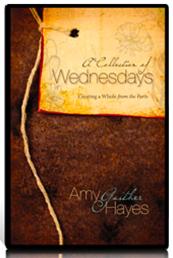
A Collection Of Wednesdays (book review)

A Collection Of Wednesdays is written by Amy Gaither Hayes, who describes herself as, “I am not One Who Must Write; I am One Who Can Write When She Must.” The One Who Can Write When She Must has delivered a book that is part memoir, part observation, and part poetry.

Arranged into fourteen distinct sections, Amy sometimes tell a story about her life, and sometimes shares with the reader what she is observing around her each week. Then each section is wrapped up with a couple of poems she has written about that particular subject. Her writings are an honest, fresh look at how we process the people and events in our lives who have gone into shaping who we have become (and are becoming).

The title of the book comes from Amy’s weekly writing time, which I think would be an appropriate way to read this book: one section each week, giving yourself time to reflect on not only Amy’s insights, but your thoughts about your own past, present, and future.

I am a Zondervan book reviewer.

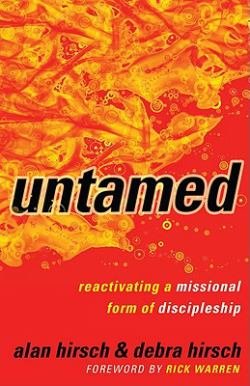
Untamed (book review)

A friend introduced me to the writings of Alan Hirsch, and I’m so glad he did! Co-written with his wife Debra, Untamed resonated with me on so many levels.

Untamed is about discipleship the way it should be; not the way those in Christendom have made it. It’s about viewing our lives as an integrated whole; not the part-Christian, part-other roles in which we tend to operate. It’s about seeing the Church operate as a living, breathing, loving organism; not as an only-meets-once-a-week organization.

There were parts of this book that made me say, “Yes! That’s what I want to be a part of.” There were other parts that made me pause and say, “Hmmm, I never thought of it like that before.” And there were still other parts (honestly) that I said, “That’s a bit too radical for me to try right now.”

If you’re tired of clichéd “Christians” or the same-old-same-old “church,” Untamed will probably resonate with you. At the end of each chapter are some great discussion questions, which will help you begin to see discipleship in a new light.

If, however, you think the church and Christendom are doing just fine, then stay far away from Untamed, because you just might begin to think otherwise!

As for me, I loved this book!

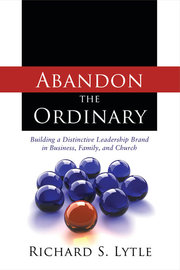
Abandon The Ordinary (book review)

Ordinary. Plain. Generic. Non-descript. Boring. According to Richard S. Lytle in Abandon The Ordinary, these words should never be the descriptors for those who want to create a distinctive brand of leadership for their business, family, or church. And they should never, ever be used to describe Christians.

Dr. Lytle is a business professor, so he comes at this topic from a distinctly business paradigm. But make no mistake: this is not a dry academic treatise. Abandon The Ordinary is an exciting and practical way to develop a distinct, unique brand for your life. In the opening chapter, Dr. Lytle quotes:

“To make ordinary that which God calls life and use your gifts and capacities for nothing is to prostitute great potential. Jesus Christ came into the world to convict us not so much of our transgressions but of our possibilities and to deliver us from an empty way of life. …God must become ill at times when He sees us so trivial, so paltry, thinking such little things, when such great and honorable and glorious things are there in front of us.” — Jim McGuiggan

This is such a refreshing viewpoint for so many people who have bought-in to the “cookie cutter” mentality that says every business should operate like this, or every family should look this way, or every Christian must behave like such-and-such.

To help aide the reader in developing a distinctive, far-from-the-ordinary brand, Dr. Lytle has included several worksheets at the back of the book, which will help you apply the methods about which he teaches. I’m looking forward to utilizing this helpful tool.

If you’re tired of ordinary, Abandon The Ordinary will be a welcomed book for your library.

I am an ACU Press book reviewer.
Max On Life (book review)

Have you ever wanted to have a conversation with Max Lucado? Just sit with him for awhile and pick his brain? With Max On Life you can do just that!

Max On Life is a compilation of 172 questions that Max has been asked. Some of his answers come from his previously written books, some are answers formed with brand new insights, but all of the answers come from his very pastoral heart.

The book is divided into seven sections – hope, hurt, help, him/her, home, have/have-nots, and hereafter. But even more helpful is the index of topics at the back of the book, as well as a listing of all of the scriptural references Max uses throughout Max On Life. I can imagine this book staying very close at hand, because I’m going to be referring to it often.

If you are a pastor or counselor, I think you will find a lot of helpful insights in this book to pass on to others. If you have a friend with lots of questions about the Christian faith, this book would make an excellent gift. Or if you just want to be a helpful friend when others are in need, this book will help prepare you to be a blessing to them.

I am a Thomas Nelson book reviewer.

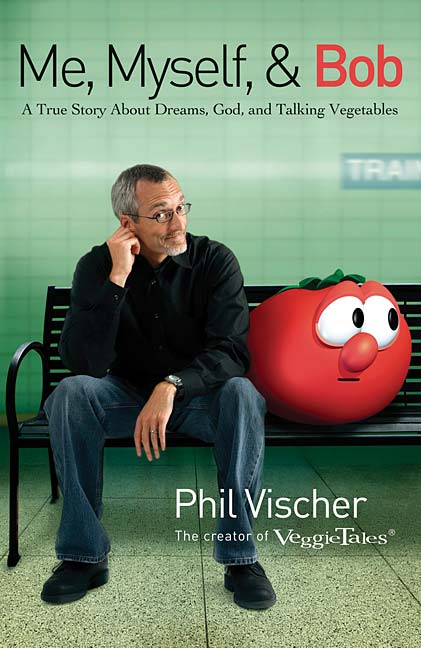
Me, Myself & Bob (book review)

As a parent of young children, I really appreciated the biblical values delivered in a fun way through so many VeggieTales videos. Now I’m really appreciating the wisdom of VeggieTales creator Phil Vischer in his book Me, Myself & Bob.

Written in the same witty style that made the VeggieTales videos so engaging, Me, Myself & Bob leads us through the meteoric rise and sudden collapse of Big Idea Productions. We read about the passion that drove the start of this incredible vision, and how—as the Bible says—zeal without a foundation of wisdom is a  dangerous thing.

With such candor, Phil shares about the vision and talents God gave him to do something so groundbreaking, how others caught that vision and jumped on board to help, and then how the company sort of took on a life of its own and how corporate executives took this highly successful business in a direction Phil never imagined.

This book is more like a business strategy book told as Phil Vischer’s autobiography. From the business board room to the family living room, there are valuable lessons to be learned from the rise and fall of VeggieTales. So whether you’re a fan of Bob the Tomato & Larry the Cucumber, an entrepreneur, or a parent, you will find something to love about Me, Myself & Bob.

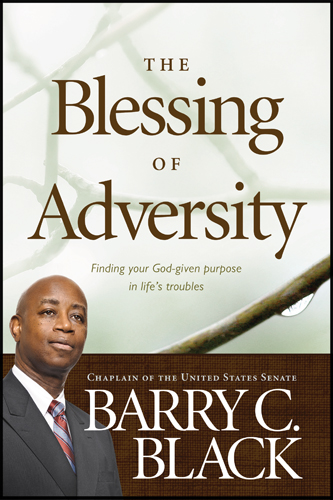
The Blessing Of Adversity (book review)

Barry C. Black has lived a full life, and that fullness has been poured into his timely book The Blessing Of Adversity: Finding your God-given purpose in life’s troubles.

A quick show of hands: how many of you have experienced trouble lately? How many of you are experiencing it right now? If you raised your hand in either category, this book could be quite helpful to you.

The Blessing Of Adversity is arranged into 23 chapters, but each chapter is broken down into several “mini chapters.” By that I mean that Chaplain Clark gives us several different ways of viewing the same topic of how to respond to adversity. He might tell you a personal story from his boyhood or his 23-year military career; or perhaps he’ll give you a modern-day example from his current ministry as chaplain to the U.S. Senate; or maybe a story from the pages of history; or a well-timed quote. Whatever his method, he always connects it with an encouraging word from the Bible to help the reader correctly process the times of adversity we all must pass through.

I found this book to be highly practical, and immediately applicable to my life. And for those of you who didn’t raise your hand earlier, there are a couple of chapters for you on how to prepare for the future adversity you are bound to face. This book would work very well as either an individual or small group Bible study.

I am a Tyndale book reviewer.

Night (book review)

Night by Elie Wiesel is not an easy read. But it is a vital read. In order to ensure that the evil perpetrated on the Jewish people by the Nazi regime never, ever happens to any other people group again, we must read what is not easy for us to read.

This book is the heart-wrenching account of the atrocities committed by the Nazis during the Holocaust. But it’s not simply a factual retelling of these horrendous events. Night takes you right into the utter despair felt by people who were completely dehumanized. People who were treated less humanely than animals. People who lived in the midst of pure Evil.

Elie Wiesel tells his firsthand account as a teenage boy forcibly removed from his home, separated from his mother and sisters, stripped of his dignity, treated in despicable ways, struggled with his anger toward God, and watched his father die right before his eyes. No one should have had to endure such things.

Elie Wiesel survived to tell his story, so that he could become the voice for the voiceless oppressed. What a great lesson for all of us to learn! We, too, should speak up for those who cannot. As Elie said in his Nobel Peace Prize acceptance speech:

We must take sides. Neutrality helps the oppressor, never the victim. Silence encourages the tormentor, never the tormented. Sometimes we must interfere. … Human suffering anywhere concerns men and women everywhere. … And action is the only remedy to indifference, the most insidious danger of all. … One person of integrity can make a difference, a difference of life and death.

Please read this book, and then be one person of integrity who makes a difference.

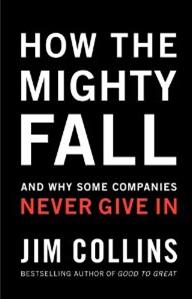
How The Mighty Fall (book review)

This is the third in the series of books from Dr. Jim Collins: Built To Last, Good To Great, and now How The Mighty Fall. This is a book that Dr. Collins wished he didn’t have to write, as he uncovers the markers that contributed to the failure of once-great companies.

If you are a frequent reader of my blog, you’re probably wondering why I’m reading/reviewing a business book. The answer is simple: the principles Jim Collins uncovers in his books are rock-solid principles of success and failure, regardless of the organization in which they are practiced or ignored. In all three of his books, I have mined so many great truths to apply to my personal life, as well as the organizations I lead.

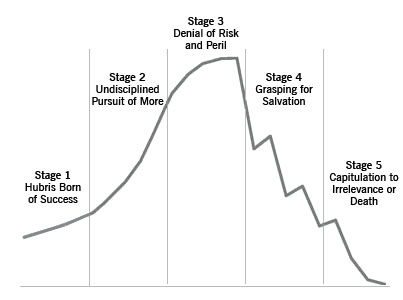
In How The Mighty Fall we learn about the five stages of decline for once-great organizations. Working backward from his evidence, Dr. Collins then gives us “markers” to look for in our own organizations that would tip us off to the stages of decline.

Why study this? Because I want to lead a great church! This quote from the book especially resonates with me:

“The point of struggle is not just to survive, but to build an enterprise that makes such a distinctive impact on the world it touches, and does so with such superior performance, that it would leave a gaping hole — a hole that could not be easily filled by any other institution—if it ceased to exist.” (emphasis added)

If you are involved in the leadership of any organization (whether for-profit or non-profit), I would encourage you to devour all three of Jim Collins’ books.