


Listen to the podcast of this post by clicking on the player below, and you can also subscribe on Apple, Spotify, or Audible.
 You may have noticed that the intensity of the pain of these sheep bites has been escalating—from flattery, to criticism, to gossip. Now we come to probably the most painful of bites: slander. This is the bite that will have the strongest pull toward the natural response, which will require our greatest reliance on the Holy Spirit to respond supernaturally.
Remember that gossip has a veneer of truth on it; slander has no truth at all. They are outright lies. They are flimsy lies. They are malicious lies. One of the Hebrew words translated slander means scandal-monger: someone who trades in lies (Jeremiah 6:28 NLT; Leviticus 19:16).
(Check out all of the biblical references in this post by clicking here.)
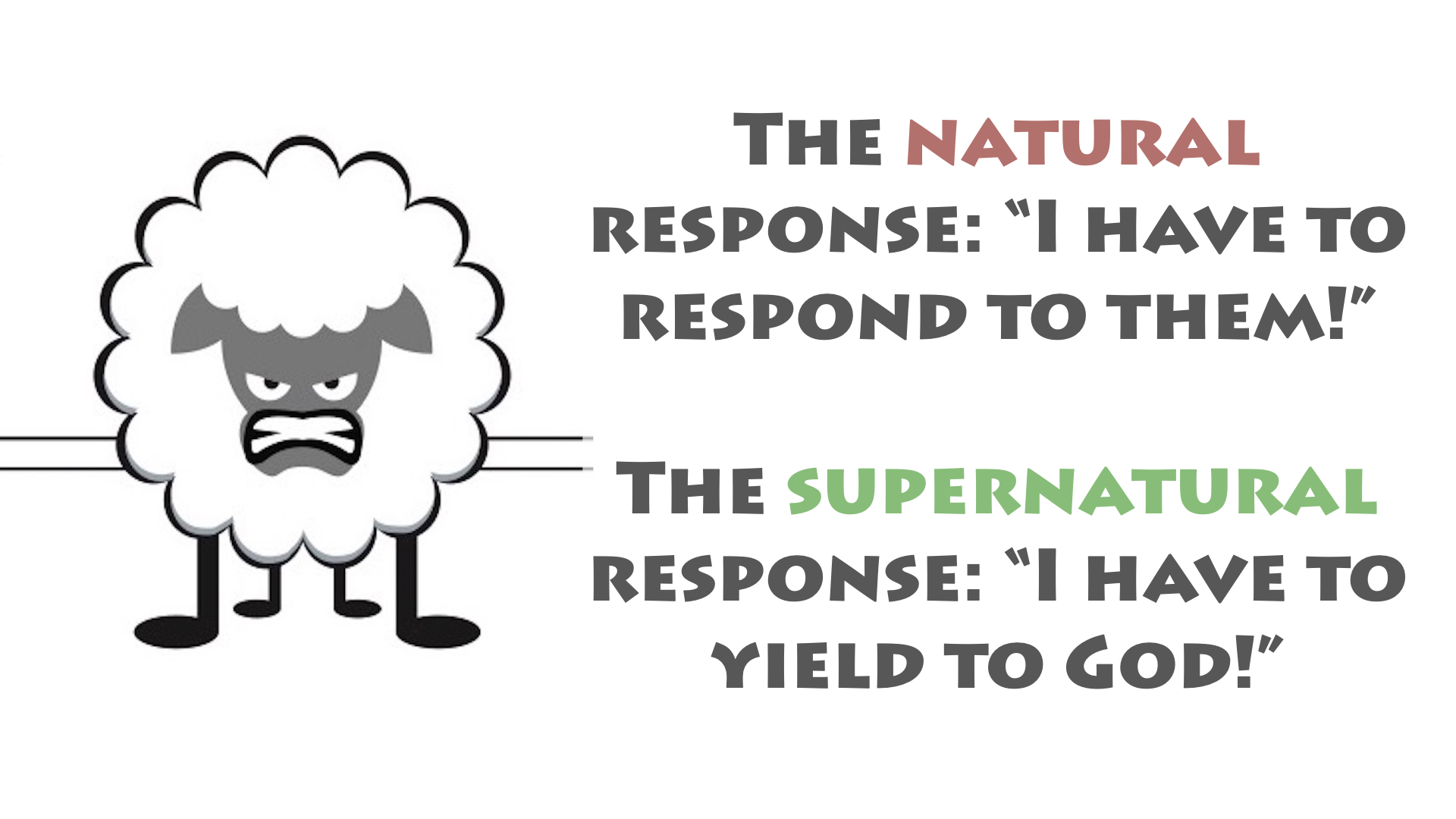
The natural response to slander is, “I have to respond to them!” The supernatural response to slander is, “I have to yield to God!”
The natural response, however, is fueled by my wounded pride. On the other hand, the supernatural response is fueled by humility toward God.
Slanderers are arrogant people too (remember Jeremiah said “they are as hard as bronze and iron” [Jeremiah 6:28]). God’s people are learning to humble themselves to wait for God (Psalm 38:12-15). These humble people are the ones who get God’s help, and not His laughter (James 4:6; Proverbs 3:34 NLT).
Look at how Jesus dealt with the very natural urge to respond to those who slandered Him. After Jesus was arrested by the temple guards, He was hauled before one group after another and each time the slanderous lies were spitefully spit at Him. In front of the Sanhedrin, before Roman governor Pontius Pilate, and in the throne room of King Herod Antipas, angry men unleashed their venomous claims—none of which were true.
There are two common themes we can notice in all of these settings.
- The lies were seen for what they were: complete fabrications without any truth behind them—Mark 14:55. Governor Pilate said “I find no basis for a charge against Him” (Luke 23:4), and he added, “Herod came to the same conclusion and sent Him back to us” (v. 15).
- The silence of Jesus: “Jesus remained silent and gave no answer” (Matthew 27:13-14; Mark 14:61, 15:5). The only red letters in this interaction with both the Sanhedrin and Pilate are when Jesus is asked a direct question. Jesus quickly answers the questions, “Are You the Messiah,” “Are You a King,” and “Don’t You know the power I have?” (Mark 14:61, 15:2; John 19:10), but He never responds to the slander.
 Let me repeat: Our supernatural response can only come from yielding to the Holy Spirit’s influence.
- We cannot treat slanderers as anything less than people created in the image of God (Genesis 1:27; Psalm 15:1, 3).
- We must take our pain into God’s presence. This is what Jesus did (1 Peter 2:21-23). We can help ourselves by praying imprecatory prayers. These are words for God’s ears only (Jude 1:9; Psalm 58:6-8).
- We have to learn to pray for our slanderers. We have to mature from praying against them to praying for them. Look at how Jesus interceded for His slanderers (Luke 23:34), which He calls us to as well (Luke 6:28).
- We have to live as overcomers. We overcome by NOT responding to slander in the natural way (Romans 12:21). But we allow our supernatural response to be used as a powerful testimony (2 Corinthians 6:3-10; Colossians 3:1-2, 8, 12-14).
We can do this—the Holy Spirit is empowering us to do this. Let’s not get down in the mud with those who slander us, but let’s yield to God and allow Him to handle this painful situation far better than we ever could.
If you’ve missed any of the messages in this series, you can find them all here. And if you are a pastor, please check out my book When Sheep Bite, which will help you both respond to sheep bites and teach others how to respond as well.
►► Would you please prayerfully consider supporting this ministry? My Patreon supporters get behind-the-scenes access to exclusive materials. ◀︎◀︎


 Craig T. Owens