Every historical mention of Obed-Edom shows him serving God: as the guardian of the ark of the covenant of the Lord, as a gatekeeper, and as a worship leader. Here in this genealogy we learn that he faithfully served his family in a God-honoring way as well.
“God had indeed blessed him” so that his future generations were also known as valiant men of service before the Lord.
Obed-Edom demonstrates something I unpack in my book Shepherd Leadership. I wrote—
Humility is often misunderstood as allowing others to advance, and in so doing, I am completely overlooked. Others get the accolades and I get nothing. As a result, humility has gotten a bad reputation. People begin to think of a humble person as someone who never speaks up for himself, someone who can be taken advantage of, someone who becomes a doormat for everyone else. But the picture of a humble person in the Bible couldn’t be more different!
We all have to bow to someone or something. The humble shepherd leader has chosen to bow to God and to follow God’s righteous standards. One name for God is Jehovah Tsidkenu, which means God is righteous (see Psalm 119:137). The Hebrew letter tsadhe is a part of God’s righteous title, and it’s how we are called to live. Tsadhe means the humble, faithful servant. …
When you zoom in on the Hebrew letter tsadhe, you will see that the faithful, humble, kneeling servant is depicted with a crown. Far from being pushed down, left behind, or left unrewarded, the humble person is the one God delights to exalt!
Listen to the podcast of this post by clicking on the player below, and you can also subscribe on Apple, Spotify, or Audible.
Jesus has sent us on-mission (which means we are missionaries) to every street. We don’t go in our power, but we are empowered by the baptism of the Holy Spirit (see Luke 24:46-49).
Jesus said our missionary work would take us to every street, starting with Jerusalem—which we have called Main Street. These are people very similar to us. Then our mission will expand into all Judea (Acts 1:8). These are people that have less in common with us. Last week we talked about taking the message of Jesus to Lombard Street: Talking with people who have knowledge of the Bible, but tend to twist and turn with the popular traditions of the day.
Remember that our mission is to be witnesses—share the Scripture and our personal story. It’s not our responsibility to try to open people’s minds so they can repent, but the Holy Spirit opens minds and calls people to repentance.
The apostle Paul reminded us that, “The god of this age has blinded the minds of unbelievers” (2 Corinthians 4:4). The Holy Spirit uses our witness as the catalyst to open minds. This clash of light and darkness creates acceptance and anger. Notice these contrasts in one short segment of Paul and Silas’ missionary journey in Acts 16:13-24 and 17:1-13:
Acceptance—Acts 16:13-15
Anger—16:16-24
Acceptance—17:1-4
Anger—17:5-6
Acceptance—17:10-12
Anger—17:13
The opposition in Philippi brought Paul and Silas to Thessalonica, and the opposition in Thessalonica brought them to Athens.
Athens was named for the goddess Athena, and it has been called “the university city of the Roman world.” Philo (a Jewish historian) called the Athenians “keenest in intellect.” It was the center of art, literature, and philosophy
I’m going to call Athens “Rodeo Drive.”
Rodeo Drive is called “the intersection of luxury, fashion and entertainment.” Kay Monica Rose, the Rodeo Drive Committee President, said, “There is nothing in the world comparable to Rodeo Drive. The legendary street’s magic continues thanks to the exemplary craftsmanship from today’s greatest fashion houses and brands, the architect-designed boutique spaces, the spectacular window displays, artist collaborations and pop ups, and our unrivaled customer service. At the heart of my vision for Rodeo Drive is the preservation and advancement of an unmatched legacy.”
A marketing professor once told me, “When advertising, you have to remember that everyone has radio station WIFM playing in their head—What’s in it for me?” The people on Rodeo Drive are self-focused and self-assured.
How do we take the message of Jesus to those Judeans on Rodeo Drive? Let’s learn from Paul’s time there (Acts 17:16-34).
Control your anger. Even though Paul was “greatly distressed,” he didn’t let his anger control him, but he kept his distress under control.
Use measured words. Paul “reasoned” with the people there, which means he engaged in meaningful dialogue with them.
Don’t argue. Some to the Athenians “disputed with him [Paul]” but he didn’t dispute back. Instead he was preaching the good news about Jesus and the resurrection.
Start where they are. Paul noted that the Athenians were “very religious.”He doesn’t condone their idolatry, but he simply uses it as a conversation starter.
Move to the eternal issue. He then proceeds to point them to Jesus as the “unknown god” that they are worshiping, bringing everything back to His resurrection from the dead.
Be ready for acceptance and anger. As in Philippi and Thessalonica, there were some who accepted the Gospel message and some who got angry when they heard it.
Remember: We don’t change minds—the Holy Spirit does by using our words as a catalyst.



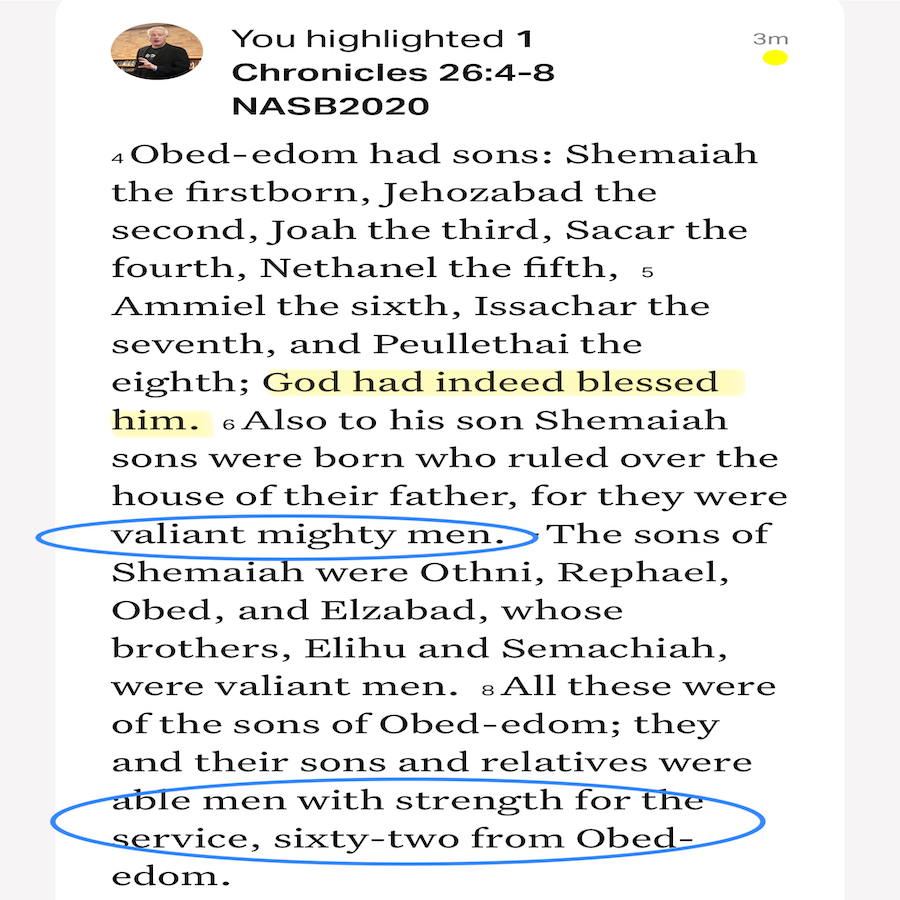 Every historical mention of Obed-Edom shows him serving God: as the guardian of the ark of the covenant of the Lord, as a gatekeeper, and as a worship leader. Here in this genealogy we learn that he faithfully served his family in a God-honoring way as well.
  We all have to bow to someone or something. The humble shepherd leader has chosen to bow to God and to follow God’s righteous standards. One name for God is Jehovah Tsidkenu, which means God is righteous (see Psalm 119:137). The Hebrew letter tsadhe is a part of God’s righteous title, and it’s how we are called to live. Tsadhe means the humble, faithful servant. …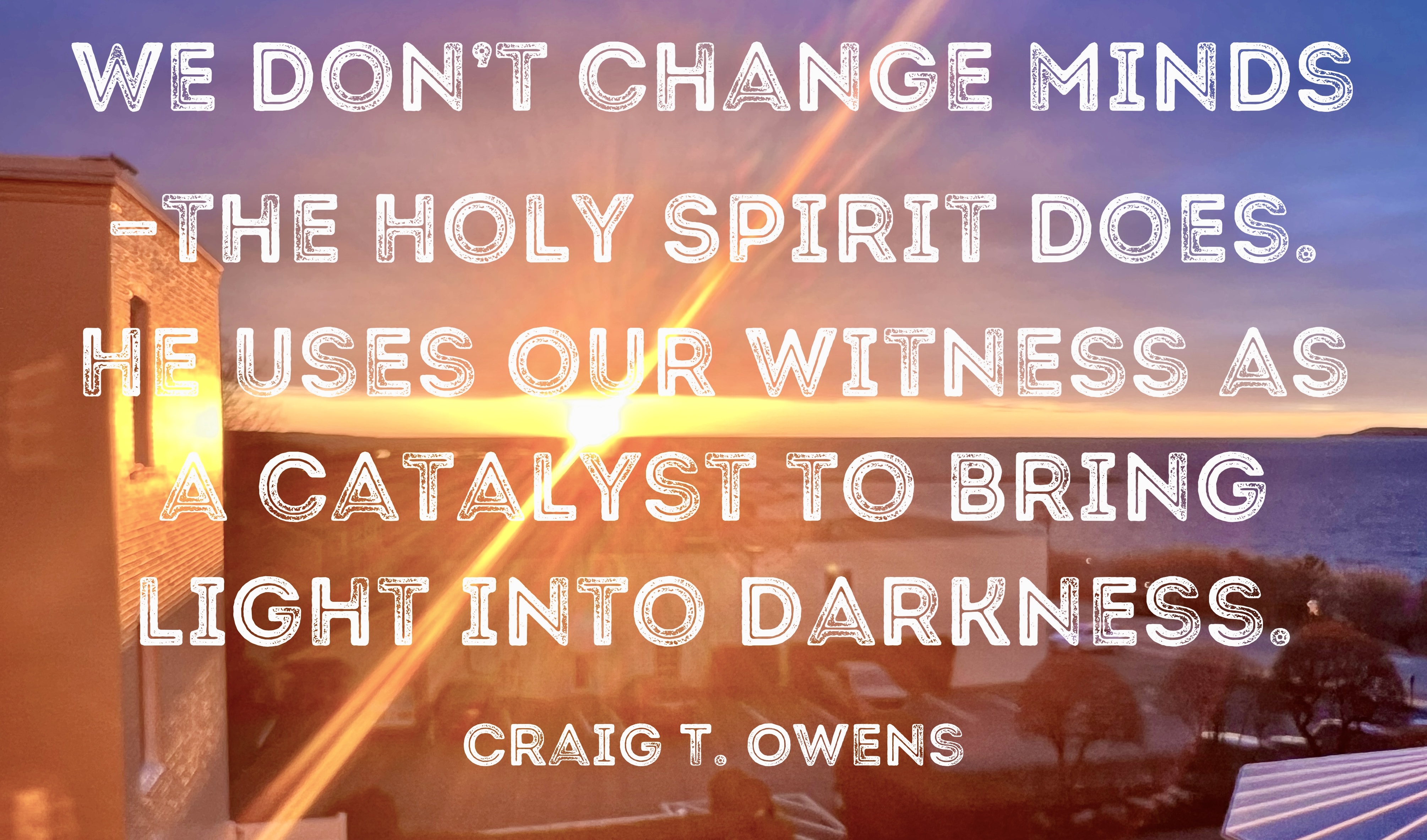


 Craig T. Owens