Limbo

According to the dictionary, limbo has some unusual definitions:

  • a region on the border of hell or heaven;
  • an intermediate, transitional, or midway state or place;
  • a place or state of imprisonment or confinement.

Have you ever felt you were in limbo? I have, and it does sometimes feel like a place of imprisonment. As a follower of Jesus Christ, I’ve been wondering why I should ever be in limbo. And I have come to the conclusion that it’s because I’m in such a hurry to arrive someplace.

We get so anxious to get somewhere—anywhere—and while we are between two points we feel the transitional state very acutely, and it often feels like a prison.

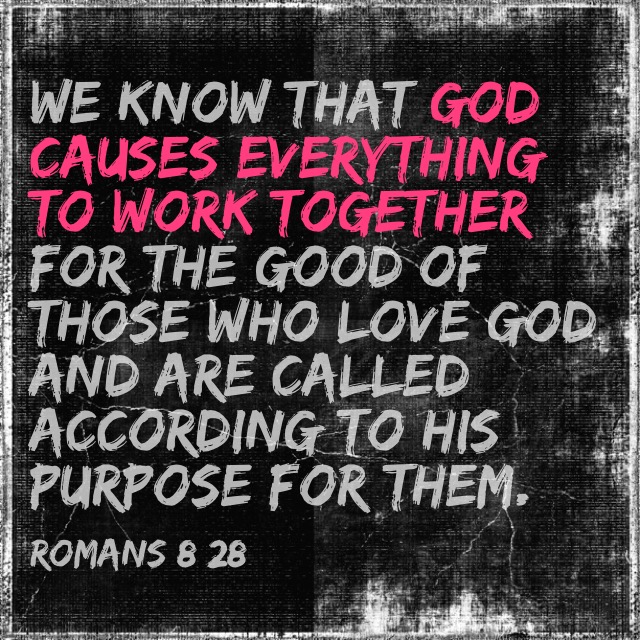
But I think God is more interested in our development process than He is in our destination. There is Bible verse quoted often when people are in limbo: “And we know that in all things God works for the good of those who love Him…” (Romans 8:28). But the verb tense here is not a destination verb but a process verb. It’s better stated, “And we know that in all things God is working for the good of those who love Him.”

Look at the differences—

  • “I really thought I was supposed to get that job” [destination focus] versus “Here’s what God taught me while I was pursuing that job” [process focus].
  • “What am I supposed to do next, God?” [destination focus] versus “What are you teaching me while I wait on You?” [process focus]
  • “Why did it turn out this way?” [destination focus] versus “Here’s how I am growing through this time” [process focus]

Limbo isn’t fun (or as one of my friends said on Facebook this morning, “A life in limbo sucks!”). But it is in the limbo times—the times of process—that we learn the most about all of the good that God is working in us and through us.

If you feel like you’re in limbo today, take your eyes off a destination, and look at the process. Believe me, this is a lesson I am learning right now—big time! What limbo lessons have you learned—or should I say, what limbo lessons are you learning right now? 
Choice Four-Letter Words

Listen to the podcast of this post by clicking on the player below, and you can also subscribe on AppleSpotify, or Audible.

Have you ever been “cursed out” by someone? I mean had a stream of four-letter obscenities hurled at you? What happens inside you? Isn’t your natural reaction to strike back? To begin to a counter-attack with a few choice four-letter words of your own?

It’s natural to feel this way; it’s a very human response.

On the other hand, have you ever been “blessed out” by someone? Had someone shower you with niceties and accolades and compliments? What happens inside you this time? Isn’t your natural reaction the complete opposite? Don’t you want to say, “Well, I think you’re pretty special, too”?

It’s natural to feel this way; it’s a very human response.

But Jesus commanded us to do something counter-cultural, something which requires a spiritual response: “Bless those who curse you” (Luke 6:28). Paul amplified this thought: “Bless those who persecute you; bless and do not curse” (Romans 12:14).

These words curse and bless are challenging for me. Curse means to hope for someone’s downfall; bless means to say good words to or about someone. Cursing can be done internally or verbally; blessing has to be done verbally. Eugene Peterson captures the essence of this in his paraphrase of Romans 12:14: “Bless your enemies; no cursing under your breath.”

If my natural response is to match curse for curse, obscenity for obscenity, then to respond in a Christ-like fashion is going to take a change of character. To respond with the right four-letter words, I have to do the opposite of my natural response.

In the Old Testament, the Hebrew word for bless carried the understanding that it all hinged on God—He is the focal point. All of the definitions of this word involve a close relationship with God: (a) bless God; (b) bless men in the name of God; (c) ask for divine favor for persons or things created by God; or (d) salute someone because we know God has saluted us.

In the New Testament, the Greek word for bless makes it clear that this has to be done verbally, out loud. It is impossible to bless under your breath. In the Greek, bless is the compound word eulogeo = eu- (good) + –logos (words): saying good words out loud.

Only God is good, so only a closer relationship with our good God will help us say good words to others. Especially to those who curse us.

The right four-letter words to use—the un-natural words to use—are: Good words.

I’m challenging myself today to bless others, especially those who curse me. I only want to say good to and about others today. I’m attempting to live out Ephesians 4:29—

  • Do not let any unwholesome talk come out of your mouths, but only what is helpful for building others up (New International Version)
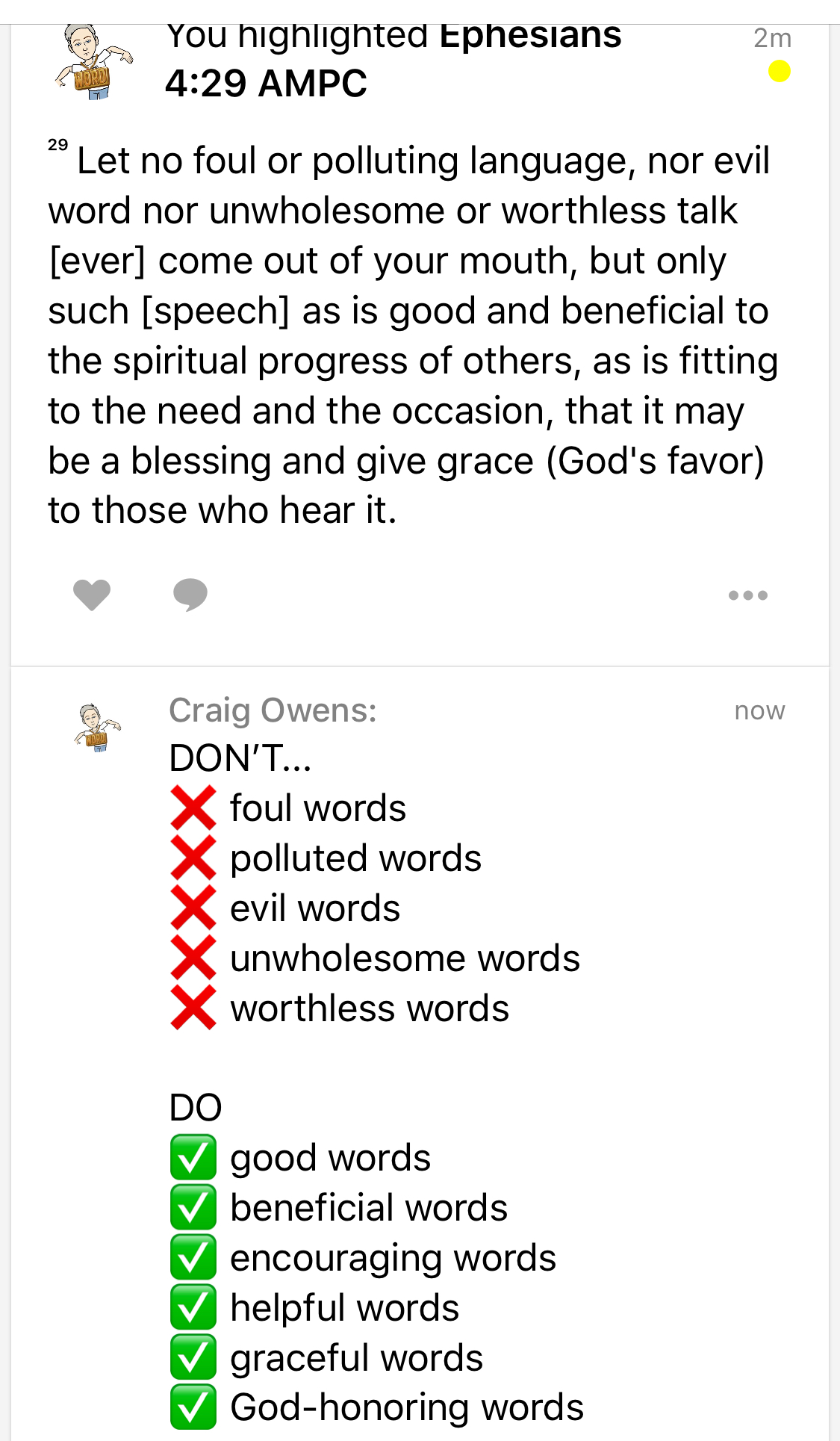
  • Let no foul or polluting language, nor evil word nor unwholesome or worthless talk ever come out of your mouth, but only such speech as is good and beneficial to the spiritual progress of others (Amplified Bible)
  • Watch the way you talk. Let nothing foul or dirty come out of your mouth. Say only what helps, each word a gift (The Message)
  • When you talk, do not say harmful things, but say what people need—words that will help others become stronger (New Century Version).

So let me ask you: How will you say the right four-letter words to others today?

►► Would you please prayerfully consider supporting this ministry? My Patreon supporters get behind-the-scenes access to exclusive materials. ◀︎◀︎

Do I Know Too Much?

Thomas Huxley wrote, “I object to Christians: they know too much about God.”

When Job was going through his trials, his “friends” showed up with all kind of knowledge about God. They knew that God would never allow the innocent to go through difficulty. They knew Job had sinned somewhere along the way. They knew that God always answers a righteous man‘s prayers exactly as he had prayed it.

They knew too much about God.

They put God in their box, telling Him how to behave the way they knew He should.

They became their own god.

Job didn’t know all that God was doing, but he did know, “He does great things too marvelous to understand” (Job 9:10). The Apostle Paul echoed the same thought: “Oh, how great are God‘s riches and wisdom and knowledge! How impossible it is for us to understand His decisions and His ways!” (Romans 11:33).

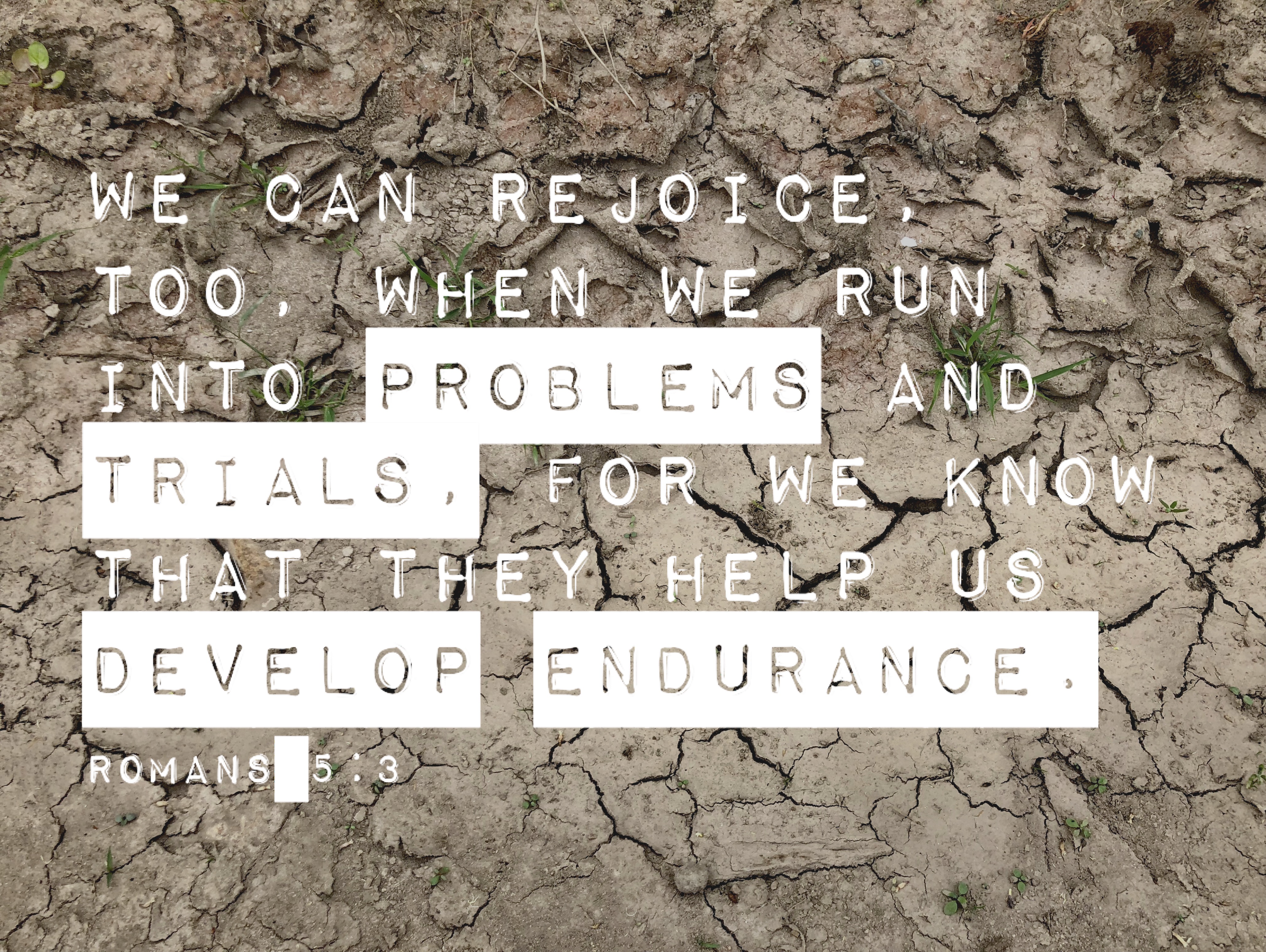
As I go through my own trials, I‘m learning a little more about the depths of God‘s love for me everyday—“We can rejoice, too, when we run into problems and trials, for we know that they help us develop endurance. And endurance develops strength of character, and character strengthens our confident hope of salvation. And this hope will not lead to disappointment. For we know how dearly God loves us, because He has given us the Holy Spirit to fill our hearts with His love” (Romans 5:3-5).

How about you: Do you know too much about God? Or are you still open to learn more?