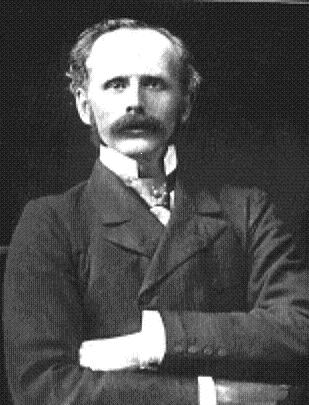
They All Agree

It’s extremely rare that a 19th-century pastor, Jesus Christ, and a noted atheist would all agree on something. But as we wrapped up our series on love today, I had to share these quotes (the added emphasis in the quotes is mine)—

“Never offer men a thimbleful of gospel. Do not offer them merely joy, or merely peace, or merely rest, or merely safety; tell them how Christ came to give men a more abundant life than they have, a life abundant in love, and therefore abundant in salvation for themselves, and large in enterprise for the alleviation and redemption of the world. … Only this fuller love can compete with the love of the world.” —Henry Drummond

“If you love only those who love you, why should you get credit for that? Even sinners love those who love them! And if you do good only to those who do good to you, why should you get credit? Even sinners do that much! … By this all men will know that you are My disciples, if you truly love one another.” —Jesus (Luke 6:32-33; John 13:35)

“Nothing can penetrate the loneliness of the human heart except the highest intensity of the sort of love the religious teachers have preached.” —Bertrand Russell

Don’t Unchristianize Your World

This morning I shared this quote from Henry Drummond. He absolutely nails it when he says our temper can unchristianize the societies in which we live and work.

“The peculiarity of ill temper is that it is the vice of the virtuous. … No form of vice, not worldliness, not greed of gold, not drunkenness itself, does more to unchristianize society than evil temper. For embittering life, for breaking up communities, for destroying the most sacred relationships, for devastating homes, for withering up men and women, for taking the bloom of childhood, in short, for sheer gratuitous misery-producing power this influence stands alone.” —Henry Drummond

May God help us eliminate our unchristianized tempers!

Fuller Love

Listen to the podcast of this post by clicking on the player below, and you can also subscribe on Apple, Spotify, or Audible.

Love is not always flowery and sweet, where everyone gets along, and no one is ever mean or even unkind. Actually that’s not love; that’s selfishness. You’re saying, “I will love you because it makes me feel good. I get something special out of this when I am kind and loving to you.”

The ancient Greeks had different words for love. Whereas we use love for food (“I love my pasta”), and the same word for special people (“I love my wife”). But we all know that I’m not really saying my wife and a plate of spaghetti are on the same level.

So the Greeks had a word for love for the inanimate (like food and music), and a word for this-makes-me-feel-so-good (like sex and alcohol), and a word for treating someone humanely or kindly (sometimes called brotherly love). These are well-known loves, but they are very fragile. The law of diminishing returns says that each time I experience one of these loves, its ability to please me the next time is slightly reduced, until at one point this thing/person no longer satisfy me at all. In fact, they may even cause my stomach to churn in nausea.

But there was one more word the Greeks used for love, that the biblical writers used almost exclusively. This word (agape) is not tuxedos and dancing gowns and chandeliers. This love shows up in work clothes, with callouses on its hands and knees, because it’s determined to serve someone else no matter what!

This is the kind of love God exhibited toward us—God shows and clearly proves His own love for us by the fact that while we were still sinners, Christ died for us (Romans 5:8).

And this is the kind of love Jesus commanded us to exhibit toward others… even toward those we think are unloveable—By this all men will know that you are My disciples, if you love one another. … If you love those who love you, what credit is that to you? Even “sinners” love those who love them. And if you do good to those who are good to you, what credit is that to you? Even “sinners” do that (John 13:35; Luke 6:32-33).

This is the kind of full love that those apart from Jesus Christ do not know, but they can see it and be drawn to it if Christians will demonstrate it. Henry Drummond said this—

“Never offer men a thimbleful of gospel. Do not offer them merely joy, or merely peace, or merely rest, or merely safety; tell them how Christ came to give men a more abundant life than they have, a life abundant in love. … Then only can the gospel take hold of the whole of a man, body, soul and spirit. … Only a fuller love can compete with the love of the world.”

Let’s show the world a fuller love, and in so doing we will show them Jesus!

If you missed any of the messages in our Loving the Unlovable series, you can check them all our here.

►► Would you please prayerfully consider supporting this ministry? My Patreon supporters get behind-the-scenes access to exclusive materials. ◀︎◀︎

11 Quotes From “The Greatest Thing In The World”

I loved the depth of insight about love from Henry Drummond’s short book The Greatest Thing In The World. This book dives into the definition of love that the Apostle Paul gives us in 1 Corinthians 13. To read my full review, and find the links for a free download of this book, please click here.

These are 11 of my favorite quotes from this book.

“Charity is only a little bit of love, one of the innumerable avenues of love, and there may even be, and there is, a great deal of charity without love. It is a very easy thing to toss a copper to a beggar on the street; it is generally an easier thing than not to do it. Yet love is just as often in the withholding. We purchase relief from the sympathetic feelings roused by the spectacle of misery, at the copper’s cost. It is too cheap—too cheap for us, and often too dear for the beggar. If we really loved him we would either do more for him, or less.”

“We hear much of love to God; Christ spoke much of love to man. We make a great deal of peace with heaven; Christ made much of peace on earth.”

“[Patience] is the normal attitude of love; love passive, love waiting to begin; not in a hurry; calm; ready to do its work when the summons comes”

“Love waives even self-satisfaction.” 

“Politeness has been defined as love in trifles. Courtesy is said to be love in little things.”

“The peculiarity of ill temper is that it is the vice of the virtuous. …No form of vice, not worldliness, not greed of gold, not drunkenness itself, does more to unchristianize society than evil temper. For embittering life, for breaking up communities, for destroying the most sacred relationships, for devastating homes, for withering up men and women, for taking the bloom of childhood, in short, for sheer gratuitous misery-producing power this influence stands alone.”

“Souls are made sweet not by taking the acid fluids out but by putting something in—a great love, a new spirit, the Spirit of Christ. Christ, the Spirit of Christ, interpenetrating ours, sweetens, purifies, transforms all.”

“Willpower does not change men. Time does not change men. Christ does.”

“What we are stretches past what we do, beyond what we possess.”

“Never offer men a thimbleful of gospel. Do not offer them merely joy, or merely peace, or merely rest, or merely safety; tell them how Christ came to give men a more abundant life than they have, a life abundant in love, and therefore abundant in salvation for themselves, and large in enterprise for the alleviation and redemption of the world. Then only can the gospel take hold of the whole of a man, body, soul and spirit, and give to each part of his nature its exercise and reward. … Only a fuller love can compete with the love of the world.” 

“No worse fate can befall a man in this world than to live and grow old alone, unloving and unloved.”

The Greatest Thing In The World (book review)

If you’ve been around Christian circles for any length of time, you probably have heard people talk about the “love chapter” (1 Corinthians 13). And if you’ve heard anyone talk about this love chapter, you probably think you’ve heard all that there is to hear about it. But think again: The Greatest Thing In The World by Henry Drummond will open your eyes to new insights on love.

D.L. Moody heard Henry Drummond share these thoughts live in 1884, and said, “It seemed to me that I had never heard anything as beautiful.” Moody then asked Drummond to not only share this with his congregation but then requested that principals in his schools read this to the students every year.

There are some wonderful insights on love that I think you will thoroughly enjoy in this short book.

If you have a Kindle, you can download The Greatest Thing In The World for free by clicking here. If you don’t have  Kindle, you can read it online for free by clicking here. And be sure to check out some of the quotes I shared from this book by clicking here.