Listen to the podcast of this post by clicking on the player below, and you can also subscribe on Apple, Spotify, or Audible.
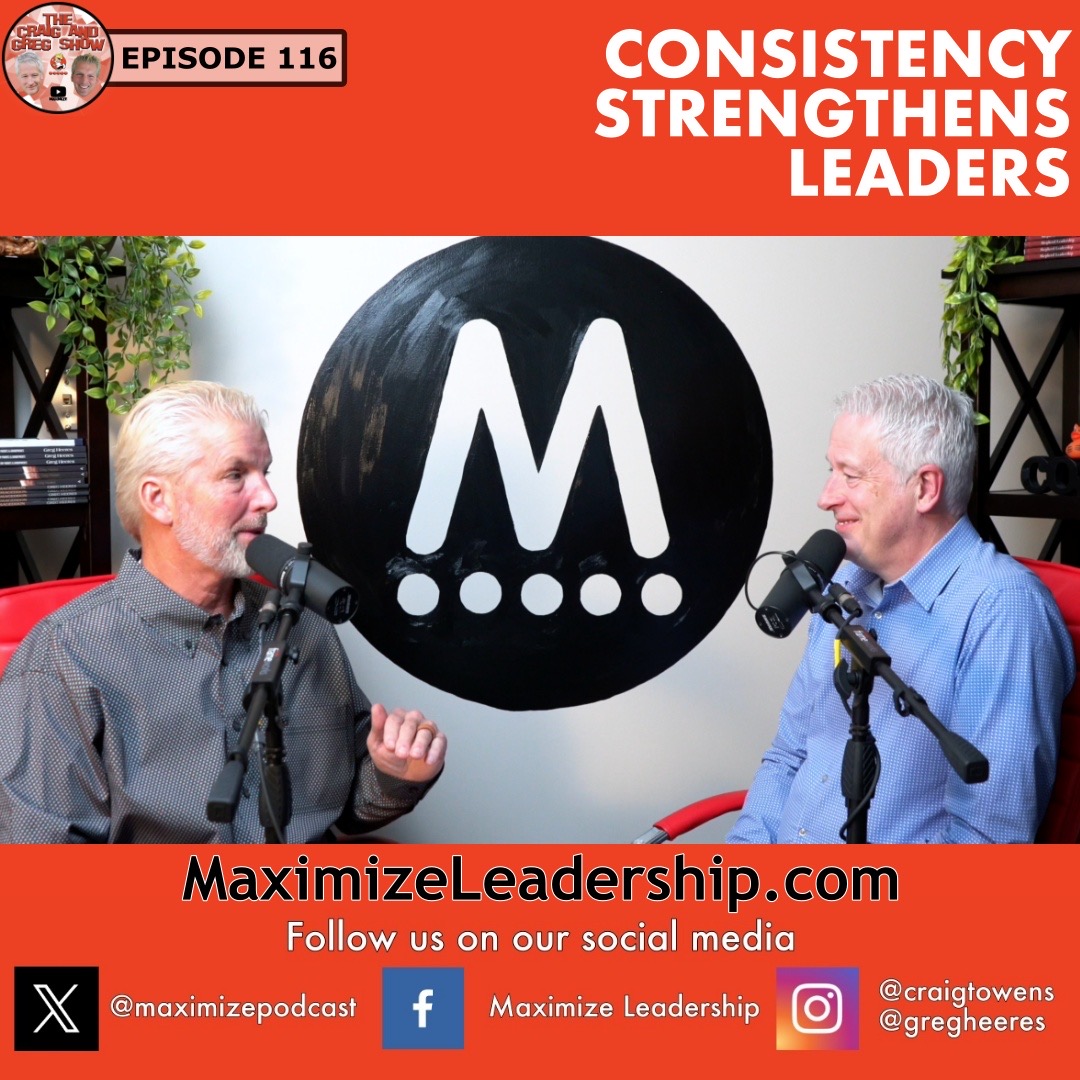
Like many popular phrases in the lexicon you’ve probably heard “consistency is key” thousands of times and rarely given it a second thought, but Greg and I want to challenge you to revisit this vital area. In today’s episode we discuss how an intentional focus on consistency will make you a better leader—which in turn will make your team more effective and productive.
[0:00] Intro
[0:30] People naturally gravitate towards certainty.
[1:20] One of a leader’s biggest goals should be to be consistent for their team.
[2:29] Greg discusses how an inconsistent leader can derail an organization.
[3:50] What is the message to your team when you’re not consistent?
[5:05] We use non-business examples to highlight the importance of consistency.
[6:44] Consistency takes effort and intentionality.
[9:03] What are people looking for from their leader to be consistent?
[10:53] Greg shares a quote from Aristotle.
[12:46] Excellence isn’t just “a habit,” it is an intentional choice of habits.
[17:42] Protect your spirit.
[18:26] I reveal what has made me the most consistent.
[22:41] Greg and I want you to be more successfully consistent as well!
Listen to the podcast of this post by clicking on the player below, and you can also subscribe on Apple, Spotify, or Audible.
What do you want people to remember about your leadership? It’s an easy question to overlook, but striving to be remembered well can help you to be a better leader every day. In today’s episode Greg and I discuss the attributes of a memorable leader and reminisce about past leaders in our lives.
[0:00] Introduction
[0:42] Here’s a really important leadership question to contemplate about your legacy.
[1:53] Memorable leaders give us freedom to use our gifting.
[3:48] We debate going negative.
[4:07] Memorable leaders believe in us.
[7:10] Memorable leaders are calm in turbulent times.
[8:16] Memorable leaders love us enough to tell us the truth.
[10:20] Memorable leaders show us a preferable end goal.
[11:22] Memorable leaders are complimentary.
[12:46] Memorable leaders let us take the victory lap for the wins, but they take the blame for the losses.
[13:29] Memorable leaders give us grace for second chances.
[15:16] What’s one word we would like on our epitaph?
[17:59] Memorable leaders have an abundance mindset.
[18:41] How do you start becoming a memorable leader today?
[22:14] People are watching how you, as a leader, treat others.
[22:53] The value of a coach is so impactful for leaders who want to become more memorable.
Listen to the podcast of this post by clicking on the player below, and you can also subscribe on Apple, Spotify, or Audible.
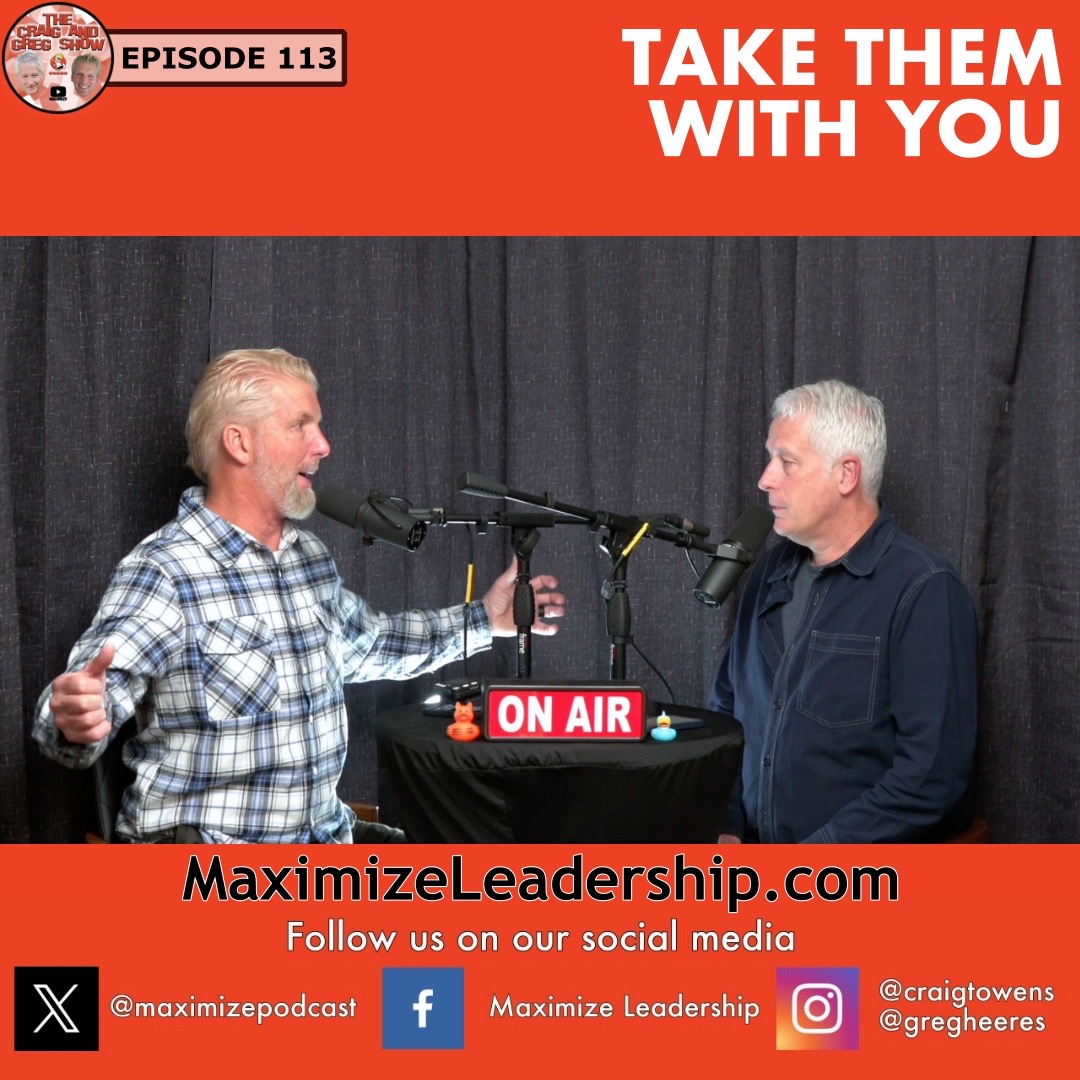
In a previous episode we brought you the exciting news that Greg and I are collaborating to write a series of books called Business By The Book. In today’s episode, we revisit the first book in this series—A CEO’s Vision—and discuss how once the vision has been cast the next vital step is to bring your team along with you.
[0:00] Introduction
[0:11] I welcome Greg to an exclusive club!
[0:49] We show why we think we are over-achievers.
[2:00] Leaders need to take others along with them, transitioning from “I” to “we.”
[4:39] How do leaders handle the frustration of a slow-moving team?
[6:51] How we wrote “Business by the Book” for a CEO who is casting vision.
Listen to the podcast of this post by clicking on the player below, and you can also subscribe on Apple, Spotify, or Audible.
One of the most important boundaries that shepherd leaders need to establish—especially when contending with biting sheep—is the protection of their family. Check out this clip from The Craig and Greg Show.
You can watch the full episode in which Greg and I talk about some of the principles in When Sheep Biteby clicking here.
Please pick up a copy of When Sheep Bite for yourself by clicking here.
Listen to the podcast of this post by clicking on the player below, and you can also subscribe on Apple, Spotify, or Audible.
I am so excited to announce that my co-host Greg has written a new book called Sales Armageddon. As anyone in the profession knows, sales can be a battlefield. Through fables and insightful teaching Greg’s book will equip you with new strategies you can implement right away to keep yourself and your team in the fight.
[0:30] Greg’s new book is out.
[1:40] The book contains a business fable based on real people.
[3:39] Salespeople can learn from this book how to work well and grow because of others.
[5:52] This is a very entertaining book that helps us learn.
[7:16] All salespeople need o learn to work with their peers.
[8:40] Sales Armageddon is not just a soft story but it shares the science of sales as well.
[9:35] Here is a teaser of a key chapter on developing a robust sales pipeline.
[12:46] This book has both the emotion and the hard skills of excelling in sales.
[14:47] Greg says that each chapter is going to remind you of someone you’ve worked with before, or it may even remind you or yourself!
[16:37] This is not a “heavy” read, but this is something that you are going to be able to immediately apply to your sales work.
Listen to the podcast of this post by clicking on the player below, and you can also subscribe on Apple, Spotify, or Audible.
Imagine your organization as a cruise ship you’re the captain of. It is your responsibility to man the helm, keeping the vessel away from danger and navigating to the correct destination. Along the way you decide that the guests’ towels need to be folded a particular way, so you step away from your post for hours to meticulously fold them to your exact specifications. You do a great job but in your absence the ship is listless, veering off course into dangerous waters.
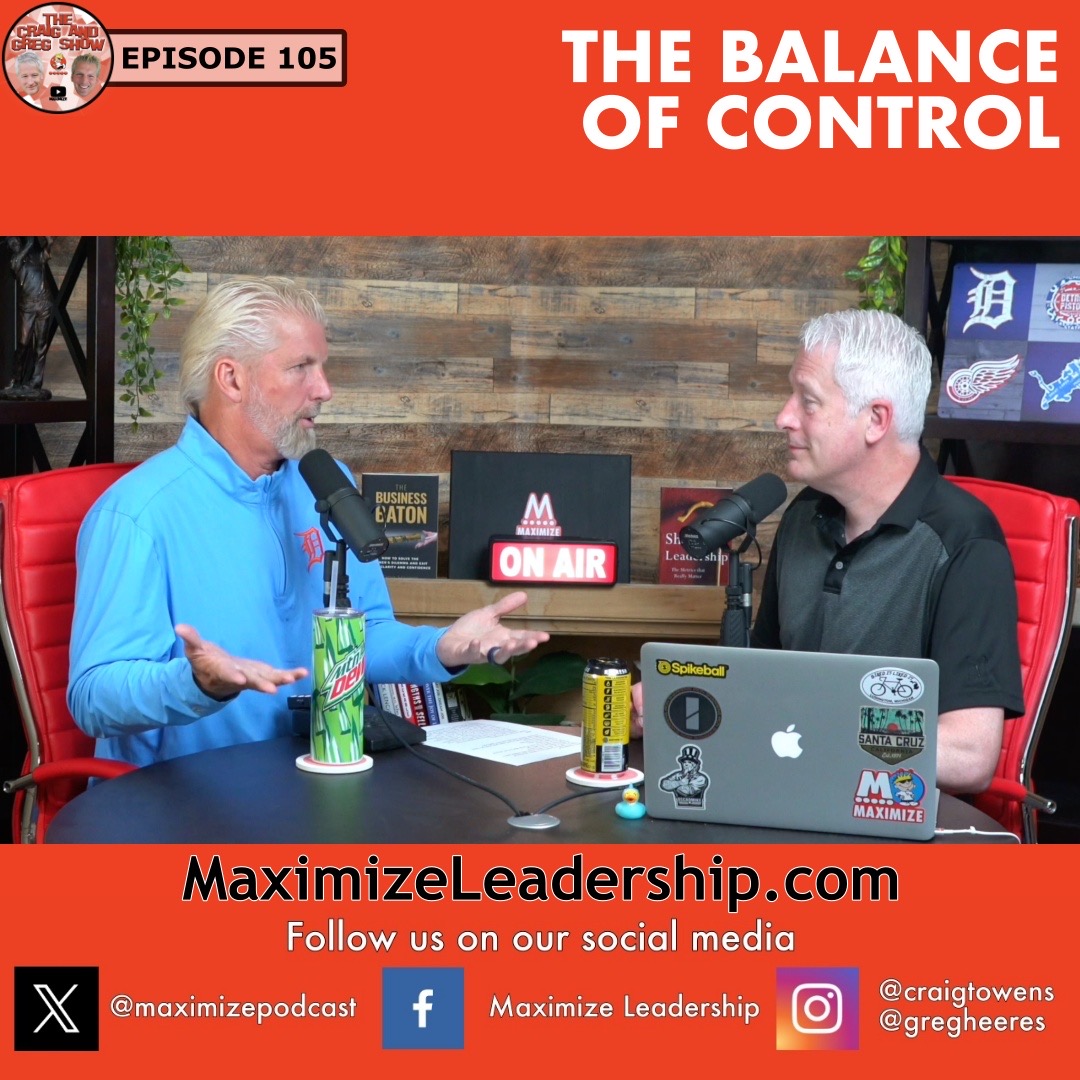
Of course it’s very likely you won’t find yourself in this exact situation, but the same logic can be applied to our terrestrial pursuits as well. In today’s episode, Greg and I discuss why it’s important for leaders to remain in control, but also vital that we don’t become controlling.
[1:00] How could a leader self-assess to make sure they are properly balanced in the way they control their organization?
[3:38] Being organized is not a problem, but controlling the organization becomes the problem.
[4:50] I point out the differences between a productive river and a destructive flood.
[6:00] Controlling leaders stifle creativity and innovation.
[8:25] Tim Irwin’s book Derailed talks about how micro-managing has led to the collapse of many successful organizations.
[14:13] The value of a coach is getting answers that others on your team aren’t giving you.
[17:12] Greg shares a quote about self-discipline as it relates to the proper balance of healthy control.
[18:20] Your teammates want your confidence, not your control.
[19:44] Leaders, it’s time for you to look in the mirror.
Check out this episode and subscribe on YouTube so you can watch all of the upcoming episodes. You can also listen to our podcast on Spotify and Apple.
Listen to the podcast of this post by clicking on the player below, and you can also subscribe on Apple, Spotify, or Audible.
On The Craig and Greg Show, Greg noted that my book When Sheep Bite isn’t just for church leaders, but business leaders can benefit from reading this as well.
I recently shared a series of messages for all Christians about how to handle the painful bites that sometimes come from other Christians. The series was called When Sheep Bite Sheep.
Listen to the podcast of this post by clicking on the player below, and you can also subscribe on Apple, Spotify, or Audible.
Leaders have to be very careful of the trap of measuring the growth of their teammates by the wrong metrics. The things that matter most are often the things that are the most difficult to measure, but leaders must find a way.
In my book Shepherd Leadership, I have a chapter entitled ‘Don’t Try to Grow Your Own Ministry.’ This book is mainly written for church and non-profit leaders, but there are helpful principles here for every kind of leader. Here’s an except from this chapter—
Businesses think in terms of quantitative gains—things they can count—but churches and nonprofits should be thinking in terms of qualitative gains—a quality improvement that isn’t as easily counted. I think we all know this, and yet we still persist in wanting to define success in a church or a nonprofit by those quantitative standards such as attendance growth, donations, and the like. When we think qualitative over quantitative, suddenly what seemed “small” is so significant and so valuable that it cannot be calculated! …
Don’t try to grow your ministry. First, because it’s not yours, it’s [God’s]; and second, because your measure of success is probably more slanted toward quantitative measurements than qualitative. Jesus wasn’t concerned about bigger numbers: “What do you think?” He asked, “If a man has a hundred sheep, and one of them goes astray, does he not leave the ninety-nine and go to the mountains to seek the one that is straying?” (Matthew 18:12).
Philip went to Samaria to tell people about Jesus. He didn’t go there because it fit his plan, but because Jesus said, “You will be My witnesses in Jerusalem, and in all Judea and Samaria, and to the ends of the earth” (Acts 1:8). Philip’s obedience brought God’s success: hundreds turned to Jesus as their Savior, demon-possessed people were delivered, the sick were healed, and the new Christians were baptized in the Holy Spirit. Yet God called Philip to leave these “ninety-nine” and go to the desert to cross paths with just one confused and wondering sheep (Acts 8). After that, Philip virtually disappears from Luke’s historical record.
What’s the value of one government official’s life? God says that his value is incalculable. Apparently, God knew that Philip was the perfect shepherd to lead this Ethiopian to the pasture where he would accept Jesus as his Savior. Philip was obedient, a sheep was saved, and God was pleased. But I wonder how many people today might think Philip’s ministry was unsuccessful because he left a bigger ministry in Samaria to go to a smaller ministry in the desert?
Leaders need to be very cautious about using the right metrics to measure the growth of their teammates and the success of their organization.
Listen to the podcast of this post by clicking on the player below, and you can also subscribe on Apple, Spotify, or Audible.
In our last episode, Greg and I discussed how vital it is to focus on your own internal development. If you’ve been doing that, chances are you have identified a few blind spots in yourself. While it might feel more comfortable to simply hide these away and hope nobody notices, we would like to encourage you to be vulnerable: Drag your blind spots into the light, address them, and watch how your leadership improves as a result.
[1:30] Leaders have to get comfortable with being vulnerable if they are going to make any meaningful changes in their life.
[2:17] Blind spots have to be brought out into the light.
[5:44] Paying attention to the feedback from others requires us to slow down to process what we need to change.
[7:35] Leaders need to understand the speed of their team in the area of productivity.
[8:34] Greg shares a “blind spot” example from one of his kids.
[9:53] Why do leaders avoid their blind spots?
[11:45] Peripheral vision isn’t good just for athletes, but for leaders too.
[13:11] I share how asking good questions has helped my teammates with their blind spots.
[14:50] If leaders assume things about their teammates or work with their favorite teammates, they will never improve the morale of the team.
[18:17] Greg talks about the movie “Blindside” as a learning point about having the right people watching out for us.
[20:10] We need to be thinking about the kind of people we need around us.
[25:42] The one word most people are afraid to say.
[26:59] Sometimes a fresh set of eyes is necessary to see a blind spot. Maximize coaching would love to be a resource for you in this area.
Check out this episode and subscribe on YouTube so you can watch all of the upcoming episodes. You can also listen to our podcast on Spotify and Apple.



 Like many popular phrases in the lexicon you’ve probably heard “consistency is key” thousands of times and rarely given it a second thought, but Greg and I want to challenge you to revisit this vital area. In today’s episode we discuss how an intentional focus on consistency will make you a better leader—which in turn will make your team more effective and productive.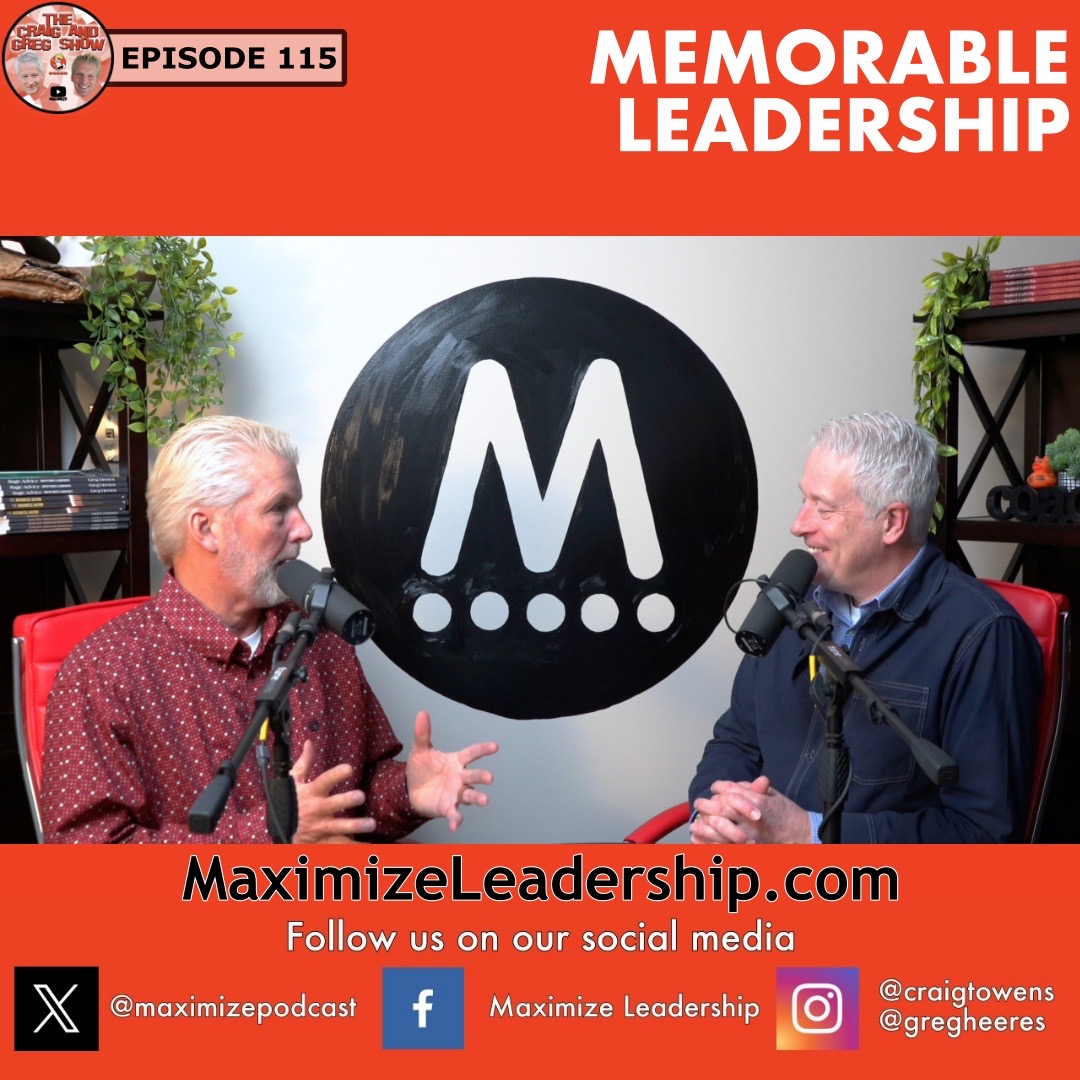





 Craig T. Owens