Links & Quotes

link quote

These are links to articles and quotes I found interesting today.

Good advice from Dr. Tim Elmore: Technology Etiquette For The Emerging Generation

And good advice from Dr. James Dobson: 10 Essentials For Your Marriage

“If you could increase the attendance of your church until there is no more room, if you could provide everything they have in churches that men want and love and value, and yet you didn’t have the Holy Spirit, you might as well have nothing at all. For it is ‘“Not by might nor by power, but by My Spirit,” says the Lord Almighty’ (Zechariah 4:6). Not by the eloquence of a man, not by good music, not by good preaching, but it is by the Spirit that God works His mighty works.” —A.W. Tozer

FINALLY!! Obama Pushes For Release Of Americans Held In North Korea, Iran

[VIDEO] Memorable Super Bowl moments

Uh oh! Facebook Is Now More Widely Read Than The Bible

[VIDEO] For all of those you posting your Facebook video: An Honest Facebook Movie

Prayer Focus: Our Youth

As this week marks the beginning of a “new year,” (as students are heading back to school and we’re all settling in to our fall routines), we are taking time to focus our prayers.

Today’s pray focus is on our youth.

Our future is not “somewhere around the corner”; it’s now! Our future is in the lives of the children in our homes and schools at this very moment. Because the enemy knows how important our kids are, satan is doing all he can to try to thwart their plans, discourage them about their prospects, and get them thinking that their lives are not very valuable.

An American College Health Association survey found:

  • 94% of students feel overwhelmed by their lifestyles.
  • 44% feel so depressed it was almost difficult to function.
  • 10% considered suicide in the past year.

As a result, many of our youth have begun to “check out” of life. This can be deadly for our future. Noted author and researcher Dr. Tim Elmore said of this generation, “In cultures where males stop setting a healthy example, there is trouble. Crime rates rise, the percentage of teen pregnancies and unwed mothers go up, the number of gangs increase, unemployment swells, and depression and delinquency rise.”

Yet Jesus made it clear that the way children received the Kingdom of God in faith is to be the pacesetting example for all of us (see Mark 10:15-16). With this in mind, the Apostle Paul challenged his young protege Timothy to be the example for all others to follow. His charge to Timothy is a part of our prayer focus today:

Don’t let anyone look down on you because you are young, but set an example for the believers in speech, in life, in love, in faith and in purity. Be diligent in these matters; give yourself wholly to them, so that everyone may see your progress. (1 Timothy 4:12, 15)

Please pray with us throughout the day for our youth. And if you can join us tonight, the church will be open for prayer from 5:30-6:30pm.

UPDATE: You can download the PowerPoint of our prayer points for today by clicking here → Week of prayer – students.

Artificial Maturity—How To NOT Move From College To Career

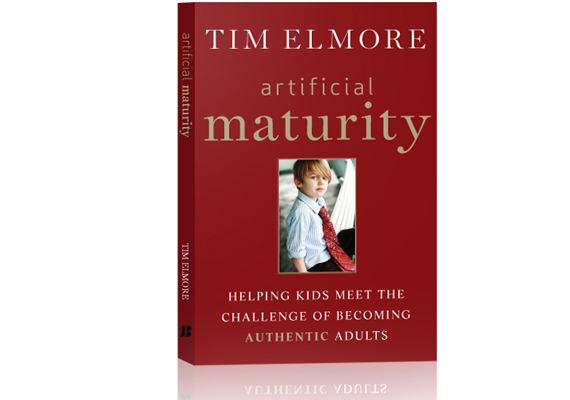
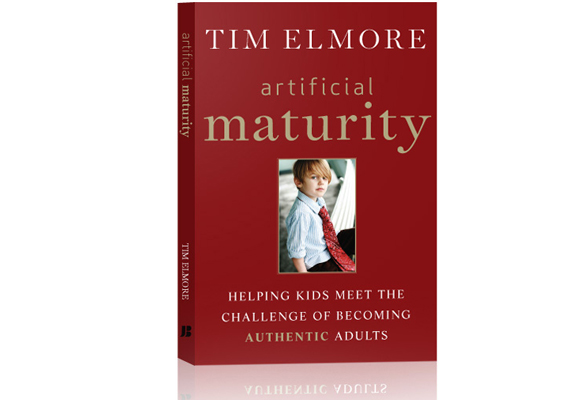
Artificial Maturity is a must-read book by Dr. Tim Elmore for parents, pastors, youth pastors, teachers, coaches, and managers—anyone who works with youth. You can read my full review of this invaluable book by clicking here.

Artificial Maturity—How To NOT Break Up With Your Girlfriend

Artificial Maturity—How To NOT Get A Job

10 Quotes From “Artificial Maturity”

The other day when I posted my review of Artificial Maturity by Dr. Tim Elmore, I said that for anyone working with children, tweens, teens, or young adults this book is a must-read. I don’t say that about very many books, but it is definitely true of this one (you can read my full review here).

Let me share with you ten of my favorite quotes from this book. Unless otherwise noted, all of the quotes are from Dr. Elmore…

“In short, the artificial maturity dilemma can be described this way: (1) Children are overexposed to information, far earlier than they’re ready. (2) Children are underexposed to real-life experiences far later than they’re ready.”

“Steps to take to build authentic maturity:

  1. Provide autonomy and responsibility simultaneously.
  2. Provide information and accountability simultaneously.
  3. Provide experiences to accompany their technology-savvy lifestyles.
  4. Provide community service opportunities to balance their self-service time.”

“For the most part, adults have failed to build true ‘life skills’ in kids. We haven’t helped them self-regulate and make decisions about concerns that matter. Students’ busy schedules often aren’t all that meaningful, and young people spiral downward into despair over relatively trivial issues. Their days are full of artificial activities with artificial consequences, resulting in artificial maturity. The stress is real, but it is often over things that don’t really matter, and it isn’t building mature people.”

“We must be parents, not pals. We must be coaches, not coddlers. And we must lead them, not just lecture them.”

“Analysts say there are increasing signs that a lack of independence fuels stress, anxiety, and depression among young people. …Kids’ early lives today are too full of information and structure, and too empty of innocence and the freedom to play and explore. But by adolescence, it’s almost the opposite. It’s as though they experience a flip-flop. Their lives are too full of freedom, and too empty of accountability.”

“This appears to be a paradoxical trend—[adolescents] expressing a decline in readiness to actually ‘be’ adults that is proportionate to their desire to leave home. …They want to be consumers but not necessarily contributors. …Our job is to prepare the child for the path, not the path for the child.”

“The fact is, kids—all kids—need adults to lead them well. In our mad obsession to remain cool and on the cutting edge of everything, adults have surrendered what may be their most important responsibility: to provide role models to the next generation. We might win at the game of being liked, but we lose at the game of leading well.”

“For our teens, we’ve defined nurturance largely in terms of the things we can do for them, the stuff we can buy them, and the experiences and opportunities we can provide. In reality, what most teens need is neither more stuff, nor more lessons, nor do most teens even need more tender, loving care or quality time. While young children need a great deal of parental nurturance in the form or direct assistance geared toward meeting their needs, adolescents need something different. Unlike children, teens’ bodies and brains most need us to nurture and develop capacities to function on their own in this world. This means expecting things of them, not just giving things to them.” —Drs. Joseph & Claudia Worrell

“Five parental decisions:

  • Decide that you will build a bridge of relationship that can bear the weight of hard truth.
  • Decide that it’s more important for you to have their respect than for them to like you.
  • Decide that it’s more important for you to pass on essential values than to just have fun.
  • Decide that it’s more important for them to be ready for the future than to be comfortable.
  • Decide to pass on the principles (values) you wish you’d known earlier in life.”

“As adults, we have done a poor job in getting this generation of kids ready for life. If they flounder, it is because we’ve focused on preparing the path for the children instead of the children for the path. I believe in this next generation. These kids are great, and they’re capable of much more than we’ve expected. We have not led them well. We’ve allowed them to mature artificially by default. We’re protected them instead of preparing them for life as adults. It’s time we get them ready to lead the way into the future.”

Artificial Maturity (book review)

When I posted my review of Tim Elmore’s previous book Generation iY, I said that book earned a rare “must read” rating from me. Whether you read that book or not, Artificial Maturity has earned the coveted must-read rating again!

If Generation iY described who this current youth generation is, Artificial Maturity describes how to help these youth achieve genuine maturity. Here’s how Dr. Elmore sets the stage for this book from the very first page:

“…I believe in this generation like none before. I believe they have the potential to be the greatest generation—a population Warren Bennis calls the “Crucible Generation.” He and many others believe these young people may just be the ones who transform society globally and restore democracy and goodwill.

I believe this with one caveat. I predict all this is possible if we, the adults, will rethink the way we parent, lead, teach, coach, pastor, and manage them. It’s up to us what kinds of adults our kids will become. So far, many of them are a part of a leaderless generation. The adults have done more protecting than preparing. Some moms and dads want to be pals rather than parents. And many adults are just overwhelmed with the notion of leading kids today—and they surrender their role as leaders.”

So this is not a book that tells you how to change kids, but how we as adults must change.

With persuasive evidence, scientific studies, personal observations, and years of hands-on experience, Dr. Elmore so accurately details how we as parents have contributed to our kids becoming artificially mature. In other words, they know lots of things, but they don’t know how to effectively apply that knowledge to be productive at work, school, and in relationships. 

I, too, share Dr. Elmore’s optimism about this generation. But if I want to see my kids—and other young people with whom I interact—excel and mature, I have to look at myself in the mirror. This generation can’t succeed if we continue to parent, and teach, and pastor, and manage as we have been doing.

I cannot urge pastors, youth pastors, parents, teachers, principals, coaches, and employers to read Artificial Maturity right away! This generation needs us to help them soar!

I am a Jossey-Bass book reviewer.

UPDATE: Read some of my favorite quotes from Artificial Maturity by clicking here.

Generation iY (book review)

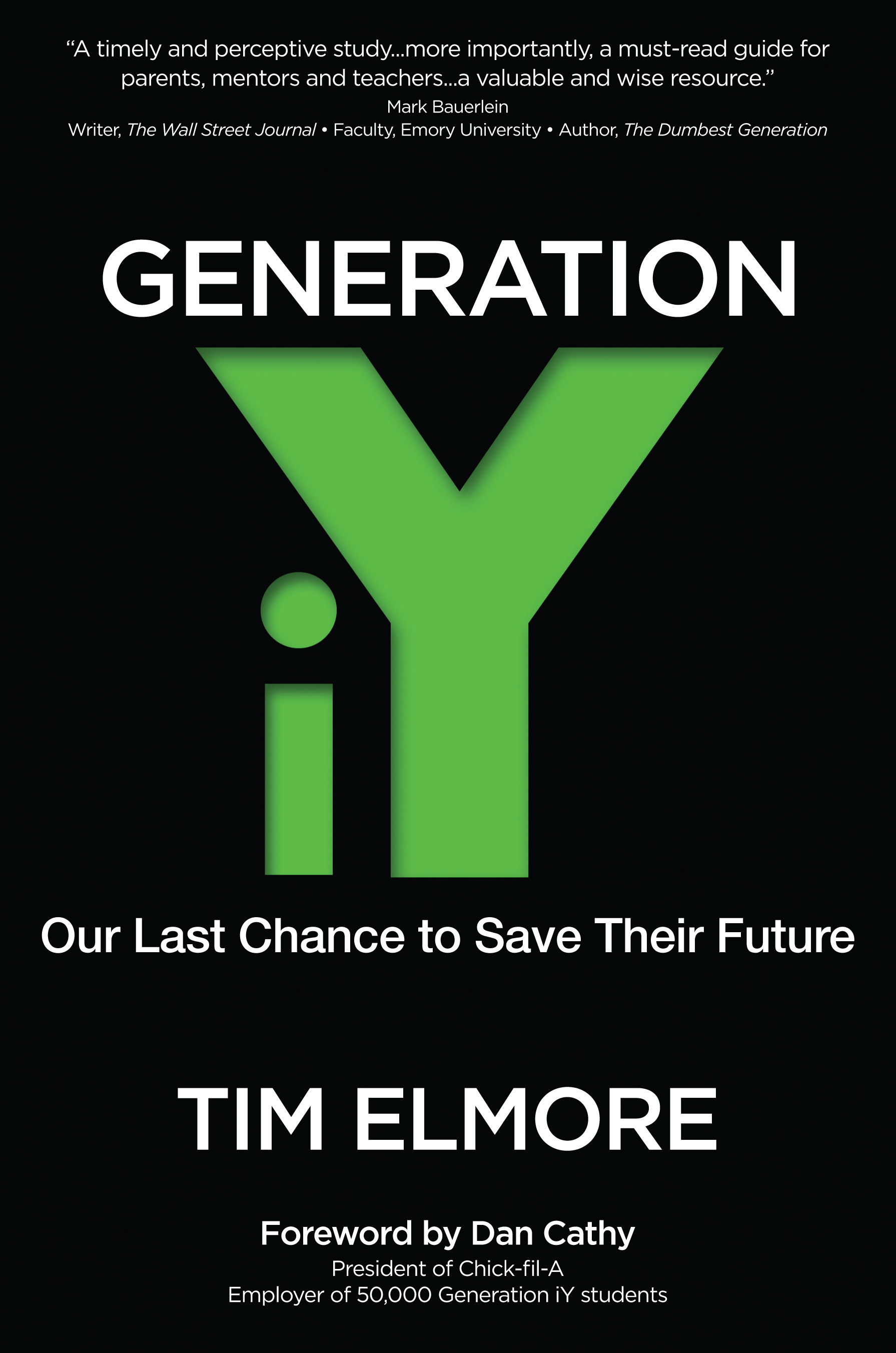
I’m going to make a statement about Dr. Tim Elmore’s book Generation iY that I rarely make: This book is a MUST READ for parents and anyone who works with youth!

Yes, a must read. The subtitle of this book is not over-dramatized, but really is an understated truth: Our last chance to save their future.

People who are parents now mostly fall into either the late Baby Boomer or Generation X classification. Our world is so different now than it was when we were kids. The growth in technology use (the “i-world” that Dr. Elmore illuminates so well) makes this generation unique. If we try to parent our kids or mentor Generation iYers using the same techniques parents have used in previous generations, we will lose this generation.

Tim Elmore knows this generation well. He outlines the paradoxes, the marks of (im)maturity, the reasons for their apparent lack of motivation, the incorrect parenting techniques, and the ineffective teaching methods that characterize Gen iY. But Dr. Elmore doesn’t stop at just pointing out all of these things; he gives clear-cut ways we can capture this generation before it’s too late. I wish this book had been available when I first became a parent of a Gen iYer!

If I haven’t made it clear enough already, let me state it again: Generation iY is a must read! The issues are too complex and the stakes are too high for us to miss our opportunity to save the future of this generation.

I am a Poet Gardener book reviewer.

Generation Now

Interbellum, Greatest, Silent, Baby Boomers, Busters, MTV, Gen X, Gen Y, Post-Millennial, Gen Z. It seems we’re obsessed with naming and defining our past and present generations. The “experts” tell us what each generation is motivated by, what they’re thinking, what they dream of, and what they are afraid of. I have stacks of books on my shelf about how to relate to people in each of these generational groups, and I constantly get emails that tell me the newest way to get each generation’s attention.

However, when I look in the Bible I only see two generations: this generation and the next generation. God is not concerned with description, but with action. I love what God said to Noah, “Go into the ark, you and your whole family, because I have found you righteous in THIS generation.

What you and I do in THIS generation reverberates into the NEXT generation.

The most important generation is Generation Now.

Yesterday I discovered something a whole lot easier than reading all of these books and sifting through all of the data to learn about GenNow. I discovered this by accident. I discovered it by fun. And I discovered it was exactly the same way Jesus connected with and related to His GenNow.

All I had to do was hang out at my office.

Throughout the day people saw my car in the parking lot, so they just stopped in. It was a blast! Just as Jesus spent times at parties, wedding banquets, in the market place, and with His friends, I got to know GenNow by simply being with them. We talked, we played music (great jam session!), I got beat in ping pong, we ate pizza, we worshipped God, we threw marshmallows at each other.

Through all of this, I learned what GenNow is dreaming about, laughing about, and worrying about. I also affirmed what I already knew: GenNow is a very special group!

Do you have a family member or friend that you want to connect with more deeply? Follow the example of Jesus: just spend time with them. I did, and it was great. In fact, I can’t wait to do it again and again and again!