Hot Pursuit

Listen to the podcast of this post by clicking on the player below, and you can also subscribe on Apple, Spotify, or Audible.

While I was reading From Azusa To Africa To The Nations, I came across a fascinating statement from William Seymour, the pastor who led his congregation into that early 20th-century revival that shook the world. Pastor Seymour was so hungry for God’s presence in his life that he set aside five hours each day to seek God’s deeper touch. He prayed liked this for over 3 years. At this point He read about the outpouring of the Holy Spirit in the Book of Acts, and something stirred in him to pray for this same outpouring on himself and on his congregation. He then increased his prayer time to seven hours a day, and continued to pray in this fashion for another two years before the answer came and the revival broke out.

I did the math. That means he prayed 11,500 hours!

How many of us get tired after praying just one hour?

Would it be easier for you to tenaciously pursue God in prayer if you knew He was also tenaciously pursuing you? Mark Batterson points out in The Circle Maker that the verb in Psalm 23:6 is poorly translated in English as shall follow me. He reminds us that it’s really a hunting term, used for a hunter in hot pursuit of his quarry. God’s love and mercy are in hot pursuit of you!

The Lord longs to be gracious to you; He rises to show you compassion. For the Lord is a God of justice. Blessed are all those who wait for Him! (Isaiah 30:18)

Want to see a great story about this in the life of Jesus? Matthew tells us about a get-away that Jesus and His disciples took. While they were relaxing, a woman barged in, imploring Jesus to heal her daughter. She would not be denied. She tenaciously implored Jesus to minister to her daughter. At last Jesus cried out, “Woman, you have great faith! Your request is granted.”

(Check out this video where I talk more in-depth about this persistent mother.)

It may sound like this woman was pursuing Jesus. But Jesus put Himself in a place for her to find Him. He pursued her first.

  • As a Canaanite (a non-Jew), it was unsafe for her to travel to southern Israel.
  • As a woman, it was unacceptable for her to go talk to a man.
  • As a mother with a sick child at home, it was unwise for her to leave home.

So Jesus traveled to a region He has never been to before, and would never go back to again. He pursued this mother-in-need so that she could find Him in prayer!

God is in hot pursuit of you, too. He hears every prayer, so keep on tenaciously praying. Don’t settle, don’t give up, don’t stop! Pray as long as it takes for God to say to you, “You have great faith! Your request is granted.”

To check out the others messages in this series on prayer called Praying Circles, please click here.

►► Would you please prayerfully consider supporting this ministry? My Patreon supporters get behind-the-scenes access to exclusive materials. ◀︎◀︎

From Azusa To Africa To The Nations (book review)

AzusaMost people are familiar with George Santayana’s powerful reminder: “Those who do not learn from history are doomed to repeat it.” This is why I love reading books of history. Denzil R. Miller has given us a powerful lesson of the history of the Pentecostal church in From Azusa To Africa To The Nations.

Denzil, a missionary in Africa, had a very specific motivation for writing this book: To remind African Christians how the full gospel message came to them, and how they should be responding to it. But I found that this book is a great reminder for all who call themselves Pentecostal.

From Azusa re-tells the story of the Pentecostal reawakening in the early days of the 1900s in a small church in Los Angeles pastored by William Seymour. From that small church, a worldwide revival to the fullness of the operation of the Holy Spirit began. It was a call to return to biblical roots; a call back to the message of Jesus, “You will receive power to be My witnesses after the Holy Spirit comes upon you” (Acts 1:8).

Denzil Miller aims to call the African churches back to their Pentecostal roots, but this is a call for all Pentecostals, regardless of the continent on which they live. This is a short, but powerful book, that I encourage you to check out.

Sola

On October 31, 1517, a sea change in world history was begun. On that day Martin Luther nailed his 95 theses to the door of a church, challenging the traditions of organized religion which he believed had strayed far from the instructions in the Bible.

The Reformation had been launched.

I truly believe that we all must be students of history, partly because all of his story is His Story. When we study history, we can see how God is working out His Story.

Second, we also need to know our history because as George Santayana rightly said, “Those who do not learn from history are doomed to repeat it.”

A third reason to (re)learn the thoughts brought out during the Reformation is for doctrinal strength. It’s important to know not only what why believe but why we believe it. And there are some valuable doctrinal truths in the history of the Reformation.

Finally, I believe an important part of learning is unlearning. Sometimes we accept something just because it’s been handed down to us. That is in large part what Luther and other reformers were challenging, and calling us to unlearn tradition and relearn what the Bible has to say.

So beginning this Sunday we will be walking through the five Sola doctrinal statements the reformers taught. I am really looking forward to relearning and unlearning, and just outright learning the biblical truths of the five solas.

I hope you can join me at Calvary Assembly of God.

Here are the topics we covered in this series:

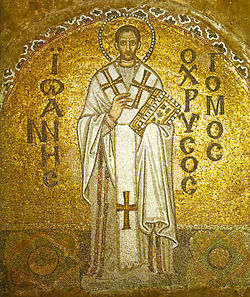
Pastoral Insights From “Golden Mouth”

John Chrysostom was a reluctant pastor. It took him a while to surrender to the call of God on his life to serve as a priest. But once he stepped into that role, his God-given talents were used mightily. He was such an incredible speaker that his sermons often moved his audience to tears or applause. Thus, he was given the nickname “Golden Mouth.”

Here are some great pastoral insights from Golden Mouth which are just as applicable today…

“Thus then must the Priest behave towards those in his charge, as a father would behave to his very young children; and as such are not disturbed either by their insults or their blows, or their lamentations, nor even if they laugh and rejoice with us, do we take much account of it; so should we neither be puffed up by the promises of these persons nor cast down at their censure, when it comes from them unseasonably.”

“Let, therefore, the man who undertakes the strain of teaching never give heed to the good opinion of the outside world, nor be dejected in soul on account of such persons; but laboring at his sermons so that he may please God, (For let this alone be his rule and determination, in discharging this best kind of workmanship, not acclamation, nor good opinions,) if, indeed, he be praised by men, let him not repudiate their applause, and when his hearers do not offer this, let him not seek it, let him not be grieved. For a sufficient consolation in his labors, and one greater than all, is when he is able to be conscious of arranging and ordering his teaching with a view to pleasing God.” 

“For the soul of the Priest ought to be purer than the very sunbeams, in order that the Holy Spirit may not leave him desolate, in order that he may be able to say, ‘Now I live; and yet no longer I, but Christ liveth in me….’ For he has need of far greater purity than they; and whoever has need of greater purity, he too is subject to more pressing temptations than they, which are able to defile him, unless by using constant self-denial and much labor, he renders his soul inaccessible to them.”