Porn-Again Christian (book review)

The title of this book should let you know that it’s a PG-13 topic. And by that, I mean that Dads should be discussing these topics with their sons by the time they are 13 years old. Mark Driscoll is simply brilliant in Porn-Again Christian: A Frank Discussion on Pornography and Masturbation.

The Bible has the best ideas for not only safe sex, but for the most enjoyable sex. In fact, as Pastor Mark points out, the Bible is more explicit on the topic of married sexual relations than most pastors are!

God is the Creator. He only creates what is good. satan is a counterfeiter and a plagiarist. Anything that is good and will bring glory to God (like a marriage that is sexually satisfying), satan will pervert and distort and mar in his attempt to keep people from glorifying God and finding their fullest satisfaction in Him. This book uncovers the lies and calls biblical truth to the forefront.

Porn-Again Christian is written directly to Christian men. It is a wake-up call for these men to become real men and take the biblical lead in maintaining purity, in increasing the level of intimacy in their marriage, and in teaching their children the difference between God’s truth and the devil’s lies.

Guys, there is no excuse for you to not read this book. You can click here to get the ebook version for FREE. The book is not very long, and you should be able to read it rather quickly. Look up the Scriptures Pastor Mark shares in this book, and then be the man God created you to be: the man who will say “No!” to the lies this culture has bought into about sex and pornography, and who will say “Yes!” to the fulfilling, satisfying relationship God intended your marriage to be.

Dads, this would be a great resource for you to use with your teenage son (and perhaps even your pre-teen son, if you deem it necessary).

C’mon men, let’s do it God’s way!

P.S. To whet your appetite for this book, I have shared some quotes that really caught my attention.
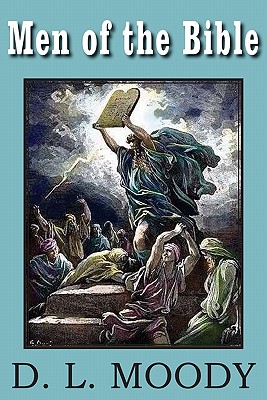
Men Of The Bible (book review)

Here’s the thing I especially like about Dwight Lyman Moody: He tells it like it is. He was not a pastor that tiptoed around an issue, nor did he have long flowery sermons. He always went right to the heart of the manner in such a straightforward way. So I was delighted to find that his book Men Of The Bible was written in this characteristic style.

Men Of The Bible digs into the lives of several men we read about in Scripture. Some of them are prominent, and some are rather obscure; some were godly men, and some were not. But in every instance, Moody gets right to the key points of their lives, and then shows us how to apply them.

Since the focus of the book is the men of the Bible, this would be an excellent resource for a men’s Bible study, or a small group meeting; although I think anyone would benefit from studying this very readable book.

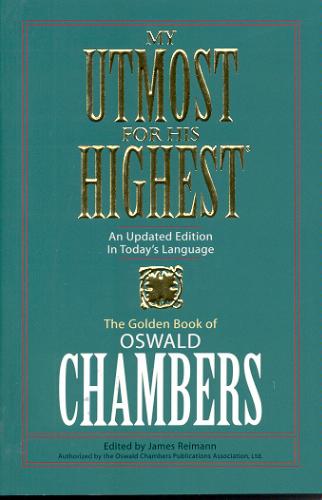
My Utmost For His Highest (book review)

Most people probably think that My Utmost For His Highest is the only book that Oswald Chambers wrote. Although My Utmost is a great devotional book, it should just be a launching pad to read more of his writings.

I am currently in the process of reading through everything Oswald Chamber wrote. And, let me tell you, it’s a lot to take in! This man was so prolific and so anointed, that not only is there much to read, but it has to be read slowly and prayerfully. That’s why I say that My Utmost is such a great starting place.

Each day’s devotional is only a page long. A few of the devotionals appear only in this book, while the remaining come from the thoughts in his many other sermons and writings. So I encourage you to spend a whole year soaking in the thoughts in My Utmost For His Highest, and then allow that to whet your appetite for more of his writings.

This book is definitely on my “must read” list!

Fearless (book review)

I recently read Fearless by Eric Blehm, the story about Adam Brown, who was a SEAL Team 6 operator. It was an amazing story!

The publisher was concerned that since a Navy SEAL was on the front cover, perhaps some church folks (especially pastors) might pass by this book. But let me assure you, this is a completely Christ-centered, God-honoring story. Check out the video review I did for Waterbrook Multnomah —

I am a Multnomah book reviewer.

I Am A Follower (book review)

About a decade ago I was moved into a position of leadership that seemed way too big for me. So to prepare myself, I began to read all of the leadership materials I could find: Bible-based leadership, marketplace leadership, anything I could find that would help me grow as a leader. I thought I was progressing as a leader, until I read I Am A Follower by Leonard Sweet.

Just a few pages into I Am A Follower I read this: “Following is the most underrated form of leadership in existence.” And thus I was confronted by a message that seemed 180-degrees out-of-phase with what I’ve been learning for the past decade.

In pointing time and time and time again to the life of Jesus, Len Sweet makes the case that Jesus is the only Leader, and the rest of us are followers. Jesus showed us perfect leadership by being a perfect Follower. In fact, He is the perfect Follower, as no one has ever followed God as He did. Some of us may follow Christ a little sooner, or a little closer, or a little more persuasively. Those, Dr. Sweet would say, are better called “first followers.”

Dr. Sweet uses phrases like the dance of life, and the transformation of viewpoint. These are not phrases that a leader uses, but they are the paradigm of followers. Check out this quote:

“The cry for leadership is deafening amid our social disintegration, our moral disorientation. We have come to believe that we have a leadership crisis while all along we have been in a drought of discipleship. The Jesus paradox is that only Christians lead by following.” (Leonard Sweet)

This book is a prophetic word: it is calling us back to true biblical-centeredness, true Christ-likeness, true discipleship. This is a book that took me a while to read, and will take me even longer to process. It’s a paradigm-busting game-changer…

…and it’s right on target.

Go get this book today!

I am a Thomas Nelson book reviewer.

Forgotten God (book review)

I grew up in a Pentecostal family (in fact, I’m a third-generation Pentecostal), so talk about the Holy Spirit was almost second nature to me. But even with my background, sometimes it’s easier to have discussions about God the Father or God the Son, than it is God the Spirit. The Holy Spirit has, in many circles, become the “forgotten God.” That’s why Forgotten God: Reversing Our Tragic Neglect of the Holy Spirit by Francis Chan is such a timely book.

“If I were satan and my ultimate goal was to thwart God’s kingdom and purposes, one of my main strategies would be to get churchgoers to ignore the Holy Spirit.” (Francis Chan)

I think part of our forgetfulness is that it’s hard to know where to put the Holy Spirit cognitively. We can understand the concepts of the Father and the Son, but it’s hard to have a mental “place” for the Spirit. And since we can find places for the Father and the Son, we can keep them in their places. But the Holy Spirit doesn’t have a “box,” and so we cannot contain Him.

Nor should we try. But, sadly, far too many people do. Again, Francis Chan writes:

“The reality is that the early church knew less about the Holy Spirit than most of us in the church today, at least in the intellectual sense. But they came to know the Spirit intimately and powerfully as He worked in and through their lives. All throughout the New Testament, we read of the apostles whose lives were led by the Spirit and lived out by His power.”

When I read what happened in the Book of Acts, my cry is always, “Do it again! Do it today!” I believe the Holy Spirit is also desirous of operating in us and through us, just as He did in the First Century Church. The question is: Will we let Him?

Forgotten God is a great introduction course for those curious about Who the Holy Spirit is, or what His role is in our lives today. This book is also a great reminder course for those of us who have grown up with the theology, but perhaps are lacking the full operational force of the Spirit in our lives. In either case, Forgotten God is an eye-opening book.

The Treasure Principle (book review)

One of the knocks I often hear about the church is that we talk too much about money. I don’t feel that’s an accurate assessment, especially considering that Jesus talked about money and possessions more than He did about Heaven and Hell. In The Treasure Principle: Unlocking The Secret Of Joyful Giving, Randy Alcorn shares the keys that Jesus taught about this important topic.

In just the first few pages, Randy sets the stage for this book by stating:

“Why did Jesus put such an emphasis on money and possessions? Because there’s a fundamental connection between our spiritual lives and how we think about and handle money. We may try to divorce our faith and our finances, but God sees them as inseparable.”

The Treasure Principle mixes biblical instruction on handling our money, Randy’s insights into those scriptures, as well as Randy’s own personal experiences with finances. These are all used to support six treasure principle keys.

One of my favorite parts of the book comes at the very end. Randy shares “31 Radical, Liberating Questions To Ask God About Your Giving.” This is where the rubber meets the road (or the principles meet the pocketbook!). This is setup for you to read one question daily for a month, to really allow God to speak to you through His Word and through this book about your financial perspectives and practices. I thoroughly enjoyed the book, and I’m looking forward to continuing my month-long journey through these radical questions.

I am a Multnomah book reviewer.

Why Jesus? (book review)

This is an age of all kinds of “spirituality”: New Age, mysticism, Eastern religions, and on and on. In his typical in-depth style, Ravi Zacharias points out why Jesus trumps them all in his newest book Why Jesus?

The subtitle is “Rediscovering His Truth in an Age of Mass Marketed Spirituality,” and that seems to really hit the mark. Ravi Zacharias takes on some of the biggest mass marketers of spirituality — like Oprah Winfrey and Deepak Chopra — and points out how their mass marketing is really just repackaging of some old, tired religious beliefs. Here’s one passage where Ravi really nails the mass marketers —

The tragedy of a worldview that is based on a blend of metaphysics, physics, spirituality, and medicine is that in the end, it violates those very disciplines to justify self-deification, which is the bottom line.

This is becoming the Absolute rather than communing with the Absolute. When you read Chopra and others of his stripe, you are told that God has a great plan for you. But the more you read Chopra, you realize that God is not visible in anything he has written. Chopra’s conclusion is that you are He… the divine is in you. Ah! But here’s the catch. To convince you of that, he has had to mutilate every other theory that holds to the contrary. How does he do that without seeming disrespectful of others? The bigger trick lies here. First, he takes their texts and strips them of their contexts. Next, he heavily quotes their own “authorities,” as long as they don’t actually believe their own texts. And finally, he dedicates his theory to all who claim to a different belief. This magical formula makes him look irenic and congenial, and then he can grace the talk shows as the ultimate glue that brings all religions together. He has provided spirituality without any absolutes and debunked any contrary claims at the same time. Anyone else may follow his lead and quote other texts out of context, but they dare not quote him out of context, unless they wish to meet him in a court of law. (emphasis mine)

There is something powerful about Jesus. Even the religious leadership immediately following Christ’s ascension told His followers to stop teaching people “in that Name.” There can be lots of gods, but there is only one Jesus.

Why Jesus? Ravi Zacharias points out that He is the One Who singlehandedly debunks every mass marketed “spirituality” being peddled today.

This is a challenging and deeply thought-provoking book, but it is well worth your time.

I am a FaithWords book reviewer.

Amazing Grace In The Life Of William Wilberforce (book review)

If you know anything about the life of William Wilberforce, you may know that he tirelessly worked for the end to slavery in the British Empire. You might think that this singular focus, and uphill battle would make Wilberforce a joyless, serious person. But according to John Piper’s book Amazing Grace In The Life Of William Wilberforce, nothing could be further from the truth.

You might also be familiar with John Piper’s writing about joy-filled Christians (in his classic Desiring God). So it makes sense that Piper would be attracted to the life of a man like Wilberforce. He was one who was described as, “His presence was as fatal to dullness as to immorality. His mirth was as irresistible as the first laughter of childhood.”

John Piper uncovers what made Wilberforce tick. What helped him stay so relentlessly focused on eliminating the slave trade, and remain a joy-filled Christian as well? Piper writes:

“He was a radically God-centered Christian who was a politician. And his true affections for God based on the ‘peculiar doctrines’ of Christianity were the roots of his endurance in the cause of justice.”

This is a great “starter book” for anyone who doesn’t know much about Wilberforce. It’s a quick and easy read. But there is so much more to learn about this amazing man. If nothing else, John Piper’s biopic on this great politician’s life should serve to whet your appetite to learn more about him. It did that for me!

Nurturing The Leader Within Your Child (book review)

I make no attempt to hide my admiration for Dr. Tim Elmore. I read his blog throughout the week, I subscribe to his newsletter, and I find his books right on target. As a parent, I always want to raise my game, and Nurturing The Leader Within Your Child is the perfect resource for me.

Tim’s desire in this book is two-fold: (1) Help parents see the enormous potential in their children, and (2) Help parents see how crucial their role is in releasing that leadership potential. One of his premises is this:

“Children want parents who:

  • communicate their interest in me;
  • express appreciation for each member of our family;
  • structure their lives to spend time together;
  • welcome my friends into our home;
  • answer my questions;
  • are committed to each other;
  • deal with crisis in a positive way;
  • are honest;
  • correct kids when needed, but not in front of friends;
  • don’t argue in front of me;
  • concentrate on strengths instead of weaknesses; and
  • are consistent.”

The concepts Dr. Elmore presents are clear, concise, and simple to implement. But they are not microwaveable concepts; that is to say, you shouldn’t expect an overnight success story. But if you want to see your children discover and tap into the leadership potential resident inside them, you—Mom and Dad—will have to nurture it. If you are ready, this book can help!