The Bare Facts (book review)

The Bare FactsBoth parents and teens should arm themselves with the facts, biblical information, scientific research and solid common sense in Josh McDowell’s book The Bare Facts: 39 Questions Your Parents Hope You Never Ask About Sex.

Let me state it simply: parents, teens, and youth pastors all need to get this book. 

Parents—Don’t wait for someone else to talk to your kids about sex and the strong urges their hormones are generating; take the lead and talk to your kids. This book is written in a question-and-answer format, so it would be an easy conversation starter to ask one of the questions Josh McDowell covers.

Teens—The information you are getting about sex, love, sexually-transmitted disease, and how-far-is-too-far from your peers is most likely wrong. Josh gives you the facts, and you need to arm yourself with truth.

Youth Pastors—You should be teaching this stuff! Will it feel awkward? Maybe. But I bet it’s a lot less awkward to talk to your students about purity than it is to counsel a brokenhearted teen who has become pregnant or contracted a sexually-transmitted disease. The discussion questions at the end of Bare Facts will help you in your 1-on-1 or small group discussion times with the students in your youth group.

What would be even better: Parent and teens and youth pastors reading The Bare Facts together. Get the information on the table and start talking about the truth.

I am a Moody Publishers book reviewer.
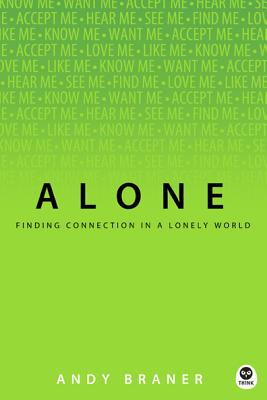
Alone (book review)

AloneIt’s weird to think this way in our highly-connected society, with the status symbol of getting as many friends, followers, and likes as possible, but more and more people feel disconnected and desperately alone. This is a serious subject that Andy Braner hits head-on in his book Alone.

Andy writes, “When people ask me, ‘What’s the biggest problem we can identify in the teenage nation today?’ it’s an easy answer: Teenagers are living all alone! … Even though Facebook gives us the ability to build a convenient corner of lives over the vast Web interface, the light of a computer screen isn’t bright enough to shine deep into our hearts and souls. We need real people. … Although this book is written for just the teen crowd, know that you’re not the only ones struggling.”

I love technology, and I’m very appreciative of the instant access to information and people. But I also know  the double-edged sword of too much technology means an increased connection to screens corresponding with a decreased connection with living human beings. There has got to be a healthy balance, and Andy makes some great suggestions for finding that balance.

I not only encourage teens to read this book, but parents of teens need to read it as well. Whether you read it together or not, find a way to discuss this content. Help your teenagers find healthy, fulfilling connections both through a screen and through face-to-face interactions.

Stopping Words That Hurt (book review)

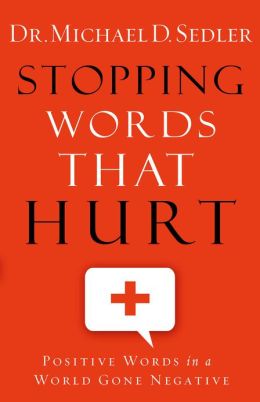
Stopping Words That HurtContrary the nursery rhyme—Sticks and stones may break my bones, but words will never hurt me—we all know that words do hurt! Dr. Michael Sedler addresses this topic in a unique way in Stopping Words That Hurt.

Reading that title you would think that this is a book about controlling your tongue, but we already know we’re supposed to do that, right? So Dr. Sedler takes a different angle and challenges us to control our thoughts and our environment. He shows us how being receptive to the negative words that others are speaking starts a downward cycle in our hearts and minds that leads to us not only receiving but perpetuating negative reports about others.

This book is not “pop psychology,” but is solidly grounded on biblical principles for heading-off negative reports at their source. Stopping Words That Hurt is filled with practical strategies for confronting gossipers, analyzing our own attitudes, and turning negative environments (where gossip flourishes) into positive environments where people are affirmed and built up.

I plan to use the strategies in this book to help the students that attend the youth center I direct to become catalysts for changing the environment in their schools and homes. Although adults can use this information too, I see a very receptive audience in pre-teens and teenagers. Parents, you need to read this book to be able to help your children as well.

I am a Chosen Books book reviewer.

“Whatever It Takes”

As a pastor, I have no greater joy than receiving notes like this! This is from a teenager in our church

Dear Church,

Since I have been here I have thought about how my life was before Christ came into my life for good. He has made some of my prayers come true. Like when my friend let God into her life, so she will no longer feel the way that she felt before that day that she came to church with me.

I love what God has done for me and my friend, and for everybody in the world. For the people that don’t know, I will do whatever it takes to let them know what God has done for the world.

Amen!

May we all do whatever it takes to tell the world about the love of our Savior Jesus Christ!

Wandering In The Wilderness (book review)

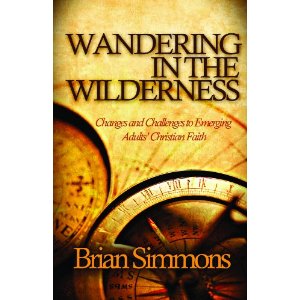
Brian Simmons addresses a vital topic for church leaders and parents: why are emerging adults leaving the church? Wandering In The Wilderness is chock full of timely research and observations that are vital for us to see a healthy future for the church.

Brian is a real boots-on-the-ground author. He works in a college setting and is very involved in the life of his students outside of the classroom. In fact, the prompting to write this book was a conversation with a former student who shared that she felt she was lost and wandering.

Wandering In The Wilderness has a very conversational tone, but it is by no means simply a collection of anecdotal observations from one college professor. On the contrary, the volume of research that is presented in this book is quite impressive. This level of research gives an authoritative tone to the conversation.

As a church leader, I was particularly drawn to the attitudes that emerging adults have about the church and organized religion. I found myself jotting down plenty of notes in the margin. I also have three children of my own who will soon be entering the emerging adult phase of their life, and I found ample information to help me guide them through this important transitional stage in their lives.

Recently I read and reviewed Tim Elmore’s outstanding book Generation iY. That book was a brilliant insight into the thought processes of emerging adults. I would recommend Wandering In The Wilderness as a companion piece, especially for church leaders who want to make sure this generation is well prepared to transition into leadership positions in healthy, growing, vibrant churches.

I am an ACU Press book reviewer.

Generation iY (book review)

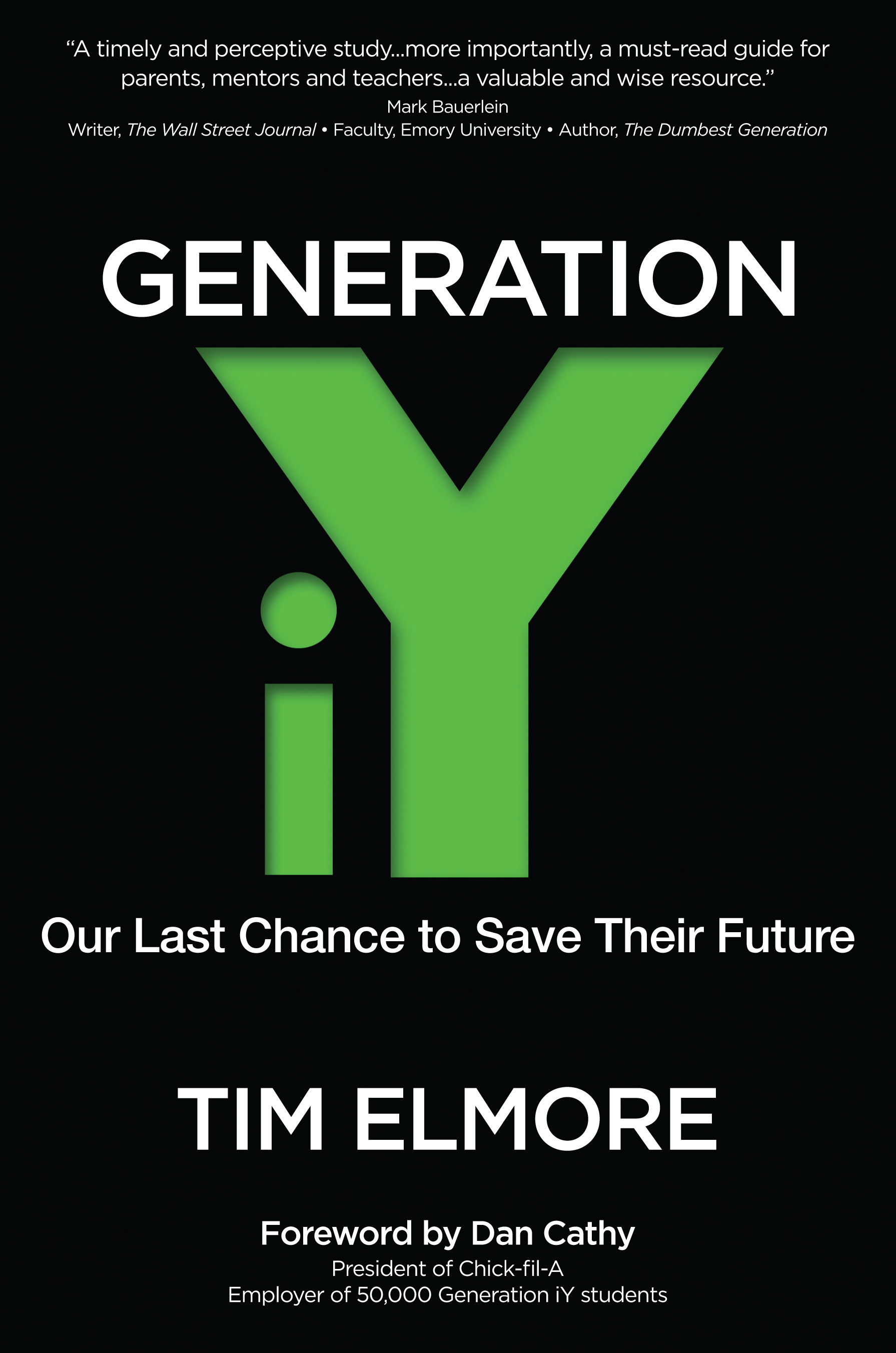
I’m going to make a statement about Dr. Tim Elmore’s book Generation iY that I rarely make: This book is a MUST READ for parents and anyone who works with youth!

Yes, a must read. The subtitle of this book is not over-dramatized, but really is an understated truth: Our last chance to save their future.

People who are parents now mostly fall into either the late Baby Boomer or Generation X classification. Our world is so different now than it was when we were kids. The growth in technology use (the “i-world” that Dr. Elmore illuminates so well) makes this generation unique. If we try to parent our kids or mentor Generation iYers using the same techniques parents have used in previous generations, we will lose this generation.

Tim Elmore knows this generation well. He outlines the paradoxes, the marks of (im)maturity, the reasons for their apparent lack of motivation, the incorrect parenting techniques, and the ineffective teaching methods that characterize Gen iY. But Dr. Elmore doesn’t stop at just pointing out all of these things; he gives clear-cut ways we can capture this generation before it’s too late. I wish this book had been available when I first became a parent of a Gen iYer!

If I haven’t made it clear enough already, let me state it again: Generation iY is a must read! The issues are too complex and the stakes are too high for us to miss our opportunity to save the future of this generation.

I am a Poet Gardener book reviewer.

Do You Speak “Teen-ese”?

I highly respect the work that Dr. Tim Elmore does with teenagers. Since I have two teenagers in my home, one of his latest blog posts about communicating with teens caught my attention. He asked 16- to 24-year-olds their preferred method of communication. Their response:

1. Text messaging

2. Internet (i.e. Facebook.com)

3. iPods and Podcasts

4. Instant messaging

5. Cell phone

6. DVD / CD

7. Books

8. Email

Email is last? Yep! Not only last, but described by one teen as the method for communicating with “old people.”

Ouch!

But as a parent, if I truly want to communicate with my teenagers, I have to learn to speak Teen-ese. It’s selfish of me to try to ask my teenager to communicate the way I’m most comfortable (that would be email, if you hadn’t guessed). If I’m going to get their attention, I need to speak the way they speak.

Paul wrote to the church in Corinth that he did the same thing. He said, “I try to find common ground with everyone.” Paul’s native language—his most comfortable language—would have been speaking to Jews in the synagogue about Christ fulfilling Old Testament law.

But he stretched himself. He learned to speak to non-Jews … to those who knew nothing about the Hebrew Old Testament … to those who worshipped idols … to those who were humanistic philosophers … to soldiers … to slaves … to government officials … to everyone.

Parents, don’t try to make your teenagers talk to you in your comfortable language.

Learn Teen-ese. Make it a goal to understand them, instead of trying to make them understand you. By this, you will show your love and earn their ear.

(Watch for a review on Dr. Elmore’s latest book—Generation iY—coming later this week.)

Benefits In Delaying Sex Until Marriage

It’s nice to see some scientific research on this. In a very encouraging article from WebMD, researchers point out some great benefits of saving sex for marriage.

I encourage you to read the full article. And then, parents, have this conversation with your teenagers… again! You cannot repeat this often enough, because the message is so counter-cultural. In case you don’t have time to read the full article, here are the most important findings:

“Researchers say their findings are clear, that ‘the longer a couple waited to become sexually involved, the better that sexual quality, relationship communication, relationship satisfaction and perceived relationship stability was in marriage.’”

Couples who waited until marriage to have sex:

  • rated sexual quality 15% higher than people who had premarital sex
  • rated relationship stability as 22% higher
  • rated satisfaction with their relationships 20% higher

As a pastor I’ve counseled so many people who have damaged relationships because of pre-marital sex. I’ve had many tell me, “I wish we would have waited until marriage to have sex.” But I’ve never had someone say, “I’m so glad we had sex before we got married!”

Save yourself from the pain, by saving yourself for your spouse.

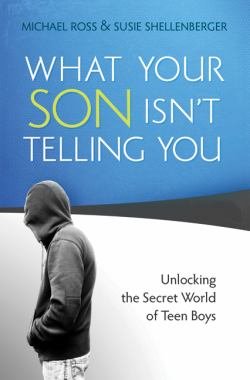
What Your Son Isn’t Telling You (book review)

Here’s a shocker (maybe you should sit down for this one): Boys are different from girls. Gasp! I know any parent who has both a son and a daughter is saying, “Duh!” Here’s the problem though: since girls are typically more verbal, it’s easier to know what’s on their minds. Not so much with boys.

That’s why I so enjoyed What Your Son Isn’t Telling You by Michael Ross and Susie Shellenberger. It’s not what your son is saying, it’s what he isn’t saying that becomes frustrating. Michael and Susie do a great job of demystifying a boy’s brain. From the physiological makeup of the male brain, to the typical coping mechanisms of guys, to the deepest fears and greatest desires that our sons have, this book helps arm Moms and Dads for better communication with their son.

The book is laced with email communications from guys from pre-teen to early-college ages. These first-person insights give real validity to what the authors are teaching. I also appreciated the very easy-to-apply communication tips to help open the door from “isn’t saying” to “saying.”

Although I am blessed to have a great wife who is actively involved with our two sons, I took note of the authors’ advice for single Moms. I was really pleased to see the special attention for a Mom that has to raise a son on her own.

Any parents with sons will appreciate this timely and practical book. I highly recommend it.

I am a Bethany House book reviewer.