Am I A Doer?

This quote from J.C. Ryle has really been working on me…

“Men and women who hear the Gospel regularly, I often fear much for you. I fear lest you become so familiar with the sounds of its doctrines, that insensibly you become dead to its power. I fear lest your religion should sink down into a little vague talk about your own weakness and corruption, and a few sentimental expressions about Christ, while real practical fighting on Christ’s side is altogether neglected. Oh, beware of this state of mind! Be doers of the Word, and not hearers only.”

Holy Spirit, bring Your conviction if my amazement at the Gospel ever slackens. May I always hear the Word gladly, and do the Word quickly.

Thursdays With Oswald—The Mountain & The Valley

This is a weekly series with things I’m reading and pondering from Oswald Chambers. You can read the original seed thought here, or type “Thursdays With Oswald” in the search box to read more entries.

The Mountain And The Valley

    It is a wonderful thing to be on the mountain with God, but a person only gets there so that he may later go down and lift up the demon-possessed people in the valley (see Mark 9:14-18). We are not made for the mountains, for sunrises, or for the other beautiful attractions in life—those are simply intended to be moments of inspiration. We are made for the valley and the ordinary things of life, and that is where we have to prove our stamina and strength. Yet our spiritual selfishness always wants repeated moments on the mountain. We feel that we could talk and live like perfect angels, if we could only stay on the mountaintop. Those times of exaltation are exceptional and they have their meaning in our life with God, but we must beware to prevent our spiritual selfishness from wanting to make them the only time.

     …The moments on the mountaintop are rare moments, and they are meant for something in God’s purpose.

     …The height of the mountaintop is measured by the dismal drudgery of the valley, but it is in the valley that we have to live for the glory of God. We see His glory on the mountain, but we never live for His glory there. It is in the place of humiliation that we find our true worth to God—that is where our faithfulness is revealed.

From My Utmost For His Highest

God gives me mountaintop experiences to prepare me to live for Him in the valley experiences. So I must never doubt in the valley what God revealed to me on the mountain. Even though I walk through the valley of the shadow of death, I will fear no evil, for You are with me.

It is true: it is in the valley that I have to live for the glory of God. Otherwise, my experience on the mountaintop was meaningless.

Get Moving

I noticed the other day how Peter, Andrew, James, John, and Matthew responded when Jesus called them to follow Him. With all of these guys, Jesus simply said, “Follow Me.” Here’s how they responded:

  • At once
  • Immediately
  • Got up and followed

They were all busy with their own lives, working on their agendas for their day. But when they heard Jesus say, “Follow Me,” they got moving.

They didn’t delay.

Make other plans.

Ask someone to take over for them.

They simply got up, left what they were doing, and followed Jesus.

They didn’t explain to their family.

Check in with their friends.

Ask Jesus for clarification.

They just followed. At once. Immediately.

Do I follow Jesus like this?

Do I get moving at once when He calls me?

Do I start immediately when He directs me?

Do I follow without explanation when He prompts me?

I’m working on it! 

How about you?

Thursdays With Oswald—Thinking Or Doing

This is a weekly series with things I’m reading and pondering from Oswald Chambers. You can read the original seed thought here, or type “Thursdays With Oswald” in the search box to read more entries.

Thinking Or Doing

     We perceive Truth by doing the right thing, not by thinking it out.

From Baffled To Fight Better

Oswald Chambers was not anti-thinking; neither am I. But there is a problem when I insist on something making sense to me before I act on it. If God says, “This way,” my first response shouldn’t be, “I’ll think about it.” But it should be, “Yes, I will obey.”

The words of the old hymn ring true:

Trust and obey
For there’s no other way
To be happy in Jesus
But to trust and obey

Do It Quickly

Sometimes when you read about an incredible prophet like Elijah, don’t you think, “I wish God would use me like that?” I mean, why not? Was there something different about him? Even James said in the New Testament that Elijah was “just as human as we are.”

So why could use God use him so powerfully? Why not me?

I think the key is in how quickly Elijah responded when God spoke. Check this out:

Then the word of the Lord came to Elijah…. So he did what the Lord had told him.

Then the word of the Lord came to him: “Go at once to Zarephath….” So he went to Zarephath.

The word of the Lord came to Elijah: “Go present yourself to Ahab….” So Elijah went to present himself to Ahab.

See the pattern? God speaks, and in the very next verse, Elijah acts.

No delays.

No excuses.

No planning.

No extra prayer.

No companions.

Just obedience.

The next time you read your Bible and you hear the word of the Lord speak, act on it immediately.

The next time your pastor speaks the word of the Lord to you on Sunday, put it into action on Monday.

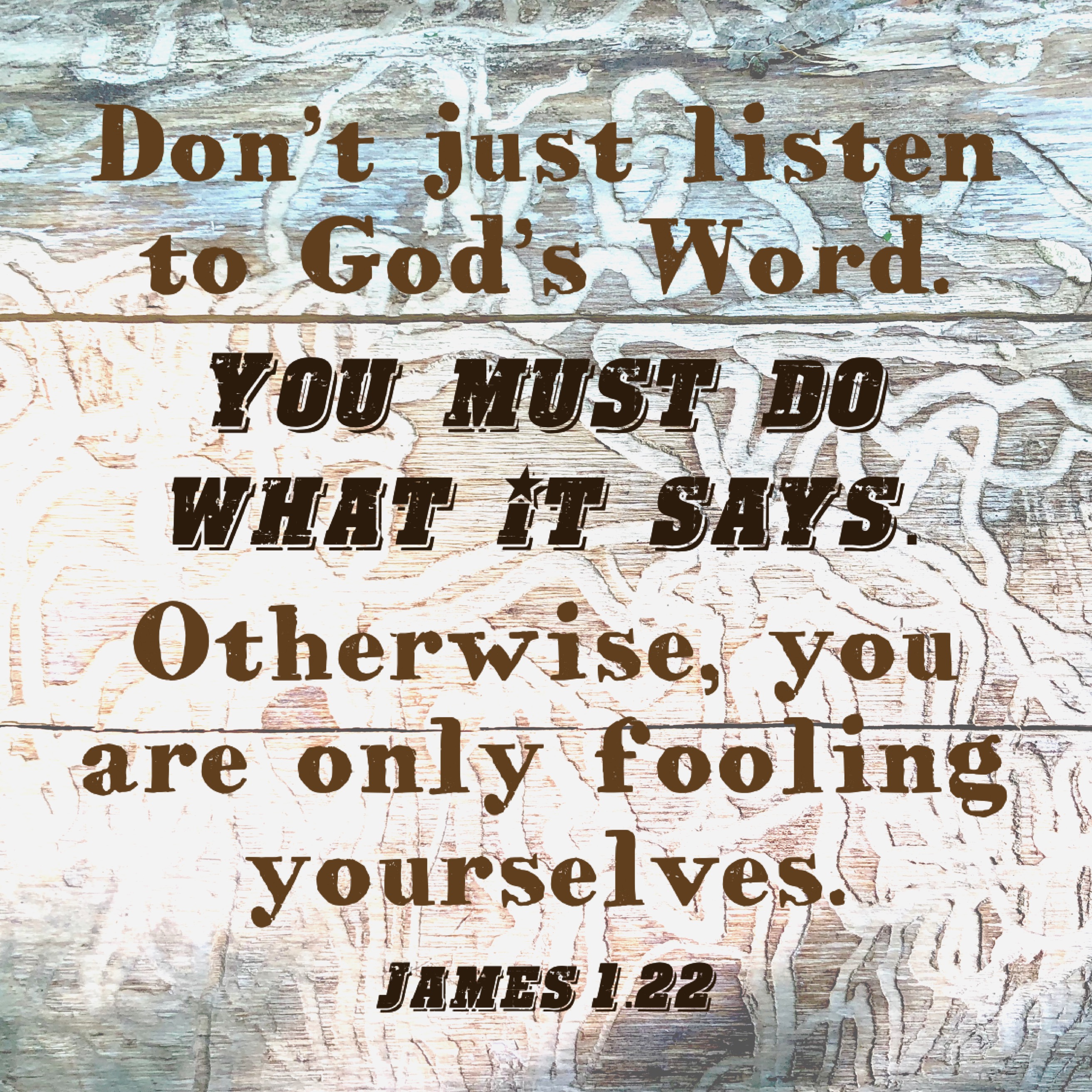
As James also said, let’s not just be hearers of the word of the Lord, let’s be immediate doers of the word.

Do it quickly and watch God begin to work through your life powerfully.

Thursdays With Oswald—Why Should I Do What I Ought To Do?

This is a weekly series with things I’m reading and pondering from Oswald Chambers. You can read the original seed thought here, or type “Thursdays With Oswald” in the search box to read more entries.

Why Should I Do What I Ought To Do?

      We imagine that if we obey authority we limit ourselves, whereas obedience to authority is not a limitation but a source of power; by obeying we are more. Naturally we are built to command, not to obey; man was originally constituted by God to have dominion—“And God said, Let Us make man in Our image, after Our likeness: and let them have dominion…” (Genesis 1:26 ); consequently there is the natural desire to want to explain things, because everything we can explain we can command. Spiritually, we are built not to command, but to obey. Always beware of the tendency to want to have things explained; you may take it as an invariable law that when you demand an explanation in connection with a moral problem it means you are evading obedience.

From Biblical Ethics

“God, if You will just tell me why I have to do this, then I’ll do it” doesn’t work. I simply must trust and obey.

Brave Enough

If God asks me to give $1, I can quickly and easily say, “Yes!”

If God asks me to give $10, I say, “Okay!”

If God asks me to give $100, I say, “Um, well, if You say so.”

If God asks me to give $1000, I say, “I need to pray about this ‘faith promise.’”

If God asks me to give $10,000, I say, “As soon as You bless me, I’ll be able to do this.”

This same principle holds true for anything else:

  • Used clothing? Sure. Brand new stuff? I’m not so sure.
  • Volunteer an hour? Okay! Make a commitment for an hour every week? Let me pray about it.
  • Pray for someone? No problem. Add them to my daily prayer list? Whoa!
  • Support missionaries? Yes! Become a missionary? Well….

It’s easy to obey when we think the stakes are low. But the more “zeroes” that get added to the amount, the higher the stakes seem. Am I brave enough to obey then?

This is what tripped up Saul, Israel’s first king. He was supposed to devote everything from the defeated Amalekites to God. “Devote” means a complete and irrevocable giving to God. When the stakes were low, he obeyed, but when he perceived the stakes being too high, he lost the courage to follow through:

Saul and his men spared Agag’s life and kept the best of the sheep and goats, the cattle, the fat calves, and the lambs—everything, in fact, that appealed to them. They destroyed only what was worthless or of poor quality. (1 Samuel 15:9 NLT)

He captured Agag, king of Amalek, alive. Everyone else was killed under the terms of the holy ban. Saul and the army made an exception for Agag, and for the choice sheep and cattle. They didn’t include them under the terms of the holy ban. But all the rest, which nobody wanted anyway, they destroyed as decreed by the holy ban. (1 Samuel 15:9, The Message)

Ironically, because Saul held on to what he thought was valuable, he lost something invaluable: a close relationship with God. His cowardice led to disobedience, and his disobedience led to his ultimate collapse.

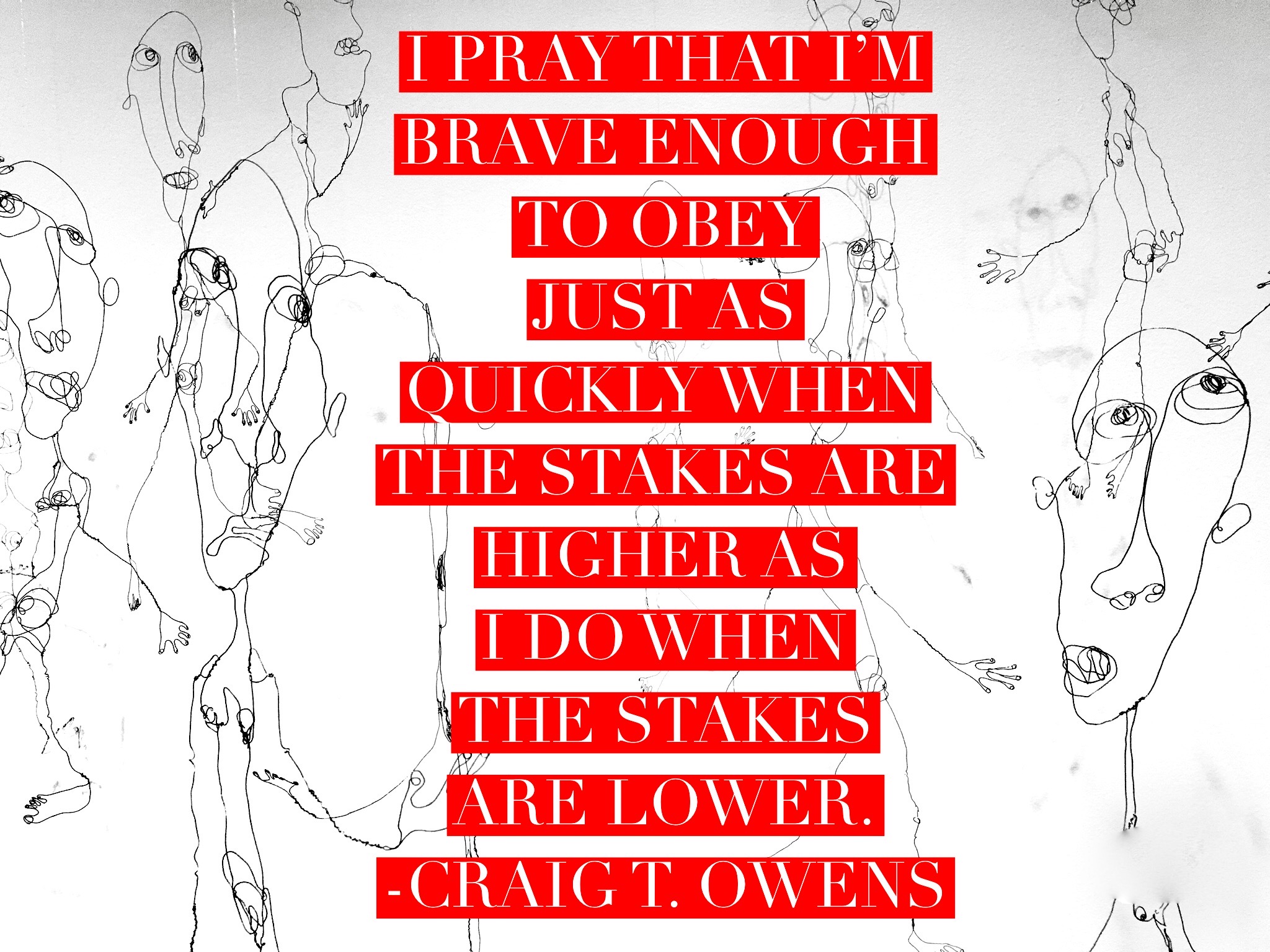
I pray that I’m brave enough to obey just as quickly when the stakes are higher as I do when the stakes are lower.

What about you? Are you brave enough?

Says Who?

The book of Joshua is full of military campaigns, but there are two battles that are given significant “ink”—where we get an insight into the strategy, the battle itself, and the final outcome. They are the first two battles: Jericho and Ai.

They both ultimately ended in total victory for the Israelites, but the path to victory was starkly different.

Length

  • Jericho: a week-long campaign
  • Ai: a 3-day campaign

Strategy

  • Jericho: the Israelites surrounded the city
  • Ai: the Israelites made a direct frontal assault, followed by a feint and a rear ambush

Casualties

  • Jericho: 0
  • Ai: 36

I believe the difference can be traced to the planning stage:

Planning

  • Jericho: the Lord said to Joshua…
  • Ai: when the spies returned to Joshua, they said

I know that someone will say, “Hold on, Craig! It was Achan’s sin that caused the initial defeat at Ai.” And I wouldn’t disagree with you. But perhaps if Joshua had heard from the Lord before attacking Ai, God would have told him about Achan’s sin.

NO OTHER CASUALTIES are mentioned in the entire book! Thirty-six people died because Joshua listened to other men instead of God.

So that leads me to ask… Who am I listening to? Who are you listening to?

Be Careful

In the final instructions before the Israelites were going to enter the Promised Land, the book of Deuteronomy uses the phrase be careful fifteen (15) times:

  • Be careful not to forget
  • Be careful to obey
  • Be careful to avoid making idols
  • Be careful to honor your leadership
  • Be careful of your thoughts

In the dictionary careful is defined as being attentive to potential danger, error, or harm. It implies paying special attention to accuracy and being discerning.

God doesn’t ask this of me to cramp my style but to put me in a place where He can bless me. And not just me: being careful leads to generational blessings. Here’s my favorite be careful verse:

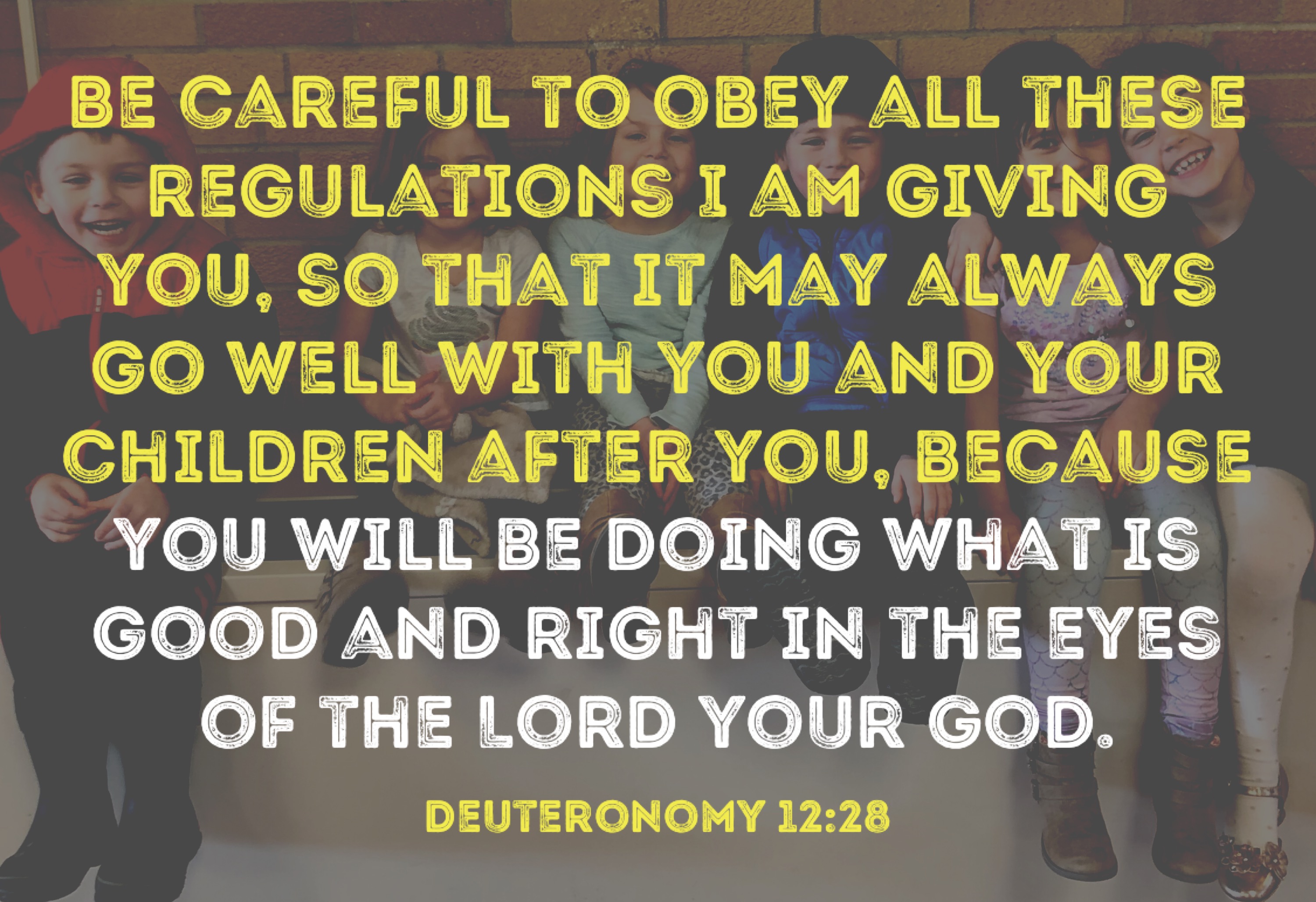
Be careful to obey all these regulations I am giving you today, so that it may always go well with you and your children after you, because you will be doing what is good and right in the eyes of the Lord your God.

Sometimes to be careful we have to slow down. We seem to want everything quickly and with as little effort as possible. Remember the cliché “Haste makes waste”?

What if you slowed down a bit today?

What if you took just a little time to be attentive to potential danger?

What if you paused long enough to discern if you were giving your best to God?

What if you took a moment to simply ask God to give you the wisdom needed to make a godly decision?

Being careful so that it may ALWAYS go well with you and your children after you….

Isn’t that worth it?

‘Nuff Said

“What does the Lord your God ask of you but to…

  • revere Him,
  • walk in obedience in all His ways,
  • love Him,
  • serve Him with all your heart and soul, and
  • observe His commands…

for your own good!” (Deuteronomy 10:12-13)

‘Nuff said!