


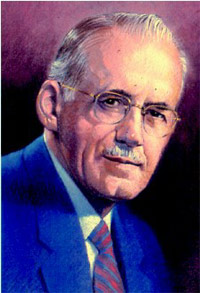
 “To pray successfully is the first lesson the preacher must learn if he is to preach fruitfully; yet prayer is the hardest thing he will ever be called upon to do and, being human, it is the one act he will be tempted to do less frequently than any other. He must set his heart to conquer by prayer, and that will mean that he must first conquer his own flesh, for it is the flesh that hinders prayer always. Almost anything associated with the ministry may be learned with an average amount of intelligent application. It is not hard to preach or manage church affairs or pay a social call; weddings and funerals may be conducted smoothly with a little help from Emily Post and the Minister’s Manual. Sermon making can be learned as easily as shoemaking—introduction, conclusion and all. And so with the whole work of the ministry as it is carried on in the average church today. But prayer—that is another matter. There Mrs. Post is helpless and the Minister’s Manual can offer no assistance. There the lonely man of God must wrestle it out alone, sometimes in fasting and tears and weariness untold. There every man must be an original, for true prayer cannot be imitated nor can it be learned from someone else.” —A.W. Tozer
Pray To Preach Fruitfully
April 25, 2014 — Craig T. OwensHospitality
April 6, 2014 — Craig T. Owens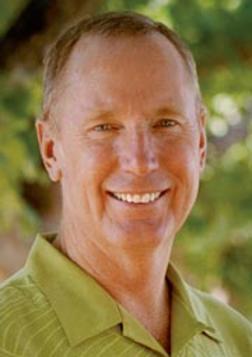 Some folks have asked me to post the Max Lucado quotes on hospitality that I shared this morning.
“Something holy happens around a dinner table that will never happen in a sanctuary. In a church auditorium you see the backs of heads. Around the table you see the expressions on faces. In the auditorium one person speaks; around the table everyone has a voice. Church services are on the clock. Around the table there is time to talk. Hospitality opens the door to uncommon community.” —Max Lucado
“If we wait until everything is perfect, we’ll never issue an invitation. Remember this: what is common to you is a banquet to someone else. You think your house is small, but to the lonely heart, it is a castle. You think the living room is a mess, but to the person whose life is a mess, your house is a sanctuary. You think the meal is simple, but to those who eat alone every night, pork and beans on paper plates tastes like filet mignon.” —Max Lucado
11 Quotes From “Alone”
August 6, 2013 — Craig T. Owens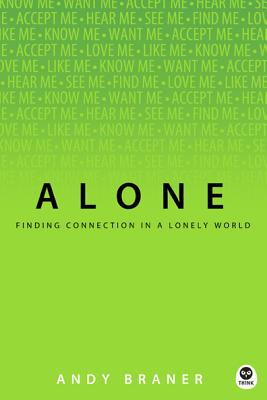 Alone should be read and discussed by parents and teens to help find the right balance of technology usage in our lives. You can read my book review by clicking here. Below are some of the quotes that stood out to me from Alone.
“Maybe God created Adam to be needy. … Maybe Adam’s relationship with God was not built in fullness but contained a hole God created inside of humanity so we might recognize the importance of each other. It was (and is) brilliant.”
“Friendship has to be accompanied by experience. … The illusion of friendship is making everyone in the world think we’re perfect. … Instead of time spent experiencing life together, we’ve turned our world into a self-shaped, self-regulated, self-indulgent, me-centered life.”
“We are now a culture that wants to deal with relationships on our time. … Relationships are work. They’re inconvenient. They’re exciting and spontaneous. You can’t apply some formula for relationships and expect to walk out of the room with a load of friends.”
“When you realize what role you have to play here on the planet, the most beautiful sense of belonging begins to awaken inside your soul. The world begins making sense. No matter what you’re doing, if God has gifted you in it, you’re going to have a high level of functioning.”
“Don’t get me wrong: Hard work and dedication are important factors as we help people understand significance, but in the end, our short lives are shaped by the relationships we make along our own journey. And if those relationships are filled with people who believe in us, the lonely factor fades away and we are recognized for the abilities we do have rather than the ones we don’t. Paul said it clearly: ‘I remind you to fan into flame the gift of God, which is in you through the laying on of my hands’ (2 Timothy 1:6). What can you do to fan someone else’s flame? Who in your life fans yours?”
“Maybe it’s because we’ve replaced the idea of risk and adventure with the idea of wealth and comfort. Loneliness begins to creep into a man’s life when adventure and risk are taken out of the equation, when men have to replace their God-given desires with something ‘more responsible.’ … Men need to sense that what they are doing in the world is courageous. They need to feel the sense of responsibility and freedom. They need to have opportunities to express their manhood.”
“There is no perfect girlfriend. There is no perfect employee. There is no perfect friend. There is no perfect body type or student or athlete. There’s no such thing as a perfect woman who finds the perfect role for her perfect situation. Those who continue to assign a high value to that mythical person who has it all together are driving themselves mad with the idea that they can achieve her. It’s from this feeling of failure, of never measuring up, that the loneliness sets in.”
“The first step in understanding true joy is defining what joy actually is. It’s a feeling. It’s an emotion. It’s a state of mind. It’s the ability to know that the desires of your heart are being fulfilled. It’s not happiness. It’s not the constant state of euphoria. It’s not everything lining up perfectly. … In modern times, joy happens when we interact with each other. When we see a friend’s smile giving us validation that he or she is interested in being with us: joy. When we hear the words ‘How are you?’ in an honest tone, with honest body language behind it: joy. When we have an opportunity to rest in the fact that someone else wants us to be the person God created us to be: ultimate joy.”
“The quickest way to initiate friendship is to give people freedom to be themselves.”
“‘Oh, you did sooo well in your game,’ she said, walking past, rolling her eyes. Versus … ‘I can’t believe you! You’re the most awesome basketball player I’ve ever seen,’ she said, putting her arm around her friend in celebration. See the difference? Authentic versus agenda-driven. Caring for someone versus using someone. When a tribe is built … When experience glues relationships together … When you can rest in the joy that certain relationship gives you … Loneliness starts to fade away. But you can’t do that on Facebook.”
“If we can take the value of the social networking scene and combine it with real-time relationships, we might see this trend of loneliness take a positive direction. What would life look like if we could really experience life together? Community is important. To be able to contribute to the life of the community is even more fulfilling.”
Alone (book review)
August 6, 2013 — Craig T. OwensIt’s weird to think this way in our highly-connected society, with the status symbol of getting as many friends, followers, and likes as possible, but more and more people feel disconnected and desperately alone. This is a serious subject that Andy Braner hits head-on in his book Alone.
Andy writes, “When people ask me, ‘What’s the biggest problem we can identify in the teenage nation today?’ it’s an easy answer: Teenagers are living all alone! … Even though Facebook gives us the ability to build a convenient corner of lives over the vast Web interface, the light of a computer screen isn’t bright enough to shine deep into our hearts and souls. We need real people. … Although this book is written for just the teen crowd, know that you’re not the only ones struggling.”
I love technology, and I’m very appreciative of the instant access to information and people. But I also know the double-edged sword of too much technology means an increased connection to screens corresponding with a decreased connection with living human beings. There has got to be a healthy balance, and Andy makes some great suggestions for finding that balance.
I not only encourage teens to read this book, but parents of teens need to read it as well. Whether you read it together or not, find a way to discuss this content. Help your teenagers find healthy, fulfilling connections both through a screen and through face-to-face interactions.
Finding Purpose Beyond Our Pain (book review)
January 11, 2010 — Craig T. Owens I’ve been a fan of Dr. Paul Meier for quite some time, and his latest book—co-authored with Dr. David Henderson—kept me cheering. Finding Purpose Beyond Our Pain explores seven areas that prompt some of the deepest soul-searching and some of the stickiest questions that humans face.
There are a couple of things I admire about Drs. Meier and Henderson. One is their understanding that humans are a tri-part being: body, soul, and spirit. Those that try to bring help for the deep pain that we all experience by addressing just one area are missing the mark. There is physical pain, emotional pain, and spiritual pain.
I’ve often found that humanists who just want to address the physical and emotional symptoms, but ignore the spiritual symptoms, offer only short-sighted answers. On the other extreme, some in the church world want to offer spiritual solutions for everything, and completely ignore the physical and emotional causes. Either extreme is unhelpful to someone who is hurting. Drs. Meier and Henderson do an excellent job addressing all three areas.
The other thing I’ve always appreciated about Dr. Meier, and now his new coauthor as well, is his accessible writing style. In other words, although these are incredibly well-educated men, they write in a way that everyone can understand. And more importantly, their writing style allows for ready application.
This book is divided into seven sections of four chapters each. Each section diagnosis an area of pain, looks at the causes, explores the possible responses, and ultimately uncovers the purpose beyond the pain. In every section, the physical, emotional, and spiritual dimensions are addressed. These sections cover the most common pain-filled struggles we all face:
- Injustice
- Rejection
- Loneliness
- Loss
- Discipline
- Failure
- Death
As a pastor, I have to deal with people who are experiencing past or present pain quite frequently. This book has enlightened me in some biblically-rooted, practical ways I can point to the purpose beyond their pain. But even if you are not a pastor or counselor, this book will be a great resource to have on your shelf. Whether you have lingering questions about the pain you have experienced, or you simply want to be ready to help a friend or loved one who may be battling one of these areas, you will appreciate Finding Purpose Beyond Our Pain.
I am a book review blogger for Thomas Nelson.
My most-viewed posts


 Craig T. Owens