Real Raw Emotions

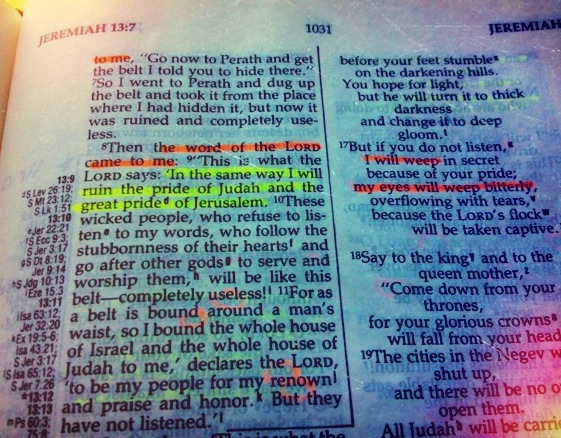
This week I’ve been writing about my favorite book—the Bible—and why I find it so fascinating. Yesterday I talked about how the Bible helps me mentally. But we are not just mental creatures, we are emotional, too, and I have found my Bible to be an excellent way to express some of my deepest, rawest emotions.

(If you would like to read the other parts of this series, they are here, here, here, and here.)

Humans are created in God’s image, and God expresses emotion. In fact, God expresses emotion more deeply and purely than we humans can His sorrow is more bitter, His love is more intense, His jealousy is more pure.

Emotion is expressed throughout the Bible, but I’m particularly attracted to the emotional responses in the Psalms. These are prayers and songs which express the deepest emotions of angry, loving, hurting people. A few examples—

You know what I long for, Lord; You hear my every sigh. (Psalm 38:9 NLT)

Be merciful to me, O God, for men hotly pursue me; all day long they press their attack. My slanderers pursue me all day long; many are attacking me in their pride. (Psalm 56:1-2 NIV)

God, smash my enemies’ teeth to bits, leave them toothless tigers. Let their lives be buckets of water spilled, all that’s left, a damp stain in the sand. Let them be trampled grass worn smooth by the traffic. Let them dissolve into snail slime, be a miscarried fetus that never sees sunlight. Before what they cook up is half-done, God, throw it out with the garbage! (Psalm 58:6-9 The Message)

O my God, my life is cast down upon me and I find the burden more than I can bear…. (Psalm 42:6 AMP)

My God, my God, why have You forsaken me? Why are You so far from saving me, so far from the words of my groaning? O my God, I cry out by day, but You do not answer, by night, and am not silent…. I am poured out like water, and all my bones are out of joint. My heart has turned to wax; it has melted away within me. My strength is dried up like a potsherd, and my tongue sticks to the roof of my mouth…. Dogs have surrounded me; a band of evil men has encircled me, they have pierced my hands and my feet. …But you, O Lord, be not far off; O my Strength, come quickly to help me. (Psalm 22:1-2, 14-16, 19 NIV)

Jesus came to earth as fully God and fully man, able to experience the deepest, rawest emotions of anyone. “He was despised and rejected—a man of sorrows, acquainted with deepest grief” (Isaiah 53:3). Jesus knows what you feel because He felt it, too: “For we do not have a High Priest Who is unable to understand and sympathize and have a shared feeling with our weaknesses and infirmities and liability to the assaults of temptation” (Hebrews 4:15). As a result, “He lives forever to intercede with God on [our] behalf (Hebrews 7:25).

Don’t ever be afraid to express your rawest emotions in God’s presence—He knows profoundly what you are feeling. When you are struggling with deep emotion, the Bible knows how to speak your heart’s cry to God.

Old And Valuable

During my freshman year of college, I was placed as a roommate with another freshman who was a theology major. Just so we’re all clear about this: theology is the study of God. And just so we’re all crystal clear about this: the study of God is typically based on the Bible.

I can hear some of you now, “Duh! Great insight!” But hang with me for a moment.

Near the start of our first semester together my roommate came into our dorm room very upset, slammed the door shut, and threw down his backpack. When I asked what was the matter he told me he had just come from a meeting with his academic advisor and was furious at his list of required classes. When I inquired what class he wasn’t allowed to take, he said, “No, it’s not what class I can’t take; it’s what classes I have to take!”

“So what classes are you upset that you have to take?” I asked, thinking maybe something like science or phys ed.

“Old Testament,” he responded. I was speechless, but he continued, “I mean, Old Testament! C’mon, that was stuff from a long time ago. We live under the new covenant now, so the old covenant has no purpose for us anymore!”

Although this is somewhat shocking to hear from a theology major, I’m afraid a lot of people feel this way.

Did you know…

  • The Old Testament (OT) is directly quoted by the New Testament (NT) writers nearly 700 times.
  • There are thousands of references to OT people, events, or principles in the NT.
  • Of the 27 books in the NT, only six don’t have direct OT quotations. But four of those six books refer back to OT people or passages.
  • Of the 39 books in the OT, all but nine of them are quoted in the NT.
  • Jesus Himself quoted from the five books of Moses (Genesis, Exodus, Leviticus, Numbers, Deuteronomy) nearly 60 times.

I love the Old Testament! There I read some great stories and meet some very colorful personalities. But I especially love reading the OT to see what was going to happen and then reading the NT to see both what did happen and what’s still going to happen.

Those 39 books of the Old Testament may be old, but they’re so rich, and so valuable, and so enlightening to the New Testament. If you haven’t made the OT a part of your Bible reading time, I encourage you to do so.

The Old Testament is not old, as in worn out, archaic, useless. It’s old, as in priceless, valuable, foundational.

Say What?

I know that you had a very important conversation yesterday. And I also know that you are going to have an extremely important conversation again today. The question is not if you had the conversation, it’s whether or not you heard the conversation clearly?

The most important conversation you will have today is the ongoing conversation you will have all day long with yourself.

But are you clearly listening to what you are saying to yourself?

I was helping Betsy grade some papers from her fourth-grade students and I noticed something consistently appearing on one of her student’s papers. This student performs well academically, and Betsy says her behavior in the classroom is “angelic.” So I don’t think it’s coincidental that this young lady talks to herself positively all day long. On her papers she writes notes to herself like “You R The Best” and “I rock!”

The way you speak to yourself matters.

The way you speak to yourself determines your attitude.

The way you speak to yourself will determine how you treat others.

Jesus said it this way, “Love the Lord your God with all your heart and with all your soul and with all your mind and with all your strength. …[And] love your neighbor as yourself” (Mark 12:30-31).

The way you love yourself determines how you love others.

The way you speak to yourself determines your performance. Dr. James Hardy of the University of Wales says, “Athletes who talk to themselves in a positive way perform better. Thinking good thoughts isn’t enough you have to say them, either muttered or out loud.”

Some of you may be saying some really harsh things to yourself. Some of the things you say to yourself would earn someone else a smack in the mouth if they said the same thing to you.

Listen to what you are saying to yourself! Stop beating yourself up!

Maybe like Betsy’s student, you might even have to write yourself a note or two to remind yourself how valuable you are. You are one-of-a-kind—there’s never been anyone like you before, no one is like you now, and no one will duplicate you in the future.

Make sure that’s the message that’s getting through loud and clear today.

Anti-Sudoku Theology

I really enjoy Sudoku. It’s a challenging game of logic, and I’m (for the most part) a logical guy. I like knowing exactly where the digits one through nine are supposed to go, using logical deduction and inference to fill in all of the squares.

If I had my choice, all of life would be this logical. Simple. Neat. Well-defined. Clear. Easy. But, much to my dismay, it’s not.

If I’m following the example and teaching of Jesus, life with Him is anything but logical. Think about some of the paradoxes Jesus Christ taught and lived—

  • To advance, be humbled.
  • To have more, give away more.
  • To possess everything, desire nothing.
  • To connect with people (social), spend time alone with God (solitude).
  • To bring people in, go out.
  • To be a leader, be a servant.
  • To fill up with God, empty yourself of yourself.
  • To come first, come last.
  • To gain wisdom, become foolish.
  • To gain strength, become weak.
  • To live, die.

A.W. Tozer wrote about a godly man: “He has accepted God’s estimate of his own life. He knows he is as weak and helpless as God has declared him to be, but paradoxically, he knows at the same time that he is in the sight of God of more importance than angels. In himself, nothing; in God, everything.”

It isn’t logical, but it’s true: God loves me. And the greatest of all paradoxes: when I was the least worthy of God’s love, that’s when Jesus came to die for my sins.

God’s love for me—the greatest of paradoxes—helps me live these paradoxes Jesus taught. And His love will help you, too.

What other biblical paradoxes have you discovered?

More Today?

I have shared before how I often wake up with a particular song on my mind. This morning it was a 1969 classic that I added to my iPod a few weeks ago: “More Today Than Yesterday” by The Spiral Starecase. (Go ahead and listen to the song while you read on.)

So as I was attempting to wake up Betsy, I sang part of the chorus to her. “I love you more today than yesterday. But not as much as tomorrow.” Which got me thinking: How do I do this?

Betsy and I have been “an item” for 8,935 days. I thought I loved her tons yesterday, so how do I love her more today than yesterday? Let me take a couple of cues from the song:

“I’ll be spending time with you”—the greater the quantity of time I spend with her the more likely I’ll have quality time with her.

“Everyday’s a new day in love with you”—love keeps no record of wrongs. If I’m holding grudges against her or beating myself up over mistakes I made, I’m keeping a record. Forgiveness is the key to wiping the slate clean so I can love her more today than yesterday.

“With each day comes a new way of loving you”—there’s a reason why the apostle Paul talks about “growing up” in the great love chapter of 1 Corinthians 13. My love should be maturing and growing up every day. So today I should be able to love Betsy in a more mature way.

“I thank the Lord for love like ours that grows ever stronger”—as my relationship with Jesus becomes more intimate I will learn how to love Betsy more today than yesterday. As C.S. Lewis put it, “When I have learned to love God better than my earthly dearest, I shall love my earthly dearest better than I do now.”

What special relationships do you have? Do you love that earthly dearest more today than yesterday? With quality time, forgiveness, maturity, and a closer relationship with Jesus, you can truly love that special someone more today than yesterday. Give it a try!

Every day’s a new day, every time I love you.

Every way’s a new way, every time I love you!

A Healthy Breakfast

Listen to the podcast of this post by clicking on the player below, and you can also subscribe on AppleSpotify, or Audible.

Health experts say breakfast is the most important meal of the day. Your body has been without food (or fasting) during the hours you are asleep, so in the morning you are breaking your fast = break-fast.

Do you want to lose weight? Eat breakfast. Studies show that those who do best on their diets eat breakfast every morning.

Do you want to fire up your metabolism to burn more calories during the day? Eat breakfast. The way you stoke your body’s engine in the morning determines how it will run all day.

Do you want to maintain a stable blood sugar level so you don’t get sleepy mid-morning? Eat breakfast. A good breakfast regulates your insulin and blood sugar levels.

Do you want to learn more? Eat breakfast. Studies show those who eat breakfast regularly have longer attention spans and greater learning capacities.

What you put in your body in the morning determines the course of the rest of your day.

What you put in your mind in the morning determines the course of the rest of your day, too.

Even if you’re not a “morning person” your mind is highly receptive in the hours right after you wake up. So a healthy mental breakfast goes a long way toward how you will deal with the situations that face you throughout your day.

Just a few things to consider—

  • What’s on your wake-up playlist in the morning? Not-so-cheery headline news? Coarse radio hosts with crude humor? Music with lyrics that are not very uplifting? A harsh buzzer? Perhaps you could rethink your morning mental breakfast with something more positive and affirming.
  • How do you speak to yourself when you wake up? “Ugh, I just gotta get through today”? “I need a vacation”? “Grrr, I hate my job”? Try thinking instead of all of the blessings you have: a roof over your head, a bed of your own, clothes to wear, a family to love, and a family that loves you.
  • How do you speak to others when you wake up? “Leave me alone”? “<Grrrr!>”? Maybe you could serve others the good mental breakfast they need with some kind, encouraging words.
  • What fuel do you put in your mind? Talking heads on the morning TV shows? Your horoscope? Perhaps switching to something more substantial would help fuel your mind for the challenges you are going to face today.

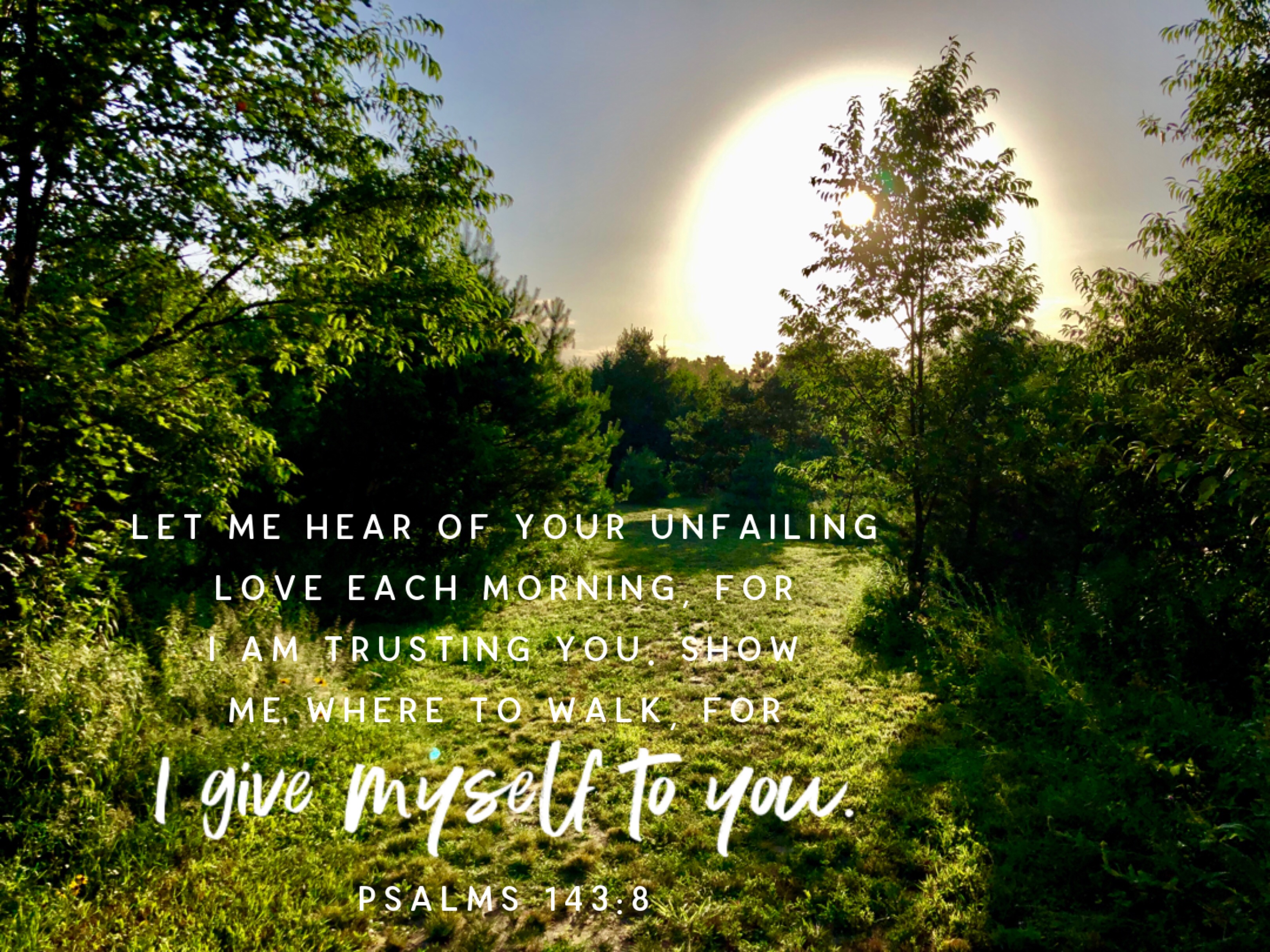
The psalmist David had a God-diet each morning, “Let me hear of Your unfailing love each morning, for I am trusting You. Show me where to walk, for I give myself to You” (Psalm 143:8, The Living Bible).

Jesus had a healthy mental breakfast, too: “Very early in the morning, while it was still dark, Jesus got up, left the house and went off to a solitary place, where He prayed” (Mark 1:35).

So let me ask you: What’s your morning mental breakfast like? do you need to make a diet change? I think a few tweaks and you will begin to see some remarkable changes for the better! Try it out and let me know.

►► Would you please prayerfully consider supporting this ministry? My Patreon supporters get behind-the-scenes access to exclusive materials. ◀︎◀︎

More Than Okay

Most mornings when I wake up there is a song echoing in my mind. This morning it was Switchfoot’s song “More Than Fine” (lyrics here).

Lately, I’ve been noticing some clichés in our culture that are survival-oriented—

  • “I’m just trying to make a living.”
  • “Another day, another dollar.”
  • “Ugh, another Monday!”
  • “I just need to make it until the weekend.”
  • “If we can just survive today.”
  • “How are you?” “I’m fine… okay, I guess.”

I suppose for some, this is how they view life. But this should never be the mindset for followers of Jesus Christ.

Jesus didn’t die on a Cross for us, conquer death and rise again so we could have an okay life. He came to give us overflowing life. Of all people, those who are in a personal relationship with Jesus should be the most more-than-okay people of anyone!

You prepare a feast for me in the presence of my enemies. You honor me by anointing my head with oil. My cup overflows with blessings. (Psalm 23:5 NLT)

The thief comes only in order to steal and kill and destroy. I came that they may have and enjoy life, and have it in abundance (to the full, till it overflows). (John 10:10 AMP)

Because of the sacrifice of the Messiah, His blood poured out on the altar of the Cross, we’re a free people—free of penalties and punishments chalked up by all our misdeeds. And not just barely free, either. Abundantly free! (Ephesians 1:7-8 MSG)

Now to Him who is able to do immeasurably more than all we ask or imagine, according to His power that is at work within us, to Him be glory in the church and in Christ Jesus throughout all generations, for ever and ever! Amen. (Ephesians 3:20-21 NIV)

Today is the only today you will ever get. You don’t have to just survive today, you don’t have to just make it through this day, you don’t have to settle for just okay. You can live for more than okay today, you can experience God’s abundance, and you can revel in the overflowing life Jesus’ resurrection purchased for you!

What Jesus Didn’t Say

All throughout the first four books of the New Testament—Matthew, Mark, Luke, and John—there are lots of “red letters” (words spoken by Jesus). But as each of these gospel writers begins to recount the arrest and sham trial of Jesus, I’m struck by how many “black letters” there are. This fulfilled an Old Testament prophesy—

He was oppressed and treated harshly, yet He never said a word. He was led like a lamb to the slaughter. And as a sheep is silent before the shearers, He did not open His mouth (Isaiah 53:7).

The chief priests and the Sanhedrin brought out a string of witnesses to falsely accuse Jesus, but even then these witnesses couldn’t get their stories to jive, so Jesus remained silent. In exasperation the chief priest Caiaphas lashed out at Jesus, “Aren’t You going to answer these charges? Don’t You hear what they’re saying about You? Why won’t You defend Yourself?”

So here’s how Jesus responded to His accusers: But Jesus remained silent (Matthew 26:63). His silence resonated louder than any words could have!

How could Jesus do this? How could He stand silently when all of these nasty things were being said about Him?

He looked back—”…He had done no violence, nor was any deceit in His mouth…” (Isaiah 53:9). All four Gospels record Jesus saying, “You heard Me speaking in public all the time. My life has been on display for You. If I had said or done anything wrong, you could have arrested Me earlier, but the facts are: I haven’t said or done anything sinful.”

He looked forward—”…Because of the joy awaiting Him, He endured the Cross, disregarding its shame…” (Hebrews 12:2). He knew that one wrong word could undo all of the good words which He previously spoke, so He looked forward to the joy that would come after this was over.

I just went through a period of my life where people threw incredibly hurtful lies at me, but what was that compared to the horrific abuse heaped upon Jesus? If He could remain silent, how much more should I?

While I was in the midst of this difficult time, a prayerful friend handed me a notecard which I have kept close to me. Perhaps these words will be helpful to you, too—

May kindness be the response in you
where such a response is not expected.
May gentleness have the power
to overrule an offense and the power to heal. (David Teems)

May this Good Friday be a time of reflection in what Jesus didn’t say. And may I, along with you, learn this power of silence when falsely accused.

Shining Like Stars

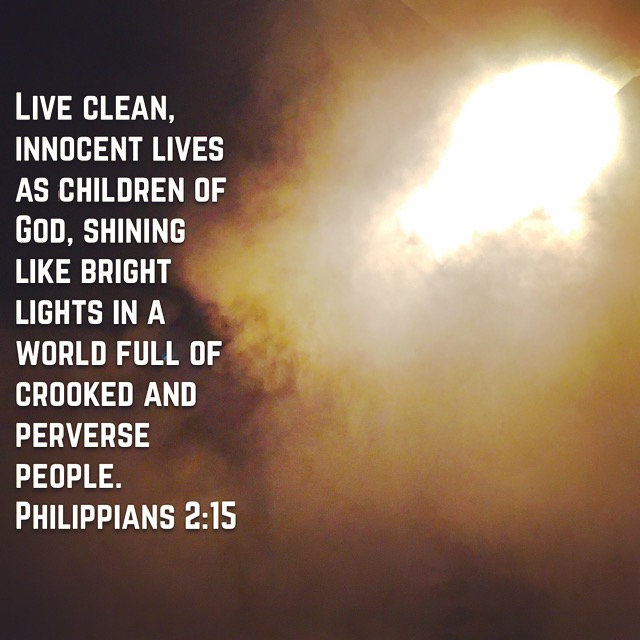
Do everything without complaining and arguing, so that no one can criticize you. Live clean, innocent lives as children of God, shining like bright stars in a world full of crooked and perverse people. (Philippians 2:14-15)

Those who follow Jesus are supposed to be different.

The word holy means different; it means “set apart from everything else for a special purpose.” But holy shouldn’t be a repelling different, but a winsome, appealing, attractive different. Instead, our holy lives should shine like bright stars.

When we first had kids, people began to talk to Betsy and me about where our kids would go to school, and their first assumption was that we would send them to a “Christian” school. But we felt differently about this. We have been called by Jesus to let our light shine before men that they may see our good deeds and praise our Father in heaven. So our desire is that our kids may let their light shine in their public schools.

While I am grateful for the A’s and B’s on all of their third-quarter report cards, there are other statements on my kids’ report cards that make me even prouder—

  • “You are a pleasure to have in class.”
  • “I am so blessed to have him in class.”
  • “You have proven yourself to be a responsible, respectful, and hard working student.”
  • “She does a fantastic job of helping out other students in class.”
  • “He is extremely respectful towards others and a pleasure to have in class!”
  • “He is always willing to lend a helping hand to others if needed.”
  • “You are a joy to be around, and I look forward to your smile every morning!”

These comments reflect lifestyles that are different—a winsome, appealing, attractive different.

This light shining out from our kids has opened the door for us to share our faith in Jesus with both teachers and students. In fact, my daughter has been able to lead one of her classmates to faith in Christ, and she and her family are now attending our church!

My kids challenge me to do everything in a way that shines. I want to be different … I want to shine … I want to live in a way that attracts others to Jesus Christ. What about you?

Choice Four-Letter Words

Listen to the podcast of this post by clicking on the player below, and you can also subscribe on AppleSpotify, or Audible.

Have you ever been “cursed out” by someone? I mean had a stream of four-letter obscenities hurled at you? What happens inside you? Isn’t your natural reaction to strike back? To begin to a counter-attack with a few choice four-letter words of your own?

It’s natural to feel this way; it’s a very human response.

On the other hand, have you ever been “blessed out” by someone? Had someone shower you with niceties and accolades and compliments? What happens inside you this time? Isn’t your natural reaction the complete opposite? Don’t you want to say, “Well, I think you’re pretty special, too”?

It’s natural to feel this way; it’s a very human response.

But Jesus commanded us to do something counter-cultural, something which requires a spiritual response: “Bless those who curse you” (Luke 6:28). Paul amplified this thought: “Bless those who persecute you; bless and do not curse” (Romans 12:14).

These words curse and bless are challenging for me. Curse means to hope for someone’s downfall; bless means to say good words to or about someone. Cursing can be done internally or verbally; blessing has to be done verbally. Eugene Peterson captures the essence of this in his paraphrase of Romans 12:14: “Bless your enemies; no cursing under your breath.”

If my natural response is to match curse for curse, obscenity for obscenity, then to respond in a Christ-like fashion is going to take a change of character. To respond with the right four-letter words, I have to do the opposite of my natural response.

In the Old Testament, the Hebrew word for bless carried the understanding that it all hinged on God—He is the focal point. All of the definitions of this word involve a close relationship with God: (a) bless God; (b) bless men in the name of God; (c) ask for divine favor for persons or things created by God; or (d) salute someone because we know God has saluted us.

In the New Testament, the Greek word for bless makes it clear that this has to be done verbally, out loud. It is impossible to bless under your breath. In the Greek, bless is the compound word eulogeo = eu- (good) + –logos (words): saying good words out loud.

Only God is good, so only a closer relationship with our good God will help us say good words to others. Especially to those who curse us.

The right four-letter words to use—the un-natural words to use—are: Good words.

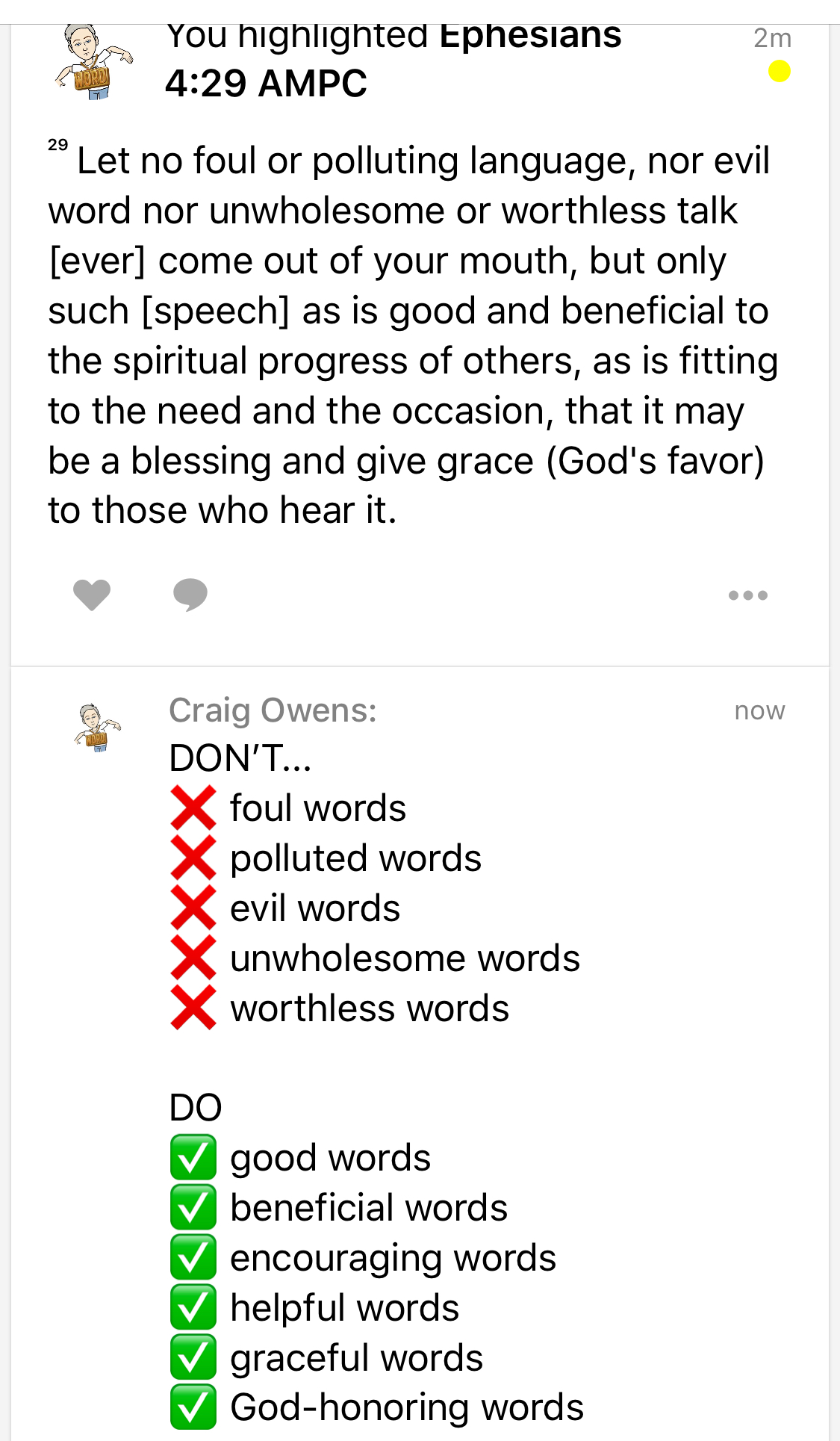
I’m challenging myself today to bless others, especially those who curse me. I only want to say good to and about others today. I’m attempting to live out Ephesians 4:29—

  • Do not let any unwholesome talk come out of your mouths, but only what is helpful for building others up (New International Version)
  • Let no foul or polluting language, nor evil word nor unwholesome or worthless talk ever come out of your mouth, but only such speech as is good and beneficial to the spiritual progress of others (Amplified Bible)
  • Watch the way you talk. Let nothing foul or dirty come out of your mouth. Say only what helps, each word a gift (The Message)
  • When you talk, do not say harmful things, but say what people need—words that will help others become stronger (New Century Version).

So let me ask you: How will you say the right four-letter words to others today?

►► Would you please prayerfully consider supporting this ministry? My Patreon supporters get behind-the-scenes access to exclusive materials. ◀︎◀︎