Hmmm

Feats of thinking may create reputation, but habits of thinking create character. —A.W. Tozer

If this is true, then I’ve got some questions to ask myself:

  • How do I think?
  • How am I processing the world around me?
  • Do I see the hand of God in daily events?
  • Can I find His truth at work?
  • Am I learning from what I experience each day?
  • Do I think positively or negatively?
  • Do difficulties cause faith or fear?
  • Am I thinking long enough?
  • Do my thoughts produce a Christ-like attitude?
  • Do I take time to think about my thoughts?

Two more thinking quotes for today:

Life consists of what a man is thinking about all day. —Ralph Waldo Emerson

Summing it all up, friends, I’d say you’ll do best by filling your minds and meditating on things true, noble, reputable, authentic, compelling, gracious—the best, not the worst; the beautiful, not the ugly; things to praise, not things to curse.Philippians 4:8

I Am What I Think I Am

Years ago I read a book that transformed the way I read and studied. This one book probably caused me to become a more discriminating reader than any other factor. Although it’s less than 50 pages long, As A Man Thinketh by James Allen revolutionized my thinking. Over the last couple of days, I’ve been listening to the audiobook as I have been driving around.

Here’s a quote from James Allen:

A man is literally what he thinks, his character being the complete sum of all his thoughts. … A noble and Godlike character is not a thing of favor or chance, but is the natural result of continued effort in right thinking, the effect of long-cherished association with Godlike thoughts.”

This is what the Bible says about the seeds of great thoughts:

“Finally, brethren, whatever things are true, whatever things are noble, whatever things are just, whatever things are pure, whatever things are lovely, whatever things are of good report, if there is any virtue and if there is anything praiseworthy—meditate on these things.”

What are you thinking about today? What’s going in? You are making yourself by what you are thinking, so choose those thought-stimulators wisely.

Doing Thinking Doing

To think or to act? That is the question. Or maybe the question should be, which comes first: the thinking or the acting? Do I think about something and then go do it? Or do I do something first and then think about what I’ve done and how I could do it better next time?

The answer, I believe, is yes.

You could be the most creative thinker in the world, your thoughts could be off on another plane, but if you do nothing with what you’re thinking, all of those great insights are wasted.

On the other hand, many people hold to the axiom that experience is the best teacher, so they just do and do and do. But experience is not the teacher; we only learn when we stop to think about what we’ve done.

William Wilberforce was already a rising star in British politics when he experienced a deeper understanding of his relationship to God. Suddenly this man of word and action wanted to do nothing more than meditate on the greatness of God. Wilberforce believed that he could best serve God by withdrawing from society and simply thinking about God.

His good friend and future prime minister William Pitt disagreed. Pitt wrote to Wilberforce, “Why then this preparation of solitude which can hardly avoid tincturing the mind either with melancholy or superstition? … Surely the principles as well as the practice of Christianity are simple and lead not to meditation but to action.” Or as the line from Amazing Grace has it, “We humbly suggest you can do both.”

I love Oswald Chambers’ counsel—

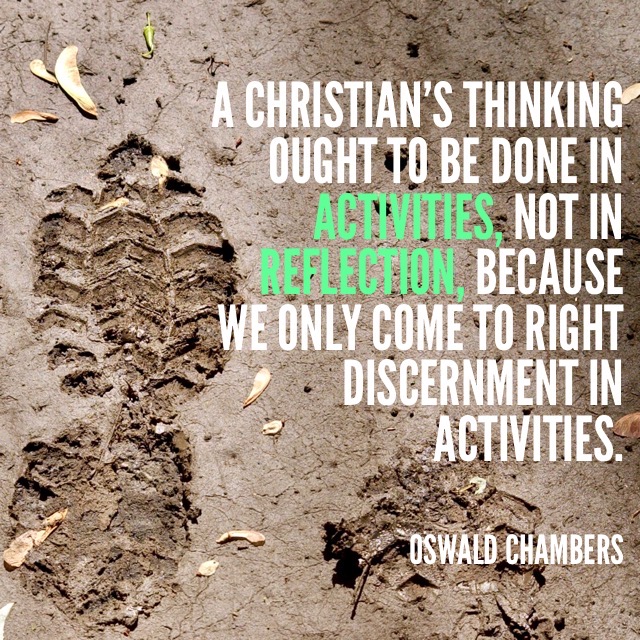
“God will never allow us to divide our lives into sacred and secular, into study and activity. We generally think of a student as one who shuts himself up and studies in a reflective way, but that is never revealed in God’s book. A Christian’s thinking ought to be done in activities, not in reflection, because we only come to right discernment in activities.”

Whether it starts with thinking or starts with action, successful thinking-doing must include both. Think about it → act on it → think about your results → do it again better than last time.

Paul wrote to the Romans how thinking and action work together when he said, “for their own conscience and thoughts either accuse them or tell them they are doing right” (Romans 2:5 NLT). The Amplified Bible renders this phrase, “their consciences (sense of right and wrong) also bear witness; and their decisions (their arguments of reason, their condemning or approving thoughts) will accuse or perhaps defend and excuse them.”

Think about it → do it → think about it → do it = the pattern for success.

Get Your Mind Out Of That Rut!

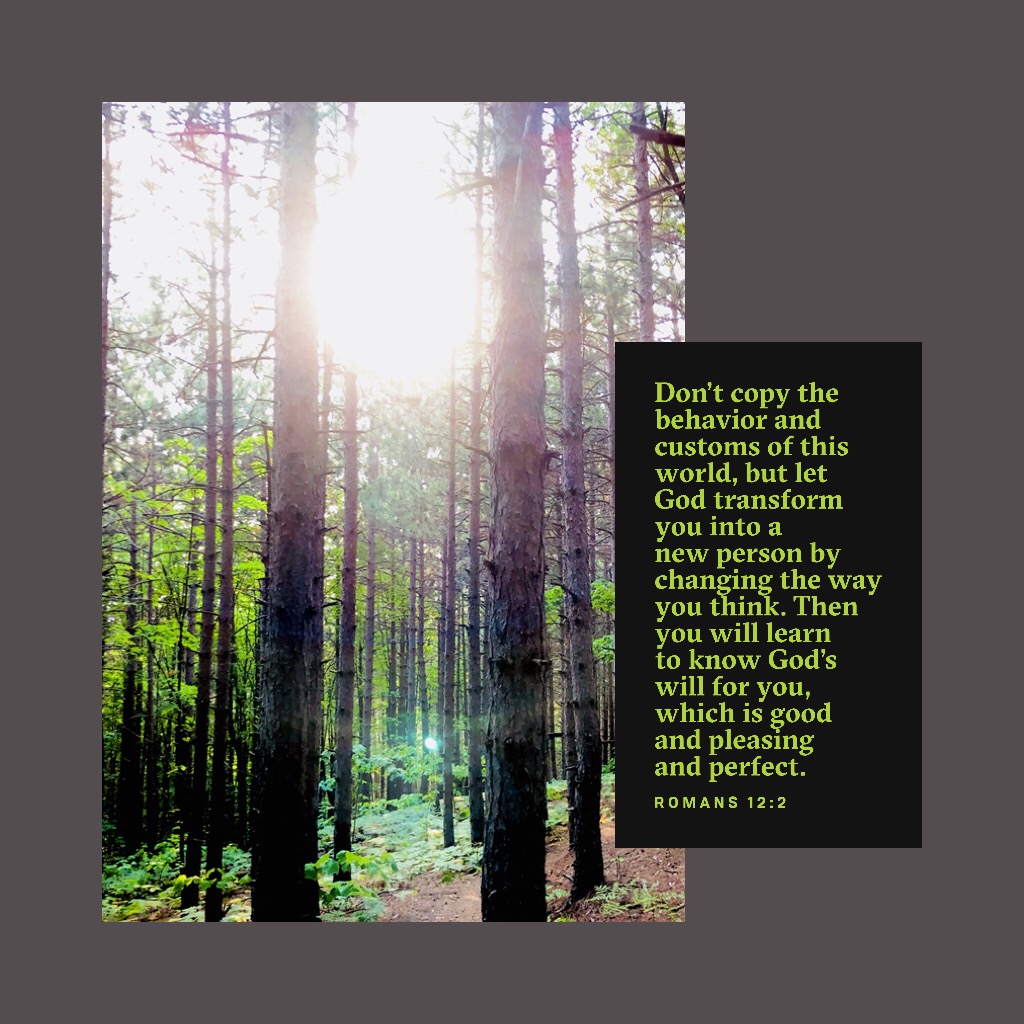
“Don’t become so well-adjusted to your culture that you fit into it without even thinking.” —Apostle Paul (Romans 12:2, The Message)

It’s important to think about your thinking—to analyze why certain thoughts are swirling through your mind. But after you identify unhealthy thoughts, you need some creative thinking to be able to move your life in a new direction. This requires a whole new set of thinking skills that are called critical thinking.

Stephen Brooking described it this way, “Critical thinkers are continually exploring new ways of thinking about their lives…. Critical thinking is complex and frequently perplexing, since it requires the suspension of belief and the jettisoning of assumptions previously accepted without question.”

  • What have you accepted without question?
  • What have you become so well-adjusted to that you simply accept it?
  • Are there things you do just because it’s always been done that way?
  • Are there some things that you won’t try because it’s never been done that way?

Two warning signs in your thinking are always and never. With the exception of God, everything changes. So when you start thinking in terms of always and never you are essentially saying, “Nothing changes. And I’ve got everything figured out.” This is mind-in-the-rut thinking!

You’ve probably heard this before but it is valuable enough to be repeated—If you always do what you’ve always done you’ll always get what you always got.

If you need a change in your life, start with a change in your thinking. Ask God to help you think in new ways. In talking to His people about what He had done for them in the past God said it was time to think in creative ways—

But forget all that—it is nothing compared to what I am going to do. For I am about to do something new. See, I have already begun! Do you not see it? I will make a pathway through the wilderness. I will create rivers in the dry wasteland. (Isaiah 43:18-19 NLT)

Don’t let your thinking stay stuck in a rut. Allow God to help you jettison the old ways of thinking and expand your horizons. God will give you greater creativity if you ask Him.