Links & Quotes

Quite frequently God’s measurement of success is nothing like our measurements. “More” doesn’t always mean success. Check out this example which I unpack in my book Shepherd Leadership. And be sure to check out all of my videos on my YouTube channel.

Living in the Great Lakes state my whole life, I have always been fascinated by the huge bodies of water which surround us—they are almost like mini-oceans. As a result, there have been nearly 600 shipwrecks on our lakes. Check out the history of these wrecks here.

A mini-biography of Robbie Risner, one of our nation’s most decorated pilots in the Korean and Vietnam wars.

In spite of what some skeptics claim, Christianity is not anti-science. In fact, J. Warner Wallace lays out the evidence that shows that Christ-followers have fueled the major scientific advancements of history.

“Always be a first-rate version of yourself, instead of a second-rate version of somebody else.” —Judy Garland

Isaac Newton said, “Atheism is so senseless. When I look at the solar system, I see the earth at the right distance from the sun to receive the proper amounts of heat and light. This did not happen by chance. … This most beautiful system of the sun, planets, and comets, could only proceed from the counsel and dominion of an intelligent and powerful Being.” Check out the amazing symmetries in our solar system that Copernicus, Kepler, and Newton all identified. 

“The truth is the kindest thing we can give folks in the end.” —Harriet Beecher Stowe

Links & Quotes

link quote

Here are the links to some interesting reading I found this weekend.

“The Holy Spirit does not belong to you. Are you charismatic? He is bigger than your signs and wonders event. Are you Reformed? He will not be limited by your theology.” —R.T. Kendall

“The worst thing that can happen to a man is to succeed before he is ready.” —Martyn Lloyd-Jones

Where is the outrage in the American mainstream media?! Kidnapped School Girls In Nigeria Sold As Child Brides.

It’s funny that many secularists believe that Christian myths about Jesus evolved over time until they were written down generations later. This is the thesis in Bart Ehrman’s latest book. It’s not accurate. It’s funny because there are things believed by some of the same secularists that actually are myths that evolved over time to create the impression that Christianity is a science stopper and anti-intellectual. One of these myths is about the scientific revolution that was purportedly initiated by Copernicus and the supposed subsequent opposition from the church to his heliocentric theories.” Read more of this eye-opening post: Copernicus And The Scientific Revolution.

Disney’s Peter Rummell shares how the Imagineers keep the great ideas coming.

“The State exists simply to promote and to protect the ordinary happiness of human beings in this life. A husband and wife chatting over a fire, a couple of friends having a game of darts in a pub, a man reading a book in his own room or digging in his own garden— that is what the State is there for. And unless they are helping to increase and prolong and protect such moments, all the laws, parliaments, armies, courts, police, economics, etc., are simply a waste of time.” —C.S. Lewis

“When sin is pardoned, our greatest sorrow is ended, and our truest pleasure begins. Such is the joy which the Lord bestows upon His reconciled ones, that it overflows and fills all nature with delight. The material world has latent music in it, and a renewed heart knows how to bring it out and make it vocal.” —Charles Spurgeon

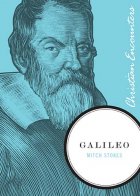
Galileo (book review)

You can quickly spot the influential people throughout history: they typically only need one name to distinguish them from all others. And Mitch Stokes does a masterful job showing why this noted scientist/mathematician/philosopher deserves the one-name designation in Galileo.

The first thing that stood out to me was how Galileo “found his way.” As the son of a musician, the field of science was never on his horizon. In fact, the start of his university career was in medicine. But as he quickly showed no aptitude nor passion for these pursuits, it was refreshing to see how his father let Galileo explore other areas of study to find his niche.

The next thing that amazed me was how Galileo’s new study and future employment in mathematics quickly evolved and expanded into areas such as philosophy, and later in life, astronomy and cosmology. Although Galileo is known today for his studies of the heavens through his improved telescope, those discoveries were only pursued to bolster his mathematic hypotheses.

Then it was amazing to see how deftly Galileo handled himself when he foresaw that his new discoveries that supported Copernicus’ claims of a heliocentric universe would upset those in the Catholic Church. Galileo said and wrote often that he was not trying to make new theology or correct old theology, but was simply trying to show how the Bible and science fit together. It was really the politically-minded (and Inquisition-minded) Cardinals in the Church that stirred up trouble for Galileo, but never the other way around.

Galileo demonstrated so beautifully through his observations and careful mathematic theorems how God had created an orderly and wonderfully-made universe. He believed that scientists had the responsibility to use their skills of observation and calculation to show how God and science are companions and not adversaries.

This is a part of Thomas Nelson’s Christian Encounters Series, and I not only highly recommend this book, but I’m looking forward to reading others in the series as well.

I am a Thomas Nelson book reviewer.