The Sovereign Lord has given me His words of wisdom, so that I know how to comfort the weary. Morning by morning He wakens me and opens my understanding to His will. … Because the Sovereign Lord helps me, I will not be disgraced. Therefore, I have set my face like a stone, determined to do His will. And I know that I will not be put to shame. (Isaiah 50:4, 7 NLT)
Listen to the podcast of this post by clicking on the player below, and you can also subscribe on Apple, Spotify, or Audible.
We’re up to Psalm 131. After this step, only three more steps to go until we reach the top! We’re almost there. We started in a dark valley surrounded by enemies that wanted to keep us in the valley, but we persevered, we matured, and now the end it almost in sight!
Notice that David wrote this Song of Ascent, and I think he may have had a particular instance from his history in mind when he did.
At the height of David’s success, the Bible says that, “David knew that the LORD had established him as king over Israel and that his kingdom had been highly exalted for the sake of His people Israel” (1 Chronicles 14:2). So David used his position to do something very noble: return the ark of the covenant of the Lord to Jerusalem. This was a popular decision that “seemed right to all the people” (13:3).
But it turned out disastrously!
One of the priests overseeing the transportation of the ark of the covenant was killed, and as a result David became angry at God and fearful of Him.
After a cooling off time, David humbled himself. He admitted that he hadn’t “inquired of the Lord” before undertaking this task and then he looked to the Scriptures to find out how to move the ark the correct way (15:12-15).
It’s quite possible David had this incident in mind when he wrote the Song of Ascent for people coming to worship God in the temple where the ark of the covenant of the Lord would be housed.
The opening words sound the tone of humility—“my heart is not proud” and “my eyes are not haughty.” I think in the context of this opening verse of Psalm 131, pride can be defined as:
trying to handle things on my own
concerning myself with things outside my control
That means that humility is trusting that God is in total control.
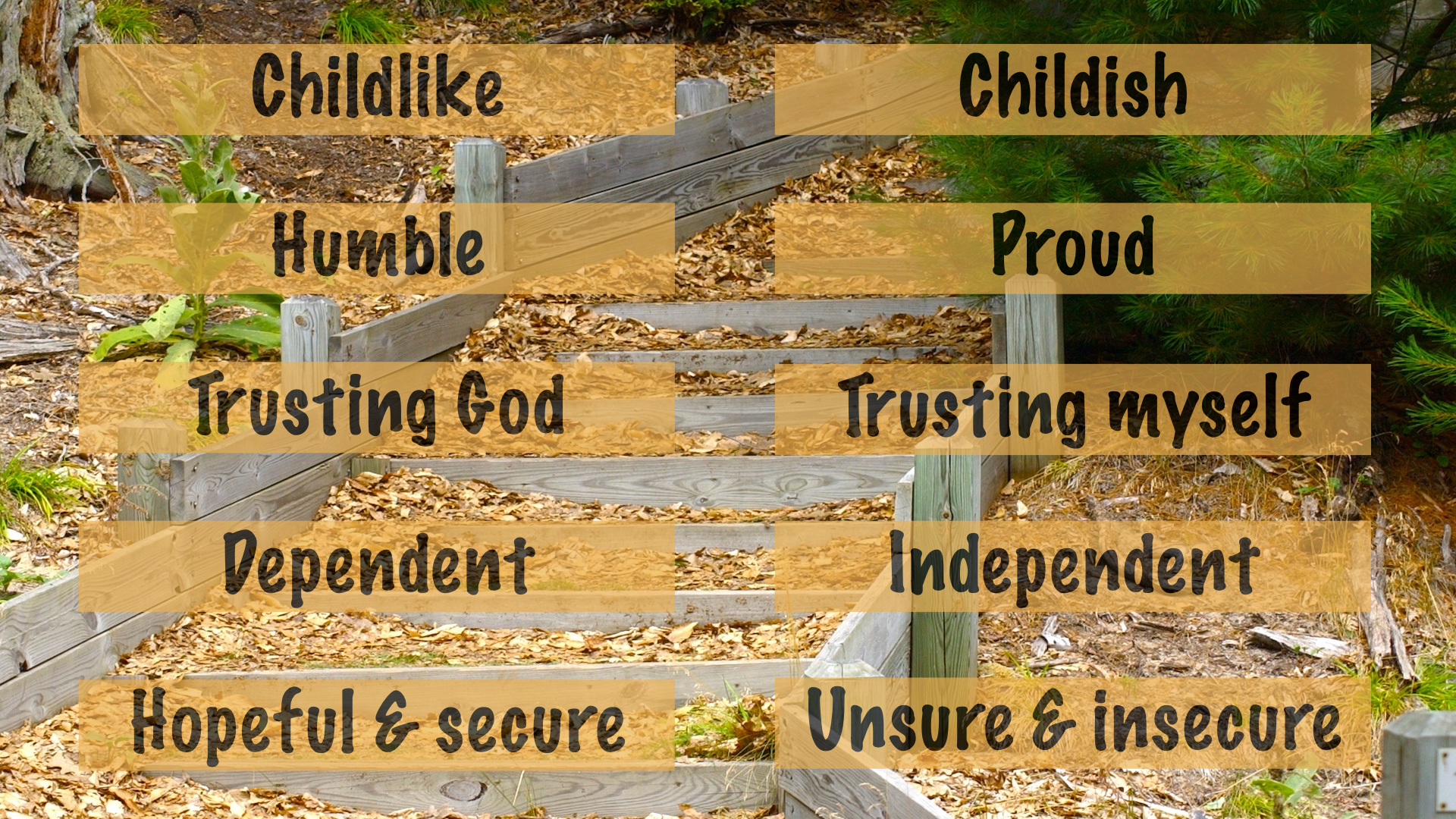
Verse 2 starts with an important word: But. Instead of the fretting of pride, David chooses the trusting of childlike humility. David says that he has “stilled and quieted my soul.” He has chosen childlike humility.
This is exactly what Jesus told us: “Truly I tell you, unless you change and become like little children, you will never enter the kingdom of heaven.Therefore, whoever takes the lowly position of this child is the greatest in the kingdom of heaven” (Matthew 18:3-4).
The consistent message throughout Scripture—from Creation in Genesis 1 until the realization of our eternal reward in Heaven in Revelation 22—is childlike trust in our Heavenly Father.
We can trust God to handle…
…every care—1 Peter 5:7
…every step—Proverbs 3:5-6
…every reward—Luke 12:32
Don’t let pride cause you to stumble in the homestretch. The closer we get to the end of the journey, the more childlike we should become.



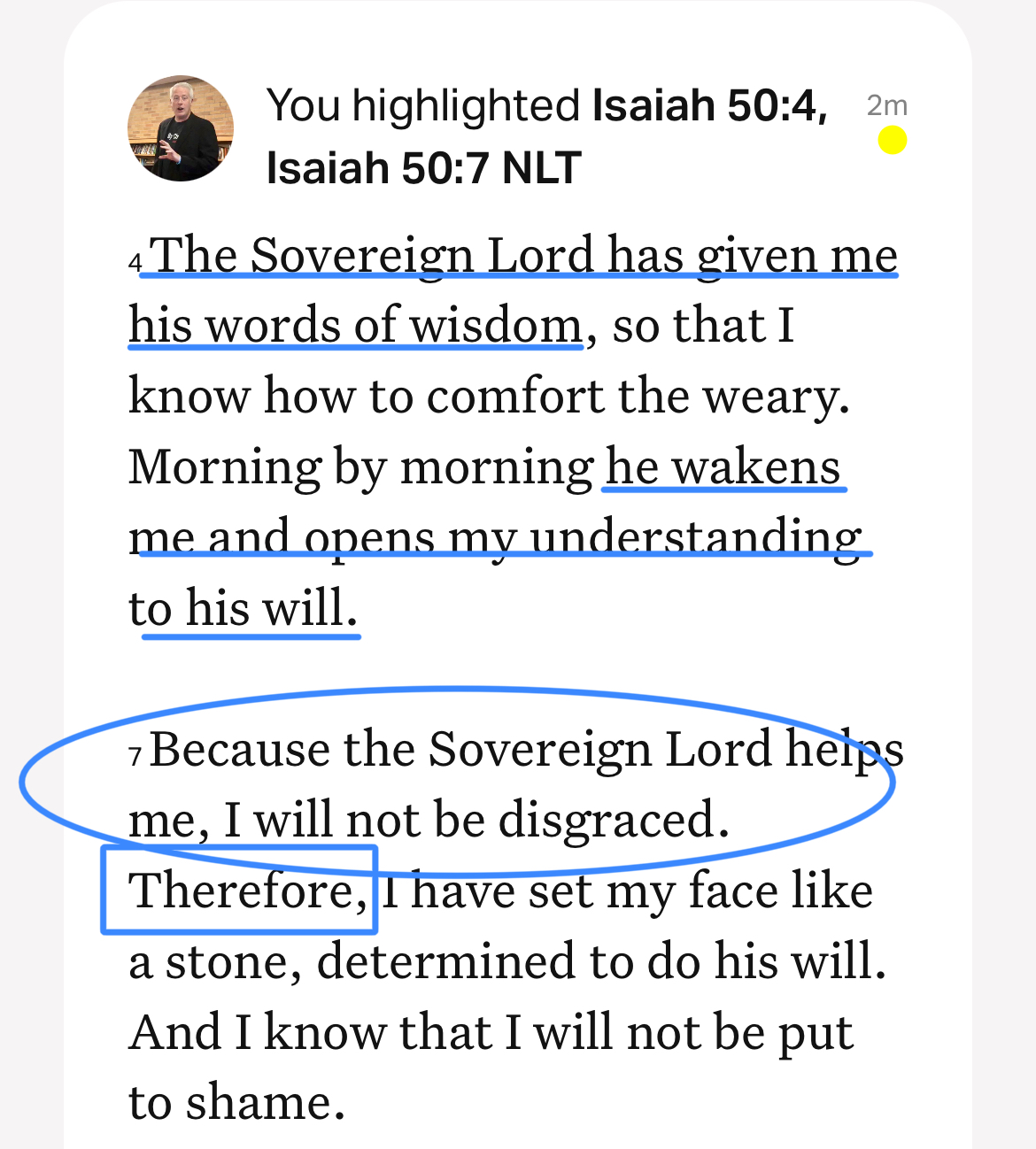 The Sovereign Lord has given me His words of wisdom, so that I know how to comfort the weary. Morning by morning He wakens me and opens my understanding to His will. … Because the Sovereign Lord helps me, I will not be disgraced. Therefore, I have set my face like a stone, determined to do His will. And I know that I will not be put to shame. (Isaiah 50:4, 7 NLT)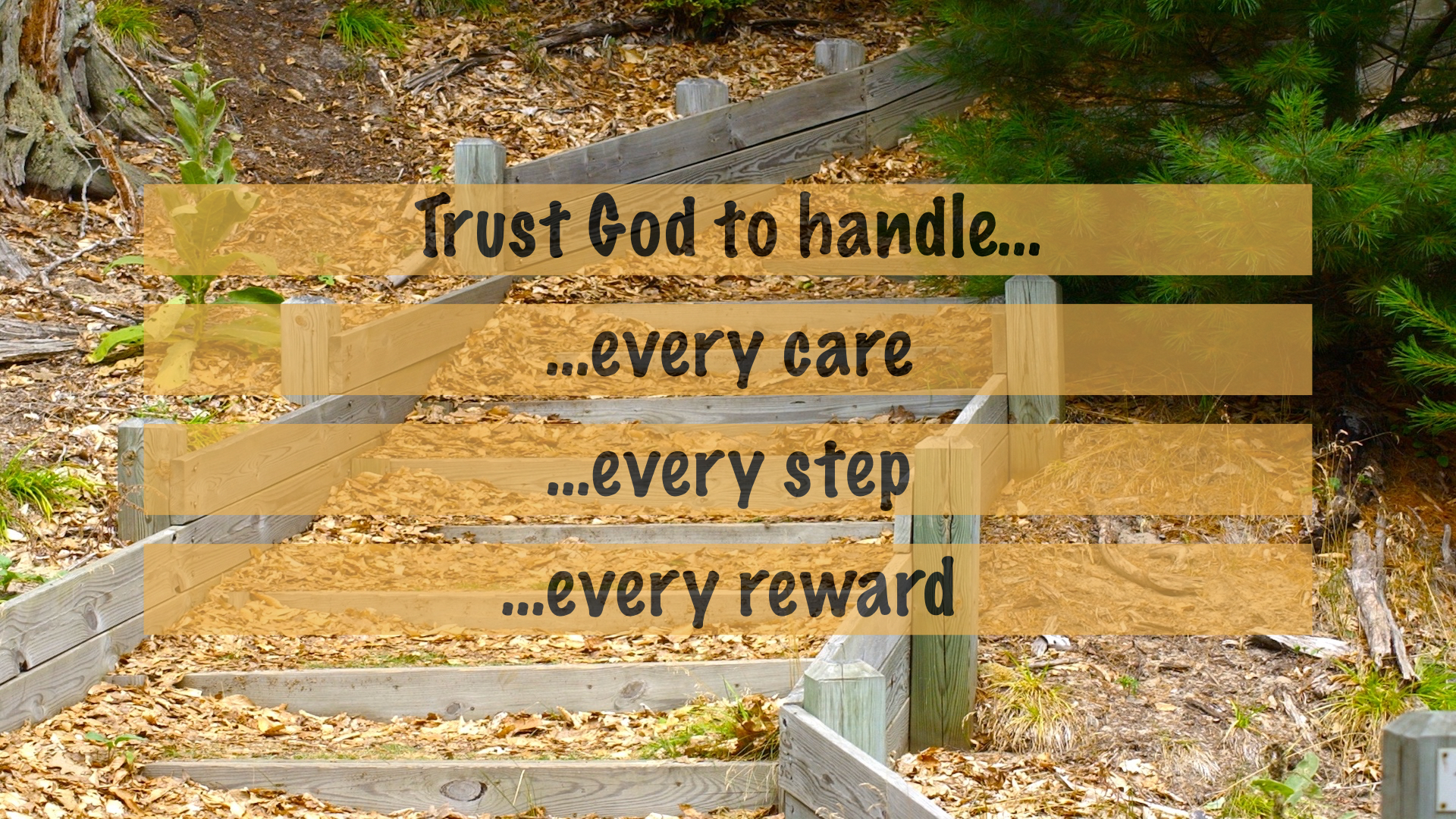


 Craig T. Owens