
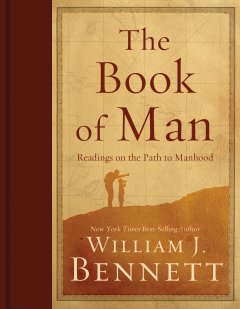
5 Quotes On Work From “The Book Of Man”

I really enjoyed reading The Book Of Man by William J. Bennett (you can read my book review here). The topics were very broad, so I’ll be sharing some of my favorite quotes on the different sections in this book over the next few days.

Here are 5 quotes about work…

“Pleasure in the job puts perfection in the work.” —Aristotle

“Every calling is great when greatly pursued.” —Oliver Wendell Holmes

“No man is happy if he does not work. Of all miserable creatures the idler, in whatever rank of society, is in the long run the most miserable. If a man does not work, if he has not in him not merely the capacity for work but the desire for work, then nothing can be done with him. He is out of place in our community. We have in our scheme of government no room for the man who does not wish to pay his way through life by what he does for himself and for the community.” —Theodore Roosevelt

“In America no one is degraded because he works, for every one about him works also; nor is any one humiliated by the notion of receiving pay, for the President of the United States also works for pay. He is paid for commanding, other men for obeying orders. In the United States professions are more or less laborious, more or less profitable; but they are never either high or low: every honest calling is honorable.” —Alexis de Tocqueville

“Our nature consists in motion; complete rest is death. …Nothing is so insufferable to man as to be completely at rest, without passions, without business, without diversion, without study. He then feels his nothingness, his forlornness, his insufficiency, his dependence, his weakness, his emptiness. There will immediately arise from the depth of his heart weariness, gloom, sadness, fretfulness, vexation, despair.” —Blaise Pascal

Do You Know Your Community?

Jesus called His followers to be salt and light. It’s pretty easy to figure out that the salt cannot season the food if it stays in the saltshaker, and the light cannot illuminate the darkness if it stays covered up. In order to season and shine in your community, you have to know your community.

And, pastor, that starts with you.

What you do is a much more effective sermon that what you say. Pastor, you need to know your community, so that you can be involved in your community, so that you and your church can season and shine in your community together.

So let me ask a couple of questions:

  • Do you know your Mayor / City Manager / Township Supervisor? If you don’t know them, how can you affirm their leadership (Romans 13:1-7)?
  • Do you attend City / Township Council meetings? If you don’t, how will you know what issues they’re wrestling with? If you don’t know those issues, how can you pray effectively for them (1 Timothy 2:1-2)?
  • Are you involved in your community? Don’t just assume people in your community will come to your church to sit among stranger to hear a stranger speak; instead, be so involved in your community that they will come to church to fellowship with friends and hear a friend speak (John 2:1-2).

I opened with the question, “Do you know your community?” But maybe a better way to ask this is, “Does your community know you?”

Does the community come to you to ask for help? This may be the best barometer of your involvement in your community: how often they seek your help or assistance in addressing issues within your community.

If you’re not as involved as you should be, the good news is that it’s never too late to start! Go get involved—go season and shine!

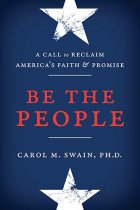
Be The People (book review)

If Carol M. Swain’s book, Be The People, sounds like the opening words of the Constitution of the United States of America, it was fully intended that way.

Be The People is a clarion call for American citizens to return to our roots. And Dr. Swain makes no attempt to hide the fact that our country’s roots are firmly grounded in biblical truth. The first section of the book is three chapters long and is called “Broken Vows: Forsaking What We Once Knew.” In language that is sometimes scholarly, sometimes biblical, but always straightforward, Dr. Swain systematically lays out where we’ve come from, and how we’ve abandoned God’s ways to get to this point in our country’s history.

The second section — which makes up the remainder of the chapters — lays out what we can do to reclaim our Judeo-Christian heritage. Leaving nothing to the imagination, Dr. Swain lists several action points at the end of each chapter. She also includes the Ten Commandments, the Declaration of Independence, the Bill of Rights, and the Constitution at the back of the book. There are no excuses for her readers not to be fully informed of the stark divide between our Founding Fathers’ original intent, and the beliefs and practices of those currently in political power.

Parts of this book surprised me; parts disgusted me; still other parts gave me a greater appreciation for our heritage. But the entirety of this book called me to action. After reading Be The People I feel more prepared to defend what I believe about our great country, and more motivated to get involved.

If you are upset with the current highly-politicized, Scripture-eschewing, heritage-denying atmosphere among the current office-holders in the USA, Be The People is just the book for you.

I am a Thomas Nelson book reviewer.