
My People

The prophet Jeremiah is often called “the weeping prophet.” Perhaps if we wept a bit more over the lost souls who are staggering toward Hell, we would be compelled to do more to rescue them.

What I love about Jeremiah is his identification with lost humanity. God called Jeremiah to be His prophet, so if anyone could have the opportunity to feel special or superior, it might be Jeremiah. But when the prophet heard about the approaching judgment, he called the residents of Jerusalem my people. Did you get that: MY people.

Not only did he call them my people, but his heart broke for them:

  • My heart is faint within me (Jeremiah 8:18)
  • I am crushed (8:21)
  • I mourn … horror grips me (8:21)
  • I weep day and night (9:1)
  • I weep and wail and take up a lament (9:10)

In Soul Work, Randy Harris has a passage that has been pounding on my heart—

Why don’t we cancel all those [church] meetings and make a field trip to the laundromat and the bars and the streets and listen to what makes sinners tick until we love them. I don’t mean try to convert anybody; I mean listen to them until we love them. Listen until we find ourselves in them. Listen to what they’re afraid of, listen to what they hope for, listen to what hurts, until we love them. And then we can try to be the church again. (emphasis added)

Or as C.T. Studd famously said:
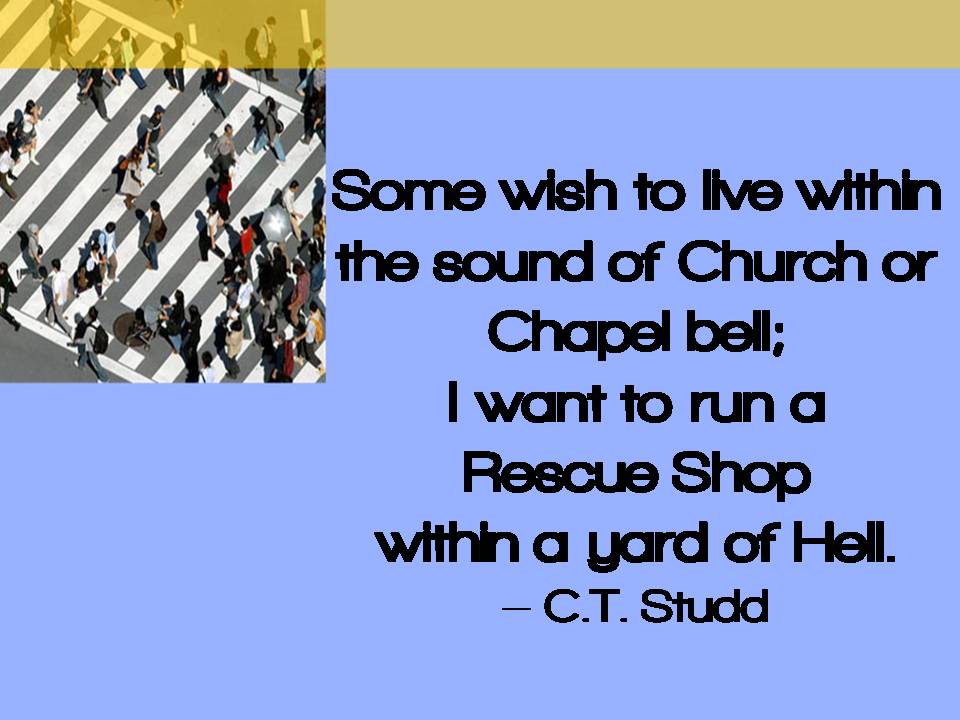
“Some wish to live within the sound of Church or Chapel bell;

I want to run a Rescue Shop within a yard of Hell.”

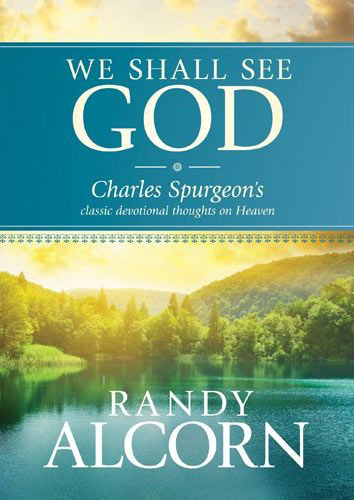
We Shall See God (book review)

It wasn’t for nothing that Charles Spurgeon was called “the prince of preachers.” In We Shall See God by Randy Alcorn, you can get a taste of Spurgeon’s eloquence, and of Heaven’s majesty.

We Shall See God is a collection of Spurgeon’s sermons about Heaven. Randy Alcorn has done a masterful job of culling through the prince’s sermons to pull out excerpts that talk about the beauty of Heaven and the horrors of Hell. Randy’s comments following each passage from Spurgeon are wonderfully presented. He doesn’t “talk over” Spurgeon, nor does he simply rehash what Spurgeon already said. He eloquently amplifies or briefly explains.

This book is designed to be used as a 50-day devotional reading. But I’ll be honest with you: I couldn’t put it down! I was so enthralled by Spurgeon’s description of Heaven, that I couldn’t wait to read more. And now I can’t wait to tell others more about Heaven.

Lately there have been so many authors and blogger hypothesizing about Heaven and Hell and the after-life. But Spurgeon doesn’t give us his opinion, he gives us biblical insight. And wouldn’t you much rather hear what the Creator of Heaven has to say about it, than what any mere mortal has to say?

I highly recommend this book to you. You will not only look forward to Heaven even more, but you will enjoy your brief journey on this Earth even more too.

I am a Tyndale book reviewer.