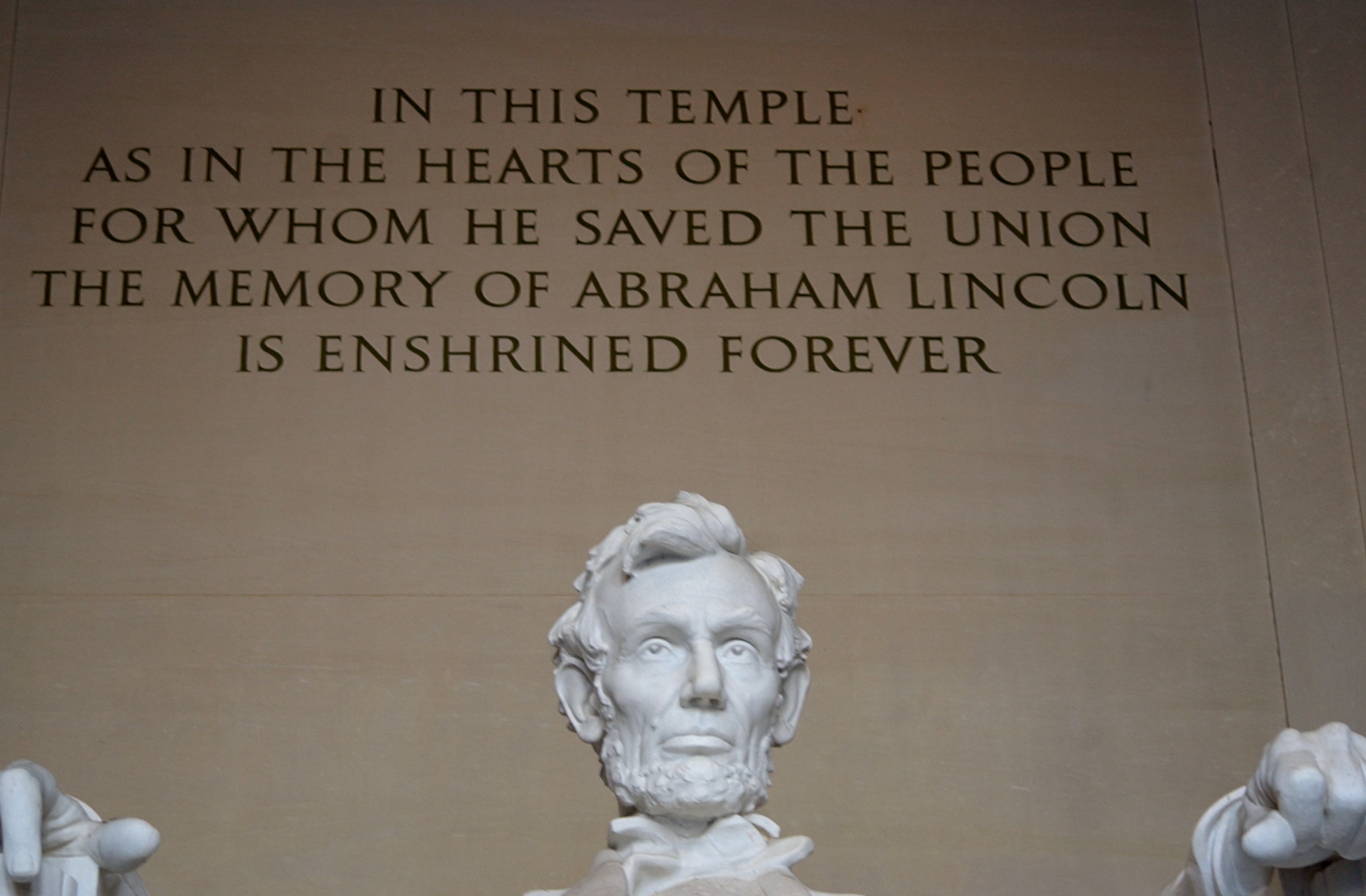
An Unabashed Appeal To Join Religion And Government

Talk about taking a passing remark out of context! In a personal letter, Thomas Jefferson mentions how church and state should be separate. But I’m convinced where we’ve ended up is no where close to what he intended! I’m so tired of historical revisionists trying to convince us that biblical values and Judeo-Christian ethics had no place in the founding of our nation. Or—worse yet—that they have no place now. Consider these founding remarks…

“…Having undertaken, for the Glory of God, and advancements of the Christian faith and honor of our King and Country, a voyage to plant the first colony in the Northern parts of Virginia….” —Mayflower Compact

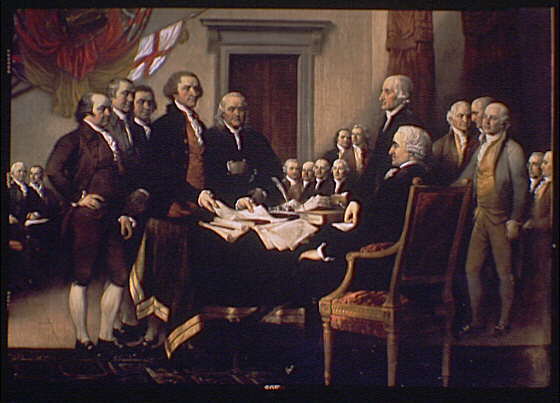
“And for the support of this Declaration, with a firm reliance on the protection of Divine Providence….” —Declaration Of Independence

“I have lived, Sir, a long time; and the longer I live the more convincing Proofs I see of this Truth, That God governs in the Affairs of Men!—And if a Sparrow cannot fall to the Ground without His Notice, is it probable than an Empire can rise without His Aid? — We have been assured, Sir, in the Sacred Writings, that ‘except the Lord build the House, they labor in vain that build it.’ I firmly believe this; and I also believe that without His concurring Aid we shall succeed in this political Building no better than the Builders of Babel…. I therefore beg leave to move, That henceforth Prayers, imploring the Assistance of Heaven, and its Blessing on our Deliberations, be held in this Assembly every Morning before we proceed to Business.” —Benjamin Franklin, Constitutional Convention

It is impossible to rightly govern a nation without God and the Bible.” —George Washington

“Suppose a nation in some distant Region should take the Bible for their only law Book and every member should regulate his conduct by the precepts there exhibited! What a Utopia, what aParadise would this region be.” —John Adams

And, of course, the quotes could go on and on and on. But one of my favorites:

“Yes, if our religion had more to do with our politics; if, in the pride of our citizenship, we had not forgotten our Christianity; if we had prayed more and wrangled less about the affairs of our country, it would have been infinitely better for us at this day.” —John Mitchell Mason (1770-1829), in his book published in 1800

Happy Birthday, America! May GOD bless you!
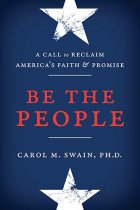
Be The People (book review)

If Carol M. Swain’s book, Be The People, sounds like the opening words of the Constitution of the United States of America, it was fully intended that way.

Be The People is a clarion call for American citizens to return to our roots. And Dr. Swain makes no attempt to hide the fact that our country’s roots are firmly grounded in biblical truth. The first section of the book is three chapters long and is called “Broken Vows: Forsaking What We Once Knew.” In language that is sometimes scholarly, sometimes biblical, but always straightforward, Dr. Swain systematically lays out where we’ve come from, and how we’ve abandoned God’s ways to get to this point in our country’s history.

The second section — which makes up the remainder of the chapters — lays out what we can do to reclaim our Judeo-Christian heritage. Leaving nothing to the imagination, Dr. Swain lists several action points at the end of each chapter. She also includes the Ten Commandments, the Declaration of Independence, the Bill of Rights, and the Constitution at the back of the book. There are no excuses for her readers not to be fully informed of the stark divide between our Founding Fathers’ original intent, and the beliefs and practices of those currently in political power.

Parts of this book surprised me; parts disgusted me; still other parts gave me a greater appreciation for our heritage. But the entirety of this book called me to action. After reading Be The People I feel more prepared to defend what I believe about our great country, and more motivated to get involved.

If you are upset with the current highly-politicized, Scripture-eschewing, heritage-denying atmosphere among the current office-holders in the USA, Be The People is just the book for you.

I am a Thomas Nelson book reviewer.

MacArthur (book review)

General Douglas MacArthur was popularly called “America’s General,” and Mitchell Yockelson’s biography—MacArthur: America’s General—does an admirable job in telling us how he earned this well-deserved moniker.

(As an aside: I have really enjoyed all of the books in the Thomas Nelson Generals series. You can read my reviews of George S. Patton here, and Robert E. Lee here.)

MacArthur’s influence is still being felt at West Point as we train our future military officers, and around the world, where General MacArthur had a prominent role in three wars. And, if his advice about Vietnam had been heeded, perhaps his influence would have extended through four wars.

How did he achieve such prominence? It’s the classic debate: are great leaders born or made? In Douglas MacArthur’s case the answer is a resounding “Yes!” Yes, he was born into a family with a strong military heritage. MacArthur certainly benefited from the influence of his grandfather (a judge), his father (a decorated, combat veteran and general), and his mother (who used her charm to sway many influential people). But these family members could only open doors; it was up to MacArthur to march through them.

And, yes, march through them he did! At every opportunity he pressed forward. Sometimes with unconventional tactics, sometimes in opposition to his leadership, and sometimes through sheer willpower. But the results speak for themselves: Without a General Douglas MacArthur to lead our troops in perilous times, the outcome in three wars could have been disastrously different.

The United States of America is viewed as the world’s superpower (and rightly so). It is very likely that without MacArthur’s influence we would not be the prominent power that we are now. We owe a huge debt of gratitude to God for blessing us with the MacArthur family.

A lively and informative read for military buffs and students of leadership. Highly recommended!

I am a Thomas Nelson book reviewer.

Lee: A Life Of Virtue (book review)

I’m thoroughly enjoying The Generals series from Thomas Nelson Publishers! The latest installment that kept me turning page after page is Lee: A Life Of Virtue by John Perry. (By the way, my review of the first book in this series is here.)

You probably think you know quite a bit about General Robert E. Lee, commander of the Confederate Army during the Civil War. After all, in our American History classes, we heard all about how Lee went to war to protect slavery, right? At least, that’s what I thought. But did you know that Lee signed the papers to free the slaves his family had inherited? And that Lee was working with other leaders to find the best way to free all of the slaves in the South?

This biography portrayed a side of Lee I had never heard before. John Perry does a remarkable job of showing us a man who quietly and resolutely relied on his faith in God for so many crucial decisions; a man who lovingly cared for his invalid mother; a man who continued to court his wife all throughout their marriage; a man who dearly loved his children; and a man who made his battlefield decisions based on what was best for his men.

The title is so apt: Lee was a man of virtue throughout his life. Always exercising self-control, always considerate of others, never cutting corners nor compromising.

If for no other reason, I recommend that you read Lee just to get a complete picture of a man who was so much more than an outstanding general; he was an outstanding man.

I am a Thomas Nelson book reviewer.

Celebrating Freedom

Yesterday at Calvary Assembly of God we celebrated our country’s birthday with an outdoor service and picnic. I talked about the biblical roots and godly heritage of our great nation. In telling this story, I used quite a few quotes from key historical people. Several people have asked me to make these quotes available, and I’m happy to do so. (Any text in bold was added by me.)

“It was the Lord who put into my mind (I could feel His hand upon me) the fact that it would be possible to sail from here to the Indies. All who heard of my project rejected it with laughter, ridiculing me. There is no question that the inspiration was from the Holy Spirit, because He comforted me with rays of marvelous inspiration from the Holy Scriptures.” —Christopher Columbus writing about the motivation for his journey

“In the name of God, amen. We whose names are under-written, the loyal subjects of our dread Sovereign, King James…. Having undertaken, for the glory of God and advancement of the Christian Faith and honor of our King and country, a voyage to plant the first colony in the northern parts of Virginia, do by these presents solemnly and mutually in the presence of God and one another, covenant and combine ourselves together in a civil body politic ….” —The Mayflower Compact

“When, in the course of human events, it becomes necessary for one people to dissolve the political bands which have connected them with another, and to assume among the powers of the earth, the separate and equal station to which the laws of nature and of nature’s God entitle them….

“We hold these truths to be self-evident, that all men are created equal, that they are endowed by their Creator with certain unalienable rights, that among these are life, liberty and the pursuit of happiness. That to secure these rights, governments are instituted among men, deriving their just powers from the consent of the governed. …

“…And for the support of this declaration, with a firm reliance on the protection of Divine Providence, we mutually pledge to each other our lives, our fortunes and our sacred honor.” —Preamble and closing sentence of the Declaration of Independence

“I have lived, Sir, a long time; and the longer I live the more convincing Proofs I see of this Truth, That God governs in the Affairs of Men! And if a Sparrow cannot fall to the Ground without His Notice, is it probable than an Empire can rise without His Aid? We have been assured, Sir, in the Sacred Writings, that ‘except the Lord build the House, they labor in vain that build it.’ I firmly believe this; and I also believe that without His concurring Aid we shall succeed in this political Building no better than the Builders of Babel…. I therefore beg leave to move, That henceforth Prayers, imploring the Assistance of Heaven, and its Blessing on our Deliberations, be held in this Assembly every Morning before we proceed to Business.” —Benjamin Franklin, at Constitutional Convention, June 28, 1787

“Whereas, the Senate of the United States, devoutly recognizing the Supreme Authority and just Government of Almighty God, in all the affairs of men and of nations, has, by a resolution, requested the President to designate and set apart a day for National prayer and humiliation.” —Proclamation of a nation day of prayer and fasting, March 30, 1863

“The year that is drawing towards its close, has been filled with the blessings of fruitful fields and healthful skies.  To these bounties, which are so constantly enjoyed that we are prone to forget the source from which they come, others have been added, which are of so extraordinary a nature, that they cannot fail to penetrate and soften even the heart which is habitually insensible to the ever watchful providence of Almighty God. … No human counsel hath devised nor hath any mortal hand worked out these great things.  They are the gracious gifts of the Most High God….” —Abraham Lincoln’s proclamation of a day of thanksgiving in October 1863

“I recognize we must be cautious in claiming God is on our side. But I think it’s all right to keep asking if we’re on His side. —Ronald Reagan

I believe God will continue to bless America IF we make sure we are on His side.

What A Dream!

I have just been listening to Dr. Martin Luther King, Jr.’s incredible I Have A Dream speech. If ever there was a man who could cast a compelling vision, it was Dr. King. Look at his pattern—

  • He had a noble cause.
  • He stated the problem first: “One hundred years later” there is still racial injustice.
  • He articulated the righteousness of the pursuit of justice and equality.
  • He set the criteria: “We will not be satisfied until justice rolls down like waters.”
  • He encouraged his audience to press on.
  • He brought his vision to a dramatic conclusion with the portable and memorable rally cry: “I HAVE A DREAM!

Powerful! Watch it again for yourself…

Lest We Forget

Days set aside for giving thanks to God have been observed throughout the history of our great nation. But in 1863 in the midst of Civil War, President Abraham Lincoln designated an annual Thanksgiving Day. Lest we not forget, our first and greatest thanks should be to God from Whom all blessings flow. A portion of President Lincoln’s proclamation reads:

“No human counsel hath devised nor hath any mortal hand worked out these great things. They are the gracious gifts of the Most High God, who, while dealing with us in anger for our sins, hath nevertheless remembered mercy. It has seemed to me fit and proper that they should be solemnly, reverently and gratefully acknowledged as with one heart and one voice by the whole American People. I do therefore invite my fellow citizens in every part of the United States, and also those who are at sea and those who are sojourning in foreign lands, to set apart and observe the last Thursday of November next, as a day of Thanksgiving and Praise to our beneficent Father who dwelleth in the Heavens.

You can read the full text of President Lincoln’s proclamation here, or for those of you who would rather listen to the proclamation, enjoy the video version.

Make today “a day of Thanksgiving and Praise to our beneficent Father.”

Ultimate Devotion

Usually I awaken each morning with some song echoing in my mind, but this morning was different. This morning I heard the last lines of Abraham Lincoln’s Gettysburg Address resounding in my mind—

It is for us the living, rather, to be dedicated here to the unfinished work which they who fought here have thus far so nobly advanced. It is rather for us to be here dedicated to the great task remaining before us—that from these honored dead we take increased devotion to that cause for which they gave the last full measure of devotion—that we here highly resolve that these dead shall not have died in vain—that this nation, under God, shall have a new birth of freedom—and that government of the people, by the people, for the people, shall not perish from the earth.

America is still an unfinished work. She is a work which has been nobly advanced by the blood of patriots who believed in the work which had been birthed on this soil. These honored dead gave their last full measure of devotion to this nation “conceived in Liberty” by the guiding hand of God Himself.

Just 87 years earlier the Founding Fathers closed the Declaration of Independence with these words—

And for the support of this Declaration, with a firm reliance on the protection of Divine Providence, we mutually pledge to each other our Lives, our Fortunes, and our sacred Honor.

Today is called Memorial Day, and it is right and proper that we memorialize the last full measure of devotion given by our fallen soldiers and patriots. It’s also a day to reflect on why they died—they were willing to shed their blood for this country conceived in Liberty under the watchful care of Divine Providence.

May we continue to honor the memory of our honored dead by upholding the values for which they died to preserve and protect. And may God continue to bless the United States of America as we remember and honor Him!

God Bless America,

Land that I love.

Stand beside her, and guide her

Through the night with a light from above.

From the mountains, to the prairies,

To the oceans, white with foam

God bless America, My home sweet home.